









Respuesta rápida
Hemosiderin staining treatment starts with the leg veins, not the skin. Using duplex ultrasound, a specialist locates faulty valves that let blood leak to the skin; this specialist seals off or removes these veins and may use laser treatment or topical care to lighten brown spots that result. Treating the veins helps keep new staining from building up. The pigment already in the skin fades slowly, and in some people part of it stays.
Hemosiderin staining treatment starts with the leg veins, not the skin. Using duplex ultrasound, a specialist locates faulty valves that let blood leak to the skin; this specialist seals off or removes these veins and may use laser treatment or topical care to lighten brown spots that result. Treating the veins helps keep new staining from building up. The pigment already in the skin fades slowly, and in some people part of it stays.
CACVI is led by board-certified endovascular specialists with more than 30 years of experience and over 15,000 vascular and cardiac procedures. We see patients in Los Angeles, Tarzana, and Victorville and offer vascular ultrasound to find the vein problem behind leg discoloration. If brown or rust-colored patches are spreading on your lower legs, request a vein evaluation so we can look for the cause.
What Is Hemosiderin Staining?
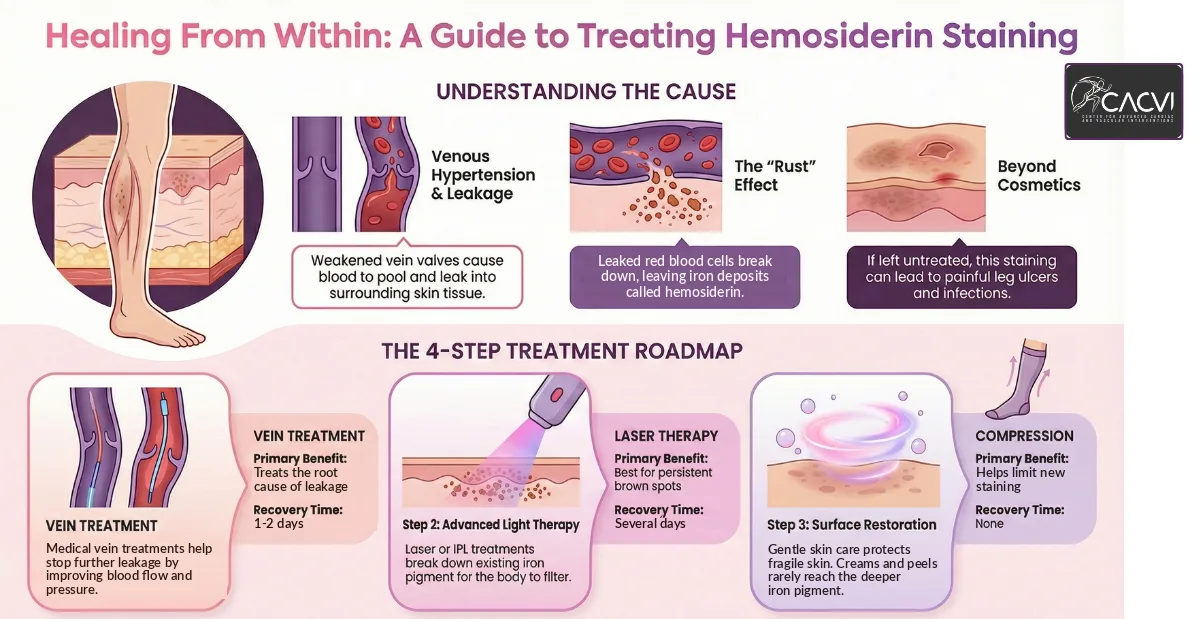
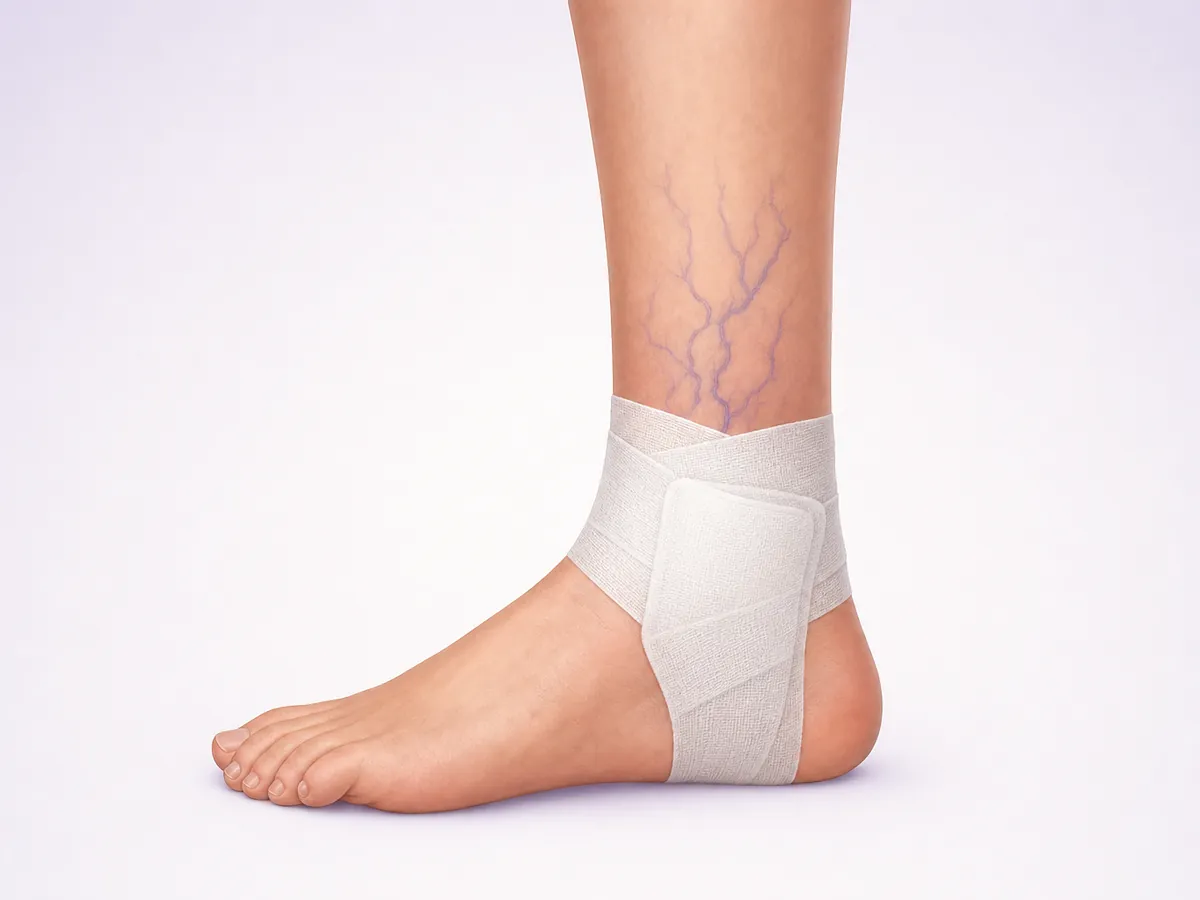
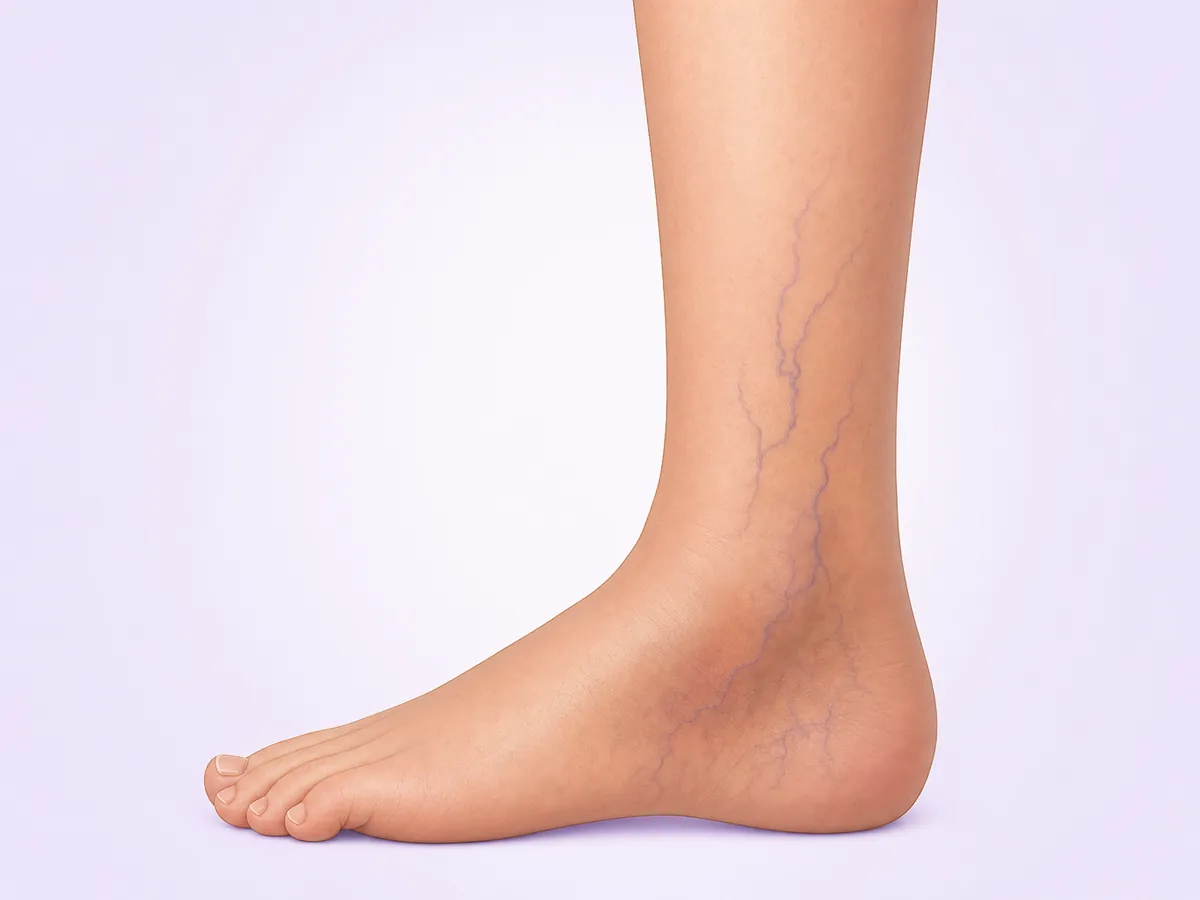
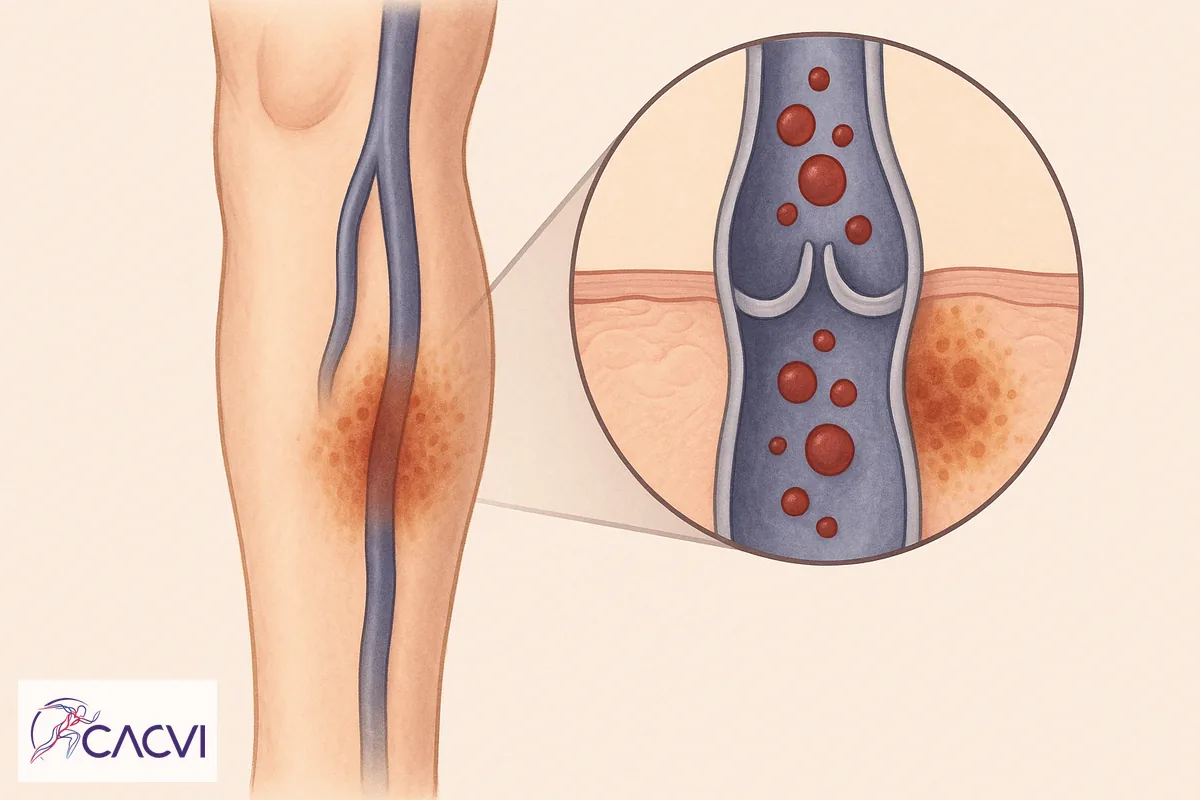
Hemosiderin is an iron-storage substance the body makes from the iron in red blood cells that have leaked out of vessels and broken down. When small blood vessels leak into the skin, cells burst and leave iron behind, which forms a stain that is reddish brown, rusty brown, or yellow brown. Most often the stains start around the ankles and lower shins.
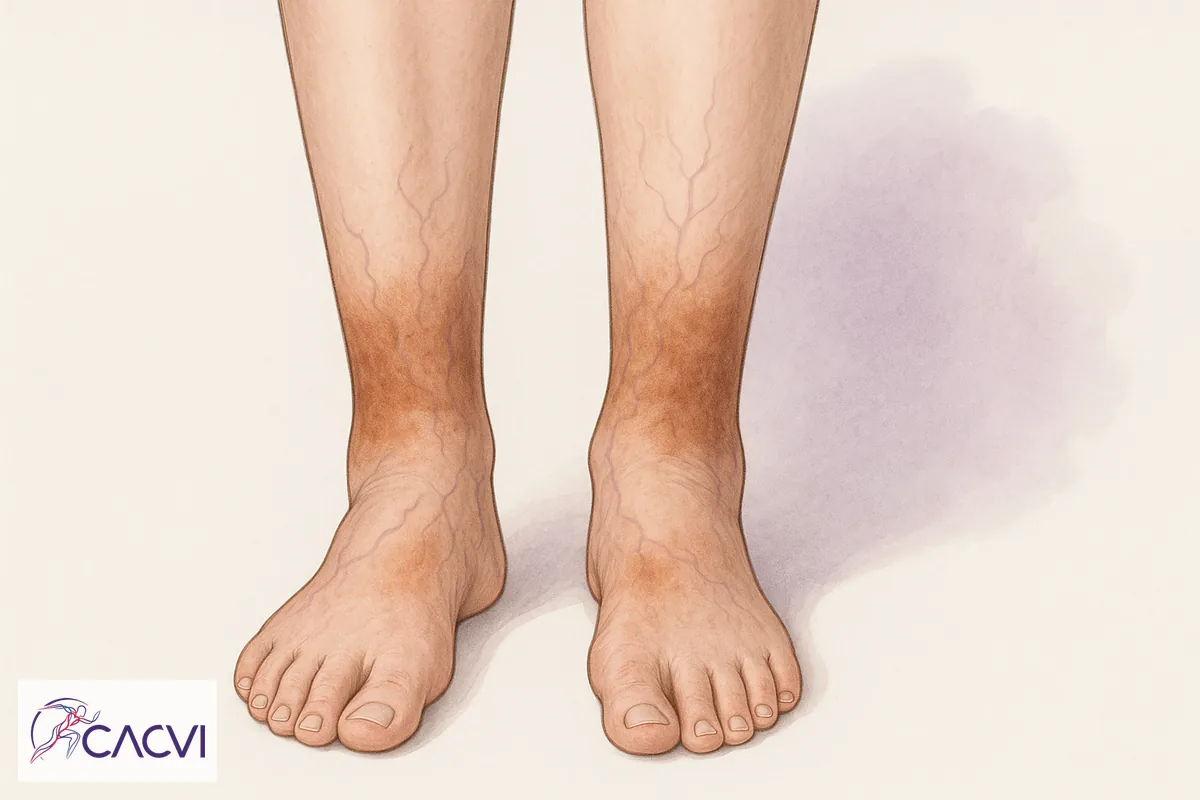
Bruises follow a similar process, and most fade within about two weeks. Staining from chronic venous insufficiency behaves differently, because the leaking keeps happening for months or years. MedlinePlus, the National Library of Medicine's patient site, describes brown coloring that develops slowly in people with stasis dermatitis, and notes that over time the skin can turn permanently dark brown.
Vein specialists grade chronic venous disease with the CEAP scale, which runs from C0 (no visible signs) to C6 (an open ulcer). Brown discoloration on its own is C4a; when the skin also hardens (lipodermatosclerosis), it is C4b, according to a 2024 review in the Journal of Chest Surgery. Practically speaking, discoloration indicates the condition has progressed beyond varicosities and is affecting the skin. The same review notes that compression alone may not be enough at this stage, and that an ultrasound scan is then needed.
Not every dark patch on the legs comes from iron. Medications, sun damage, and other skin conditions can also cause brown skin discoloration on the lower legs. Any new dark spot that changes shape or color, bleeds, or appears on the sole of the foot should be checked by a doctor right away, since skin cancers, including melanoma, can show up in those places.
What Causes Hemosiderin Staining?
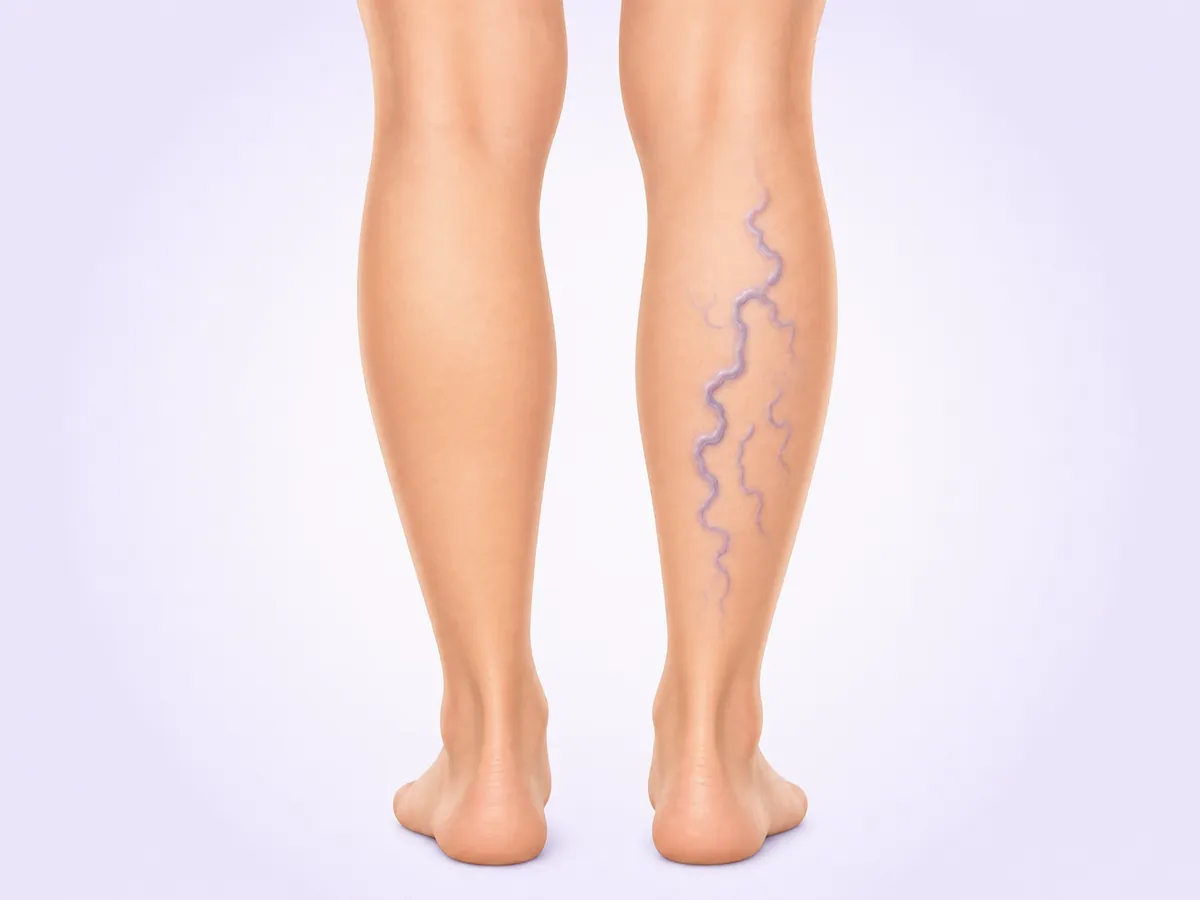
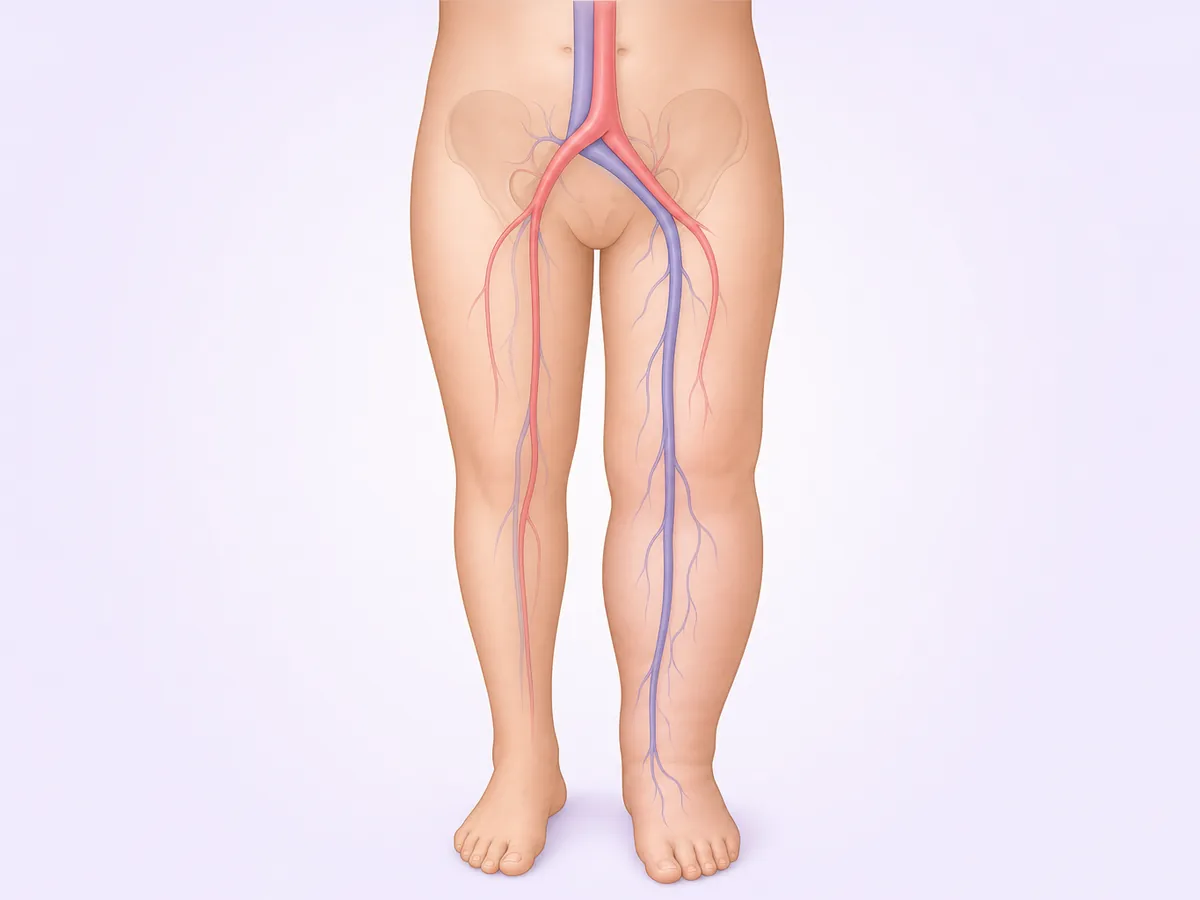
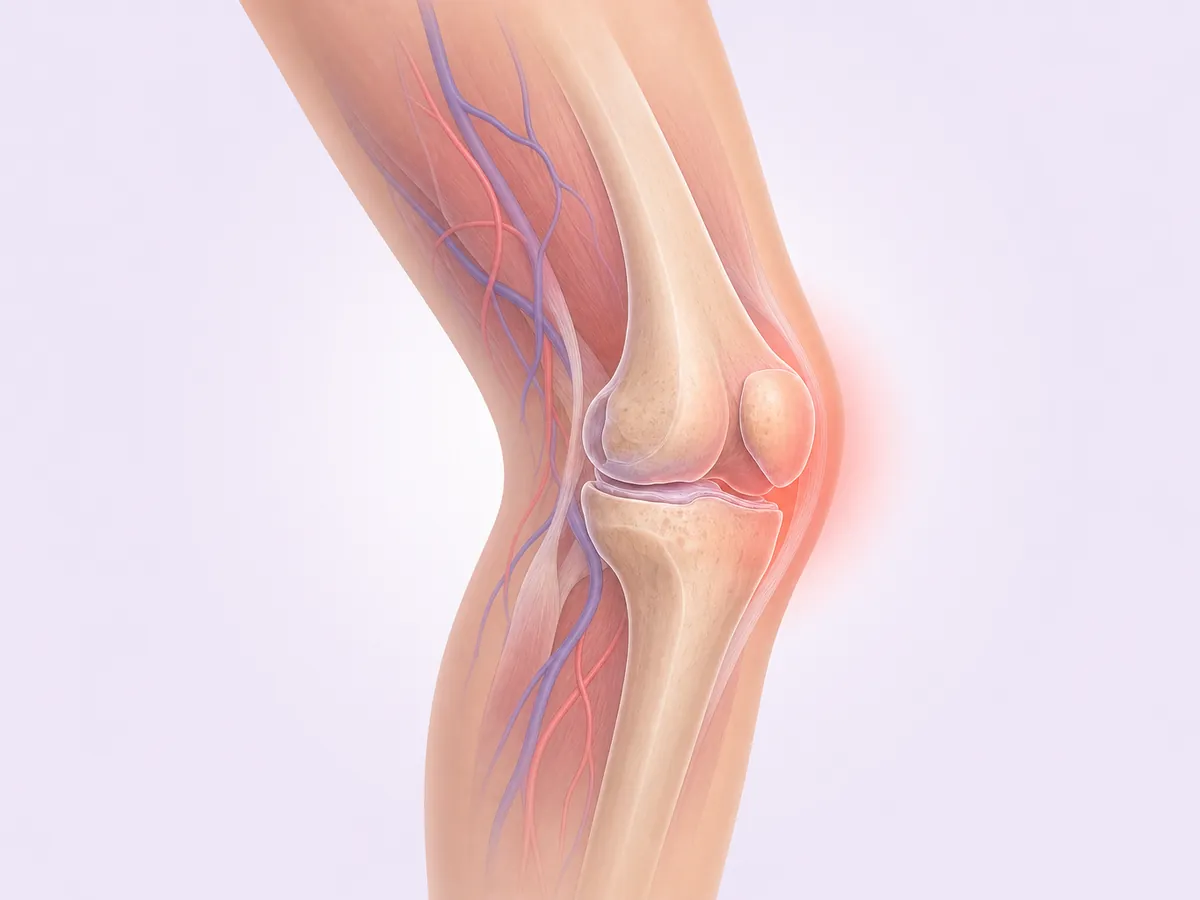
The most common cause is venous hypertension, which means high pressure inside the leg veins (not high blood pressure in the usual sense). Leg veins have one-way valves that keep blood moving toward the heart. When those valves weaken, blood flows backward and pools in the lower leg. Pressure forces blood into very small blood vessels and out into the skin. Várices are the most visible sign of this reflux, though staining can appear even when bulging veins are not obvious.
Other factors causing discoloration include bruises from injuries and old clots that have damaged deeper veins. Sclerotherapy, the injection treatment used to close small veins, leaves brown marks in up to 30 percent of cases, according to studies summarized in a 2025 case series in Cureus. Those marks come mostly from iron left behind by blood that leaks from the treated vein, though inflammation can add melanin pigment too. They usually fade on their own, but it can take several months or longer. However, discoloration due to untreated vein disease is different: there's still blood leaking somewhere.
Why Hemosiderin Staining Needs a Vein Evaluation
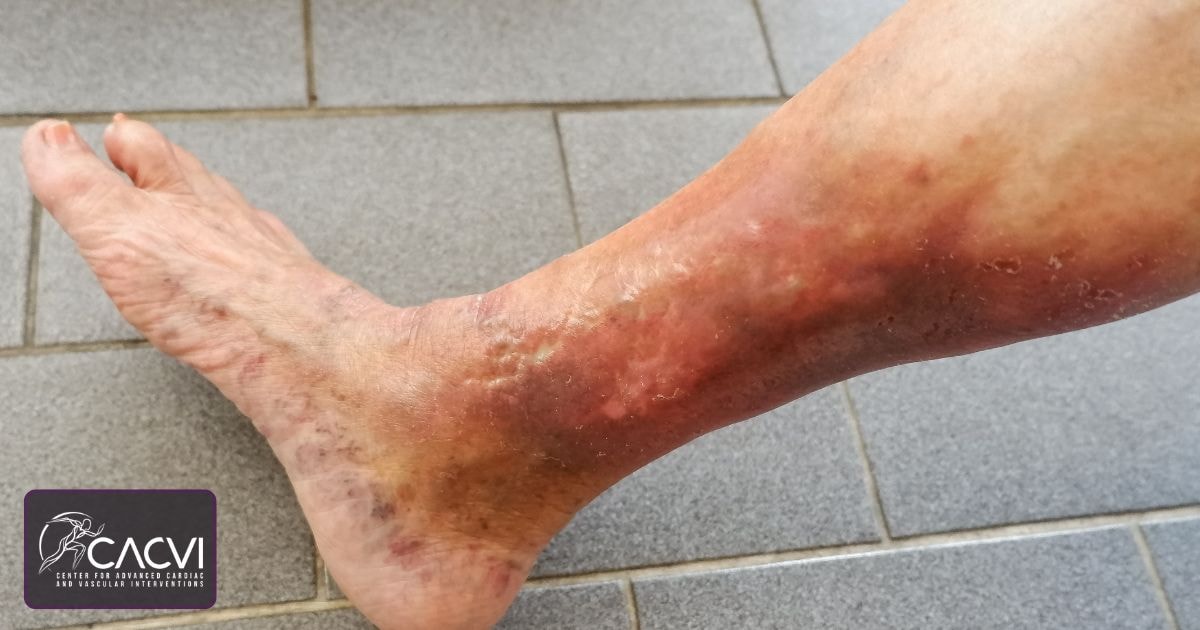
The stain itself does not hurt you. What it signals does. Skin that holds hemosiderin has been under pressure for a long time, and it is more likely to thicken, itch, crack, and break down. The Journal of Chest Surgery review describes venous ulcers as shallow sores, usually on the lower leg just above the ankle, sometimes surrounded by dark hemosiderin staining. Once an open sore forms, it can be slow to heal. Our page on venous leg ulcers explains how they develop and how they are managed.
Treating the veins early gives the skin time to settle down before a cosmetic concern turns into a wound-care problem.
How CACVI Treats Hemosiderin Staining
No single cream or laser fixes hemosiderin staining. Care at CACVI generally follows this order, starting with the cause and ending with the skin.
Map the Veins With Duplex Ultrasound
A vascular ultrasound shows blood flow in real time, so we can see which valves leak, which veins carry the backward flow, and whether there is a clot. According to the Journal of Chest Surgery review, duplex ultrasound is the most widely used and recommended test for chronic venous disease. MedlinePlus notes that a duplex ultrasound exam checks how blood flows in the veins and looks for problems such as a blood clot. The test is noninvasive.
Start With Conservative Care
A conservative approach involves using compression stockings regularly along with elevating legs and walking every day. This lowers pressure in veins. For many patients this is also the first step their insurance requires before covering a procedure.
Seal Any Veins That Are Leaking
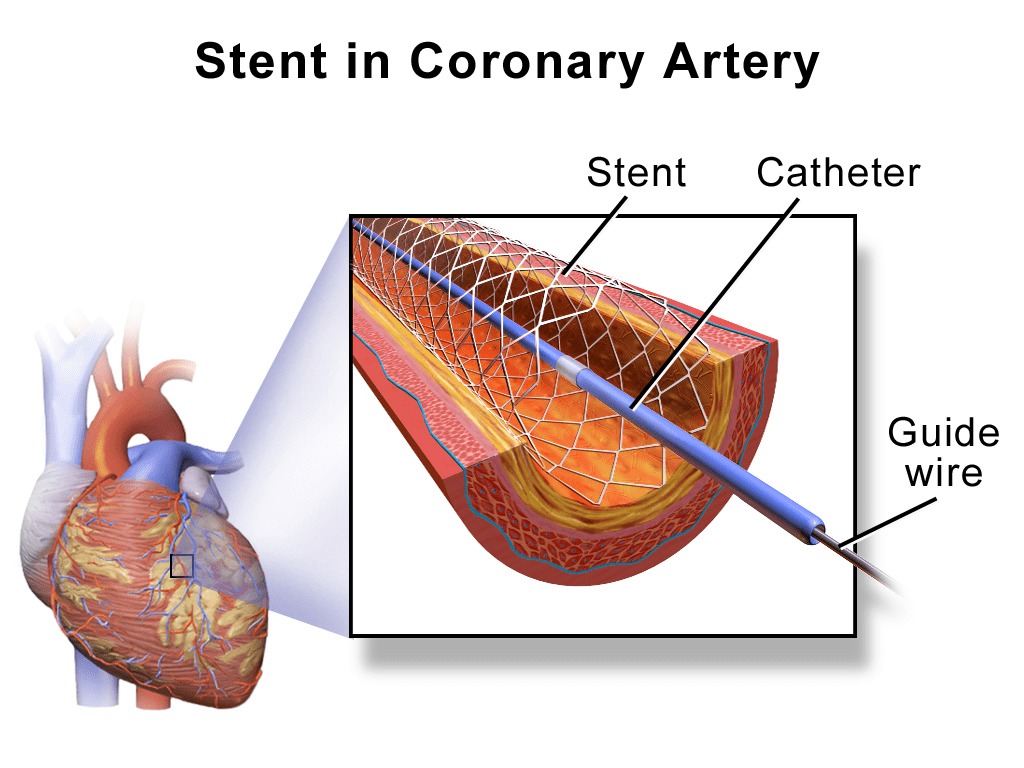
If the scan shows reflux in the great or small saphenous vein, endovenous ablation uses radiofrequency or laser energy through a thin catheter to seal the vein shut, and blood reroutes through healthy veins. Smaller veins may be closed with sclerotherapy, and bulging surface branches can be removed through tiny incisions (microphlebectomy).
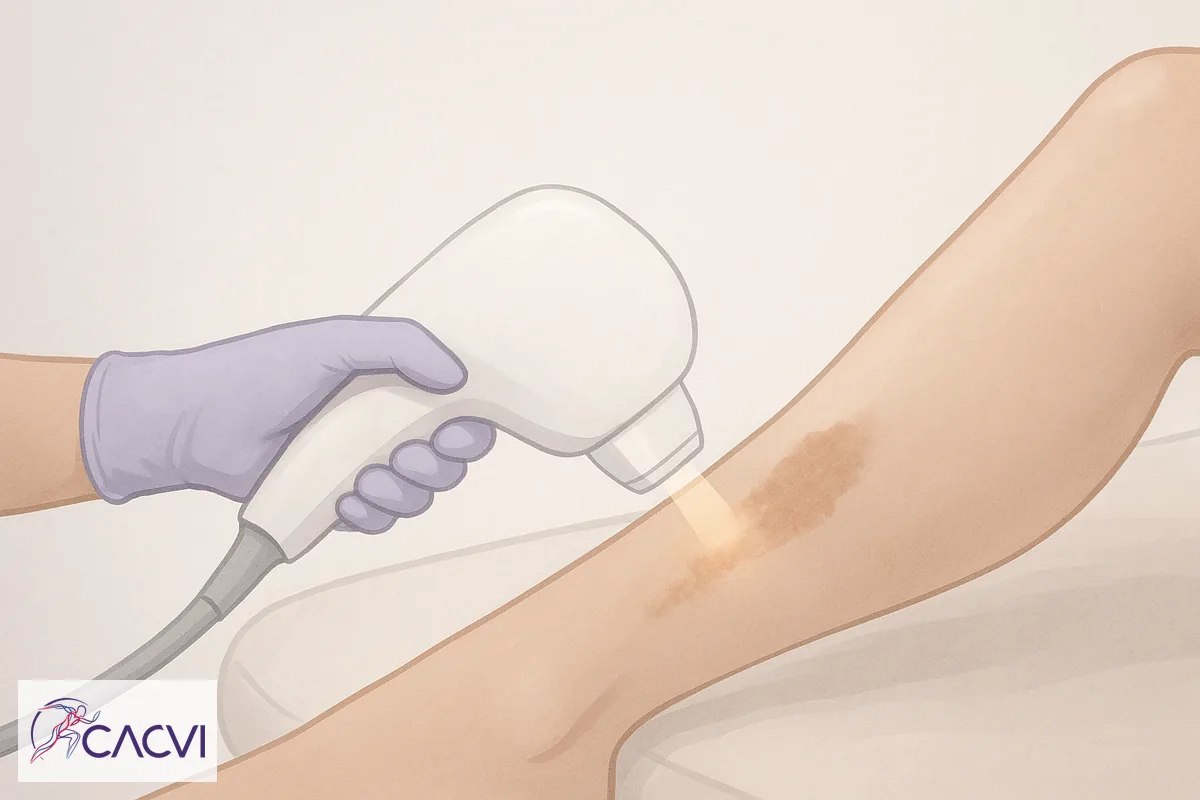
Lighten the Pigment That Remains
Once the pressure is under control, Q-switched laser or intense pulsed light can break up some of the pigment so the body can clear it. We work closely with dermatologists if further skin treatment is necessary. Evidence for laser on hemosiderin comes mostly from small studies and case reports, so several sessions may be needed and some staining may not clear.
Recheck and Protect the Skin
Follow-up appointments allow us to see if treated veins stay closed and to look out for any new reflux too. Fading usually takes months, and old staining from long-standing vein disease can be partly permanent.
Who Performs Vein Treatment at CACVI
Dr. Mehran Khorsandi is an interventional cardiologist and endovascular specialist with five board certifications. He graduated from the University of Pennsylvania School of Medicine and completed his residency and fellowship training in internal medicine and cardiology at Cedars-Sinai Medical Center; he has served as attending there since 1993. He is also director of the cardiac catheterization lab at Providence Cedars-Sinai Tarzana Medical Center.
Dr. Khorsandi has been issued 50 U.S. and international patents in interventional cardiology and co-founded a medical technology company focused on bifurcation stenting. At CACVI his work includes varicose vein treatment, venous insufficiency care, and amputation prevention.
Comparing Treatment Options for Hemosiderin Staining
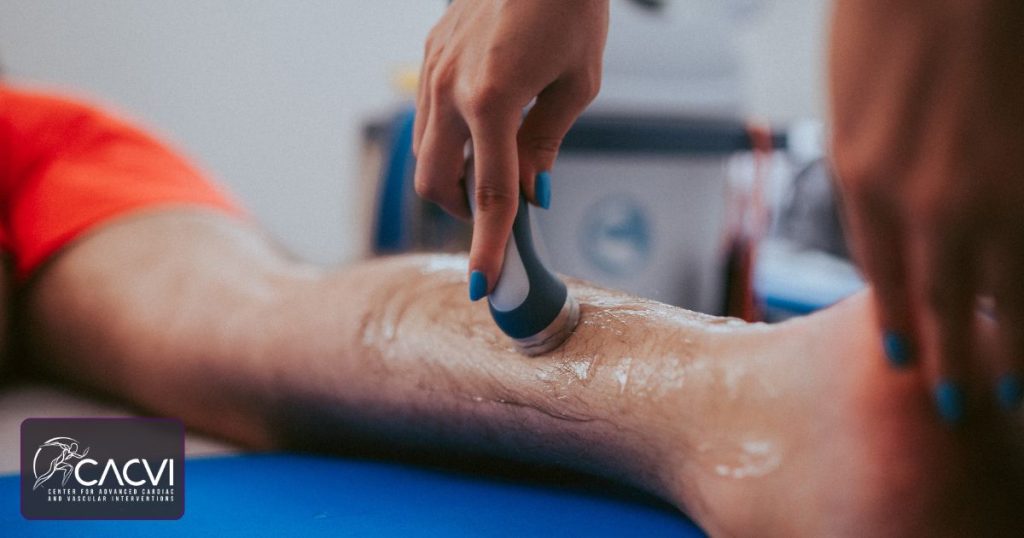
The right mix depends on how dark the staining is, whether the ultrasound shows reflux, and how much downtime you can take. The table below compares the main options side by side.
| Treatment | What it does | Recovery | Pros | Cons |
|---|---|---|---|---|
| Compression, elevation, and walking | Reduces pressure in the leg veins, resulting in less blood leakage into the skin | None | Low cost, no procedure, reduces new staining | Does not remove existing pigment and works only if done consistently |
| Endovenous ablation (radiofrequency or laser) | Seals the faulty saphenous vein to reroute blood through healthy veins | Most people return to normal activities within 1 to 2 days and wear compression stockings for about a week | Addresses the cause of the leak and is performed with local anesthesia | Bruising and tenderness along the vein; less common risks include blood clots, nerve irritation, and the vein reopening |
| Sclerotherapy | Closes smaller veins using an injected solution or foam | Short, with compression stockings afterward | Office-based and suited to smaller veins | Can leave its own brown staining, which may take months to fade |
| Q-switched laser or IPL | Disperses pigment in the skin for the body to remove it | Redness, swelling, or light bruising for several days, sometimes up to about 10 | Can lighten stubborn staining after the veins are treated | Several sessions, results vary, and new staining keeps forming if the veins are not treated |
| Topical creams | Lighten skin pigment and soothe irritated skin | None | Easy to use at home | Most lightening creams target melanin, not iron, so there is little evidence they help hemosiderin |
| Chemical peels | Remove the outer layers of skin | Several days of peeling | May improve surface texture | Don't reach hemosiderin deep in the dermis, and can irritate fragile skin on legs with vein disease |
Peels are rarely a good fit for hemosiderin staining. Pigment from vein disease sits deep in the dermis, below the layer most peels reach. Skin damaged by vein disease is often thin and slow to heal.
What to Expect From Treatment
Most side effects are temporary. After laser or IPL, the treated skin is usually red and a little swollen for a few days, and blistering or a change in skin tone is possible. Most people feel brief stinging or a burning sensation during the pulses. A numbing cream can be applied beforehand. Topical creams can cause dryness, redness, or peeling, and some ingredients make the skin more sensitive to sunlight.
After endovenous ablation, bruising and tightness along the treated vein are common and fade gradually. Sclerotherapy itself can also leave dark marks. A 2001 study, cited in the 2025 Cureus case series, found that untreated marks took 150 to 255 days to fade. Our article on what to avoid after sclerotherapy covers the aftercare that lowers that risk.
Be realistic about timing when dealing with this treatment. Once the veins are treated, new staining usually slows or stops, but the iron already in the skin clears slowly. You should expect changes gradually over months rather than overnight. Staining that built up over many years may lighten without disappearing.
How to Keep Hemosiderin Staining From Getting Worse
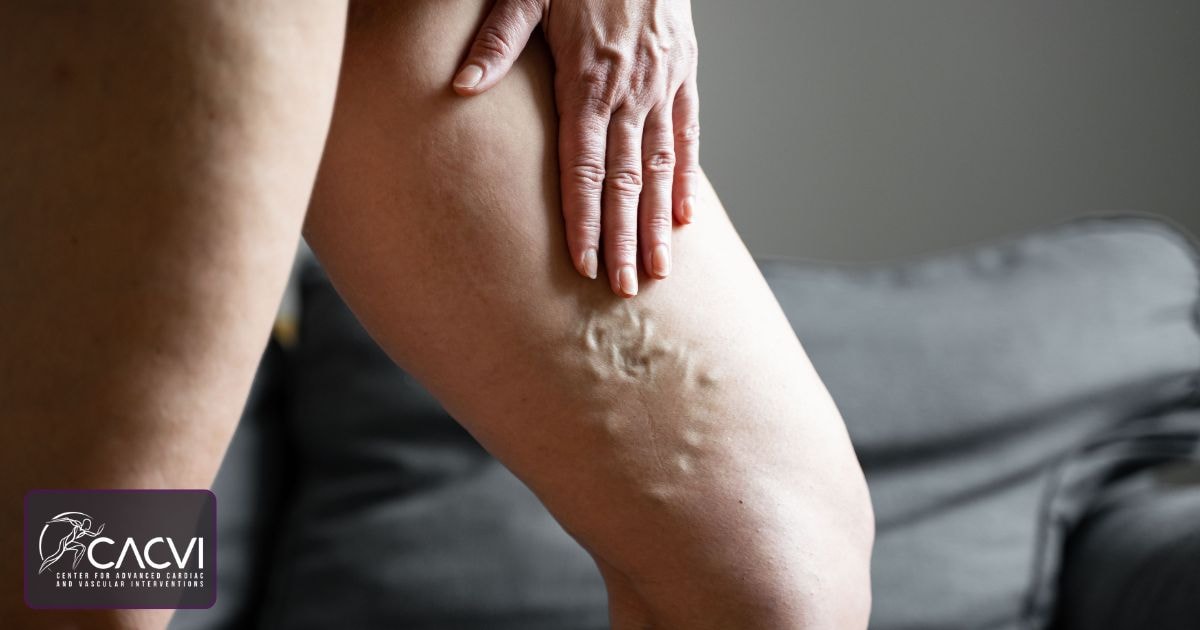
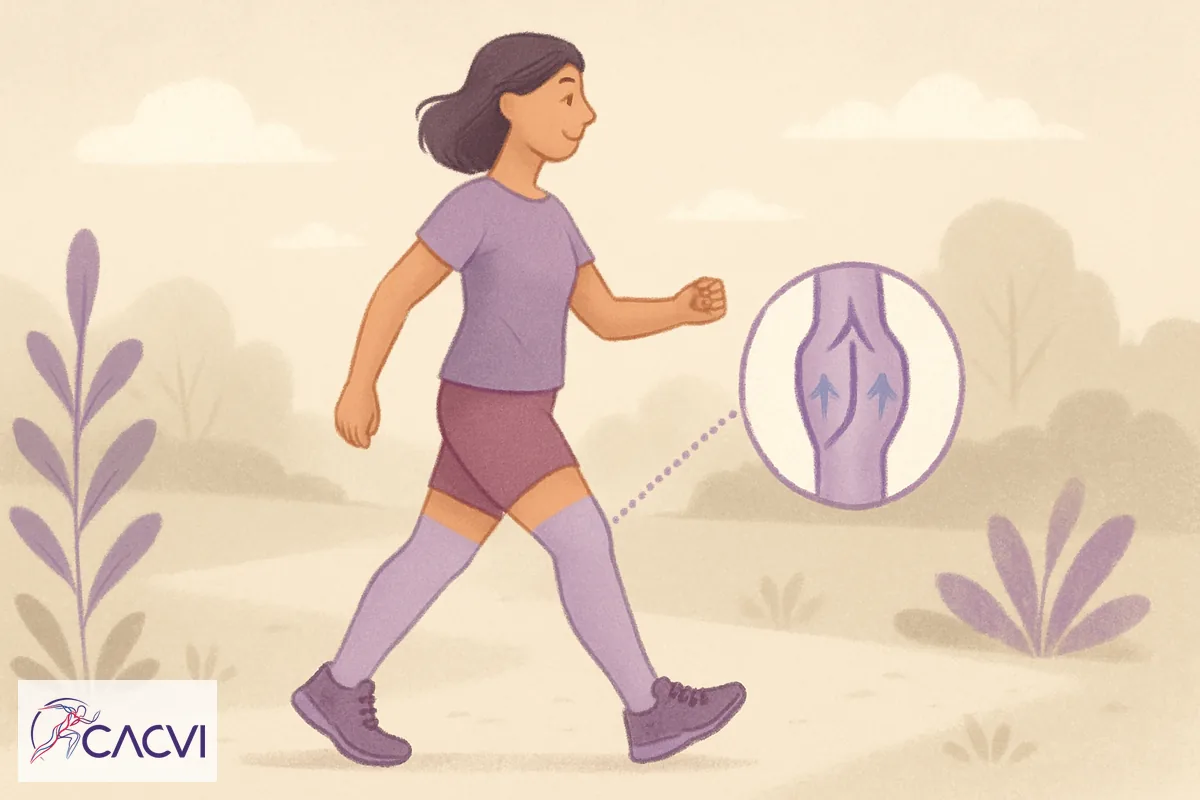
Daily routines do make a big difference whether you are undergoing treatment or not. MedlinePlus suggests raising your legs for about 15 minutes, three to four times a day, and avoiding long stretches of standing or sitting. Walking is important because calf muscles squeeze deeper veins and help move blood toward the heart. Losing extra weight also eases the strain on leg veins.
Wearing compression stockings while walking through the day gently squeezes the legs to move blood upward and limit swelling. A vein specialist can also prescribe the right level of pressure for your legs.
Look after your skin: moisturize regularly and protect any rough spots from direct sunlight. Avoid scratches and bumps on the legs because even little scrapes in already weak skin can become hard to heal. Check with your doctor before using new lotions or ointments. MedlinePlus advises people with stasis dermatitis to avoid topical antibiotics such as neomycin, drying lotions such as calamine, lanolin, and numbing products such as benzocaine.
Call a doctor promptly if you notice any of the following:
- An open sore or a crack in the skin that does not close within a couple of weeks
- Sudden swelling, pain, or warmth in one leg, which can signal a blood clot
- Redness that spreads, feels hot, or comes with a fever
- Bleeding from a varicose vein
- A new dark spot on the sole of the foot, or a spot that changes in size, shape, or color
Does Insurance Cover Hemosiderin Staining Treatment?
Coverage depends on whether the treatment is aimed at treating a health issue or improving appearance. Under Social Security Act section 1862(a)(1)(A), Medicare pays only for services that are reasonable and necessary to diagnose or treat illness or injury.
In California, Medicare coverage of vein procedures follows Noridian's Local Coverage Determination L34209, Treatment of Varicose Veins of the Lower Extremities. It requires a failed trial of at least three months of conservative therapy, such as exercise, leg elevation, weight loss, compression, and avoiding long periods without moving. The patient must also have at least one qualifying problem, including pain or burning that limits mobility, repeated superficial phlebitis, a non-healing ulcer, bleeding from a varicose vein, stasis dermatitis, or swelling that does not respond to treatment. This LCD pays for one duplex ultrasound prior to treatment and considers treatment of spider veins cosmetic.
Treatment done only to improve appearance is not covered, so laser sessions aimed solely at fading the pigment are often an out-of-pocket cost. Since each insurer has its own guidelines and policies, you should check with yours before scheduling anything.
Schedule a Vein Evaluation at CACVI
Hemosiderin staining is easier to manage when the vein problem behind it is found early. At CACVI, a vascular ultrasound shows what your veins are doing, so the plan is based on the cause and not only on how the stain looks. We have offices in Los Angeles, Tarzana, and Victorville where we see patients. Learn more about vein treatment in Los Angeles, or call the office nearest you to book a consultation.
Request a Vein Evaluation
We see patients in Los Angeles, Tarzana, and Victorville.
Request a Vein Evaluation →Frequently Asked Questions About Hemosiderin Staining Treatment
Here are answers to common questions about hemosiderin staining, what treatment can do, and how coverage works:
Can Hemosiderin Staining Be Completely Removed?▾
Not always. Treating the vein problem helps stop new stains from forming, and lasers can lighten some of what remains, but long-standing staining is often partly permanent.
Is Hemosiderin Staining Dangerous?▾
While the stain itself isn't harmful, it indicates that veins have been under high pressure for a long time. If this vein pressure is left untreated, there is a higher risk of skin thickening, infection, and ulcers.
Can Lifestyle Changes Alone Improve Staining?▾
Compression, elevation, walking, and weight loss can help reduce new staining and decrease swelling. They rarely lighten existing pigment much on their own, especially when an ultrasound shows significant reflux.
Is Treatment Covered by Insurance?▾
Vein procedures are often covered when they meet medical criteria, such as Medicare's requirement of a three-month trial of conservative therapy under LCD L34209. Using lasers solely to treat pigmentation is usually considered purely cosmetic.
How Can You Get Rid of Hemosiderin Staining Naturally?▾
There is no proven natural cure. Raising your legs, walking around, and using compression garments all help reduce pressure on veins, but they don't dissolve iron that has already settled into the skin.
What Ointment Is Good for Hemosiderin Staining?▾
There is not much evidence that any kind of ointment effectively removes hemosiderin. Ingredients like hydroquinone, retinoids, vitamin C, and kojic acid target melanin, which is another kind of pigment altogether. If someone has irritated or itchy skin from vein disease, a doctor may prescribe moisturizers or topical steroids. Researchers are also studying iron-binding drugs such as deferoxamine, injected into the skin, for staining after sclerotherapy.
What Is the Best Cream for Hemosiderin Staining?▾
Different creams don't work equally well for everybody; plain moisturizers help prevent cracked skin that's discolored. If you want to lighten that skin, you should consult a vein specialist or a dermatologist after treating the veins. Be sure to ask about any new products you put on your lower legs, as certain ingredients can irritate skin that has been treated for veins.
Medical Disclaimer: This article is for general information only and is not medical advice. Hemosiderin staining can have more than one cause, and the right treatment depends on an in-person exam and diagnostic testing. Consult a qualified physician before you start any kind of treatment for your symptoms.
Revisado médicamente por Dr. Moinakhtar Lala, M.D., FACC, FSCAI, RPVI · Last reviewed November 2026
Contacte a CACVI
If you were told you need an amputation, get a second opinion! We are board certified consultants in endovascular interventions committed to improving the quality of your life and the lives of those you love!
Thanks for contacting CACVI! We will be in touch with you shortly.