




















Respuesta rápida
Ask your cardiologist about your risk of heart disease, what your test results mean, whether you need medication or lifestyle changes, and which symptoms need emergency care. A cardiologist appointment may last between 15 minutes and an hour, depending on whether it is your first visit, the complexity of your condition, and whether additional tests are required. If you are going with an elderly parent, bring their medication list and write your questions down before the visit.
Some key questions to ask your cardiologist include: What is my risk of developing heart disease? Are my blood pressure and cholesterol levels healthy? What do my test results mean? Do I need medication or lifestyle changes to protect my heart? What symptoms should I watch out for, and when should I seek emergency care? Having these questions ready can help you make the most of your appointment, understand your heart health, and make informed decisions about your care. If you are accompanying an elderly parent, spouse, or loved one, asking questions together can also help you understand their condition and provide better support.
At CACVI, our board-certified cardiologists and interventional cardiologists care for patients with heart and vascular conditions, from routine checkups to structural heart procedures. Our team includes Dr. Mehran Khorsandi, who has more than 30 years of experience performing complex cardiovascular interventions. Contact us to schedule a visit.
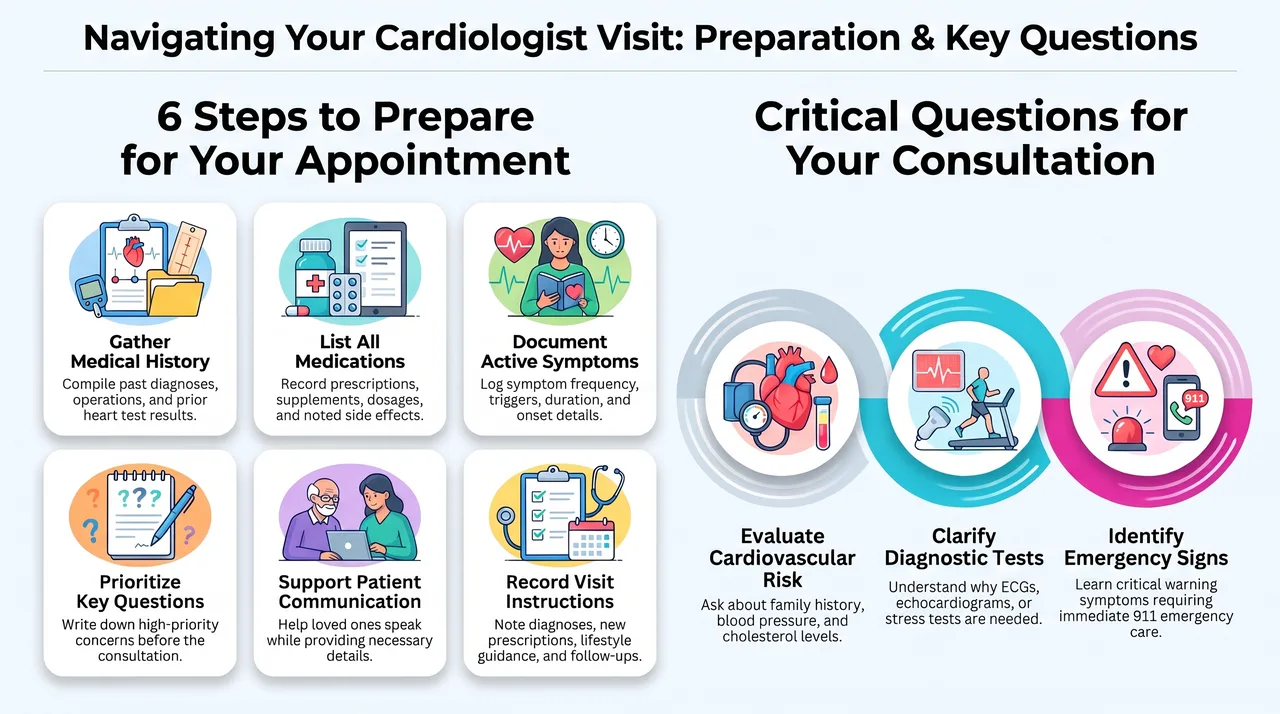
In this guide, we cover key questions to ask during a cardiology appointment, what to expect during your visit, and how to prepare when accompanying an elderly parent or loved one. We also look at how often you should see a cardiologist and what to discuss about heart conditions, treatment options, and long-term heart health.
25 Questions to Ask Your Cardiologist
A cardiology visit is where you learn how your heart is working, talk through any symptoms, and find out how to keep your heart healthy. However, concerns can slip your mind once you are in the consultation room, especially when discussing a new diagnosis or treatment plan. Preparing some questions ahead of time will help you get clear answers and make decisions for better long-term health. If you have someone else come with you to see the doctor, those same questions can also help you understand what your loved one's situation is and assist them appropriately.
Questions About Your Heart Health and Family History
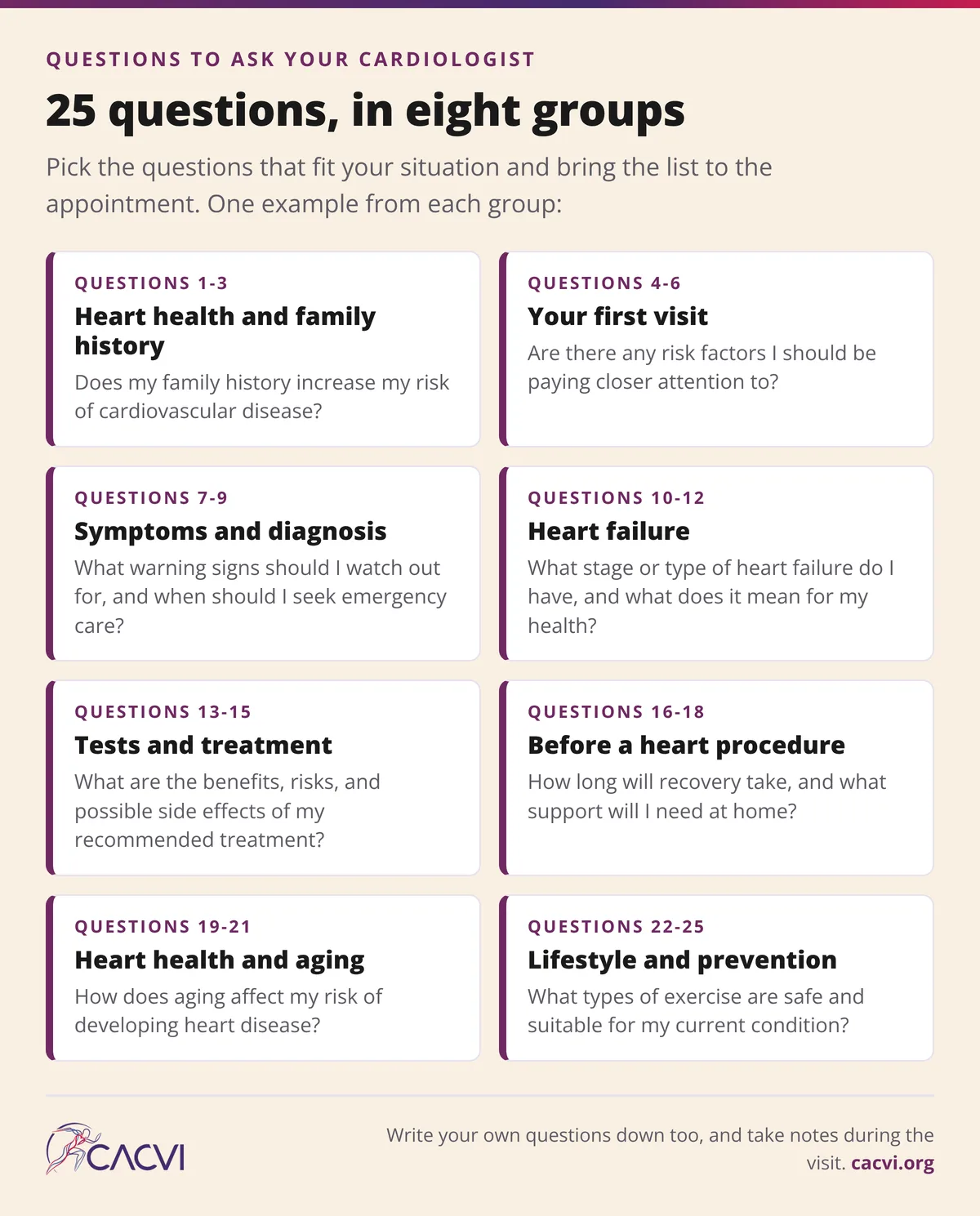
- What is my current risk of developing heart disease?
- Does my family history increase my risk of cardiovascular disease?
- Are my blood pressure, cholesterol, and blood sugar levels within a healthy range?
Questions to Ask Your Cardiologist During Your First Visit
- How healthy is my heart based on my medical history and current examination?
- Are there any risk factors I should be paying closer attention to?
- How often should I schedule follow-up appointments?
Questions About Heart Symptoms and Diagnosis
- Could my symptoms, such as chest pain, dizziness, or shortness of breath, indicate a heart problem?
- What warning signs should I watch out for, and when should I seek emergency care?
- What tests do I need to determine the cause of my symptoms?
Questions to Ask Your Cardiologist About Heart Failure
- What stage or type of heart failure do I have, and what does it mean for my health?
- What treatment options can help manage my condition and prevent it from getting worse?
- What changes should I make to my diet, exercise habits, and daily routine?
Questions About Heart Tests and Treatment Options
- What do my test results reveal about my heart health?
- Do I need additional tests, such as an ECG, echocardiogram, or stress test?
- What are the benefits, risks, and possible side effects of my recommended treatment?
Questions to Ask Before Open Heart Surgery or Other Heart Procedures
- Why do I need this procedure, and are there alternative treatment options?
- What are the potential risks and benefits of the procedure?
- How long will recovery take, and what support will I need at home?
Questions About Heart Health and Aging
- How does aging affect my risk of developing heart disease?
- Are there particular heart conditions I should be more concerned about as I get older?
- How can I maintain good heart health as I age?
Questions About Lifestyle Changes and Heart Disease Prevention
- What dietary changes would make the biggest difference to my heart health?
- What types of exercise are safe and suitable for my current condition?
- How do smoking, alcohol consumption, and stress affect my cardiovascular health?
- What lifestyle changes should I prioritize to reduce my risk of heart disease?
Questions to Ask When You Go With a Parent or Loved One
If you are there as a caregiver, a few extra questions can make the weeks after the visit easier to manage.
- What changes should we watch for at home, and which ones mean we should call your office?
- Who do we contact with questions after hours or on weekends?
- Could any new medicine interact with the ones my parent already takes, and which side effects should I look out for?
- Which activities are safe for my parent right now?
- Can we get a written summary of today's visit, or will it be posted to the patient portal?
What to Expect at a Cardiologist Appointment
Your first visit to a cardiologist is a chance to talk about your heart health, go over the symptoms you've had, and find out whether you need more testing or treatment. Getting ready before that appointment is important and especially so if you're going with someone who's older such as a parent or close friend.
The American Heart Association notes that many medical office visits last around 15 minutes, so organize your concerns and decide which questions matter most before you arrive.
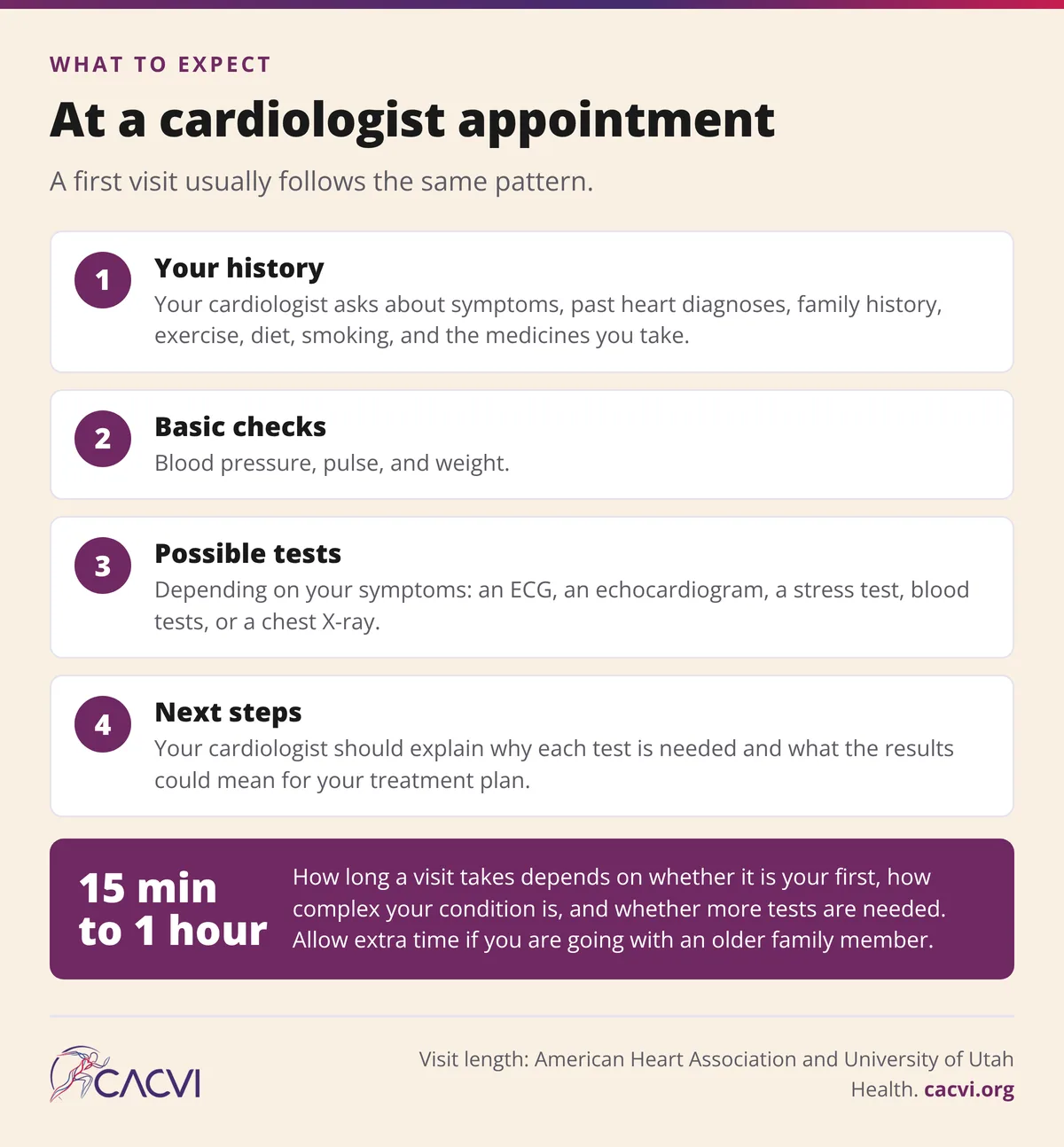
On your very first visit with your cardiologist, they will talk to you about your medical background, symptoms you have now and anything that could impact your heart health. They may ask about any previous heart diagnoses, whether anyone in your family has had heart problems, how much exercise you do regularly, what you eat, if you smoke cigarettes, and which medicines you take. During the visit, they may also do some basic checks, such as measuring your blood pressure, checking your pulse, and weighing you.
Depending on your symptoms and medical history, your cardiologist may recommend additional diagnostic tests to assess how your heart is working. These may include an electrocardiogram (ECG) to record your heart's electrical activity, an echocardiogram to create images of your heart, or a stress test to assess how it responds to physical activity. Blood tests can check cholesterol and blood sugar levels, and a chest X-ray may be recommended to examine your heart and lungs. Your cardiologist should explain why each test is necessary and what the results could mean for your treatment plan.
Before your appointment, gather relevant medical information to help your cardiologist understand your health history. Bring a list of current medications, including prescription drugs, over-the-counter medicines, vitamins, and supplements. You should also take previous medical records, recent test results, information about family history of heart disease, and notes about any symptoms you have experienced. Record when symptoms started, how frequently they occur, how long they last, and what seems to trigger or relieve them. The National Institute on Aging recommends preparing questions and bringing details about medications, medical records, and medical history to make appointments more productive.
A cardiologist appointment may last between 15 minutes and an hour, depending on whether it is your first visit, the complexity of your condition, and whether additional tests are required. An initial consultation may take longer because your cardiologist needs to review your medical history, discuss symptoms, and determine the next steps. University of Utah Health notes that cardiology appointments may last up to an hour, although the duration varies depending on the patient's needs.
If you are accompanying an elderly family member, allow extra time for check-in, completing forms, and discussing their concerns.
You can also bring a family member, spouse, or close friend to your cardiology appointment. Having someone with you can be particularly helpful if you are older, managing a chronic heart condition, or discussing a new diagnosis. Someone there can help you remember questions, take notes, and understand what the cardiologist says. This helps most when you are supporting an elderly parent who may find it difficult to remember medical instructions or explain all their symptoms. However, the patient should remain at the center of the conversation and have the opportunity to speak privately with the cardiologist if needed. The National Institute on Aging recommends bringing a trusted companion when helpful, while making sure the patient stays actively involved in their care.
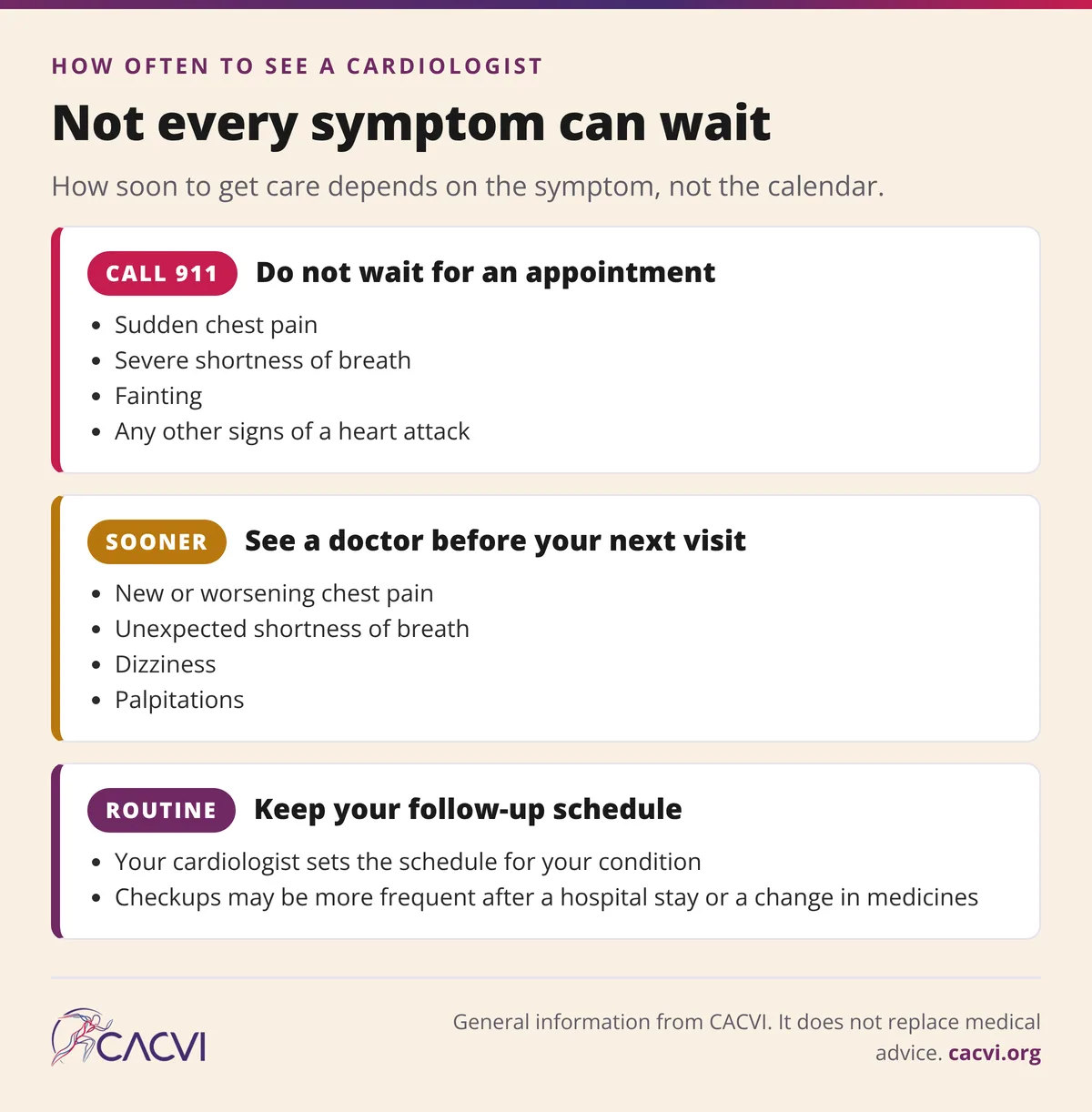
If you or someone you are supporting experiences sudden chest pain, severe shortness of breath, fainting, or other possible signs of a heart attack, do not wait for a scheduled cardiology appointment. Call 911 right away.
How to Prepare for a Cardiologist Appointment for an Elderly Parent or Loved One
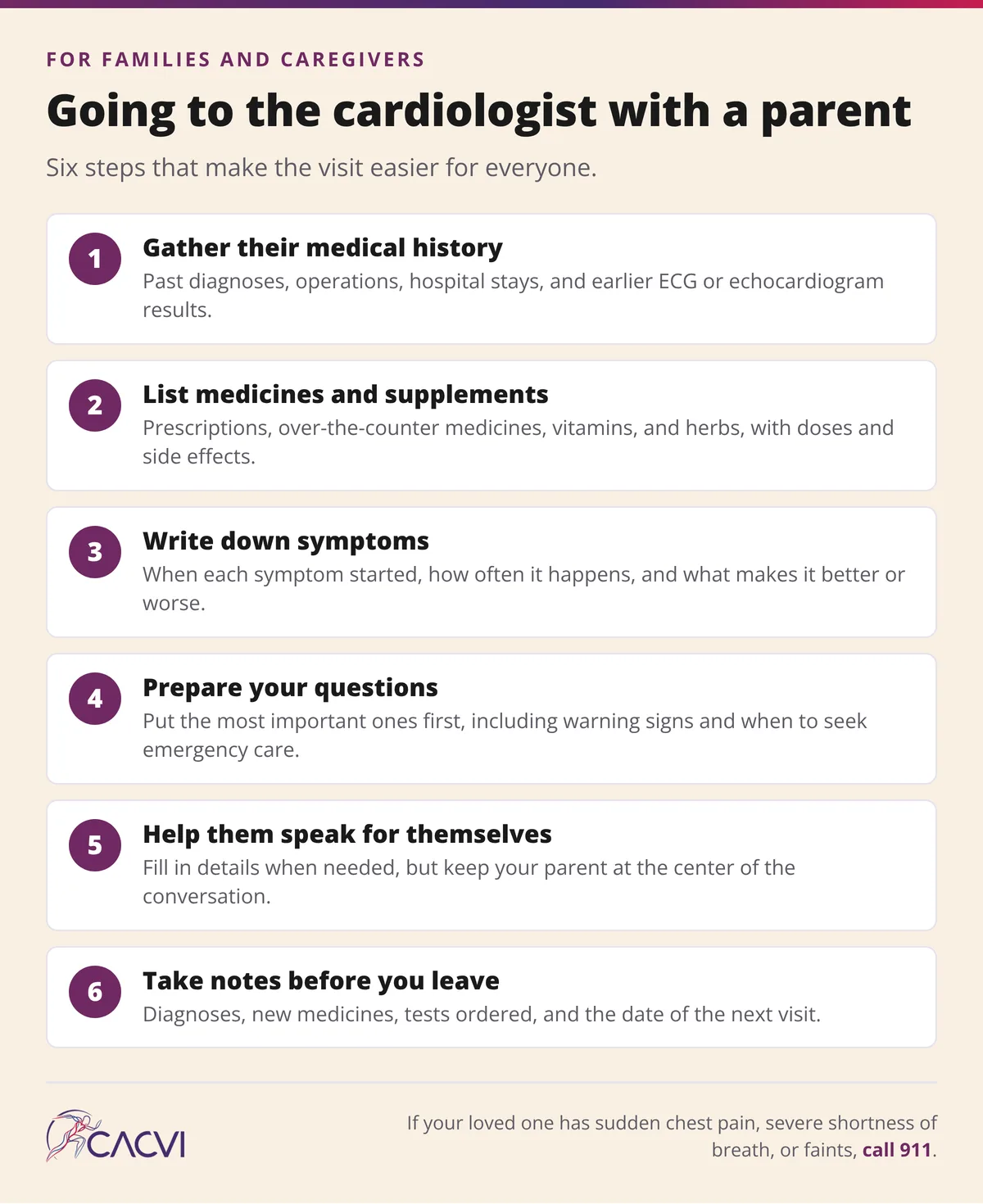
Visiting a cardiologist with an elderly relative or someone close who has heart problems or new symptoms coming up can be stressful. Some preparation beforehand can make the visit more productive and make those involved feel more comfortable getting care. Here are six ways to prepare for that visit and maximize it.
Gather Their Medical History and Previous Test Results
Collect a clear record of your loved one's medical history. Include things like past diagnoses, operations, hospital stays and any conditions such as hypertension, diabetes, heart failure or coronary artery disease. If they have had an electrocardiogram (ECG), echocardiogram, or other heart tests before, bring those results too. This will help the cardiologist understand their background health and detect changes that may need closer attention.
If you want to see your parent's records or talk with the doctor on their behalf, ask the office what permission it needs. HIPAA guidance from the U.S. Department of Health and Human Services explains that a doctor may talk with a family member who comes to the visit if the patient does not object. The office does not have to share information with you unless you are your parent's personal representative, for example through a health care power of attorney.
Prepare a List of Current Medications and Supplements
Make a note of all the medications that your loved one is taking, including prescriptions, over-the-counter medicines, vitamins, and herbs. Note the dose as well as how frequently these are taken and what side effects have been noted. Older adults often take several medications for different health conditions, so an accurate list helps the cardiologist identify possible drug interactions and decide whether any adjustments are necessary.
Document Their Symptoms and When They Occur
During the visit, your loved one may not remember exactly when symptoms began or how often they happen, so write down some notes beforehand. Include things like chest pain, difficulty breathing, dizziness, unusual tiredness or heart palpitations. When they occur, note when they started and ended and also describe their activities at that time. Also mention if anything makes the symptoms better or worse. Having these specific details will help your cardiologist decide whether more tests or treatments are needed.
Write Down Questions Before the Appointment
During a visit with a doctor, it's easy to lose track of things especially when you're talking about diagnosis and treatment plans. So write down any questions you have regarding your loved one's condition, medication, different treatment options and lifestyle adjustments. You may also want to ask about their risk of heart attack or stroke, warning signs to watch for, and when to seek emergency care. Prioritize the questions you think are most important so you can address those first.
Help Them Communicate Their Concerns to the Cardiologist
Encourage your parent or loved one to say openly how they feel and to share any concerns they have about their heart health. If they have difficulty remembering medical details or expressing themselves, help by providing additional information when appropriate. But allow them to speak freely whenever possible and also to participate more with decisions related to their care. Don't be afraid to ask the cardiologist to explain things that are confusing in simpler terms if needed.
Take Notes on Diagnoses, Treatment Instructions, and Follow-Up Appointments
Before leaving the consultation, make sure you understand the cardiologist's findings and recommended next steps. Write down things like diagnoses, new medicines that have been prescribed, suggestions about lifestyle and other tests ordered as well. Be clear on when to take the medication, whether there will be side effects and when to schedule the next visit. Writing it all down helps everyone who cares for your loved one follow the treatment plan at home.
A final reminder: If your loved one experiences sudden chest pain, severe shortness of breath, fainting, or other possible signs of a heart attack, do not wait for the scheduled appointment. Call 911 right away.
How Often Should You See a Cardiologist?
How often you should see a cardiologist depends on your age, medical history, cardiovascular risk factors, and whether you have an existing heart condition. Some people only need occasional assessments to monitor their heart health, while others may require regular appointments to manage ongoing conditions. Your cardiologist can advise you about what schedule works best for your individual situation.
- For routine cardiovascular assessments: If you do not have a diagnosed heart condition, your primary care doctor can help determine whether you need to see a cardiologist based on factors such as your blood pressure, cholesterol levels, blood sugar, family history, and lifestyle. People with several risk factors may still benefit from a specialist's assessment, even if they feel well.
- For diagnosed heart conditions: If you've got coronary artery disease, high blood pressure that's hard to bring under control, or a history of heart attacks, then regularly seeing a cardiologist is important. Monitoring your condition and assessing if your treatment is effective are key goals. Your cardiologist may change your medicine or suggest further testing when necessary.
- For heart failure and arrhythmias: People with conditions like heart failure and arrhythmia typically need ongoing monitoring. Your appointment schedule may depend on how stable your condition is, whether you have recently experienced new symptoms, and how well you respond to treatment. More frequent checkups may be needed after a hospital stay or if there is any change in medicines.
- When symptoms change: If new symptoms appear or existing ones worsen, that may indicate you should see a doctor sooner rather than later. Symptoms like chest pain, unexpected shortness of breath, dizziness and palpitations are reasons to seek medical attention sooner rather than waiting for the next scheduled visit. If you have sudden chest pain, extreme difficulty breathing, fainting or any signs of a heart attack, dial 911 right away.
Need Help Supporting Your Family's Heart Health?
Heart health matters at every stage of life. Whether you have heart disease risk factors yourself or you are caring for an elderly parent or friend with a heart or circulation problem, a professional assessment is a sensible next step.

At CACVI, our cardiologists and interventional cardiologists diagnose and treat a wide range of heart conditions, along with circulation and blood vessel problems. If you or someone in your family has concerns about chest discomfort, heart rhythm, blood pressure, circulation, or other cardiovascular symptoms, schedule a visit as a new patient or contact CACVI to talk with our team.
Talk to a CACVI Cardiologist
If you or a parent has chest discomfort, heart rhythm concerns, high blood pressure, or circulation problems, our team can evaluate the heart and blood vessels in one practice. We see patients in Los Angeles, Tarzana, and Victorville.
Contact CACVI →Frequently Asked Questions About Visiting a Cardiologist
Getting ready for an appointment with a cardiologist can help you feel more at ease talking about your heart health and understanding your treatment choices. Here are answers to common questions patients and caregivers may have before visiting a cardiologist.
What Do They Do at a Cardiologist Appointment?▾
Your cardiologist looks at your medical background, talks about any symptoms you have, measures your blood pressure and heart rate and checks out your general cardiovascular health. Depending on your needs, they may recommend tests such as an ECG, echocardiogram, stress test, or blood work to help diagnose or monitor a heart condition.
What Questions Should I Ask a Cardiologist About AFib?▾
Talk about what may be causing atrial fibrillation (AFib), how that impacts your risk of having a stroke, and which kinds of treatments work best for you. You should also discuss whether you need blood thinners, how to manage AFib symptoms, and what lifestyle changes may help control your heart rhythm.
What Questions Should I Ask a Cardiologist About Heart Failure?▾
Ask what type and stage of heart failure you have, how it may affect your daily activities, and which treatments can help manage the condition. Also discuss the warning signs that heart failure is getting worse. Also talk about diet, physical activity, possible side effects from medications and how often you should see your doctor for checkups. Our guide to heart failure life expectancy covers what affects long-term outlook.
What Questions Should I Ask Before Aortic Valve Replacement Surgery?▾
Ask why you need aortic valve replacement, whether you are eligible for a less invasive procedure such as transcatheter aortic valve replacement (TAVR), and what risks are associated with each option. Discuss how long it takes to recover from surgery, what complications may occur after surgery, how long the new valve lasts and what kind of follow-up care you would need.
What Questions Should I Ask Before Pacemaker Surgery?▾
Ask why you need a pacemaker and how it will help control your heartbeat. Ask which type of device your cardiologist recommends. You should also discuss the risks of implantation, pacemaker recovery time and restrictions, how often the device needs checking, and whether it will affect activities such as driving, exercise, or traveling.
What Questions Should I Ask a Doctor About My Elderly Parent?▾
Ask about your parent's cardiovascular risk factors, current diagnosis, medications, and whether any symptoms require further investigation. Also discuss ways of improving lifestyle, what signs to look out for, available treatment options, and how to support them at home.
What Is the Difference Between a Cardiologist and a Vascular Surgeon?▾
A cardiologist specializes in diagnosing and treating conditions affecting the heart, including heart failure, coronary artery disease, and abnormal heart rhythms. A vascular surgeon treats conditions affecting blood vessels outside the heart and brain, such as peripheral artery disease, aneurysms, and certain circulation problems. At CACVI, our interventional cardiologists are also trained in endovascular procedures, so patients can get care for both heart and blood vessel conditions in one practice.
Medical Disclaimer: The information in this article is intended for educational purposes only and should not replace professional medical advice, diagnosis, or treatment. Always consult a qualified healthcare provider about your symptoms or medical concerns, and seek emergency care for potentially life-threatening symptoms such as sudden chest pain or severe shortness of breath.
Revisado médicamente por Dr. Mehran J. Khorsandi, M.D., CCDS, FACP, FACC, FSCAI · Last reviewed November 2026
Contacte a CACVI
If you were told you need an amputation, get a second opinion! We are board certified consultants in endovascular interventions committed to improving the quality of your life and the lives of those you love!
Thanks for contacting CACVI! We will be in touch with you shortly.