




















Evaluación cardíaca
Cardiology care for Moorpark and east Ventura County
If your internist near Los Angeles Avenue flagged a borderline EKG, if your blood pressure keeps creeping up on the home cuff, or if an emergency visit at Adventist Health Simi Valley ended with “follow up with cardiology,” the closest CACVI office is in Tarzana. It sits at 18226 Ventura Boulevard, about 30 miles from Moorpark by the 23 and the 101, and its cardiologists see adults for heart rhythm problems, chest symptoms, valve and heart failure questions, blood pressure, cholesterol and artery disease in the legs, neck and abdomen.
Moorpark patients see CACVI’s cardiologists in Tarzana, so this page is written around what changes when your heart doctor is in another county. That means the drive and the train, Ventura County’s Medi-Cal plan and its ride benefit, Medicare drug costs, and the medical questions that send people from Moorpark and the surrounding Las Posas and Tierra Rejada areas to a cardiologist: a stroke work-up a neurologist couldn’t finish, cholesterol medicine that didn’t agree with you, calf pain on walks, snoring, an aneurysm screening mentioned at a Medicare visit, and the private questions people hesitate to ask.
Book from Moorpark: the Tarzana line, 818-905-5904, is answered weekdays and Saturdays, and the contact page takes online appointment requests. A heart emergency in Moorpark goes to 911, never into the car toward Tarzana.
Moorpark visit planner: the office, both highways and your coverage in one table
These are the key facts for Moorpark patients, gathered in one place with the source for each. Drive times come from Google Maps on a weekday morning and will move with traffic. Plan and phone details come straight from the agencies that run them, so check those sources again if you are reading this months from now.
| Topic | Detail | Source |
|---|---|---|
| Nearest CACVI office | CACVI – San Fernando Valley, 18226 Ventura Blvd, Suite 102, Tarzana, CA 91356; phone 818-905-5904 | CACVI contact page |
| Office hours | Mon-Fri 8:30 a.m.-5:00 p.m.; Sat 8:00 a.m.-4:30 p.m.; closed Sunday | Google business listing |
| Drive from 799 Moorpark Ave | 30.5 miles by the 23 and the 101; 37 minutes on a Monday at 9 a.m. | Google Maps, Nov. 23, 2026 |
| Car-free option | Metrolink Moorpark to Northridge (33 min), then Metro Line 240 down Reseda Blvd; 1 hr 22 min door to door | Metrolink and Google Maps transit |
| Nearest emergency departments | Adventist Health Simi Valley, 2975 Sycamore Dr (9.2 mi, 15 min by the 118); Los Robles Regional Medical Center, 215 W Janss Rd, Thousand Oaks (11.2 mi, 18 min by the 23) | Adventist Health; Los Robles; Google Maps |
| Medi-Cal in Ventura County | Gold Coast Health Plan, Member Services 1-888-301-1228 (TTY 711); out-of-network care needs pre-approval | Gold Coast Health Plan |
| Free Medicare counseling | Ventura County Area Agency on Aging HICAP; statewide line 1-800-434-0222 | VCAAA HICAP; California Dept. of Aging |
| Hospital listing CACVI physicians | Providence Cedars-Sinai Tarzana Medical Center, 18321 Clark St, Tarzana (Dr. Khorsandi, Dr. M. Lala) | Providence directory |


Heart and vascular care CACVI provides to Moorpark patients
For Moorpark patients, a heart specialist, a cardiology clinic, heart and vascular care and a cardiovascular doctor all point to roughly the same thing: someone who can work out what is wrong with the heart or the arteries and then do something about it. At CACVI that is one practice. The same physicians who read your echocardiogram in the office also perform catheter procedures in the hospital, and their training covers arteries outside the heart as well as the heart itself. Here is how that breaks down for the heart problems a Moorpark patient may bring in.
Chest pressure, breathlessness and a stress test that came back unclear
A tight chest on the walk up from the parking lot, breath that runs out sooner than it used to, or a treadmill result your primary care doctor called “equivocal” all lead to the same first conversation: is a coronary artery narrowed? According to CACVI’s Tarzana page, the office has its own EKG, echo and stress-test equipment, and a test that’s called for can often be run during the same appointment. If the answer points to a blocked artery, CACVI’s physicians are interventional cardiologists, and coronary angioplasty and stenting is part of their work. For patients who need imaging of the arteries without a catheter, a coronary CT angiogram can be ordered and reviewed through the practice.
Palpitations, a racing pulse and atrial fibrillation
Skipped beats that come and go rarely show up during a ten-second EKG. That is why the practice offers mobile cardiac telemetry, a monitor you wear at home while the rhythm is recorded and reviewed. If the recording shows atrial fibrillation, the questions turn to stroke risk and blood thinners. If years of blood thinners aren’t realistic for you, ask about the WATCHMAN left atrial appendage closure. A slow heart rate that causes dizziness may lead instead to a pacemaker, and Dr. Khorsandi holds a cardiac device certification.
Valves, murmurs and a heart that has started to tire
A murmur heard at an annual physical, ankles that swell by evening, or a night spent propped on pillows to breathe are reasons to get an echocardiogram. It shows how strongly the heart pumps and how well each valve opens and closes. A narrowed aortic valve may eventually call for transcatheter aortic valve replacement (TAVR), which both Lala physicians list among their procedures. A weak or stiff heart muscle falls under CACVI’s heart failure care, where medicines are adjusted over a series of visits.
Arteries in the legs, the neck, the kidneys and the abdomen
This is the “vascular” half of the practice’s name, and it is the part many people don’t expect a cardiologist to handle. Calf pain that stops you halfway down the block and eases when you rest can be peripheral artery disease. A whooshing sound over the neck can mean carotid artery narrowing. Both are checked with vascular ultrasound, and both can be opened with catheter procedures when medicine and walking programs aren’t enough. Dr. Moinakhtar Lala built the practice’s limb salvage and amputation prevention program, so a foot wound that won’t heal is also a reason to call.
Veins that ache, swell or bulge
Varicose veins and legs that feel heavy at the end of the day are a circulation problem too, but on the return side. The practice treats symptomatic varicose veins with procedures such as endovenous ablation, and the first step is an ultrasound of the leg veins. Ask where any vein procedure would take place when it is recommended.
What one Tarzana visit can cover
Because the trip from Moorpark takes most of a morning, it helps to know what can happen in a single appointment. The Tarzana office page describes the visit as a sit-down review of your history and medicines, then testing on site when it’s indicated, then an explanation of what was found and a plan. Your primary care doctor receives the notes and results afterward. Ask when you book whether your likely tests can be done the same day, and say so if you’re coming from Ventura County, because a second trip costs you more than it costs someone who lives on Ventura Boulevard.
Sent by a Moorpark doctor? Have the referral, your most recent EKG or test report and your medicine list ready when you call 818-905-5904. That lets the scheduler book the right length of visit.
The 118 through Simi Valley or the 23 to the 101: reaching Tarzana by car or Metrolink
Moorpark sits where two state highways meet, and that gives you a real choice on the way to Ventura Boulevard. The 23 runs south through Thousand Oaks to the 101, which then carries you east past Agoura Hills and Calabasas into the Valley. The 118 runs east through Simi Valley and over the Santa Susana Pass into Chatsworth and Porter Ranch, and from there you cross the Valley south to Tarzana. On the map the two routes look close. On a weekday morning they aren’t always.


Three starting points, one Monday rush hour
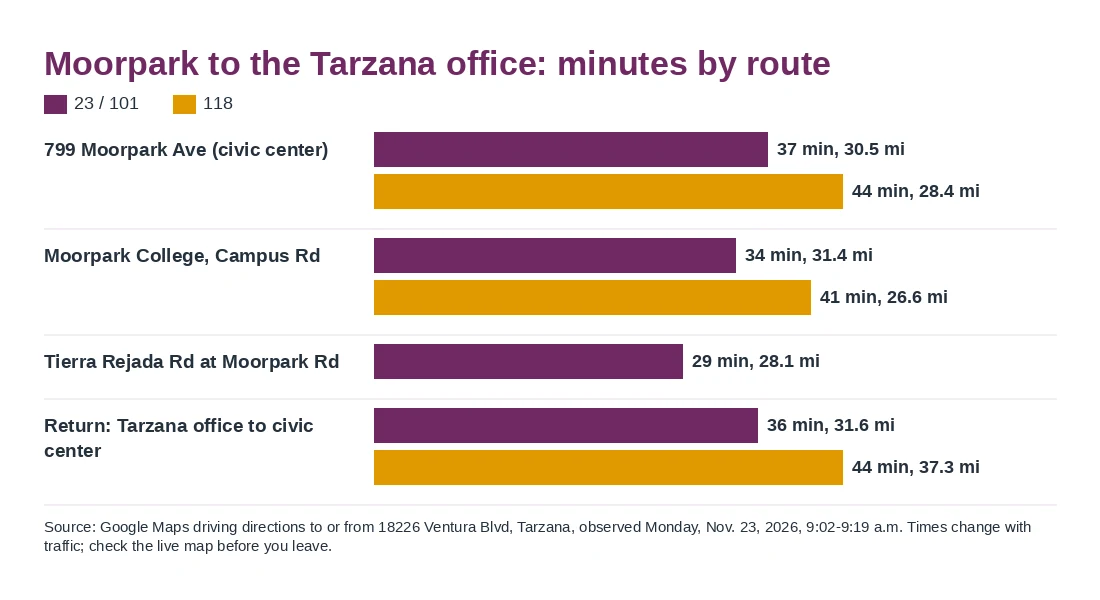
Between 9:02 and 9:19 a.m. on Monday, November 23, 2026, Google Maps gave us these trips from three corners of Moorpark. From 799 Moorpark Avenue, the city’s civic center, the 23 and the 101 took 37 to 38 minutes over 30.5 miles, while the 118 was 28.4 miles but 44 minutes. From Moorpark College on Campus Road, the 23 and 101 took 34 minutes over 31.4 miles, and the 118 was again shorter, 26.6 miles, but slower at 41 minutes. From the corner of Tierra Rejada Road and Moorpark Road, on the south side of town, the trip was 29 to 30 minutes and about 28 miles, and Google didn’t offer the 118 at all. The chart puts those numbers side by side.
When the 118 is worth a look
The 118 earns its place when you start on Moorpark’s north side, near the college or along Campus Park Drive, and when the 101 through Calabasas is backed up. It is the shorter road in miles from that end of town, and it keeps you on one freeway through Simi Valley instead of two. The catch is the climb over the pass and the cross-Valley leg at the end, which add stop-and-go time that the mileage doesn’t show.
When the 23 and the 101 make more sense
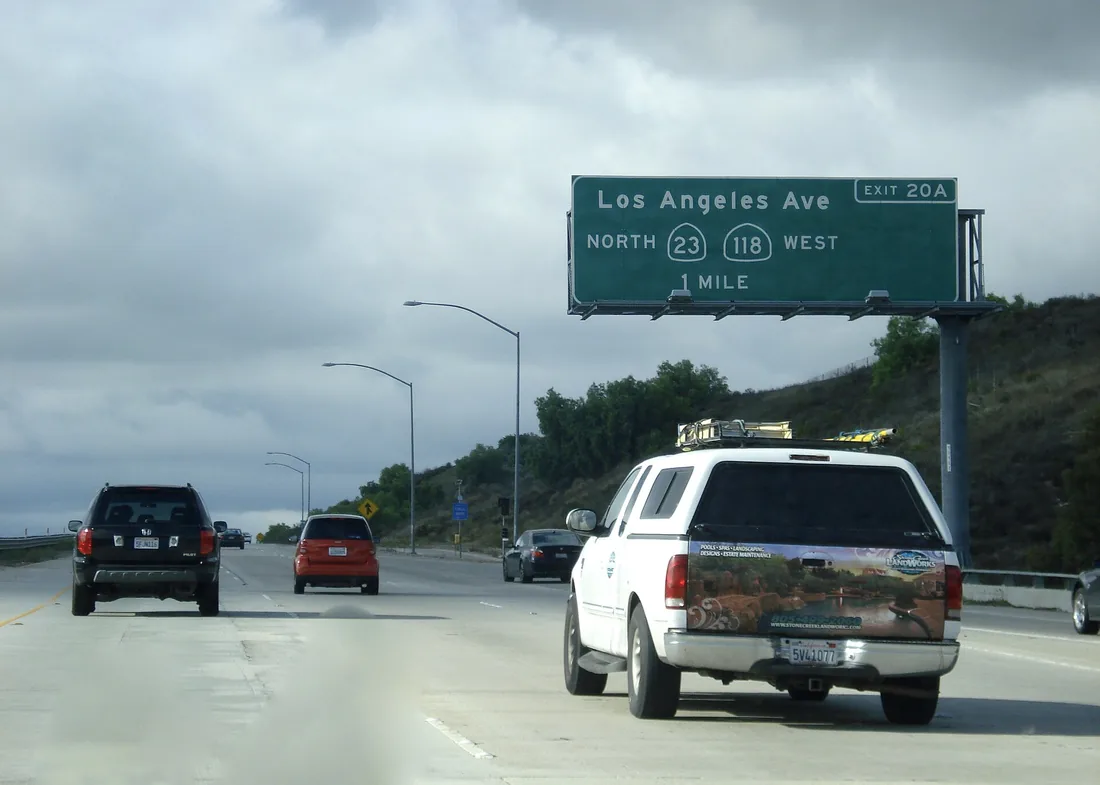
From anywhere south of Los Angeles Avenue, and especially from the Tierra Rejada and Mountain Meadows side, the 23 is the natural way out. It drops you onto the 101 in Thousand Oaks, and the office is a short distance from the Reseda Boulevard exit. Because 18226 Ventura sits on the boulevard itself, you can leave the freeway an exit early and finish on Ventura Boulevard if the 101 slows through Woodland Hills.

The trip home
The return leg is a separate calculation. In the same Monday-morning check, Tarzana back to Moorpark’s civic center was 36 minutes by the 101 and the 23, and 44 minutes by the 118 west, a pattern close to the outbound trip. An afternoon appointment that ends near 5 p.m. puts you on the westbound 101 with everyone else leaving the Valley, so if you have a choice, an appointment that lets you head home before mid-afternoon is easier on a tired driver. Check the live map before you leave the parking lot rather than relying on habit.
Choosing an appointment time around the drive
The office opens at 8:30 a.m. on weekdays and 8:00 a.m. on Saturdays, according to its Google listing. An early slot means leaving Moorpark in the heaviest eastbound traffic, so a mid-morning appointment usually gives you a more predictable drive. If the visit includes a stress test, think about the trip home too: you may be tired afterward, and a passenger seat is a better place to be than the driver’s seat on the 101. Saturday hours are the other option for people who work weekdays, and a Saturday slot keeps the drive out of the weekday commute altogether.
Metrolink from Moorpark station, then the 240 bus
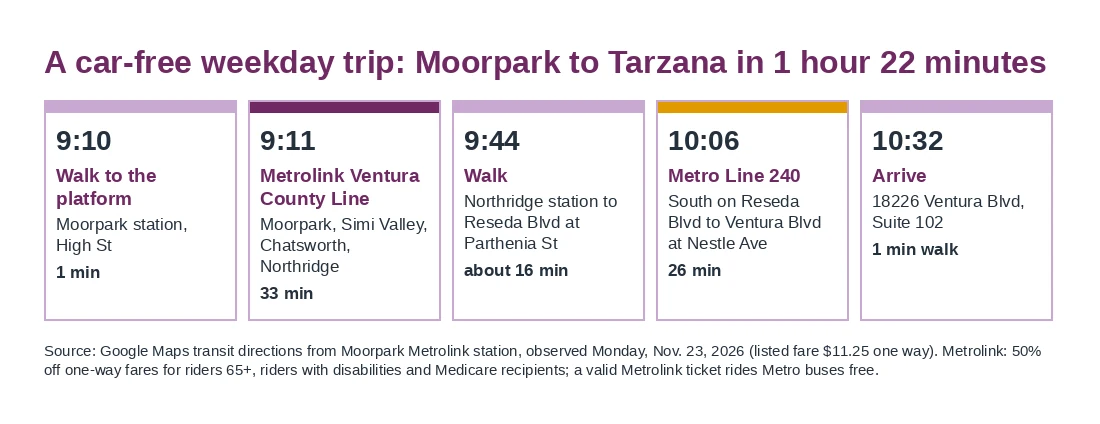
If you’d rather not drive, Moorpark is on Metrolink’s Ventura County Line. The station is downtown on High Street, and Google Maps laid out a weekday trip that leaves Moorpark at 9:11 a.m. The train reaches Northridge in 33 minutes, stopping at Simi Valley and Chatsworth on the way. From Northridge it’s about a 16-minute walk to the Metro Line 240 stop at Reseda Boulevard and Parthenia Street, and the bus then runs south down Reseda for 26 minutes to Ventura and Nestle, a one-minute walk from the office. Door to door, the trip took 1 hour and 22 minutes and was priced at $11.25 one way.
Fares, the half-price ticket and the free bus connection
Metrolink gives 50% off one-way tickets to riders 65 and over, riders with disabilities and Medicare recipients, and a Medicare card is one of the IDs it accepts as proof. Its transit connections page also says a valid Metrolink ticket works as a free fare on Metro Local and Rapid buses in Los Angeles County on the day of travel, which covers the 240. If you are 65 or older, the train fare and the bus together cost much less than the listed price.

Getting to the station, and a caution about trains after a test
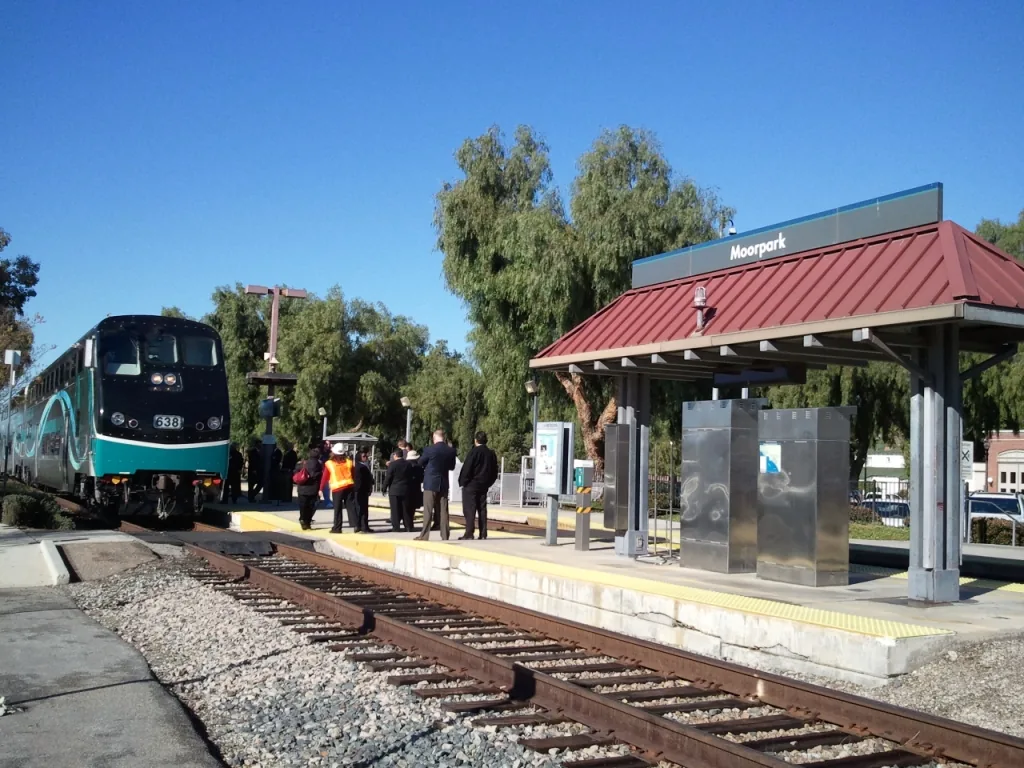
Moorpark City Transit is listed by Metrolink as the local bus service at Moorpark station, at 805-375-5473, so you may not need to park at all. The train makes sense for a consultation or a review of results. It makes less sense after a procedure or any test that involves sedation, when you’ll be asked to have someone drive you home. Ask the office when you book whether your visit falls into that group.
Where to leave the car in Tarzana
Free spaces at the building are few, according to CACVI’s contact page, and the street is the fallback. Give yourself a few minutes to find a space, and bring the parking reality into your choice of time: a late-morning arrival tends to be easier than the first slot of the day.
Want to keep it to one trip? Mention the Moorpark address when you book, so testing can be lined up for the same morning where possible. Call 818-905-5904.
Gold Coast Health Plan members: Medi-Cal cardiology from a Ventura County address
If you have Medi-Cal and live in Moorpark, your coverage almost certainly runs through Gold Coast Health Plan. Gold Coast describes itself as the only community Medi-Cal plan in Ventura County, and it is a County Organized Health System that the Ventura County Board of Supervisors created in 2011. That structure changes how you get to any cardiologist, and it matters more when the cardiologist is across the county line in Tarzana.
The referral starts with your primary care provider
Gold Coast’s member handbook says that if you need a specialist, your primary care provider or another specialist gives you a referral to one, and the doctor who refers you works with you to choose. It also describes a standing referral for people who need the same specialist over a long period, so you don’t need a new referral for each visit. Heart conditions that need regular follow-up are a good fit for that. Ask your primary care office about it when the first referral is written.
In network or out of network
This is the question to settle before you book. The handbook is direct about it: except for emergencies, urgent care outside the service area and family planning, you must get pre-approval from Gold Coast before you see an out-of-network provider, and without it you might have to pay for the care. Gold Coast may approve a referral to an out-of-network provider when the service isn’t available in its network or is very far from your home. Check Gold Coast’s online provider directory or call Member Services at 1-888-301-1228 (TTY 711), and call our office at 818-905-5904, before the appointment rather than after.
Keeping a cardiologist you already see
People sometimes join Gold Coast, or move into it from fee-for-service Medi-Cal, partway through heart care with a doctor who is outside its network. The handbook calls the answer continuity of care. You may be able to keep seeing that provider for up to 12 months if you had an ongoing relationship before enrolling, saw them for a non-emergency visit at least once in the 12 months before, and the provider agrees to Gold Coast’s contract terms and payment, meets its professional standards and is enrolled in Medi-Cal. For a serious chronic condition, the handbook allows completion of covered services for up to 12 months, and a covered procedure that the doctor recommended and documented, and that Gold Coast authorizes, can still go ahead within 180 days. You have to ask for it: call Member Services and name the doctor.
A second opinion before a procedure
If a cardiologist recommends a stent, a valve procedure or a device and you want another view, Gold Coast will pay for a second opinion from an in-network provider without pre-approval, and its staff will help you pick one. If no one in the network can give that opinion, the plan pays for an out-of-network second opinion and tells you within five business days whether your choice is approved, or within 72 hours in writing when your health is under serious and immediate threat. A denied request can be taken up as a grievance.
The 15-business-day yardstick
Gold Coast’s provider access standards, set by the state Department of Health Care Services, say routine specialty appointments should be available within 15 business days of the member’s request. If you are waiting much longer than that for a cardiology appointment through the plan, Member Services is the place to raise it.
A free ride to the appointment
Gold Coast covers rides to Medi-Cal-covered medical appointments at no cost. Members who can travel in a regular car, taxi or bus use nonmedical transportation; members who need a wheelchair van or similar vehicle use nonemergency medical transportation, which needs written approval from a provider first. Both are booked with Ventura Transit System at 1-855-628-7433, Monday to Friday 7 a.m. to 5 p.m., at least two business days before the visit. Gold Coast also says it can provide a one-month bus pass, and that if a friend or family member drives you because VTS couldn’t, it will pay mileage for the trip.
Medi-Cal and Medicare together
If you have both, Gold Coast now offers a Medi-Medi plan called Total Care Advantage (HMO D-SNP) that combines the two. Gold Coast’s home page says dual-eligible members can switch into it at any time rather than waiting for the fall enrollment period. An HMO has its own network and referral rules, so the in-network question above applies just as much.
If the plan says no
A denial, delay or change to a requested service arrives as a Notice of Action letter. The handbook gives you 60 days from the date on that letter to ask Gold Coast for an appeal, by phone, by mail or online, and your doctor can file it for you with your written permission. Gold Coast acknowledges the appeal within five days and decides within 30. When waiting that long could put your life, health or ability to function in danger, you or your doctor can ask for an expedited review, which is decided within 72 hours. If the appeal doesn’t go your way, or no decision arrives within 30 days, the next step is a State Hearing with the California Department of Social Services at 1-800-743-8525, and there is no charge for it. For a cardiology referral, it helps to ask the referring doctor to put the reason in writing, such as an abnormal stress test or a valve finding, so the reason for the request is in the record the plan reviews.
Heart prescriptions go through Medi-Cal Rx
One detail catches people out after a cardiology visit. Outpatient prescriptions for Gold Coast members aren’t run through Gold Coast itself; the handbook says they are covered through Medi-Cal Rx, the state’s fee-for-service pharmacy program. If a pharmacy says a new heart medicine needs approval, or bills you for it, the number to call is Medi-Cal Rx at 1-800-977-2273, not the health plan. Ask the cardiologist’s office to send any approval request the pharmacy asks for, so you aren’t left without a blood thinner or a heart failure drug while paperwork moves.
Interpreters and after-hours advice
Gold Coast’s Member Services works in English and Spanish and says interpreter services in other languages are available at no cost. When the office is closed, the plan’s 24/7 Nurse Advice Line is 1-805-437-5001 or 1-877-431-1700. A nurse line is the right call for a question about a new swollen ankle at 9 p.m. Chest pain skips the nurse line and goes straight to 911.
Heart prescriptions under Medicare: negotiated prices and the yearly out-of-pocket cap
A cardiology visit often ends with a new prescription, and for Moorpark patients on Medicare the rules on what that prescription costs have changed in ways worth knowing. Two federal changes matter most for heart patients: Medicare now has negotiated prices for several common heart and diabetes drugs, and Part D has a ceiling on what you pay out of pocket in a year.
Five heart prescriptions with Medicare-negotiated prices
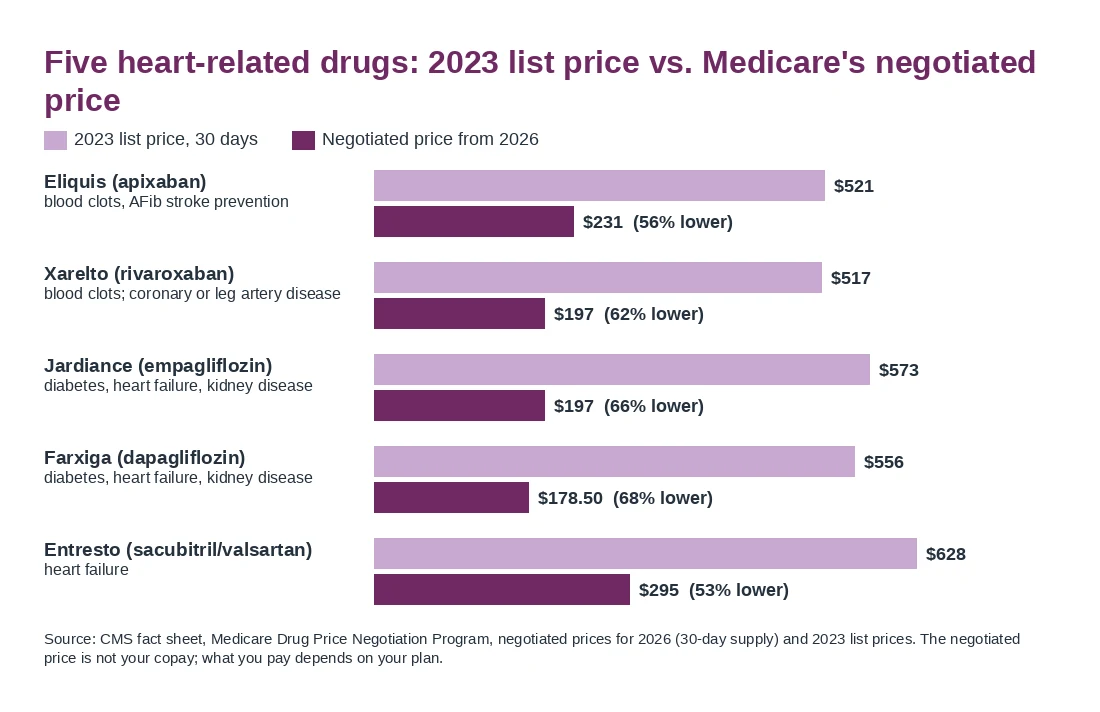
Under the Medicare Drug Price Negotiation Program, prices that CMS negotiated with drug makers took effect in 2026 for the first ten selected drugs. Five of them are prescribed for heart, vessel or heart-related kidney conditions. According to the CMS fact sheet, the negotiated price for a 30-day supply is $231 for Eliquis (apixaban), $197 for Xarelto (rivaroxaban), $197 for Jardiance (empagliflozin), $178.50 for Farxiga (dapagliflozin) and $295 for Entresto (sacubitril/valsartan). Their 2023 list prices were $521, $517, $573, $556 and $628. The chart shows the gap.
What the negotiated price means at the pharmacy counter
The negotiated price is the price Medicare drug plans work from for that drug. It is not your copay. What you pay still depends on your plan’s deductible, its copays or coinsurance and where the drug sits on its formulary. CMS estimated that people with Medicare drug coverage would save about $1.5 billion in out-of-pocket costs in 2026 from these prices, but the effect on any one person’s bill varies. If you take one of these five drugs, compare your pharmacy receipts from early 2026 against 2025, or ask the pharmacy to show you the plan’s price.
The yearly ceiling on Part D costs
Medicare.gov explains that once your out-of-pocket spending on covered Part D drugs reaches $2,100 in 2026 ($2,400 in 2027), you move into catastrophic coverage and pay nothing more for covered drugs for the rest of the calendar year. No Part D plan may have a deductible above $615 in 2026. For someone on a blood thinner, a heart failure drug and a diabetes drug at the same time, the cap is often the number that matters most.
Extra Help for people with limited income
Medicare’s Extra Help program pays part of Part D premiums, deductibles and copays for people with limited income and resources. Medicare.gov says you get it automatically if you have full Medi-Cal coverage, get help from the state paying your Part B premium through a Medicare Savings Program, or receive Supplemental Security Income; others can apply. For a Moorpark household paying for a brand-name blood thinner every month, it is worth checking.
Spreading the cost across the year
Hitting the cap in January can mean a large pharmacy bill in a single month. The Medicare Prescription Payment Plan lets you pay your out-of-pocket drug costs in monthly installments across the calendar year instead. Medicare is clear that this doesn’t lower what you owe; it only changes when you pay it. Your plan runs the enrollment, so the call goes to the number on your plan card.
Free, unbiased plan comparisons in Ventura County
Medicare’s open enrollment period runs from October 15 to December 7 each year, with changes taking effect January 1. That is the window to check whether your current Part D or Medicare Advantage plan still covers your heart medicines on a reasonable tier. In Ventura County, the Area Agency on Aging runs HICAP, the Health Insurance Counseling and Advocacy Program, which gives free, one-on-one counseling on Medicare Parts A through D and can compare plans for you. The statewide HICAP line, 1-800-434-0222, routes to the local office. Bring your medicine list, with doses, to that appointment.
Questions to bring to the cardiologist about cost
Doctors don’t always know what a drug costs on your plan, so tell them if a prescription is hard to afford. Ask whether a generic in the same class would do the job, whether a 90-day supply is cheaper on your plan, and whether two drugs could be replaced by one. For blood thinners in particular, never stop or skip doses because of cost without talking to the prescriber first; ask for an alternative instead.
After a stroke or a mini-stroke: the heart questions the neurologist passes on
A stroke or a transient ischemic attack, the brief “mini-stroke” whose symptoms fade within minutes or hours, usually starts with a 911 call and an emergency department in Simi Valley or Thousand Oaks. The neurology work-up happens there. What often comes next is a referral to cardiology, because a good share of strokes start as a clot or a blockage that a heart or artery test can explain. If you have been discharged with a note that says “cryptogenic stroke” or “embolic stroke of undetermined source,” this section is about you.
What “cryptogenic” means on a discharge summary
Cryptogenic means the first round of testing didn’t find the cause. It isn’t a diagnosis so much as an unanswered question, and the answer can change which kind of blood-thinning medicine you go home on. The American Academy of Neurology’s 2020 practice advisory on patent foramen ovale stresses that a thorough search for other causes should come before any decision about closing a hole in the heart, which is why the cardiology part of the work-up matters.
The echocardiogram, with or without bubbles
The heart ultrasound looks for a clot inside a heart chamber, a weak area of heart muscle where a clot could form, or a valve problem. A variation called a bubble study adds a little agitated saline into an arm vein; if tiny bubbles cross from the right side of the heart to the left, there is an opening between them. A transesophageal echo, where the probe goes down the throat under sedation, gives a closer view when the standard test leaves questions. The AAN advisory notes that a patent foramen ovale shows up in roughly a quarter of adults on these tests, so finding one doesn’t prove it caused the stroke.
Long-term rhythm monitoring, because AFib hides
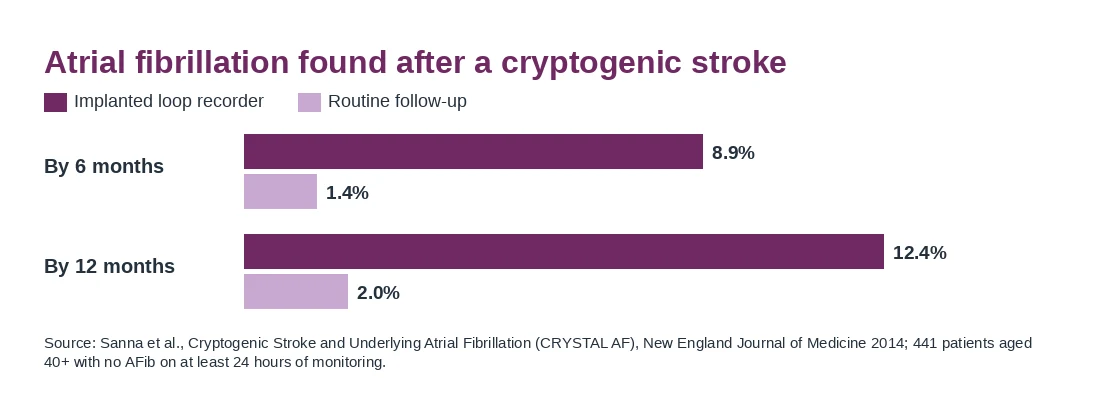
Atrial fibrillation that comes and goes can be missed by a hospital monitor. The CRYSTAL AF trial, published in the New England Journal of Medicine, randomized 441 patients aged 40 and over with cryptogenic stroke and no AFib on at least 24 hours of monitoring. An implanted loop recorder found atrial fibrillation in 8.9% of patients by six months and 12.4% by a year, against 1.4% and 2.0% with routine follow-up. The chart shows the gap. Weeks of wearable monitoring, such as the mobile cardiac telemetry CACVI offers, or a small implanted recorder are the tools; which one fits depends on how long the search needs to run.
Patent foramen ovale and whether to close it
For patients younger than 60 with a PFO, a stroke that looks embolic and no other cause found, the AAN advisory says closure may be recommended after a discussion of benefits and risks. It gives the numbers for that discussion: an absolute reduction in recurrent stroke of 3.4% over five years, a procedure complication rate of 3.9%, and a small added rate of atrial fibrillation afterward, 0.33% a year. When another, higher-risk cause has been found, the advisory says closure shouldn’t be routinely recommended. Dr. Vasim Lala’s biography lists PFO closure among his procedures, so the conversation can happen in Tarzana; your neurologist should be part of it.
The neck arteries
Narrowing of the carotid arteries in the neck is another source of stroke, and the hospital work-up usually includes imaging of them. If that report mentions plaque or a percentage of narrowing, bring it. CACVI’s carotid artery page explains the condition and the ways it is followed or treated.
Questions worth asking at the cardiology visit
Go in with a short list. Was anything found on the echo, and do I need a bubble study or a transesophageal echo as well? How long should my heart rhythm be watched, and with which kind of monitor? If a PFO was found, do I fit the group the neurology guidance describes, younger than 60 with no other cause? Which blood-thinning medicine am I on now, and what would change it? Who is coordinating between the neurologist and the cardiologist, so results from one reach the other? Writing the answers down matters, because stroke follow-up often stretches over several months and two or three specialists.
Bringing the stroke file to the first cardiology visit
Ask the hospital for the discharge summary, the brain imaging report, the echocardiogram report and any rhythm strips or telemetry summary, and bring the list of medicines you left the hospital on. If a monitor was already started, note when it goes back or when its report is due. Gold Coast members need the referral in place before the visit, as described in the plan section above. If new stroke symptoms appear at any point, such as a drooping face, a weak arm or slurred speech, that is a 911 call and not a reason to move the appointment forward.
When statins don’t agree with you: other ways to bring LDL down
“I tried a statin and my legs ached, so I stopped” is one of the most common things a cardiologist hears. It is a real problem, because LDL cholesterol that stays high keeps building plaque whether or not the pill was pleasant to take. The good news is that there are more ways around it than there were even five years ago.
What counts as statin intolerance
The National Lipid Association’s 2022 statement defines statin intolerance as side effects that improve or go away when the dose is reduced or the statin is stopped. It can be complete, meaning no dose of any statin is tolerated, or partial, meaning you can’t take the dose needed to reach your goal. To call someone statin intolerant, the statement says at least two statins should have been tried, including one at the lowest approved daily dose. One bad month on one drug doesn’t meet that bar.
Symptoms that also showed up on placebo
Two British trials, StatinWISE and SAMSON, gave people who had stopped statins because of side effects alternating periods of a statin and an identical-looking placebo, without telling them which was which. A review in the Harvard Data Science Review describes the result: symptoms on the statin and on the placebo were remarkably similar, and up to half of the participants went on to restart a statin after taking part. The NLA statement names this “nocebo” effect too. None of this means your aches weren’t real. It means the cause isn’t always the drug, and a careful re-trial is worth considering.
A different statin, a lower dose or fewer doses a week
The NLA statement recommends trying several strategies before giving up on statins: a different statin, a different dose or a different dosing frequency. In practice that can mean a low dose of a different statin, or a dose taken a few days a week instead of daily. For people at high or very high risk, the statement says a non-statin medicine can be started while those attempts continue, so the LDL doesn’t stay high for months during the trial and error.
Non-statin medicines with outcome data
When a statin can’t do the whole job, the NLA favors medicines whose randomized trials showed fewer cardiovascular events, not just a lower LDL number. Ezetimibe and the PCSK9 inhibitors are the familiar ones, and the American Diabetes Association’s 2026 standards name both as add-ons when LDL goals aren’t met. Bempedoic acid was tested in the CLEAR Outcomes trial in nearly 14,000 statin-intolerant patients. Over a median of about 40 months it lowered LDL by about 21 percentage points more than placebo, and major cardiovascular events fell from 13.3% to 11.7%. Gout and gallstones were somewhat more common on the drug, which is part of the conversation about whether it fits you.
Muscle symptoms that shouldn’t wait
Ordinary aches are one thing; a rare, serious muscle reaction is another. The prescribing information for atorvastatin (Lipitor) tells patients to report unexplained muscle pain, tenderness or weakness promptly, particularly when it comes with feeling generally unwell or with a fever, because statins carry a small risk of myopathy and rhabdomyolysis, a breakdown of muscle that can strain the kidneys. The label also describes a rare autoimmune muscle condition linked to statins. If weakness is new and real, rather than an ache after yard work, call the prescriber the same day instead of waiting for your next cardiology appointment.
Bringing your history to the visit
The most useful thing you can bring is a simple record: which statins you took, at what dose, for how long, what you felt and how quickly it went away after stopping. Add your most recent lipid panel. With that, the cardiologist can tell whether you’ve had a fair trial and which next step makes sense, rather than starting from scratch.
Sex, erection problems and heart medicines: the questions people don’t ask
This is one of the most common worries after a heart diagnosis and one of the least discussed in the exam room. People want to know whether sex is safe after a heart attack or a stent, whether their new medicines are causing problems, and whether an erection pill is off limits. The American Heart Association has a patient guide on exactly this, and a multispecialty consensus known as Princeton III gives cardiologists a framework for it. Both are frank, and both say the conversation belongs in a cardiology visit.
Is sex safe once heart disease is stable?
The AHA’s guide says it is probably safe to have sex once heart disease has stabilized, and that heart attacks and angina rarely happen during sexual activity, partly because it usually lasts a short time. Unstable angina or severe symptoms are different; the guide says those need to be assessed, treated and stabilized first. It also says that after a heart attack or heart failure, cardiac rehabilitation and regular physical activity can lower the risk of complications during sex.
After a heart attack or with stable angina
Princeton III doesn’t treat everyone with heart disease the same way. It moved people with mild, stable angina and people whose heart attack was more than six to eight weeks ago into an intermediate-risk group, a step up from the low-risk label earlier versions gave them. In practice that means a cardiology evaluation, often including an exercise test, before erection medicine is prescribed or before the all-clear is given. The AHA guide also points out that the research on sexual activity in some heart conditions, particularly in women and older adults, is thinner than it should be, which is one more reason to ask about your own situation rather than rely on general rules.
A rough yardstick for exertion
Princeton III compares the physical demand of sexual activity to walking a mile on level ground in 20 minutes, or briskly climbing two flights of stairs in about 10 seconds, and to roughly four minutes of the standard Bruce treadmill test. If you can manage that kind of effort without chest pain, unusual breathlessness or dizziness, that is useful information to share. If you can’t, or if you aren’t sure, a stress test can answer the question, and the consensus uses exercise ability and stress testing for exactly that purpose before erection medicines are prescribed.
Erection problems as an early heart warning
Princeton III treats erectile dysfunction as more than a quality-of-life issue. It notes that ED often occurs alongside coronary disease that hasn’t caused symptoms yet, with a window of two to five years between the start of ED and a coronary event, and that ED also predicts peripheral artery disease and stroke. For that reason the consensus says sexual function should be part of the first cardiovascular evaluation for all men, whether or not they already have heart disease. A man in his 40s or 50s with new erection trouble and no known heart problem is a reasonable candidate for a risk check: blood pressure, cholesterol, blood sugar and a conversation about whether further testing makes sense.
The one combination that is never safe
The AHA guide says erection medicines are generally safe for people with heart disease, with one firm exception: they shouldn’t be used by anyone taking nitrates for chest pain, such as nitroglycerin. It adds that a nitrate shouldn’t be given within 24 to 48 hours after an erection drug, depending on which one was taken. That matters in an emergency. If you have taken one and develop chest pain, tell the paramedics and the emergency team which drug you took and when, so they don’t give a nitrate.
When a heart medicine seems to be the problem
Some people stop a blood pressure pill or a beta-blocker on their own because they blame it for a lower sex drive or erection problems. The AHA guide is direct: don’t skip medicines that help your heart because of this worry. Raise it instead. The cause may be the medicine, the heart disease itself, depression or anxiety, or something else, and there are often alternatives within the same drug class. For postmenopausal women with heart disease, the guide notes that estrogen applied in the vagina can help with painful intercourse.
How to bring it up
If saying it out loud is the hard part, write it on the list of questions you hand the cardiologist, or ask the clinician to bring it up first. Women thinking about birth control or pregnancy with a heart condition should also raise it, as the AHA guide recommends. None of this needs a separate appointment; it fits into the same visit as the blood pressure check.
Calf pain on the walk: the supervised exercise program Medicare covers
Cramping in the calf, thigh or buttock that comes on with walking and fades within about ten minutes of rest has a name: claudication. The 2024 guideline on lower extremity peripheral artery disease, written by the American College of Cardiology, the American Heart Association and nine other societies, defines it that way and counts it as a sign of chronic symptomatic peripheral artery disease. Many people assume the fix is a stent. The guideline’s first-line answer is a structured walking program, and Medicare pays for the supervised version.
What the guideline recommends first
For people with symptomatic peripheral artery disease, the guideline gives its strongest class of recommendation, backed by its highest level of evidence, to supervised exercise therapy to improve walking distance, daily function and quality of life. It gives the same strength to a structured community-based program that uses behavior-change techniques, the kind you do at home or in your neighborhood with guidance. It also recommends supervised exercise after a leg artery procedure, so a stent isn’t the end of the walking plan.
How a supervised program runs
The guideline describes sessions of 30 to 45 minutes of training within a 60-minute visit, at least three times a week for at least 12 weeks. You walk on a treadmill until the leg pain reaches a moderate level, rest until it settles, then walk again, and the work increases as your walking improves. A stationary bike can stand in when a treadmill isn’t suitable. Programs often run inside a cardiac rehabilitation unit, with exercise physiologists or nurses trained in exercise supervising.
Medicare’s rules for a supervised walking program
CMS decided in 2017 to cover supervised exercise therapy for people with claudication from peripheral artery disease. Its decision memo allows up to 36 sessions over 12 weeks, in a hospital outpatient department or a physician’s office, with sessions of 30 to 60 minutes. The program must be delivered by staff trained in exercise therapy for peripheral artery disease, under the direct supervision of a physician, physician assistant or nurse practitioner. A referral follows a face-to-face visit with the physician who is treating your leg symptoms.
Making the program fit a Moorpark schedule
Three sessions a week for three months is a real commitment, so location matters more than for a one-time test. A program in Simi Valley or Thousand Oaks will usually be easier to keep up with than one in the Valley. Ask the cardiologist for the referral paperwork and the diagnosis details the program will need, then compare what’s covered on your plan before you start. If daily travel isn’t realistic, the community-based option the guideline also recommends is a fair alternative, and you can say so at the visit.
Walking at home between sessions
The guideline explains that walking to the point of mild or moderate pain, then resting, is what drives the improvement in walking performance. The same pattern works on a neighborhood loop: walk until the pain is moderate, stop, let it ease, and go again. Time your first stop on each outing and jot it down. That number, tracked over weeks, is the clearest sign of whether the program is working and the most useful thing to bring to your follow-up visit.
When walking isn’t enough
The guideline bases procedure decisions on how severe your symptoms are, how much they limit daily life, how you’ve responded to medicines and structured exercise, and the likely short- and long-term benefit balanced against the risks. Pain at rest, a wound that won’t heal or a cold, discolored foot is a different and more urgent condition, and it should be seen promptly rather than walked off.
Snoring, sleep apnea and a heart rhythm that won’t settle
A spouse’s complaint about snoring can be a cardiology clue. Obstructive sleep apnea, where the airway closes repeatedly during sleep, drops oxygen levels, spikes blood pressure and fragments sleep. The American Heart Association’s 2021 scientific statement on sleep apnea and heart disease calls it underrecognized and undertreated in cardiovascular practice, even though it is common in exactly the people cardiologists see.
How often the two show up together
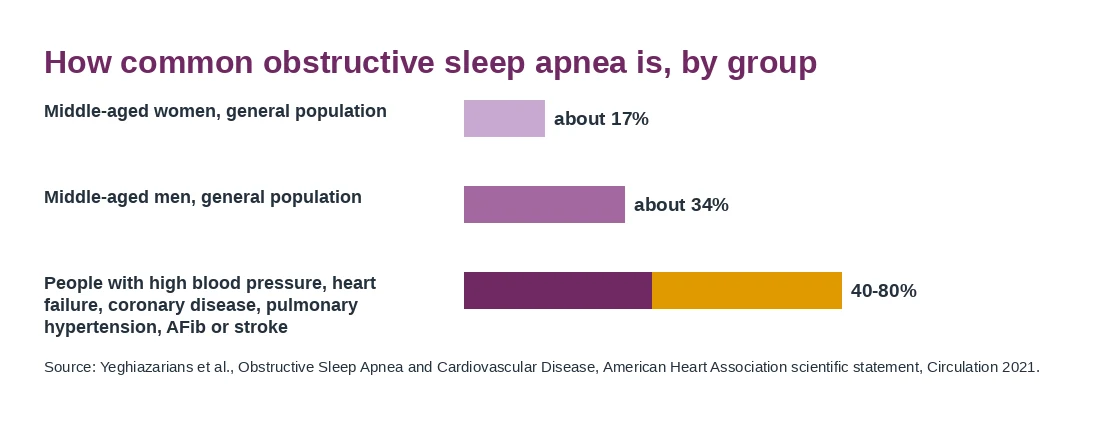
The AHA statement says about 34% of middle-aged men and 17% of middle-aged women meet the criteria for obstructive sleep apnea. Among patients already diagnosed with hypertension, heart failure, coronary disease, pulmonary hypertension, AFib or a stroke, it climbs to somewhere from 40% to 80%. If you are being seen for one of those, there is a fair chance sleep apnea is part of the picture.
Heart patients the statement singles out
Three groups get a firm screening recommendation in the AHA document: blood pressure that stays high despite treatment, pulmonary hypertension, and atrial fibrillation that returns after a cardioversion or ablation. It calls a formal sleep assessment reasonable for heart failure patients with symptoms who are suspected of disordered breathing or are very sleepy in the daytime. Nighttime events are another clue in the statement: angina, a heart attack, an arrhythmia or a defibrillator shock that strikes during sleep raises the odds that apnea is involved.
Clues to mention at the visit
Tell the cardiologist if a bed partner has noticed loud snoring, pauses in breathing or gasping, if you wake with headaches or a dry mouth, or if you fall asleep easily when sitting still during the day. Morning readings that run high despite your pills are worth reporting too. These aren’t a diagnosis, but they decide whether a sleep study is worth ordering.
Treatment options and coverage
Per the AHA authors, nobody with diagnosed apnea should be left untreated by default; losing weight and changing habits are part of the menu when they fit. For severe cases the statement says a CPAP machine should be offered; for milder ones, or for people who can’t get on with CPAP, a mouthpiece-style oral appliance is an option. On the Medicare side, a diagnosis opens the door to a 12-week CPAP trial under Part B, and coverage carries on past those weeks only if an in-person visit documents that you meet Medicare’s conditions and the machine is helping.
Checking that treatment is working
The statement recommends follow-up sleep testing to confirm treatment is effective. From the heart side, the things to watch are your home blood pressure readings, how often palpitations or AFib episodes happen, and how rested you feel. If your rhythm or pressure improves after CPAP, that is worth telling the cardiologist, because it can change how the heart medicines are adjusted.
Abdominal aortic aneurysm screening: the one-time ultrasound many older men qualify for
The aorta is the main artery leaving the heart, and in the abdomen it can slowly widen and weaken without any symptoms. The U.S. Preventive Services Task Force defines an abdominal aortic aneurysm as an aorta 3.0 cm across or wider, and says most cause no symptoms until they rupture, when the risk of death is as high as 81%. Screening exists to find them before that.
Who the Task Force recommends for screening
The USPSTF’s 2019 recommendation is specific. A single ultrasound is recommended for any man from 65 to 75 with a smoking history, however long ago. Men in the same age range who have never smoked can be offered screening selectively, based on their own situation. For a woman with no smoking history and no affected relatives, the advice is to skip it. Women of 65 to 75 with a smoking history or an affected relative fall into a gray zone: the Task Force says the evidence doesn’t settle it either way.
The once-in-a-lifetime Medicare benefit
Medicare Part B covers a one-time abdominal aortic aneurysm screening ultrasound for people at risk, and you need a referral from your provider. Two things put you in Medicare’s at-risk group: a relative who had an abdominal aortic aneurysm, or being a man aged 65 to 75 with at least 100 cigarettes smoked over your life. There’s no charge to you when the provider takes Medicare assignment. Because it is a once-in-a-lifetime benefit, it is worth making sure it actually happens rather than sitting on a list of reminders.
Quit years ago? You may still qualify
Both definitions look backward over a lifetime. The Task Force’s group is men who have “ever smoked,” and Medicare’s line is at least 100 cigarettes in your lifetime. A man of 68 who smoked through his twenties and stopped decades ago still meets both. People often leave that history off intake forms because they think of themselves as non-smokers, so mention it at the visit if it applies.
The scan itself
Screening is an ultrasound of the abdomen that measures the width of the aorta, so it uses sound waves rather than X-rays or dye. Follow whatever preparation instructions come with the appointment. CACVI’s vascular ultrasound page covers the practice’s imaging of the arteries.
If the scan finds a widened aorta
A finding isn’t automatically a reason for surgery. The USPSTF review weighed the benefits and harms of treating small aneurysms, 3.0 to 5.4 cm across, found through screening, so size and growth over time shape what happens next. That plan is made with a physician who treats the aorta. CACVI’s aortic aneurysm page describes the condition, and endovascular aneurysm repair is listed among the practice’s procedures.
Family members
A family history of abdominal aortic aneurysm is one of Medicare’s at-risk criteria, so a diagnosis in a father or brother is worth passing on. Relatives who qualify can raise it with their own doctor at their next Medicare visit.
The three physicians a Moorpark patient may see in Tarzana
CACVI’s Tarzana page names three cardiologists. Every one of them does catheter work, so the useful difference for a patient is where each one’s experience runs deepest. The summaries below are drawn from their CACVI biographies.
Dr. Mehran J. Khorsandi: devices, branch-point blockages and the Tarzana cath lab
Pacemaker and defibrillator questions line up with Dr. Khorsandi’s record: device certification is one of the five credentials CACVI lists for him, the others covering internal medicine, general and interventional cardiology, and endovascular medicine. Coronary narrowings that sit where an artery splits in two are his research territory; the biography credits him with 50 patents and a co-founded stent company built around that problem. After medical school in Philadelphia at Penn, all of his postgraduate training happened at Cedars-Sinai, which has kept him on its attending staff since 1993. In Tarzana he runs the cath lab at the Providence Cedars-Sinai hospital, according to CACVI, and his interests also take in high-risk angioplasty, leg arteries and veins.
Dr. Moinakhtar Lala: legs at risk and reading the images
For a foot wound, leg pain at rest or a surgeon’s mention of amputation, Dr. M. Lala is the name to ask for. Saving limbs is the program he built at CACVI from 2016 on. He is also certified to interpret echocardiograms, nuclear heart scans and vascular ultrasound, so the echo and ultrasound studies done in the office are squarely within his certifications. On the coronary side he lists complex and total-occlusion cases done through the wrist, and he performs TAVR. A medical graduate of Saurashtra University in Gujarat, India, he later held the chief resident post in internal medicine at SUNY Downstate before his New York fellowships.
Dr. Vasim Lala: catheter valve work and cardiology over the long haul
Dr. V. Lala holds a DO degree and finished his subspecialty years at Mount Sinai in Manhattan before coming to Tarzana in mid-2022. Two parts of his biography stand out for Moorpark patients. One is valve and septal work through a catheter, which on his list means aortic valve replacement, closing a patent foramen ovale and left atrial appendage closure. The other is the everyday cardiology he manages over years, including high blood pressure, atrial fibrillation, heart failure, cardiomyopathy and heart care during cancer treatment, which suits someone looking for a long-term cardiologist rather than a single procedure. He also writes and edits medical education material and has published research.
Where a procedure would be done
CACVI’s ¿Por qué procedimientos en consultorio? page talks about an OBL (office-based lab) and an ASC (ambulatory surgical center) as its settings, with discharge the same day, but it doesn’t name an address. Providence’s physician directory also lists Dr. Khorsandi and Dr. M. Lala at the Clark Street hospital in Tarzana. Before saying yes to a procedure, get the facility’s name in writing and check it against your plan’s network; Gold Coast and HMO members have the most to lose if that step is skipped.
What Moorpark patients ask, answered
These answers are for patients in Moorpark and east Ventura County. Each answer adds a detail the sections above don’t cover.
Which CACVI office is closest to Moorpark?
The nearest is Tarzana; the other two are on Alden Drive near Cedars-Sinai in Los Angeles (310-652-2744) and on Hesperia Road in Victorville (760-706-7115). On the same Monday-morning check used on this page, the Los Angeles office was 45.3 miles and 1 hour 6 minutes from Moorpark’s civic center, against 37 minutes to Tarzana, so Tarzana is the practical choice for most Moorpark patients.
Does my insurance want a referral before cardiology?
Your insurer sets that rule, not CACVI. Phone the plan before booking and get two answers on record: is a referral required for cardiology, and is the Tarzana office in network? The Tarzana office page says staff verify coverage and gather records before your first visit, so tell the scheduler which plan and medical group you have when you call 818-905-5904.
My child needs a heart check. Is CACVI the right place?
The CACVI physicians’ biographies describe adult training in internal medicine and cardiology, so a child with a murmur or a fainting spell should start with a pediatrician’s referral to a pediatric cardiologist. For Gold Coast Health Plan members under 21, the plan’s member handbook describes California Children’s Services, a state program for certain long-term health conditions, as one route to specialty care.
Is CACVI a heart surgery practice?
No. The doctors here are interventional cardiologists, which means stents, TAVR, the WATCHMAN device and leg artery repairs are done by threading thin tubes from a needle-sized entry point. Bypass grafting and other operations that open the chest belong to cardiothoracic surgeons. Perfusionists run the heart-lung machine during those open-heart operations and aren’t booked directly by patients.
Who can do an EKG for me without a trip to the Valley?
The tracing is part of a Tarzana cardiology visit, and a lot of primary care offices run one during an ordinary appointment, so your own doctor may be the fastest route. Bear in mind that a resting EKG records only a few seconds of rhythm. If the chest pain, faintness or racing heart is happening right now, skip the EKG hunt and dial 911.
I have an arrhythmia. Do I need an electrophysiologist instead?
Not always. CACVI’s physicians evaluate palpitations and atrial fibrillation, fit rhythm monitors, implant pacemakers and defibrillators and perform WATCHMAN procedures. Their biographies don’t list catheter ablation of heart rhythm, which is an electrophysiologist’s procedure, so if ablation becomes the question, the cardiologist can refer you on.
Does CACVI look after heart failure?
Yes. See the heart failure page for the practice’s approach; among the three physicians, Dr. Vasim Lala’s biography is the one that names heart failure and cardiomyopathy as ongoing conditions he looks after. For some patients whose symptoms continue despite medicines, CACVI’s site also describes Barostim therapy, an implanted device that works on the nerves controlling blood pressure.
Is there cardiac rehab near Moorpark, and does Medicare pay for it?
Medicare’s rehab benefit (exercise sessions plus teaching and counseling) opens after any of these: a heart attack within the past year, bypass, stable angina, a valve repair or replacement, angioplasty or a stent, a heart or heart-lung transplant, or stable chronic heart failure. Expect 20% coinsurance after the Part B deductible, plus a hospital copay if the program is hospital-run. Ask the cardiologist for a referral to a program close to home in Ventura County, since you’ll go several times a week.
How do I get my records from Adventist Health Simi Valley or Los Robles to CACVI?
Request a release from the hospital’s health information department naming CACVI as the recipient: fax 310-967-2140 or info@cacvi.org. Useful items are the discharge summary, EKG tracings, the echo report and any cath report. Scans are different; pick up a disc of the actual images and carry it to the appointment yourself.
What does the new-patient page ask me to have with me?
Plan on getting there a quarter of an hour ahead with the printed registration form filled in. Pack the insurance card, any outside records or scans, and the bottles (or a full list) of prescriptions, herbal remedies, vitamins and supplements. Payment is by cash or a major credit card, and knowing your copay in advance speeds up check-in.
Is Dr. Khorsandi at the Tarzana office?
Yes. Providence’s physician directory lists Dr. Mehran Khorsandi at 18226 Ventura Blvd, Suite 102, in Tarzana as well as at 8741 Alden Dr in Los Angeles. Asking for him by name at booking is fine.
Is the Tarzana office open on weekends?
Saturdays, yes: Google lists 8:00 a.m. to 4:30 p.m., and Sunday is closed. Weekend slots may not cover every test, so check with the scheduler whether a first visit can go on a Saturday.
What if heart symptoms start while I’m at home in Moorpark?
Call 911 and let the ambulance crew take it from there. The closest emergency departments are Adventist Health Simi Valley, 2975 Sycamore Dr, (805) 955-6000, and Los Robles Regional Medical Center, 215 W Janss Rd in Thousand Oaks, (805) 497-2727, but paramedics decide where to take you. The American Heart Association’s heart attack warning signs are worth reading before you ever need them.
Is a preventive cardiology visit worth it if I feel fine?
It can be, if something specific is raising your risk: a parent with early heart disease, a high LDL, diabetes, or a borderline result on a routine test. Dr. Vasim Lala’s biography lists preventive cardiology among his interests. Bring your lipid panel, your blood pressure readings and your family history, so the visit ends with a decision rather than a general talk.
Reviews Google users left for the Tarzana, Los Angeles and Victorville offices
The cards below pull Google reviews from all three CACVI offices, so a review may describe a visit in Los Angeles rather than Tarzana. The office is named on each card.
Other CACVI cardiology pages around Moorpark
CACVI has pages for the communities on either side of Moorpark’s two highways. Each one is written for its own city, so pick the one closest to where you live or work.
- Simi Valley: the next city east along the 118, between Moorpark and the Santa Susana Pass.
- Thousand Oaks: the first city south on the 23, where it meets the 101.
- Somis: the farming community west of Moorpark along the 118.
- Camarillo: southwest of Moorpark, past Somis.
- Ventura County: CACVI’s page for the county as a whole.
Moorpark page sources: agencies, plans and guidelines
Every figure and rule on this page comes from one of these sources. Drive and transit times are single observations and will vary.
| Source | Publisher | Used for |
|---|---|---|
| CACVI: Contact Us | CACVI | Office addresses, phones, fax, email, parking. |
| CACVI: New Patients | CACVI | What to bring, arrival time, payment methods. |
| CACVI San Fernando Valley listing | Tarzana office hours. | |
| Moorpark to Tarzana directions | Google Maps, observed Nov. 23, 2026 | Drive times, distances and the Metrolink plus bus itinerary. |
| Moorpark station | Metrolink | Ventura County Line station; Moorpark City Transit contact. |
| Everyday discounts | Metrolink | 50% off for riders 65+, riders with disabilities and Medicare recipients. |
| Transit connections | Metrolink | Free rides on Metro buses with a valid Metrolink ticket. |
| About Gold Coast Health Plan | Gold Coast Health Plan | County Organized Health System created in 2011; Member Services hours. |
| Member Handbook (2026) | Gold Coast Health Plan | Referrals, standing referrals, out-of-network pre-approval, nurse line, California Children’s Services. |
| Transportation Benefits | Gold Coast Health Plan | NEMT and NMT rides through Ventura Transit System. |
| Access and Availability Standards | Gold Coast Health Plan | 15-business-day standard for routine specialty appointments. |
| Negotiated Prices for 2026 | Centers for Medicare & Medicaid Services | Negotiated and list prices for Eliquis, Xarelto, Jardiance, Farxiga and Entresto. |
| Catastrophic coverage | Medicare.gov | Part D out-of-pocket cap and deductible limit. |
| Medicare Prescription Payment Plan | Medicare.gov | Monthly payment option for drug costs. |
| Joining a plan | Medicare.gov | Open enrollment dates. |
| Health Insurance Counseling (HICAP) | Ventura County Area Agency on Aging | Free Medicare counseling in Ventura County. |
| NLA scientific statement on statin intolerance | Journal of Clinical Lipidology, 2022 | Definition of statin intolerance and re-trial strategies. |
| Personalized (N-of-1) trials for statin intolerance | Harvard Data Science Review | StatinWISE and SAMSON findings. |
| Bempedoic acid and cardiovascular outcomes in statin-intolerant patients | New England Journal of Medicine, 2023 | CLEAR Outcomes results. |
| Cardiovascular Disease and Risk Management: Standards of Care in Diabetes 2026 | American Diabetes Association (Diabetes Care) | Blood pressure and LDL goals, SGLT2 and GLP-1 recommendations, natriuretic peptide and ABI screening. |
| Lipitor prescribing information | DailyMed (National Library of Medicine) | Muscle symptoms to report promptly on a statin. |
| Obstructive sleep apnea and cardiovascular disease | American Heart Association (Circulation), 2021 | Prevalence, screening groups and treatment. |
| Practice advisory update: patent foramen ovale and secondary stroke prevention | American Academy of Neurology (Neurology), 2020 | Work-up before PFO closure; PFO prevalence; closure benefit and risk figures. |
| Cryptogenic stroke and underlying atrial fibrillation (CRYSTAL AF) | New England Journal of Medicine, 2014 | AFib detection with an implanted monitor after cryptogenic stroke. |
| Sexual activity and heart disease | American Heart Association | Safety once stable, nitrate warning, medicines and sexual function. |
| Princeton III Consensus on erectile dysfunction and cardiovascular disease | Mayo Clinic Proceedings, 2012 | ED as an early marker of heart disease; exertion equivalents. |
| CPAP devices | Medicare.gov | 12-week CPAP trial coverage. |
| Screening for abdominal aortic aneurysm | US Preventive Services Task Force (JAMA), 2019 | Who should be screened. |
| Abdominal aortic aneurysm screenings | Medicare.gov | One-time screening coverage and eligibility. |
| 2024 Guideline for the Management of Lower Extremity Peripheral Artery Disease | ACC / AHA and partner societies (Circulation) | Claudication definition, supervised and community-based exercise recommendations. |
| Supervised exercise therapy for symptomatic PAD, decision memo | CMS | Medicare coverage of up to 36 sessions over 12 weeks. |
| Help with drug costs (Extra Help) | Medicare.gov | Who gets Extra Help automatically. |
| Cardiac rehabilitation | Medicare.gov | Qualifying conditions and costs. |
| Dr. Moinakhtar Lala | Providence physician directory | Practice locations, including Tarzana. |
Book a Tarzana visit from Moorpark
The San Fernando Valley office books at 818-905-5904, and an online form sits on the contact page. Mention that you live in Moorpark, name your insurance plan and medical group, and mention any surgery date, recent hospital stay or test result that prompted the visit. If a Gold Coast referral or pre-approval is involved, have the referral details on hand. Anything that should be in your chart before you arrive can be faxed or emailed using the details in the records answer above.
¿Listo para hablar?