




















Evaluación cardíaca
Cardiologists near Oxnard: a heart team you can drive to
If calf discomfort keeps cutting a walk short, that’s worth a real look. Same if a foot wound isn’t healing, or a limb suddenly feels cooler than it should. Around Oxnard, people often fold all of that into one phrase, “poor circulation.” The trouble is, those problems don’t always share a cause, and they don’t always share an urgency. CACVI provides cardiology and vascular evaluation for Oxnard patients. What you’ll find below is about lower-extremity peripheral artery disease, or PAD, and about telling a stable walking complaint from a threatened limb.
The published CACVI locations don’t include an Oxnard clinic. The Tarzana office is 18226 Ventura Blvd, Suite 102, Tarzana, CA 91356, reached at 818-905-5904. Contact CACVI about a non-emergency circulation evaluation before you plan an out-of-county trip. No drive time, same-day study, or office-specific physician assignment is promised.
Sudden, severe limb symptoms or acute chest pain require emergency care, not a routine appointment request. The 2024 ACC/AHA PAD guidance distinguishes acute limb ischemia from chronic disease. The chest-pain guideline addresses urgent cardiac symptoms. Call 911 for an emergency.
Why an Oxnard cardiology search still leads some people to Tarzana
| Published distinction | Why it affects the patient question | Source |
|---|---|---|
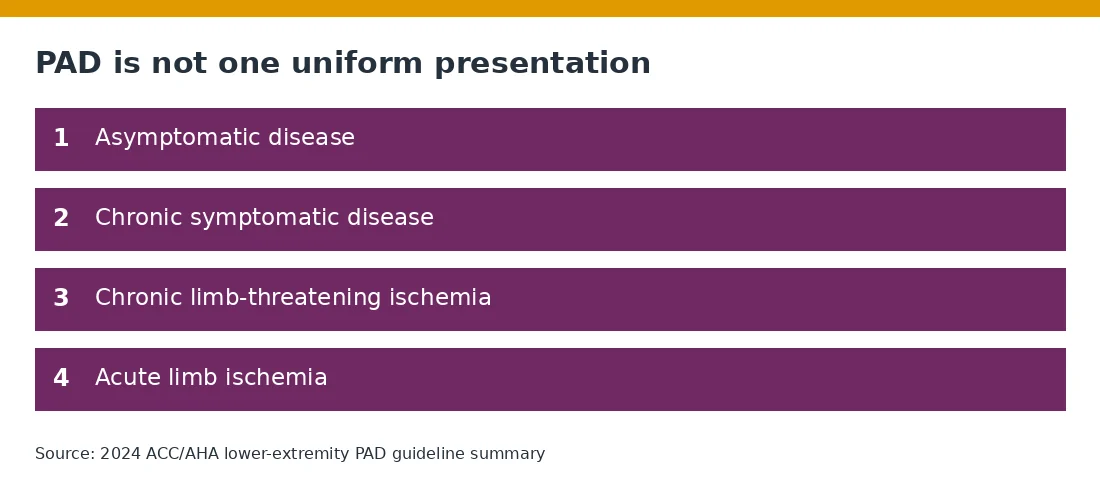
| Asymptomatic PAD | Arterial disease can be present without a typical walking complaint. | 2024 PAD summary |
| Chronic symptomatic PAD | Function-limiting symptoms need assessment and ongoing treatment. | 2024 PAD summary |
| Chronic limb-threatening ischemia | Rest pain or tissue loss can require limb-preservation evaluation. | 2024 PAD summary |
| Acute limb ischemia | A sudden perfusion problem belongs on an emergency pathway. | 2024 PAD summary |
| Diabetes, kidney disease and tobacco exposure | These are PAD risk amplifiers, not proof of a diagnosis. | 2024 PAD summary |
| St. John’s Regional Medical Center | Oxnard acute-care facility at 1600 N Rose Ave, CA 93030. | Hospital cardiac service |
Walking limitations and the first arterial assessment
Describe what stops the walk
Tell the clinician where the discomfort occurs, and what happens when you rest. Say whether it comes back at a similar level of activity, whether it’s new, and whether the problem also shows up at rest. A search for foot pain in Oxnard doesn’t establish PAD. Joint, nerve, and other causes remain possible.
El Centro de 2024 guideline summary recommends a focused history and examination when PAD is suspected. Explain the effect on ordinary tasks rather than assigning a vascular diagnosis yourself. For an Oxnard patient considering travel to Tarzana, that lets the consultation address the actual limitation, rather than a generic request for “a circulation test.”
An ankle-brachial index addresses a specific question
The guideline recommends a resting ankle-brachial index, or ABI, when history or examination findings suggest PAD. It compares pressures as part of an arterial assessment. The result has to be interpreted with the clinical situation. It isn’t a standalone forecast of walking ability.
CACVI’s PAD condition page provides practice-level context. This service-area page doesn’t claim that every patient receives ABI testing, or that an examination will be performed on the same day as an inquiry.
Diabetes changes the information a clinician needs
The guideline identifies diabetes as a risk amplifier. Bring an existing diabetes diagnosis, and the relevant treatment information, into the discussion. That’s clinically useful. It doesn’t invent an Oxnard prevalence estimate, and it doesn’t assume that every resident has diabetes.
A wound, a change in sensation, and a walking complaint should each be described, even if you believe they share one cause. A risk factor raises concern. It doesn’t identify the mechanism of every foot symptom. This page doesn’t replace a foot examination, and it doesn’t offer wound treatment based on a photograph.
Record functional change in ordinary language
You can supply useful detail without buying equipment, and without trying to provoke pain:
- Where the discomfort begins.
- Whether one leg is involved, or both.
- What activity brings it on.
- What happens after you stop.
- Whether symptoms occur at rest.
- The location and appearance of any existing wound.
- Whether the pattern has changed.
- Prior arterial tests or procedures.
These prompts organize the guideline’s history and examination concepts. They aren’t instructions to perform an unsupervised exercise challenge. Arrange a circulation consultation for a persistent non-emergency limitation, and use urgent care pathways for an abrupt, concerning change.
Limb preservation is a different question from improving a stable walk
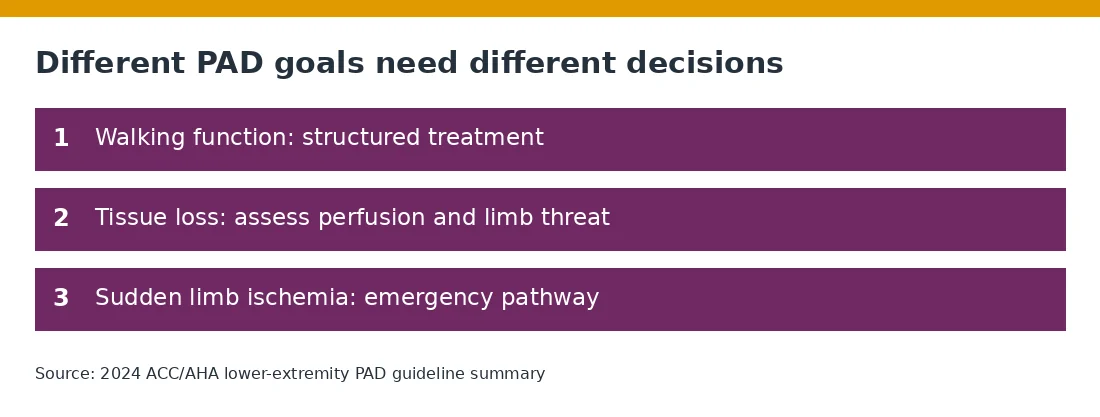
Tissue loss needs more than a pain label
A nonhealing wound or gangrene can be part of chronic limb-threatening ischemia when it’s attributable to arterial disease. The guideline recommends additional perfusion assessment in suspected cases, which can include toe pressure or a toe-brachial index, and other measures. That clinical pathway differs from assuming all discomfort is a muscle strain.
Keep the wound’s history, and any prior treatment record, available. Don’t infer from an online description that a wound is venous, diabetic, or arterial without an examination. CACVI’s arterial leg-ulcer information addresses that particular condition, not every possible cause of a wound.
Structured exercise applies to selected stable disease
The guideline recommends supervised exercise therapy, or a structured community-based program, for chronic symptomatic PAD. That isn’t the same as telling every patient with a painful foot to walk farther. The condition, safety, and functional goals need assessment first.
If daily activities in Oxnard are shrinking, ask which treatment goal applies: symptom relief, walking function, wound healing, or another issue. Those goals shape the discussion. Don’t use general exercise advice as a stand-in for evaluating rest pain or tissue loss.
Revascularization has an indication, not a universal timetable
For function-limiting claudication that hasn’t responded adequately to guideline-directed management, revascularization can improve walking function and quality of life. The guideline separately recommends revascularization in chronic limb-threatening ischemia to preserve a functional limb and reduce tissue loss.
Those are different clinical situations. The same source advises against performing revascularization solely to prevent progression in asymptomatic PAD. This page makes no promise about a procedure, a wound-healing date, or an amputation-prevention result. A treatment decision requires anatomy, clinical findings, risks, and patient goals.
A documented physician program does not predict an outcome
Dr. Moinakhtar Lala, M.D. has a CACVI biography documenting his interventional cardiology background and peripheral arterial and venous disease care, and the practice’s Limb Salvage and Amputation Prevention Program. That background supports talking through the issue here. The program’s name isn’t a promise that every limb can be preserved.
We don’t claim that he attends Tarzana on a specified schedule. We also don’t invent a number of limbs saved, procedures completed, or percentage of wounds healed. The medical problem, and the published physician background, are sufficient reasons to discuss an evaluation without unsourced promotional results.
Oxnard emergency resources and the out-of-county care boundary
Use a local acute-care resource when the situation is urgent
St. John’s Regional Medical Center publishes a 24/7 cardiac emergency service and a STEMI receiving-center role. It’s a separate Oxnard hospital, not a CACVI branch. The emergency crew, not this page, picks where you go. We don’t assert that this is the closest ER from every Ventura County address. Hospital cardiac information.
A hospital image identifies the local facility. It isn’t an endorsement of a particular transport route, and it isn’t evidence of insurance coverage. Acute symptoms shouldn’t become a trip to Tarzana merely because that’s the outpatient office listed here.


GO ACCESS has a defined service area
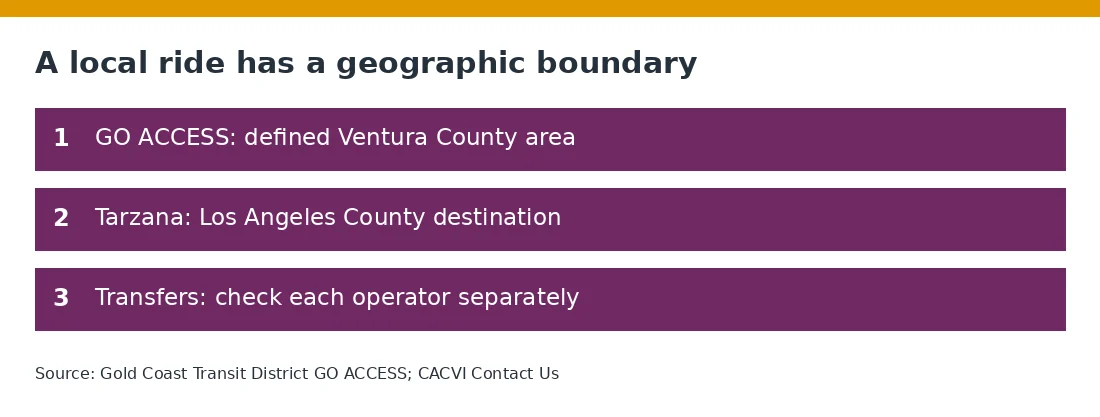
Gold Coast Transit District’s GO ACCESS information describes service in Oxnard, Ventura, Port Hueneme, Ojai, and intervening unincorporated Ventura County areas. It serves eligible ADA-certified riders and seniors age 65 and over. Eligibility there still doesn’t get you a promised ride all the way to Tarzana in Los Angeles County.
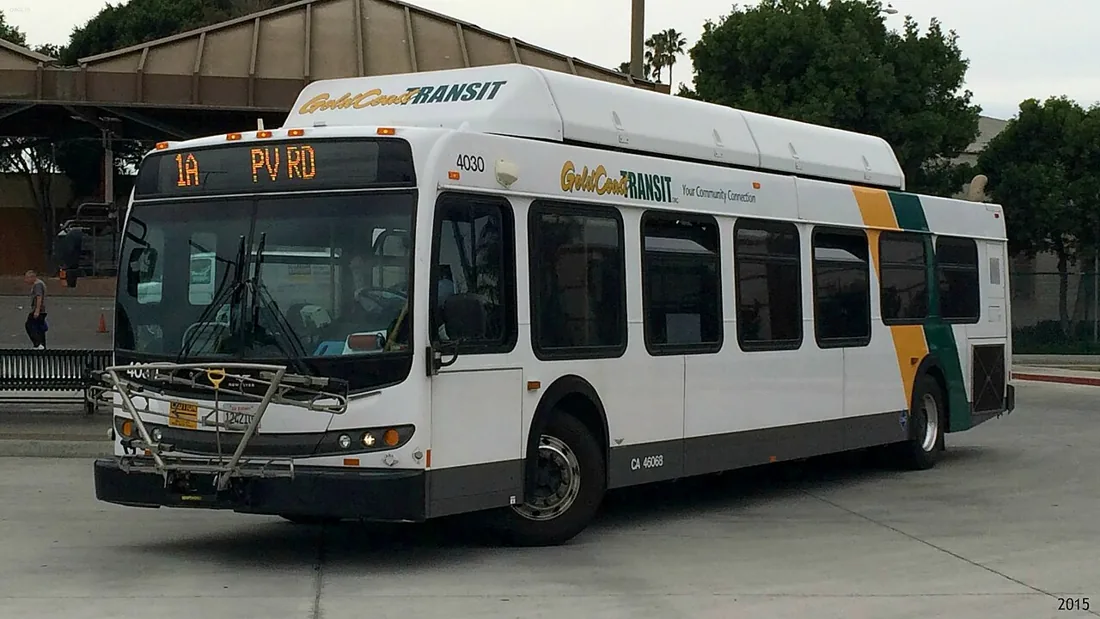
The operator describes shared rides and connections with neighboring services. Transfers involve separate service arrangements and fares. Read the operator’s current rules for the ride you’re planning. A photograph of a Gold Coast bus doesn’t establish that it can take you directly to the practice.

Match parking information to the destination
CACVI lists limited free on-site and street parking at Tarzana. That description belongs to the published outpatient location, not to the Oxnard hospital or transit center. Consult the practice’s arrival information rather than applying hospital parking rules to an unrelated building.
No parking availability is assured at a particular arrival time. There’s also no clinic timetable inferred from a street, transit, or garage schedule. A service-area page should identify a real destination without inventing operational details.


Send the clinical question with the relevant record
CACVI posts a registration checklist. The vascular handoff below identifies the clinical material relevant to a limb concern. For a PAD referral, keep an earlier arterial report, procedure description, or wound-care summary identifiable by source and date if you already have it. The referring note should say why the evaluation was asked for. It doesn’t prove that outside images have transferred.
Bring existing information rather than delaying a concerning change to build a perfect packet:
- The consultation reason from the referring clinician.
- A relevant vascular report, if one exists.
- Previous procedure documentation.
- A wound-treatment summary, when it applies.
- Current medicines and supplements.
- Bring the card your insurer issued, which registration will ask for.
The practice’s published contact route is for arranging non-emergency care. No record-transfer turnaround, or automatic sharing with St. John’s, is asserted.
PAD questions for Oxnard patients comparing their next step
Does chronic kidney disease matter in PAD assessment?
Yes, mention chronic kidney disease if you have it. The 2024 guideline calls it a risk amplifier, so it belongs in the history of a leg-circulation visit, not off to the side as if it were a separate story. PAD guidance.
Can examination findings support assessment even without classic claudication?
You don’t need a textbook story of calf pain first. If the physical findings already suggest PAD, the guideline supports ABI testing. A clinician still has to look at that finding, of course. Diagnostic recommendations.
Does PAD affect cardiovascular risk beyond the leg?
PAD isn’t only a leg problem. The guideline also addresses prevention of major adverse cardiovascular events as part of management, alongside what happens in the limb. Relieving one walking symptom isn’t the whole job. Guideline summary.
Is cholesterol treatment part of PAD management?
Cholesterol treatment does come up. The guideline recommends high-intensity statin therapy for PAD, and it leaves treatment goals and any extra therapy to clinical judgment. Consider that background for a medication conversation, not a reason to change your prescription tonight. Lipid recommendations.
Is antiplatelet treatment addressed in the guidance?
Yes, the guidance addresses antiplatelet treatment. In symptomatic PAD, single antiplatelet therapy is recommended to reduce cardiovascular event risk. Which drug, and whether it fits, still depends on indications and bleeding risk, so don’t start one from a FAQ. Antithrombotic guidance.
Should full-intensity anticoagulation be used for PAD alone?
If PAD is the only issue, the summary advises against full-intensity anticoagulation to reduce cardiovascular and limb events. Another diagnosis can change that picture, so if you’re already on a blood thinner, have it reviewed. Have the prescription reviewed instead of discontinuing it yourself. Guideline recommendations.
Are some combination antithrombotic treatments used after revascularization?
Sometimes, after revascularization, or in selected symptomatic PAD, the guideline discusses low-dose rivaroxaban with low-dose aspirin. You won’t find dosing or an eligibility call here, and that’s deliberate. Bleeding risk and the rest of the picture need a clinician. PAD summary.
Is long-term follow-up needed after an arterial procedure?
Yes, follow-up continues after an arterial procedure. The guidance wants an ongoing look at limb symptoms, function, pulse and foot findings, and risk-factor management. Getting the procedure isn’t the end of care. Follow-up recommendations.
Can a new symptom after revascularization require additional testing?
If something new shows up in the leg after revascularization, the guideline recommends ABI and arterial duplex ultrasound. Bring that change to a clinician rather than guessing what the new symptom means. Surveillance guidance.
Are compression products automatically appropriate for foot pain?
CACVI distinguishes arterial disease from venous conditions. A search term alone doesn’t establish which problem is present.
Is cilostazol appropriate when a patient also has heart failure?
No, not if you have heart failure. The guideline says cilostazol shouldn’t be given to patients with congestive heart failure of any severity. That’s something for a clinician to catch in the history, not a prompt to change treatment by yourself. PAD medication guidance.
Does the guideline support chelation for claudication?
No. The 2024 summary does not recommend chelation or pentoxifylline for claudication. If something is being advertised as a circulation treatment, that still isn’t a reason to assume it will improve arterial walking symptoms. Ask about options that actually have evidence. 2024 recommendations.
Book a cardiologist visit from Oxnard
El Centro de Port Hueneme, Ventura and Camarillo pages concern nearby incorporated cities. Somis is a regional community resource, not an additional adjacent-city office. For the service itself, use the cardiac evaluation overview or the vascular conditions hub.
Arterial guidance and Ventura County access sources
| Source | Publisher | What it covers |
|---|---|---|
| ACC: 2024 Guideline for Lower Extremity PAD | American College of Cardiology | Key points from the 2024 multisociety guideline on lower-extremity peripheral artery disease. |
| 2021 AHA/ACC Guideline for the Evaluation and Diagnosis of Chest Pain | American Heart Association / American College of Cardiology | Clinical practice guideline with recommendations and algorithms for evaluating and diagnosing chest pain in adults. |
| CACVI: Appointments | CACVI | Office addresses, phone numbers, parking notes, and how to request a visit. |
| CACVI: New Patients | CACVI | Registration form and a checklist of what to bring to a first visit, including insurance card and medical records. |
| CACVI: Cardiac Evaluation | CACVI | Explains what a cardiac evaluation includes, starting with a physical examination and medical history. |
| CACVI: Dr. Moinakhtar Lala | CACVI | Published biography and credentials for Dr. Moinakhtar Lala, M.D. |
| Dignity Health: Heart Care at St. John’s Regional Medical Center | Dignity Health / CommonSpirit Health | Heart and vascular services at St. John’s Regional Medical Center in Oxnard, including interventional cardiology and electrophysiology. |
| Gold Coast Transit: GO ACCESS Paratransit | Gold Coast Transit District | Paratransit service for riders who need an alternative to fixed-route buses. |
¿Listo para hablar?