




















Respuesta rápida
When only one leg swells, doctors call it unilateral leg swelling, and it usually has a local cause in that leg rather than a whole-body one. The most common reasons one leg swells more than the other are deep vein thrombosis (DVT), chronic venous insufficiency (CVI), varicose veins, May-Thurner syndrome, infection, injury, lymphedema, and a Baker's cyst behind the knee. Some of these are minor. A blood clot is not, so new swelling in one leg should be checked rather than waited out.
Swelling of the legs, which is also referred to as edema, happens when fluid accumulates in tissues. When only one leg swells, doctors call it unilateral leg swelling, and it usually has a local cause in that leg rather than a whole-body one. The most common reasons one leg swells more than the other are deep vein thrombosis (DVT), chronic venous insufficiency (CVI), varicose veins, May-Thurner syndrome, infection, injury, lymphedema, and a Baker's cyst behind the knee. Some of these are minor. A blood clot is not, so new swelling in one leg should be checked rather than waited out.
At CACVI, our board-certified specialists bring over 30 years of experience and more than 15,000 vascular and cardiac procedures to diagnosing and treating the conditions behind one-sided leg swelling, including CVI, DVT, and May-Thurner syndrome. Many of the treatments we offer are minimally invasive and performed in our office. Contact us to schedule an evaluation.
If you're experiencing swelling along with chest pain, trouble breathing, or a fast heart rate, please call 911 right away. These can be signs that a clot has traveled to your lungs.
Left Leg vs. Right Leg Swelling
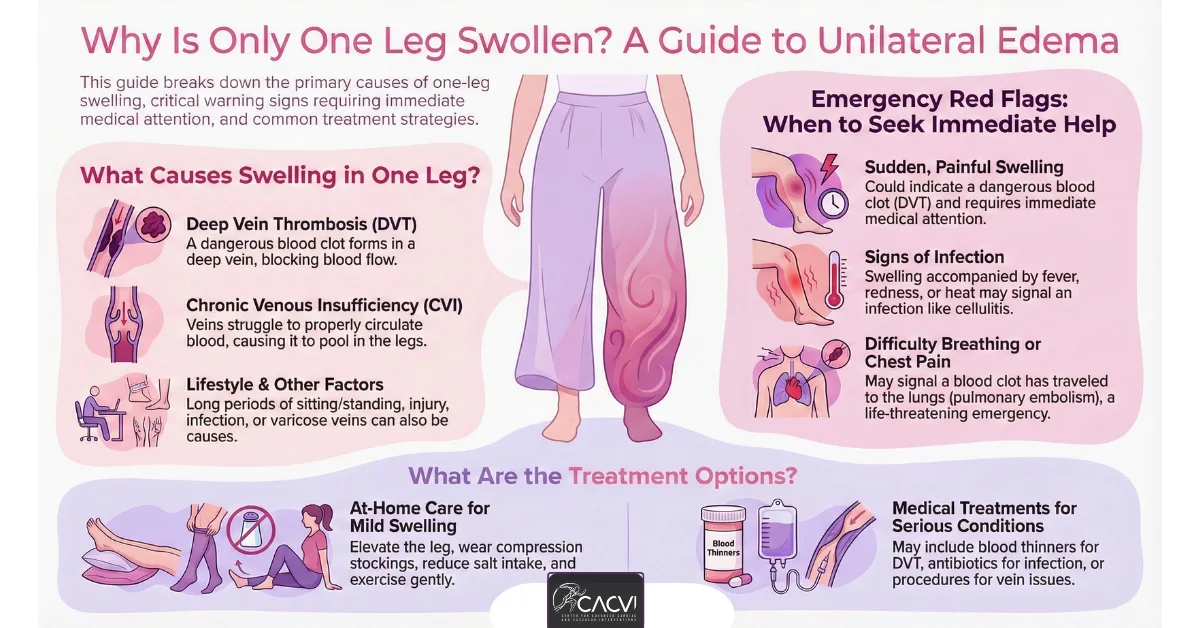
Either leg can swell, but some conditions favor the left side because of how the body is built. In the pelvis, the right iliac artery crosses over the left iliac vein. In some people this artery pushes against veins near the spine and narrows them; this can slow blood flow out of the left leg. This is known as May-Thurner syndrome and it's one reason why swelling and blood clots show up more often in the left leg.
Swelling on the right side should be checked too. A clot, infection, an injury, or varicose veins can affect either of your legs and which side is affected doesn't tell you what the problem is.
Common Causes of Swelling in One Leg
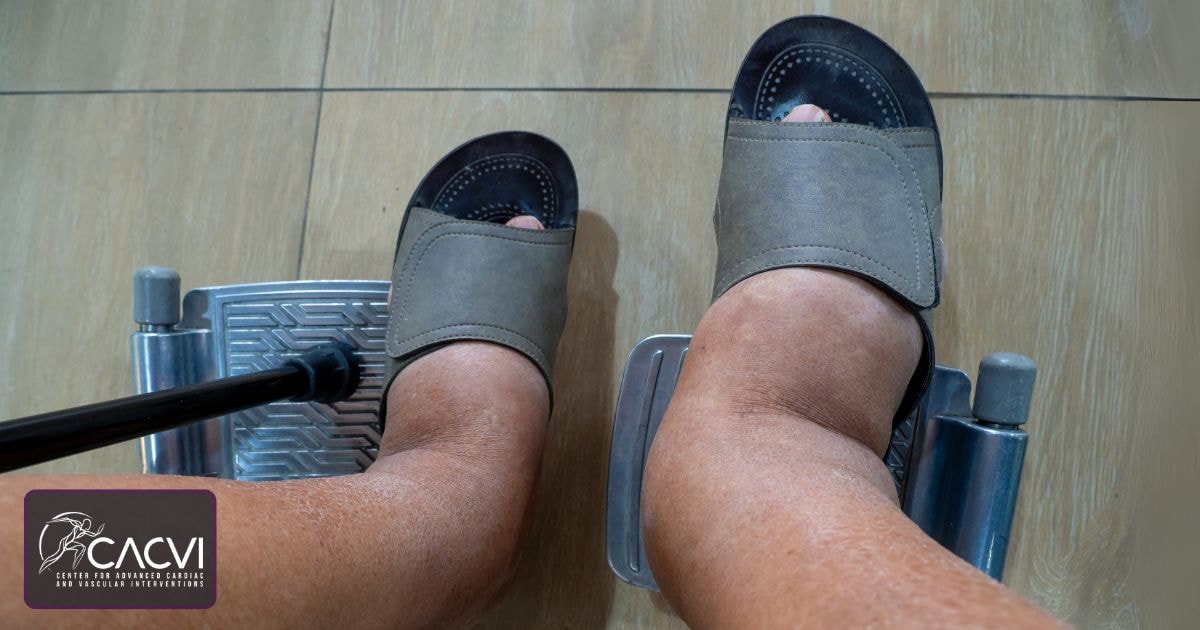
One-sided leg swelling is a symptom, not a diagnosis. It can come from blood vessels, the veins, the lymphatic system, infection or trauma. Here are the causes organized by type.
Vein and Circulation Causes
Deep vein thrombosis (DVT) is the most serious cause to rule out. A blood clot forms in a deep vein, usually in the calf or thigh, and blocks blood from flowing back toward the heart. The leg may swell, ache, feel warm, or look red or darker than the other leg. DVT does not always hurt, and some people notice only swelling or a heavy feeling, which is why it gets missed. The danger is that part of the clot can break off and travel to the lungs, causing a pulmonary embolism. The CDC estimates that up to 900,000 people in the United States are affected by these blood clots each year. Recent surgery, long periods without moving, long trips, cancer, hormone therapy, and pregnancy all raise the risk. Our guide to a blood clot in the calf covers the warning signs in more detail.
A clot can also form in a vein just under the skin, called superficial thrombophlebitis. It usually causes a tender, red, rope-like line along the vein with some swelling around it. While this clot is less dangerous compared to DVT (deep vein thrombosis), it is still important to get checked out because some surface clots do extend into deeper veins.
Chronic venous insufficiency (CVI) develops when the valves inside the leg veins weaken and allow blood to flow backward and collect. The leg feels heavy during the day and swelling increases; this eases at night. Over time, CVI can cause brown skin discoloration, thickened skin, and venous leg ulcers near the ankle.
Várices are enlarged, twisted veins caused by the same valve problem. If one leg is worse, that leg usually swells more, especially after you stand for a long time. Our article on whether varicose veins can cause leg swelling explains the link, and our comparison of DVT vs. varicose veins covers how to tell the two apart.
May-Thurner Syndrome causes constriction of the left iliac vein. Swelling and heaviness persist for a long time in the left leg along with visible varicose veins and also elevate risk of DVT on that side. Problems in the pelvic veins often go unnoticed for a long time because a standard leg ultrasound does not show them well.
Lymphatic and Other Medical Causes
Lymphedema occurs when fluid doesn't drain properly from tissues due to problems with the lymphatic system. It often follows cancer surgery or radiation that removed or damaged lymph nodes in the groin or pelvis, but some people are born with it. Swelling due to lymphedema tends to be firm and doesn't disappear quickly; it can also affect feet and toes.
Infections like cellulitis or abscesses cause swelling along with redness, warmth and pain. Cellulitis is a fast spreading bacterial infection of the skin and prompt treatment is especially important for people who have diabetes. An abscess is a pocket of pus under the skin that may need to be drained.
A Baker's cyst is a fluid-filled sac behind the knee, often linked to arthritis or a knee injury. It causes swelling and tightness behind the knee. If it ruptures, fluid leaks into the calf and causes sudden pain and swelling that can look a lot like DVT. Ultrasound helps tell them apart. Our piece on pain and swelling in the knee and calf talks about that overlap too.
Injuries like sprains, strains, broken bones, and torn calf muscles result in swelling as part of the body's way of healing. Swelling usually gets better as the injury heals. Swelling that keeps growing after an injury, or a leg that was immobilized in a cast or brace, should be checked for a clot.
Fluid retention is caused by heart problems, kidney disease, and liver issues but swelling usually affects both legs similarly. If you have one of these conditions and one leg suddenly swells more than the other, a separate local cause such as a clot may be involved.
Enfermedad arterial periférica (PAD) restricts arteries that bring blood to legs. It usually causes leg pain when walking and cold feet along with slow healing of sores instead of swelling. Swelling can appear in advanced PAD, often when a person sleeps with the leg hanging down to ease pain. PAD is important for another reason too: compression stockings can be dangerous if circulation of blood through arteries is poor. So your doctor should check arteries before you start using them.
Lifestyle-Related Causes
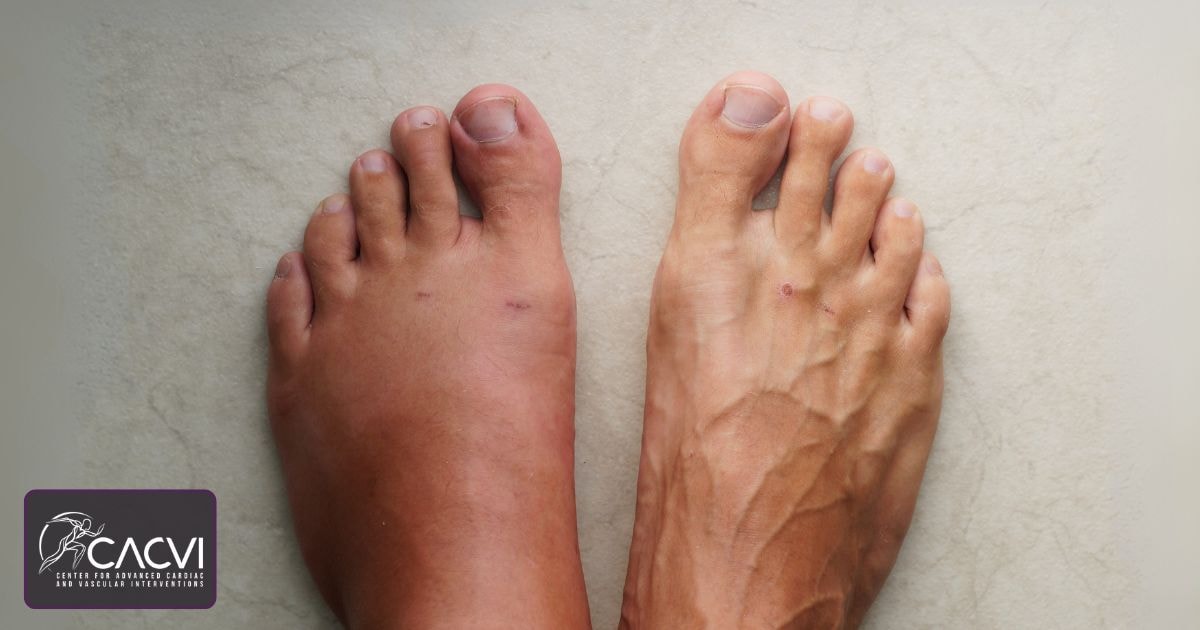
Long periods of sitting or standing cause fluids to pool in lower legs. This usually swells both legs, but a leg with weak veins or varicose veins will swell more. If one leg is consistently bigger an underlying vein problem is likely.
Tight clothing, socks, or straps that press on one leg can slow circulation below the pressure point and cause mild swelling on that side.
Pregnancy increases the risk of developing blood clots. According to the CDC, women are five times more likely to suffer from blood clots during pregnancy, childbirth, or the three months after delivery. Swelling of both legs is fairly common during pregnancy. If swelling is particularly severe on one leg along with pain or warmth then you should check this out promptly.
When to Seek Medical Help for One-Sided Leg Swelling
This table pairs typical sets of symptoms with suspected causes and indicates how soon you should see a doctor. It is a general guide, not a diagnosis. When in doubt, get checked.
| What You Notice | Possible Cause | How Soon to Get Care |
|---|---|---|
| Swelling with chest pain, shortness of breath, coughing blood, or a racing heart | Pulmonary embolism | Call 911 now |
| New swelling in one calf or thigh with pain, warmth, or a darker color | DVT | Same day (urgent care or ER) |
| Red, hot, spreading skin with fever or chills | Cellulitis or abscess | Same day |
| Sudden pain and swelling in the calf after a knee problem | Ruptured Baker's cyst or DVT | Same day, to rule out a clot. |
| Heaviness and swelling that get worse during the day and improve at night. | CVI or varicose veins | Schedule a vein evaluation |
| Long-term swelling in the left leg, varicose veins, or a previous clot in the left leg. | May-Thurner syndrome | Schedule a vascular evaluation |
| Firm swelling that does not ease overnight, after cancer treatment | Lymphedema | Schedule an evaluation |
| Brown skin, thickened skin, or an open sore near the ankle | Advanced CVI or leg ulcer | See a vascular specialist soon |
Swelling that keeps recurring shouldn't be overlooked even if it's mild. Untreated CVI tends to get worse over time and can lead to skin damage and ulcers that are harder to treat than the original vein problem.
At CACVI, we diagnose and treat the vein and artery conditions behind most cases of one-sided leg swelling. If one leg is swelling more than the other you should see someone for an evaluation.
How to Diagnose Swelling in One Leg
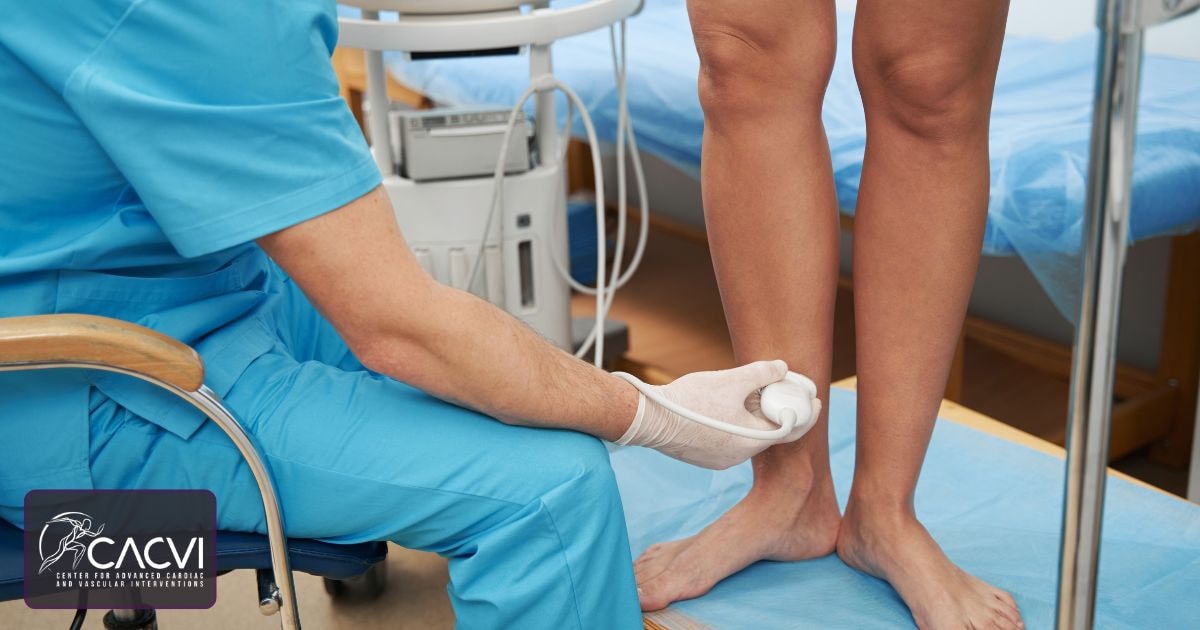
Diagnosis starts with a physical exam and your history. Your doctor wants to know when swelling began and if swelling changes from morning to night as well as asking if you have had any surgery, travel, an injury, or cancer treatment. They will compare both legs; they'll check for tenderness, look at warmth levels and changes in skin color, and press into swelling to see if that leaves an indentation.
A vascular ultrasound is typically the first test. A duplex ultrasound can display blood flow live; it can detect clots in veins of legs and also show if valve function is faulty. It's completely painless and doesn't use radiation. When a clot is suspected, a D-dimer blood test can help decide how likely one is. Other blood tests can check for infection, kidney or liver problems, and clotting disorders.
If the leg veins look normal but the swelling continues, especially in the left leg, the problem may be higher up in the pelvis. Imaging such as magnetic resonance venography (MRV), CT venography, or catheter venography using intravascular ultrasound (IVUS) can show narrowing of the iliac veins, the problem behind May-Thurner syndrome.
If PAD is a possibility, an ankle-brachial index (ABI) test compares blood pressure at the ankle and arm to check arterial flow. Peripheral vascular disease evaluation covers these tests. If lymphedema is suspected, lymphoscintigraphy traces a small amount of tracer through the lymphatic system to see how well it drains.
Treatment Options for One-Sided Leg Swelling
Treatment depends on the cause, which is why diagnosis comes first. Home care can help with swelling due to vein issues but it doesn't deal with clots or infections directly.
At-Home Care for Mild Swelling
Before you start home care, make sure a clot has been ruled out if the swelling is new, painful, or warm. Massage and vigorous exercise are not recommended until DVT has been excluded.
After the doctor clears you, elevation is helpful. Raise the leg above the level of your heart for about 30 minutes a few times a day so gravity can help fluid drain.
Compression stockings apply steady pressure that helps the veins push blood back up toward the heart. They are a standard treatment for CVI, varicose veins, and lymphedema. Talk to your doctor about what pressure levels you need and have your arteries checked first if you have symptoms of PAD or diabetes.
Movement helps too. Walking and doing calf exercises helps move blood upwards from the legs and interrupting long stretches of sitting or standing reduces pooling too. Reducing salt intake also helps to reduce fluid buildup.
Medical and Minimally Invasive Treatments
Blood thinners (anticoagulants) are the main treatment for DVT. They prevent clots from getting bigger and reduce the risk of a pulmonary embolism while the body breaks down the clot. For people who can't take blood thinners, an IVC filter may be used to catch clots before they travel to the lungs.
Antibiotics treat cellulitis and an abscess may also need draining. Lymphedema is managed with compression, specialized lymphatic drainage therapy, and exercise guided by a trained therapist.
Endovenous ablation treats leaky veins that are common for conditions like chronic venous insufficiency and many varicose veins. With guidance from ultrasound, the doctor inserts a thin catheter through a very small cut and slides it into the damaged vein; using either laser or radio frequency energy they heat and seal the vein and blood then finds its way through healthy veins. Endovenous ablation uses local anesthesia and most patients return to normal activities within a few days. Sclerotherapy is used for treating smaller varicose and spider veins; it injects a solution that seals off the vein.
Venous stenting treats May-Thurner syndrome and other narrowed pelvic veins. Using venography and placing a stent through a catheter, the doctor keeps veins open so blood can flow out of the leg normally.
Worried About One Leg Swelling More Than the Other?
Leg swelling in one leg has a cause, and finding that reason early makes treatment easier. If the swelling is new, painful, or warm, get checked the same day to rule out a clot. If a vein problem has been building up for months, a vascular assessment can uncover what is causing it. Contacte a CACVI to schedule an evaluation with our vascular team.
Schedule a Vascular Evaluation
We see patients in Los Angeles, Tarzana, and Victorville.
Request an Evaluation →Preguntas frecuentes
Below are common questions we get from patients about why one leg swells more than the other.
What causes one leg to swell more than the other?▾
Swelling on one side generally points to something related to that leg. Common causes range from blood clots (DVT), chronic problems with veins like reflux, varicose veins, May-Thurner Syndrome, an infection such as cellulitis, injuries, lymph issues, or a cyst behind the knee called Baker's cyst.
How is unilateral leg swelling diagnosed?▾
Most evaluations start with a physical exam and a vascular ultrasound, which can find a clot and show whether vein valves are leaking. When there is suspicion of having a clot, D dimer blood tests may be used. If there are no abnormalities in the appearance of leg veins then checking imaging of pelvic veins would be useful to see if someone has May-Thurner Syndrome.
Can swelling in one leg be treated without surgery?▾
Often, yes. Swelling from CVI or varicose veins is usually treated first with compression, elevation, and activity, and if that is not enough, with minimally invasive procedures such as endovenous ablation rather than open surgery. Deep vein thrombosis (DVT) is treated using blood thinners and treating infections with antibiotics.
When should I see a doctor about leg swelling?▾
Get checked the same day if the swelling is new and comes with pain, warmth, redness, or a change in skin color, since these can be signs of a clot or an infection. If you have swelling along with chest pain or trouble breathing, call 911. Schedule a regular evaluation if the swelling keeps coming back, makes your leg feel heavy, or comes with skin changes or sores near the ankle.
This article provides general information and does not constitute medical advice. This does not replace evaluation by a qualified healthcare professional. If you think that you may have had a blood clot or any other kind of medical emergency, call 911 or go directly to the emergency room nearest you.
Revisado médicamente por Dr. Moinakhtar Lala, M.D., FACC, FSCAI, RPVI · Last reviewed November 2026
Contacte a CACVI
If you were told you need an amputation, get a second opinion! We are board certified consultants in endovascular interventions committed to improving the quality of your life and the lives of those you love!
Thanks for contacting CACVI! We will be in touch with you shortly.