




















Evaluación cardíaca
Burbank cardiologists you can see this week
Respuesta rápida
Burbank patients see CACVI cardiologists at the San Fernando Valley office in Tarzana (818-905-5904) or the Los Angeles office on Alden Drive (310-652-2744). The cardiologists evaluate blood pressure that stays high on three or more medicines, look for causes such as excess aldosterone, sleep apnea and kidney disease, check what the pressure has done to the heart and the aorta, and treat coronary, valve, rhythm and heart failure problems. For chest pain, stroke signs or sudden severe back or belly pain, call 911; Providence Saint Joseph Medical Center in Burbank is the city’s heart-attack receiving hospital.
Blood pressure numbers that will not quiet down on a third medication. A father’s bypass at 55 that has you thinking about your own heart. A reading at a routine physical that your internist wants a cardiologist to look at. Each is a good reason to see a cardiologist at the Center for Advanced Cardiac and Vascular Interventions (CACVI), and the first one shapes most of what follows.
Burbank patients are seen at two CACVI offices. The San Fernando Valley office is on Ventura Boulevard in Tarzana, west along CA-134 and US-101. The Los Angeles office is on Alden Drive, over the hills to the south, a block from Cedars-Sinai. Emergencies belong closer to home, at Providence Saint Joseph Medical Center on Buena Vista Street.
Blood pressure or heart question? Contact CACVI from Burbank
A Burbank hypertension clinic visit when blood pressure stays high on full treatment
A family doctor or internist handles most cases of high blood pressure without help. Burbank patients who see a cardiologist for their blood pressure are usually past that stage. They take two or three pills a day, their readings are still above the goal their doctor set, and they want to know why. A CACVI cardiology visit asks two things: is something driving the pressure up, and has it already affected the heart or the large arteries?
The American Heart Association’s scientific statement on resistant hypertension puts the next step plainly. When pressure stays uncontrolled after the usual measures, it advises referral to a hypertension specialist. CACVI’s physicians are board-certified cardiologists, and the practice’s Tarzana office lists high blood pressure among the conditions they evaluate and treat.
When blood pressure counts as “resistant”
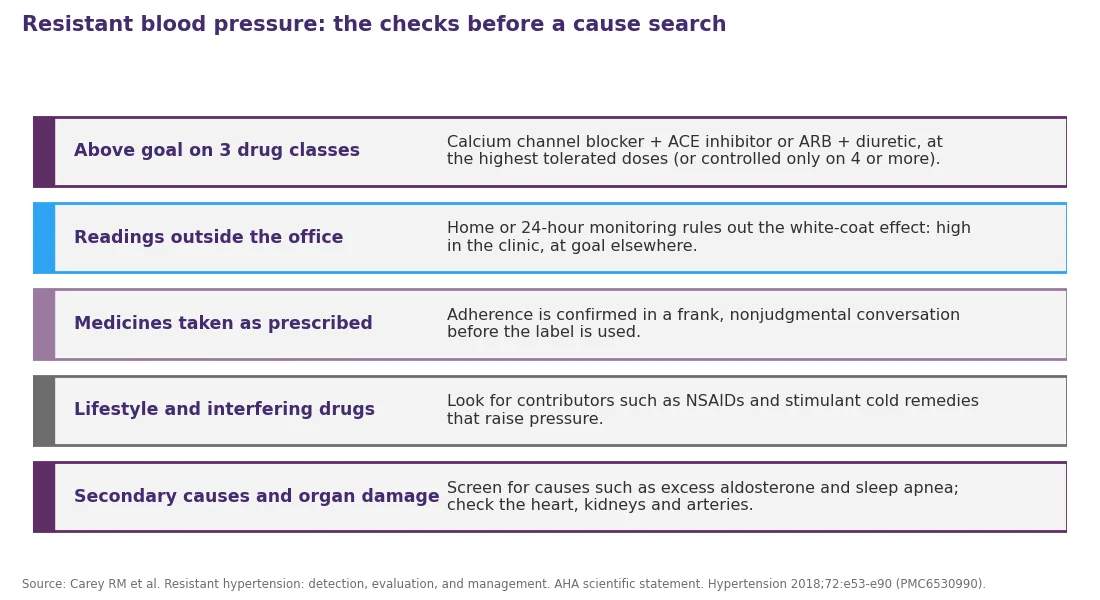
The term has a specific meaning. The AHA statement defines resistant hypertension as pressure above goal even though the person takes three blood pressure drug classes at the same time, at the highest doses they can tolerate. One of the three is usually a long-acting calcium channel blocker, one blocks the renin-angiotensin system (an ACE inhibitor or an ARB), and one is a diuretic. Someone whose pressure is finally controlled, but only with four or more medicines, also falls inside the definition.
Two things have to be ruled out before the label applies. One is the “white-coat effect”: pressure that is high in the clinic but at or below goal at home or on a 24-hour monitor. The other is medicines that are prescribed but not taken as directed, which the statement calls very common and recommends sorting out through an honest, nonjudgmental conversation. Both change what happens next, because looking for a hidden cause only makes sense once the pressure is known to be truly high on a full regimen.
The 24-hour monitor and what it can change
The statement says out-of-office readings are generally needed to diagnose true resistant hypertension, and it prefers a 24-hour ambulatory monitor: a cuff worn through a normal day and night that inflates on its own at set intervals. Home readings are the fallback when that isn’t available. By the statement’s figures, a clinically significant white-coat effect shows up in 28% to 39% of people whose pressure looks resistant on office readings alone. The monitor also uses its own yardstick. Control means under 130/80 mm Hg in the office but under 125/75 mm Hg averaged over 24 hours.
The night is where the monitor earns its keep. Pressure normally falls during sleep. When it falls less than expected, the report calls it nondipping; when it rises, reverse dipping. The statement reports a blunted nighttime decline in 43% to 65% of people with resistant hypertension and links both patterns to overactivity of the nerves that raise pressure. A report full of high night readings points the physician toward sleep apnea and toward the timing of the medicines.
The goal the numbers are measured against
“Above goal” needs a goal. The AHA statement notes that the 2017 guideline lowered the treatment target to under 130/80 mm Hg for most people, and the 2025 guideline keeps a systolic goal under 130 for adults on intensive treatment. Your own target may differ with age, kidney disease or other conditions, so ask which number your doctors are aiming for. A lower goal also means more people meet the definition of resistant pressure, which the statement itself expects.
Who tends to have resistant pressure
The AHA statement lists the conditions that turn up more often in resistant hypertension than in pressure that responds to treatment: obesity, a thickened left ventricle, protein in the urine, diabetes, chronic kidney disease, a higher ten-year heart risk score and obstructive sleep apnea. None of them proves the pressure is resistant, but each one raises the odds, and several of them are things a cardiology work-up measures directly. Someone who carries two or three of them and still has high readings on three medicines is the person this kind of visit is built for.
Where a cardiologist fits into the work-up
Once the readings are confirmed, the statement lists four things to work through: lifestyle factors that keep pressure up, medicines that interfere with the blood pressure drugs, secondary causes, and damage the pressure may already have done to organs such as the heart, kidneys and arteries. The last item is where a cardiologist adds the most. Years of high pressure make the heart work against a stiffer load, and the echocardiogram and EKG done in the Tarzana office show whether its walls or rhythm have already changed. The sections that follow take each of the other three items in turn, starting with the hormone cause the 2025 guideline most wants found.
Still above goal on three blood pressure medicines? Ask CACVI for a cardiology evaluation
What a Burbank patient can check before calling CACVI
| Item | The fact | Source |
|---|---|---|
| San Fernando Valley office | 18226 Ventura Blvd, Suite 102, Tarzana, CA 91356; 818-905-5904; free on-site parking, limited spaces | CACVI contact page |
| Los Angeles office | 8741 Alden Drive, Suite A, Los Angeles, CA 90048; 310-652-2744; Robertson Alden Garage (Lot 703), 141 Robertson Blvd, free for the first 2 hours | CACVI contact page |
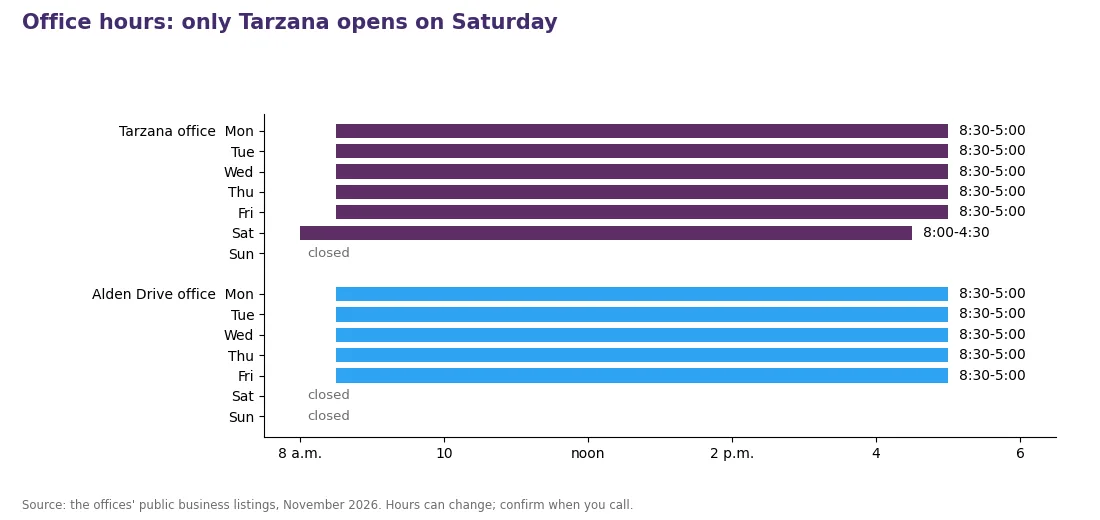
| Office hours | Both offices Monday to Friday, 8:30 a.m. to 5:00 p.m.; Tarzana also Saturday, 8:00 a.m. to 4:30 p.m. | Offices’ public business listings, November 2026 |
| Testing in Tarzana | Heart ultrasound (echo), EKG, stress testing on a treadmill or with medicine, Holter or event monitoring, vascular ultrasound, ankle-brachial index | CACVI Tarzana page |
| Emergency hospital in Burbank | Providence Saint Joseph Medical Center, 501 S Buena Vista St; designated STEMI Receiving Center and certified stroke center | Providence emergency care page |
| Aorta and artery scans | Abdominal aortic aneurysm duplex and other vascular ultrasound studies are on CACVI’s list | CACVI vascular ultrasound page |
| Fax for records | 310-967-2140, shared by the CACVI offices | CACVI contact page |
| First-visit paperwork | Completed registration form, insurance card, medical records and imaging, and a list of medicines, vitamins and supplements; arrive 15 minutes early | CACVI new-patient page |
Why three pills sometimes aren’t enough, and why it matters
Resistant pressure is partly a medical problem and partly a prescribing one. Before anyone looks for a hidden cause, the AHA statement asks whether the regimen itself is doing its job, and it gives a clear reason for taking the question seriously: resistant pressure carries a higher risk of heart, kidney and brain events than pressure that responds to treatment.
What resistant pressure does to the odds
The statement summarizes the outcome studies. In a retrospective study of more than 200,000 people with newly diagnosed high blood pressure, those whose pressure proved resistant were 47% more likely to have the combined outcome of death, heart attack, heart failure, stroke or chronic kidney disease over a median of 3.8 years, driven largely by kidney disease. In another study of more than 400,000 patients, resistant pressure came with a 32% higher risk of end-stage kidney disease, 24% for an ischemic heart event, 46% for heart failure, 14% for stroke and 6% for death. Studies using 24-hour monitors suggest close to twice the risk of cardiovascular events in true resistant hypertension compared with pressure that responds to treatment. The statement adds that the extra risk is sharper in people who already have chronic kidney disease or coronary heart disease, and that among people with resistant pressure, a lower pressure goes with fewer of some cardiovascular events. The effort to bring it down pays off.
Doses that never reached full strength
Sometimes the regimen is the problem. The statement cites a United States practice network in which only 49.6% of patients with uncontrolled, apparently resistant pressure were on an optimal regimen. More than 90% were rightly prescribed a diuretic, yet in 42.1% the blood pressure medicines were given at less than half their maximum recommended dose. It also notes that spironolactone and chlorthalidone, two of the most effective drugs for this group, are rarely part of the regimens these patients are on. A first cardiology visit therefore starts with the doses on the bottle, not only the names.
Making three pills behave like three pills
The statement estimates that as many as 50% to 80% of people prescribed blood pressure medicines take them less than fully, often for ordinary reasons: cost, side effects, a regimen with several doses a day. Its suggested fixes are practical. Use once-daily medicines where possible, use combination pills when they exist, choose low-cost generics when cost is the barrier, and line refills up so the pharmacy trip happens once. The 2025 AHA/ACC guideline goes further for stage 2 pressure and recommends starting with two drugs of different classes, preferably combined in a single pill, because that shortens the time to control. If you skip a dose because of a side effect, say which one; there is usually another drug in the same family.
Questions about your present regimen
These questions follow the points the AHA statement raises about regimens that fall short:
- Is each of my blood pressure medicines at its full dose, or the highest dose I can tolerate?
- Is my diuretic a long-acting one such as chlorthalidone or indapamide, and does my kidney function suit it?
- Have I been tried on spironolactone or eplerenone, and if not, is there a reason?
- Could any of my pills be combined, or switched to once-daily versions?
- Am I taking anything, prescribed or over the counter, that pushes pressure up?
- Has anyone checked my pressure outside the office for a full day and night?
Not every drug in a class works the same
The statement points out differences inside drug classes that matter for resistant pressure. In 24-hour monitoring studies, the ARB azilsartan medoximil lowered systolic pressure by an average of 4 to 8 mm Hg more than other ARBs such as valsartan and olmesartan, or the ACE inhibitor ramipril. Among calcium channel blockers, amlodipine and extended-release nifedipine are the most studied, while drugs in the same class that must be taken two or three times a day work against adherence. The statement also reports that taking once-daily blood pressure drugs at bedtime, rather than in the morning, was linked to fewer people whose pressure stays high at night. Any change in drug or timing is a decision for the prescribing doctor.
Too much aldosterone: the cause behind a fifth of resistant blood pressure
In primary aldosteronism, one or both adrenal glands overproduce aldosterone, so the kidneys keep sodium they would normally pass and the blood pressure climbs. A 2026 review of the 2025 AHA/ACC guideline reports that the condition accounts for 5% to 10% of all high blood pressure and up to 20% of resistant hypertension, yet fewer than 2% of the people who should be screened ever are. The AHA statement’s own estimate for confirmed resistant hypertension is about 20%. For a Burbank patient on three medicines, that makes it the first cause worth ruling out.
The AHA statement describes the condition as aldosterone production that runs on its own, without regard to the hormone system that normally controls it, and that stays high even when the body is loaded with salt. The results are salt and water retention, a nervous system pushed into higher gear, low potassium in some patients and, over time, damage to the heart and kidneys. In people with high blood pressure that responds to treatment, the statement puts the frequency at about 8%; it is the jump to about 20% in confirmed resistant pressure that makes screening worthwhile.
Who the 2025 guideline says should be screened
The guideline now recommends screening everyone with stage 2 or resistant hypertension, whether or not their potassium is low. That last point matters, because low potassium was long treated as the clue, and most people with the condition have normal potassium. The review lists further reasons to test: low potassium (on its own or brought on by a diuretic), muscle cramps or weakness, an adrenal mass found by chance on a scan, obstructive sleep apnea, or a family history of high blood pressure or stroke at a young age. The review adds that this wider screening brings the AHA/ACC guideline closer to the Endocrine Society, which supports testing everyone with high blood pressure of any stage, and that the testing steps themselves are largely unchanged from 2017.
How the screening blood test works
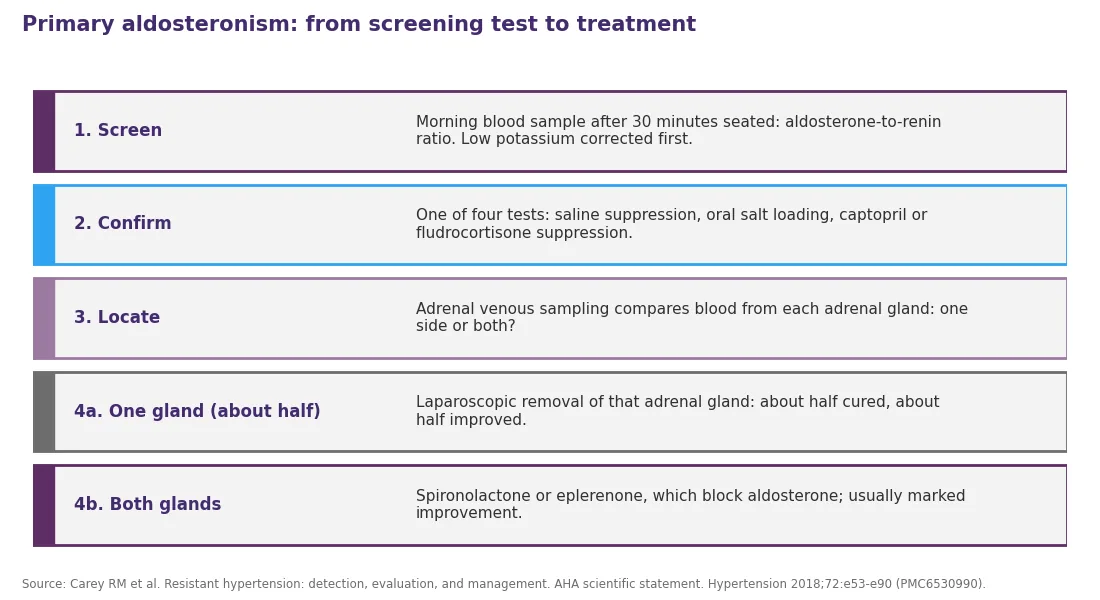
Screening compares two levels in one blood sample: aldosterone and renin, expressed as a ratio. The AHA statement asks for a morning sample taken after the patient has been seated for at least 30 minutes, and for low potassium to be corrected with supplements first, since low potassium itself suppresses aldosterone. A high ratio only opens the question. The ratio is affected by several common blood pressure drugs, and the details of what to stop, and for how long, are in the questions at the end. Never stop a medicine to prepare for the test unless the ordering doctor tells you to.
From a positive screen to a diagnosis
After a positive screen, the statement says, the patient usually goes to an endocrinologist or a hypertension specialist for one of four confirmatory tests: a saline suppression test, an oral salt-loading test, a captopril test or a fludrocortisone suppression test. Each checks whether aldosterone stays high when the body has every reason to turn it down. If the diagnosis is confirmed, the next question is whether one gland or both are responsible, and that is usually answered by adrenal venous sampling, in which blood is drawn from the veins of each adrenal gland and compared.
One gland or two: why the answer changes the treatment
The statement puts unilateral disease at about half of confirmed cases, most often a small aldosterone-producing adenoma. Those patients can have the affected adrenal gland removed laparoscopically; about half are cured of the high blood pressure and the other half improve. When both glands are overactive, surgery is not the answer, and the statement describes marked improvement with spironolactone or eplerenone, the drugs that block aldosterone at its receptor. Either way, the regimen that failed is usually not the regimen that follows.
Why a cardiologist cares about an adrenal hormone
The diagnosis matters for more than the blood pressure number. Compared with people whose high blood pressure has no identifiable cause, the AHA statement reports that people with primary aldosteronism have about 4.2 times the rate of stroke, 6.5 times the rate of heart attack and 12.1 times the rate of atrial fibrillation. It also links the condition to a thickened left ventricle, a stiff heart that fills poorly (diastolic dysfunction), heart failure and stiff large arteries. So an aldosterone result often leads straight to an echocardiogram and a rhythm check, the parts of the work-up a cardiologist runs, while the endocrine steps go to the endocrinologist.
Sleep, kidneys, medicines and the rarer reasons pressure stays high
Aldosterone is the most common identifiable cause, but it is far from the only one. A European nephrology commentary on the 2025 guideline names chronic kidney disease, primary aldosteronism, narrowing of the kidney arteries and obstructive sleep apnea as the most common causes of secondary hypertension. Several of them can sit in the same person, and some medicines and habits push pressure up without being a disease at all.
Obstructive sleep apnea
The AHA statement calls sleep apnea extremely common in resistant hypertension, with rates as high as 70% to 90%, and often severe when present. One explanation it gives is fluid: the extra salt and water that come with resistant pressure, and with aldosterone excess in particular, shift into the neck when a person lies down and narrow the airway. Drugs that block aldosterone have reduced the severity of sleep apnea in small studies. Its advice to doctors is to keep the threshold for a sleep study low, prompted by heavy snoring, breathing stops a bed partner has seen, or sleepiness during the day. How much the breathing machine lowers pressure is covered in the questions below.
The statement adds two details that matter for treatment. Poor blood pressure control is most strongly linked to severe sleep apnea, at 30 or more breathing interruptions an hour. And because the machine alone lowers pressure only modestly, some drugs taken at bedtime, including ARBs, some beta-blockers and the central agents clonidine or guanfacine, can help with the nighttime component. Short or broken sleep matters on its own as well: the statement describes sleep deprivation and a related condition, pseudopheochromocytoma, with sudden surges of pressure that mimic a hormone tumor, as contributing causes of resistant pressure.
The kidneys, as cause and as casualty
Chronic kidney disease is both a cause and a complication of poorly controlled pressure, the statement says. Weaker kidneys hold on to salt, overactivate the hormone system that raises pressure and change how well the drugs work. That is why the guideline expects two routine tests when high blood pressure is first diagnosed: an estimated glomerular filtration rate (eGFR) from a blood sample and a urine albumin-to-creatinine ratio. Kidney function also decides the diuretic. The statement notes that chlorthalidone keeps working down to an eGFR of about 30, while hydrochlorothiazide loses its effect below 45, and that a long-acting loop diuretic such as torsemide takes over at lower kidney function. Control also gets harder as kidney disease advances: the statement reports that the share of patients reaching a goal of 130/80 or lower falls from 49.5% at stage 1 chronic kidney disease to 30.2% at later stages. Bring your most recent eGFR and urine albumin results to the first visit.
Products on the AHA list that raise pressure
The AHA statement keeps a list of drugs and substances that can cause high blood pressure or make it worse:
- nonsteroidal anti-inflammatory drugs (NSAIDs, the ibuprofen and naproxen family), which also blunt diuretics, ACE inhibitors, ARBs and beta-blockers;
- oral contraceptives, which in the Nurses’ Health Study came with an 80% higher risk of developing high blood pressure;
- sympathomimetics, the stimulant ingredients in many cold and sinus remedies;
- cyclosporine and tacrolimus, used after organ transplants;
- erythropoietin and VEGF-inhibitor cancer drugs;
- alcohol, cocaine and amphetamines;
- some antidepressants, with dose-related rises reported for venlafaxine;
- glucocorticoids and mineralocorticoids.
Low-dose aspirin is not on the list; the statement notes it does not raise blood pressure. If you take anything from the list regularly, tell the physician which product, how much and how often. Don’t stop a prescribed medicine on your own; some have alternatives and some don’t.
Rarer hormone causes
Pheochromocytoma and paraganglioma, tumors that release adrenaline-like hormones, are rare in high blood pressure overall, about 0.01% to 0.2%, but the statement puts the figure as high as 4% among patients referred for resistant hypertension. Typical episodes bring headache, palpitations, pallor and sweating with surges of pressure, diagnosis is usually delayed by about three years, and a third of cases are inherited, so the statement says the possibility should be considered in anyone referred for resistant pressure. Cushing syndrome, from excess cortisol, is on the same list; the statement describes it as uncommon but often accompanied by high blood pressure, weight gain, stretch marks, muscle weakness and blood sugar problems. So is thyroid disease in both directions: an underactive thyroid brings dry skin, cold intolerance and weight gain, while an overactive one brings heat intolerance, tremor, weight loss and a racing pulse. So is coarctation of the aorta: adults who had a narrowed aorta repaired in childhood often develop high blood pressure, and the statement advises CT angiography to look for leftover narrowing when they do.
The kidney arteries, in brief
Narrowing of an artery that feeds a kidney can also raise blood pressure, and it is usually found with an ultrasound of the kidney arteries, one of the vascular studies CACVI lists. If it needs treating, CACVI places a stent to reopen the artery, as described on its renal artery stenting service page.
When no single cause turns up: the treatment steps for resistant pressure
Many work-ups end without one fixable cause. That is not a dead end. The AHA statement lays out a stepwise plan for resistant hypertension, and the 2025 guideline adds a procedure for selected patients. Your regular doctor and the cardiologist can share the steps, so it is worth settling at the first visit who adjusts which medicine.
Lifestyle steps, with the size of their effect
The numbers explain why the statement puts lifestyle first rather than last. In 12 people with true resistant hypertension, a week on a low-sodium diet (50 mmol a day) instead of a high-sodium one (250 mmol) lowered average office pressure by 22.7/9.1 mm Hg. In a large analysis of aerobic exercise programs, pressure in people with hypertension fell by 8.3/5.2 mm Hg over several weeks. Resistance training added a smaller drop, about 1.8/3.2 mm Hg, and the statement cites a treadmill walking program that was safe and effective in people with resistant pressure. Weight loss lowered pressure by about 4.5/3.2 mm Hg in the most recent analysis the statement cites, and guidelines aim for a loss of 5% to 10% of body weight. Heavy drinking is a firm risk factor. The statement also notes a U-shaped link between sleep and high blood pressure, with the lowest risk at seven to eight hours of uninterrupted sleep a night. The 2025 guideline adds potassium-based salt substitutes for selected patients, with caution in advanced kidney disease; the statement gives the same warning about a potassium-rich DASH diet in stage 4 and 5 kidney disease, where potassium can climb to dangerous levels.
The diuretic and the aldosterone blocker
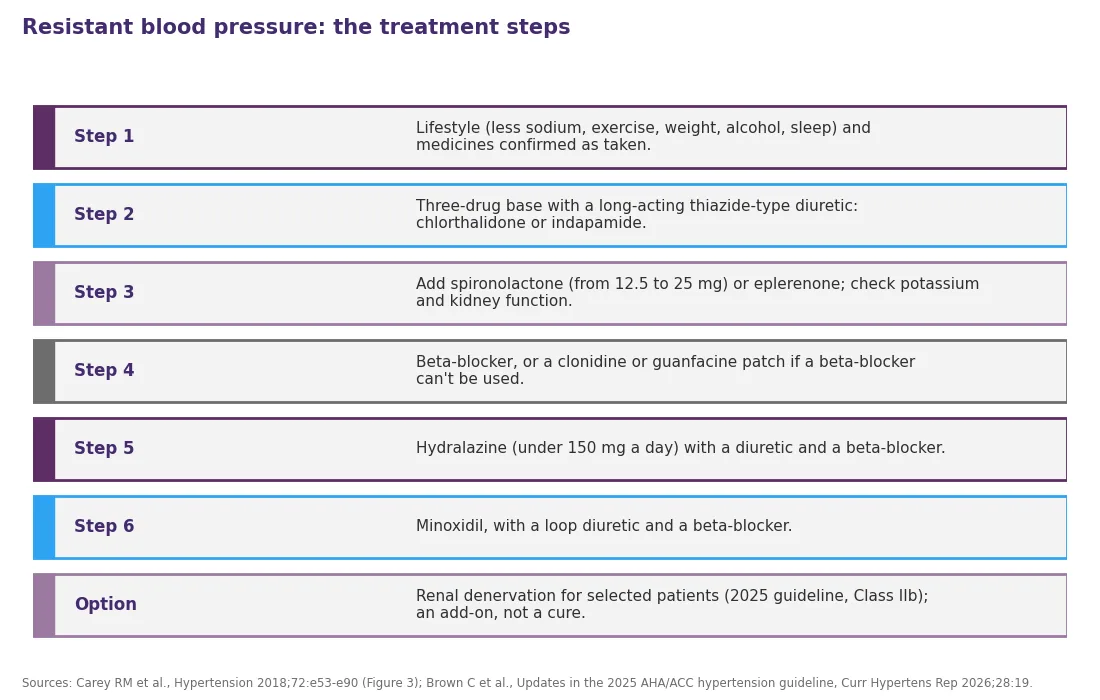
The drug plan starts by making sure the base is right: a long-acting thiazide-type diuretic (chlorthalidone or indapamide) alongside the other two classes. The statement cites comparisons in which simply switching from hydrochlorothiazide to the same daily dose of chlorthalidone lowered systolic pressure by another 7 to 8 mm Hg. The next step the statement describes is a mineralocorticoid receptor antagonist, spironolactone or eplerenone. In people who are not visibly fluid-overloaded but show low renin or salt-sensitive pressure, it reports that these drugs work better than alpha-blockers or beta-blockers as the fourth drug. Spironolactone is taken once a day and can be started at 12.5 to 25 mg. It suits about 70% of people with resistant hypertension, judged by kidney function and potassium, yet only a small fraction receive it. Potassium can rise too high with it, especially when the eGFR is below 45 or potassium already runs above 4.5, so potassium and kidney blood tests are part of the plan.
Later steps if pressure is still high
If pressure stays high, the choice of the next drug depends partly on heart rate, which the statement uses as a rough guide to how hard the nervous system is driving the pressure; in two large trials, patients with resting heart rates above 80 beats a minute had higher mortality. The statement’s next step is therefore a beta-blocker or, when one can’t be used, a central agent such as clonidine or guanfacine. It recommends the clonidine skin patch over clonidine tablets, because tablets need frequent doses and can cause a rebound rise in pressure when doses are missed. Taking guanfacine at night, it adds, can reduce daytime drowsiness and may help with sleep. After that comes hydralazine, kept under 150 mg a day and paired with a diuretic and a beta-blocker, or with nitrates in people who also have heart failure. Minoxidil is the last step. It lowers pressure in most people but needs a loop diuretic and a beta-blocker alongside it and causes unwanted hair growth.
Renal denervation, the procedure the 2025 guideline added
Renal denervation uses a catheter to quiet the nerves in the walls of the kidney arteries that help raise blood pressure. The 2025 guideline introduced it as an optional add-on (a Class IIb recommendation) for adults whose office pressure stays between 140 and 180 systolic, with a diastolic of 90 or more, despite optimized medicines, or who cannot tolerate several drugs. In sham-controlled trials it lowered 24-hour systolic pressure by about 3 to 5 mm Hg in people already on two to five drugs, and the 2026 review stresses that it is not a cure or a replacement for medication. Most trials excluded people with narrowed kidney arteries, fibromuscular dysplasia or a prior kidney-artery stent. If you are interested, ask the physician whether you might qualify and where the procedure is performed.
Benefits beyond the reading
Lowering pressure is not only about the heart. The 2026 review of the guideline notes that more intensive blood pressure lowering reduces the risk of heart disease, stroke and kidney disease, and also the risk of dementia. That is part of why the guideline expands its advice on cognition and on older adults.
Burbank heart specialists for what years of high pressure do to the heart
High blood pressure rarely stays a number. Over years it changes the heart muscle, the heart’s filling, its rhythm and the arteries that feed it, and those changes are what a cardiologist looks for and treats. They are also why many people who first see CACVI for blood pressure stay for something else.
A thicker, stiffer left ventricle
The left ventricle pumps blood into the aorta. Against years of high pressure, its wall thickens, much as any muscle does under a heavier load. The AHA statement lists left ventricular hypertrophy among the conditions found more often in resistant hypertension than in controlled pressure. A thick wall is a stiff wall. CACVI’s heart failure page describes this form of the problem: the ventricles become stiff and don’t fill properly between beats. The echocardiogram measures wall thickness and shows how the chamber fills.
Reading the echo report after a blood pressure visit
An echocardiogram report from CACVI covers chambers, valves, pumping strength expressed as an ejection fraction, and any backward leak through a valve. For someone with long-standing high pressure, the useful lines on the report are the wall thickness of the left ventricle, the size of the left atrium, the ejection fraction and any comment on how the ventricle fills. A normal ejection fraction with a thick wall and poor filling describes a heart that is pumping well but stiffening. Ask the physician to go through those lines with you, because they decide how aggressive the blood pressure plan should be.
When stiffness becomes heart failure
CACVI’s heart failure page lists hypertension among the conditions that damage or weaken the heart over time. The symptoms it names include shortness of breath with effort or when lying flat, tiredness, swelling in the legs and ankles, needing to urinate at night and rapid weight gain from fluid. The page lists the signs that call for emergency care: fainting or severe weakness, a rapid or irregular heartbeat together with breathlessness, chest pain or fainting, and sudden severe breathlessness with pink, foamy mucus. If any of these accompany your high blood pressure, mention them at the first visit, because they change which tests come first. CACVI’s heart failure page and cardiomyopathy page describe the treatment it offers.
Rhythm and the coronary arteries
High pressure also feeds two other problems a cardiologist treats. One is atrial fibrillation; the aldosterone figures above show how strong that link can be when a hormone cause is present, and an EKG can catch it. For a beat that comes and goes, CACVI also offers wearable recorders: a Holter that runs one to two days without a break, and an event monitor that captures a few minutes at a time. The other is coronary artery disease, including angina, the chest pressure that comes with effort, and the heart attack it can lead to. Stress testing, done on a treadmill or with medicine in Tarzana, is how the physician checks the coronary arteries when symptoms suggest it.
A stress test before stepping up exercise
Exercise is one of the strongest non-drug treatments for high blood pressure, and some people with long-standing high pressure want reassurance before starting. During the test, pressure, pulse and the electrical tracing are recorded as the workload climbs, on a treadmill, a bike, or with a drug such as Lexiscan for people who can’t exercise. CACVI lists two uses that matter here: finding how much exertion the heart handles and shaping an exercise plan around it, alongside the usual check for narrowed coronary arteries and rhythm problems. For a blood pressure patient, the pressure response during the test is part of the result, so ask what it showed.
TAVR and MitraClip: valve procedures through a blood vessel
CACVI also treats mitral valve disease and aortic valve disease, and it lists two catheter-based valve procedures among its services. Reemplazo de válvula aórtica por catéter (TAVR) replaces a narrowed aortic valve through a blood vessel, and MitraClip treats a leaking mitral valve the same way. Whether either fits depends on the echocardiogram and the valve team’s assessment.
Kidneys and brain: the organs outside the heart
The cardiologist’s view of hypertension damage reaches past the chest. The kidney numbers already mentioned, eGFR and urine albumin, show whether pressure is harming the filters. The brain is the other organ at stake. Stroke is the most familiar risk, and the 2025 guideline’s attention to cognition reflects evidence that better pressure control lowers dementia risk too. A full picture of these effects is what lets the physician decide how hard to push the numbers down, and how fast.
The aorta: the large artery high blood pressure strains most
The aorta carries the blood from every heartbeat down through the chest and abdomen, and it takes the full force of high blood pressure. Of the blood vessels outside the heart, it is the one a blood pressure work-up most often turns to. According to the National Heart, Lung, and Blood Institute (NHLBI), high blood pressure is the main risk factor for a thoracic aortic aneurysm, a bulge in the part of the aorta inside the chest, and a risk factor for an abdominal aortic aneurysm as well.
What raises the risk besides blood pressure
NHLBI lists the other main risks. Age matters: abdominal aneurysms are most common after 65. Smoking is one of the strongest factors, and in current smokers an abdominal aneurysm can grow faster and is more likely to burst. Family history counts: about 1 in 10 people with an abdominal aneurysm have relatives with one, and a first-degree relative raises the chance to about 1 in 5. For the chest aorta, inherited conditions such as Marfan, Loeys-Dietz, Ehlers-Danlos and Turner syndromes, and a bicuspid aortic valve, raise the risk. Stimulants such as cocaine raise both blood pressure and aneurysm risk. NHLBI’s list of medical risk factors also includes chronic obstructive pulmonary disease, kidney disease, obesity, unhealthy cholesterol and atherosclerosis elsewhere in the body, and it names pheochromocytoma, one of the rare blood pressure causes described earlier.
Aneurysm and dissection are different problems
An aneurysm is a widening: the wall bulges outward over months or years. A dissection is a split: NHLBI describes it as a tear in the inner layer of the aortic wall that lets blood force its way between the inner and middle layers. An aneurysm can lead to a dissection or a rupture, and the main purpose of treating a known aneurysm is to keep either from happening. High blood pressure feeds both, which is why controlling it is part of aneurysm care, not a separate issue.
How an aneurysm is found
Most aortic aneurysms cause no symptoms, NHLBI says, so they are found on purpose or by chance. When a large one does cause symptoms, it is usually by pressing on something nearby: hoarseness, trouble swallowing or breathing, a throbbing feeling in the belly, or pain in the back, chest, neck or jaw, depending on where the bulge sits. At a physical exam, a doctor may feel the abdomen, listen to the heart and check the pulses in the arms and legs, but imaging settles the question. An abdominal aneurysm is diagnosed when the aorta measures 3 centimeters or more across, and ultrasound measures it and, when the aorta is larger than it should be, is repeated later to check for growth; an abdominal aortic aneurysm duplex is one of the vascular studies CACVI lists. The echocardiogram done for blood pressure also shows the part of the thoracic aorta closest to the heart, while other parts of the chest aorta need CT or MRI. CACVI’s aortic aneurysm page defines an aneurysm as an aorta widened to more than one and a half times its normal size.
Who is checked for an aneurysm in the chest
Screening for the chest aorta is targeted at people with a reason. NHLBI lists people with Marfan, Loeys-Dietz, Ehlers-Danlos or Turner syndrome, and the parents, children and siblings of anyone who has a thoracic aortic aneurysm or a bicuspid aortic valve with aortic involvement. If a relative had an aortic tear or an aortic repair, say so at the first visit; it changes which images the physician orders and how often they are repeated.
Living with a known aneurysm
For a small aneurysm, NHLBI describes treatment aimed at slowing growth and lowering the chance of a tear. Stopping smoking is the most important step, and NHLBI notes that the risk of rupture falls after smoking stops, especially in women; the National Cancer Institute’s free quitline is 1-877-448-7848. Blood pressure medicines, including beta-blockers, ACE inhibitors and ARBs, lower the strain on the wall, and statins and sometimes aspirin are added. NHLBI also suggests avoiding heavy weightlifting and powerful stimulants, while noting that moderate physical activity does not raise the risk of growth or rupture. Repair is considered when an aneurysm is large or growing; CACVI’s endovascular aneurysm repair page describes the catheter-based option.
Signs of a tear, and where to go
A rupture or dissection, a tear in the aortic wall, is a 911 emergency. NHLBI lists sudden, severe pain in the chest, belly or back, light-headedness and a rapid heart rate as the warning signs. Anyone in Burbank with those symptoms, especially with a known aneurysm or very high blood pressure, should call 911 rather than drive anywhere, including to a CACVI office.
Three CACVI cardiologists for blood pressure and aorta work
Three CACVI cardiologists list on their biographies the imaging and endovascular credentials that blood pressure and aorta work relies on. The letters after each name are worth decoding, because each set means something different.
- Dr. Mehran J. Khorsandi: residency and cardiology fellowship at Cedars-Sinai after medical school at Penn; diplomate in interventional cardiology, cardiovascular disease, endovascular medicine and internal medicine, and a certified cardiac device specialist, which matters for the pacemakers and defibrillators CACVI lists among its procedures.
- Dr. Moinakhtar Lala, M.D., FACC, FSCAI, RPVI: founder of CACVI’s limb salvage program, per his biography; certifications span interventional cardiology, endovascular medicine, echocardiography, nuclear cardiology and vascular ultrasound.
- Dr. Vasim Lala, D.O., FACC, FSCAI, RPVI: his Mount Sinai subspecialty fellowship in New York included endovascular cardiology, and the certifications on his CACVI biography include interventional cardiology, nuclear cardiology, echocardiography and the RPVI.
FACC and FSCAI are fellowship titles, granted by the American College of Cardiology and by SCAI, the society for catheter-based cardiology. “RPVI” stands for Registered Physician in Vascular Interpretation, the credential for reading vascular ultrasound such as the aortic and kidney-artery scans described above. Board status in echocardiography and nuclear cardiology applies to two tests a blood pressure patient often gets: the heart ultrasound and the nuclear stress scan. For blood pressure work, those imaging credentials are the ones that come into play most often.
Other specialists who may join the work-up
Resistant pressure often needs more than one specialty, and the AHA statement names them. The endocrine testing for aldosterone described earlier belongs to an endocrinologist. Suspected sleep apnea goes for a sleep study. Advanced kidney disease brings in a kidney specialist, because it changes the choice of diuretic and the safety of spironolactone. The statement also describes a separate certification program for hypertension specialists and hypertension clinicians. The cardiologist’s part is the heart, the aorta and the artery imaging, and keeping the overall plan in one place so each specialist sees what the others found.
Vein and leg-artery care
For Burbank residents, vein treatment, blocked leg arteries and limb-saving care are covered on the Burbank leg pain doctor page; the aorta and the blood pressure causes stay here.
Tarzana or Alden Drive from Burbank, by time of day
Neither office is a short hop from Burbank, and on a weekday the two trips take about the same time. What separates them is the kind of road. The Tarzana trip is a freeway trip, west on the Ventura Freeway with the 5 and the 405 as a fallback. The Alden Drive trip is mostly city streets over the hills, by Olive Avenue, Hollywood Way, Laurel Canyon or Coldwater Canyon. The figures below are typical weekday ranges. Use them to plan, not as promises.
| Leaving from | Office | Leave 8:00 a.m. | Leave 5:00 p.m. |
|---|---|---|---|
| Burbank City Hall, 275 E Olive Ave | Tarzana | 30 min to 1 hr 5 min; 15.0 mi by US-101 | 35 min to 1 hr 10 min; 15.0 mi by US-101, or 23.4 mi by I-5 and I-405 in the same time |
| Burbank City Hall | Alden Drive | 35 min to 1 hr 25 min; 11.0 mi by Olive Ave | 35 min to 1 hr 15 min; 11.0 mi by Olive Ave |
| Hollywood Burbank Airport area | Tarzana | 30 min to 1 hr 5 min; 15.0 mi by US-101 | 35 min to 1 hr 5 min; 20.9 mi by I-5 and I-405 |
| Hollywood Burbank Airport area | Alden Drive | 35 min to 1 hr 30 min; 11.7 mi by Hollywood Way | 35 min to 1 hr 15 min; 11.7 mi by Hollywood Way |
| Burbank Town Center, Magnolia Blvd | Tarzana | 28 min to 1 hr 5 min; 15.0 mi by US-101 | 35 min to 1 hr 5 min; 22.7 mi by I-5 and I-405 |
| Burbank Town Center | Alden Drive | 35 min to 1 hr 25 min; 11.0 mi by Olive Ave | 30 min to 1 hr 15 min; 11.0 mi by Olive Ave |
Morning appointments
At 8 a.m., Tarzana’s range tops out lower than Alden Drive’s from every Burbank starting point in the table: about an hour and five minutes at worst, against close to an hour and a half. The westbound Ventura Freeway is slow in the morning, but the surface-street routes to Alden Drive are slower when they jam. For a first appointment that may include an echocardiogram or a stress test, the Tarzana slot is usually the easier one to reach on time.


Late-afternoon appointments, and the 5 as the way around
By 5 p.m., the two offices even out, and the route to Tarzana changes. From the airport area and the Town Center, the fastest evening route is often not the Ventura Freeway at all but north on I-5 and back south on I-405, about 21 to 23 miles against 15, for roughly the same time. When the 101 is backed up, that loop around the north side of the Valley is the alternative to know about. At midday the same I-5 and I-405 loop can still be the quicker way from the airport area, at about 32 minutes for 20 miles.
The surface-street run to Alden Drive
Alden Drive is closer on the map, 11 to 12 miles from most of Burbank, and that is the trap. The fastest routes cross the hills on city streets: down Olive Avenue or Hollywood Way and through the passes. At midday, City Hall to Alden Drive takes about 40 minutes for 11 miles. The evening alternative over Coldwater Canyon added about five miles. Alden Drive makes the most sense when the visit fits into a day already spent on the Westside or near Cedars-Sinai.
The Saturday option on Ventura Boulevard
Of the two offices that serve Burbank, Tarzana alone keeps weekend hours. For anyone who works weekdays, that can matter more than any drive time. Not every type of appointment may be offered on a Saturday, so ask when you call.
Leaving from Providence Saint Joseph
For a follow-up after a hospital stay, the trip starts on Buena Vista Street. From the hospital, the 8 a.m. range to Tarzana is 26 to 55 minutes for 13 miles on the Ventura Freeway, the shortest of any Burbank starting point; to Alden Drive it is 35 minutes to 1 hour 20 minutes for 9.5 miles by Olive Avenue. Anyone recovering from a hospital stay should have someone else drive.
Metro buses and the B Line instead of driving
Transit works but takes time. The Tarzana trip takes about 1 hour to 1 hour 30 minutes on two or three buses, ending with Metro’s Ventura Boulevard line, and the Alden Drive trip about 1 hour 30 to 1 hour 45 minutes by bus, the Metro B Line and a bus along Beverly Boulevard. Ask when you book whether the visit includes a test, so you can plan the return trip.
Between visits: working with your regular doctor and pharmacist
Resistant blood pressure is not fixed in one appointment. The 2025 guideline gives more weight to team-based care than its predecessor, naming physicians, nurses, pharmacists, dietitians and community health workers as part of sustained control, and it recommends home blood pressure monitoring for adjusting medicines between visits. In practice, that means a few habits make the cardiology visits count.
One medicine list, everywhere
Keep a single list with each blood pressure medicine, its dose, when you take it and the date it was started or changed, and bring it to every visit, including visits to other specialists. New prescriptions from other doctors are one of the ways interfering drugs, such as an NSAID or a steroid, enter the picture without anyone noticing.
The pharmacist’s part
A pharmacist can line refills up on one date, flag combination pills that replace two separate ones and spot an over-the-counter product from the interfering list. Ask the pharmacy to put every medicine on the same refill cycle; the AHA statement lists consolidating refills among the simple ways to improve adherence.
Readings and follow-up between appointments
The 2026 review of the guideline describes standardized home readings, backed by frequent contact with the care team, as a way to speed up dose changes, support adherence and keep treatment from stalling. It also notes that the guideline recommends telehealth as part of team-based care. Ask CACVI which follow-up steps can be handled remotely and which need an office visit, and agree how your home readings will reach the physician between appointments.
What each follow-up should include
A follow-up for resistant pressure goes better when the physician has the same material every time:
- home or 24-hour readings since the last visit, with the times they were taken;
- blood test results from any lab since the last visit;
- new prescriptions or over-the-counter products from anyone else;
- side effects, and any dose you have skipped because of them;
- new symptoms such as breathlessness, ankle swelling, palpitations or snoring that someone has noticed.
Dizziness when you stand up
As the doses climb, some people feel light-headed on standing. The 2025 guideline addresses this directly. It says that better blood pressure control lowers the risk of orthostatic hypotension, the drop in pressure on standing, and that when someone on intensive treatment has a drop without symptoms, continuing toward a systolic goal under 130 is reasonable. When treatment is started or stepped up, it advises checking for symptomatic drops, which can point to another underlying condition. Report light-headedness, near-fainting or falls rather than quietly skipping doses.
Agreeing who adjusts the doses
Both your regular doctor and the cardiologist can change blood pressure medicines. Agree at the first visit who makes routine adjustments, and make sure both see the same readings and lab results. Potassium and kidney blood tests after a spironolactone start or a diuretic change are the kind of follow-up that slips when two offices each assume the other ordered it.
Providence Saint Joseph and 911: emergencies stay in Burbank
A CACVI office is the place for planned cardiology care, not for an emergency. Chest pain or pressure that doesn’t ease, sudden shortness of breath, fainting, stroke signs such as face drooping, arm weakness or slurred speech, and sudden severe pain in the chest, belly or back mean calling 911. The same goes for a blood pressure reading far above your usual numbers that comes with any new symptom.


Very high readings without symptoms
The 2025 guideline changed the vocabulary for very high readings. “Hypertensive urgency” is gone; the guideline now says “severe hypertension” for markedly high pressure without signs of acute organ damage, and the 2026 review notes that prompt outpatient management of it avoids hospital stays that don’t help. For patients already in the hospital for something else, the guideline advises against giving extra doses purely to bring a high number down fast when no organ damage is present. Symptoms or signs of organ damage are different: those patients are hospitalized and treated with intravenous medicines. If a very high home reading comes without symptoms, call your doctor or CACVI the same day; if it comes with any symptom on the list above, call 911.
Burbank’s STEMI Receiving Center
The emergency department is open 24 hours a day, every day (818-843-5111). Providence reports that the California State Department of Health Services and the Los Angeles County Emergency Medical Services Agency have designated the Saint Joseph emergency department as a STEMI Receiving Center, a hospital equipped for the most serious type of heart attack. Its STEMI team works with paramedics and calls in the hospital’s catheterization team, interventional cardiologists and heart surgeons. Providence also lists the hospital as a certified stroke center, run with its neuroscience institute, with clot-busting medicines and medicines to protect the brain and reduce swelling among the treatments it names, and rehabilitation and support services after the acute stage. Because paramedics take a heart attack patient to a receiving center, the right first move from anywhere in Burbank is 911 rather than a private drive.
Heart surgery and the hospital’s heart program
CACVI’s physicians are cardiologists who treat with medicines and catheter procedures; they are not heart surgeons. Providence’s heart and vascular page lists cardiac and thoracic surgery, open-heart and bypass surgery, valve repair and replacement, cardiac catheterization and an accredited vascular laboratory among the services at Saint Joseph. When a Burbank patient’s heart or aorta problem turns out to need an operation, that is the kind of hospital program where the surgery happens, and the cardiologist’s records travel with the patient.
Who you will see in the Saint Joseph emergency room
Providence notes that its emergency physicians come from Burbank Emergency Medical Group, an independent contractor. They may not be in the same insurance networks as the hospital, and Providence suggests checking with your insurer. That is worth knowing in advance if you have a heart condition and expect to use that emergency room again.
Leaving Saint Joseph with a new diagnosis
If an emergency visit at Saint Joseph led to a diagnosis or a new medicine, ask for the discharge summary, the kidney and potassium results, and any EKG, echocardiogram or imaging reports before you leave. Bring them, or have them faxed, to whichever CACVI office you book for the follow-up visit.
Burbank cardiologist questions on blood pressure, the aorta and visits
Is a referral needed before a cardiologist looks at my blood pressure?
Whether a referral is required depends on your health plan, and only the plan can answer that. Clinically, a referral note from your regular doctor is useful even when it isn’t required. The most helpful ones list every blood pressure medicine with its dose and start date, the readings that prompted the referral, recent kidney and potassium results, and the specific question the doctor wants answered, such as “resistant on three drugs, please evaluate for secondary causes.”
Is there somewhere close to Burbank for an EKG or an echo?
Both are listed as done in CACVI’s Tarzana office, along with stress testing. A cardiology visit is the usual way in, because the physician decides which test answers your question. If your primary care doctor has already ordered an echo, ask the office whether it can be booked on its own.
Where can I check a cardiologist’s board status?
The American Board of Internal Medicine runs a free Verify a Physician tool on abim.org. It shows whether a doctor’s certification in cardiovascular disease, interventional cardiology or another ABIM subspecialty is current, and since when. Look up the physician’s own name, because certification belongs to the doctor, not the practice. Boards outside ABIM, such as the echocardiography or endovascular boards named on CACVI’s biographies, keep their own records.
My pressure was fine on treatment for years and suddenly isn’t. Should causes be checked?
Yes. The European nephrology commentary on the 2025 guideline lists the situations in which secondary causes are more common: stage 2 pressure (140/90 or higher), pressure that resists treatment, loss of control in someone whose pressure had been well regulated, high blood pressure that began before age 30, and heart or kidney damage out of proportion to how long or how high the pressure has been. Any one of these is reason enough to ask the physician to look for a cause.
Do I need to stop my blood pressure pills before the aldosterone test?
Usually not, and only on your doctor’s instructions. The AHA statement asks for spironolactone, eplerenone and high-dose amiloride to be stopped for at least a month before the test. Other common drugs also nudge the ratio: beta-blockers and clonidine-type drugs lower renin, while ACE inhibitors, ARBs, ordinary diuretics and amlodipine-type calcium blockers raise it. If a first result is unclear, the statement describes swapping those drugs for at least two weeks for ones that don’t interfere, such as slow-release verapamil, hydralazine or an alpha-blocker. The 2026 review gives a ratio of 30 or more, with aldosterone of at least 10 ng/dL and suppressed renin, as the result that calls for confirmation.
Does spironolactone have side effects I should know about?
Besides the potassium checks, the AHA statement notes that at higher doses over long periods, spironolactone can cause breast enlargement and erectile problems in men and menstrual irregularity in women. When that happens, eplerenone is the usual substitute. It acts more briefly, so the statement advises taking it twice a day for its full effect.
How much does a CPAP machine lower blood pressure?
Modestly. In the randomized trial the AHA statement describes, people with resistant hypertension and moderate to severe sleep apnea who used CPAP saw 24-hour pressure fall by 3.1/3.2 mm Hg on average. Those who used the machine at least four hours a night did better, at 4.4/4.1 mm Hg over 24 hours, with larger drops at night. CPAP helps, but medicines are almost always still needed.
Are potassium salt substitutes safe for me?
For many people they help. The 2025 guideline supports potassium-based salt substitutes for selected patients, but with caution in severe chronic kidney disease and in anyone whose body clears potassium poorly. Ask the physician before switching, particularly if you take spironolactone or eplerenone, which can also push potassium up.
How much alcohol counts as heavy for blood pressure?
The AHA statement calls heavy intake, more than about 30 to 50 grams of alcohol a day, a well-established risk factor for high blood pressure. A standard US drink holds about 14 grams, according to the National Institute on Alcohol Abuse and Alcoholism, so that is roughly two to three and a half drinks a day. The statement adds that the relationship may differ between men and women.
What blood test checks for a pheochromocytoma?
The AHA statement names plasma free metanephrines or urine fractionated metanephrines, breakdown products of adrenaline-like hormones, as the screening test of choice. People with high blood pressure often have mildly raised levels, especially with obesity, sleep apnea or tricyclic antidepressants, so a borderline result is usually repeated before any scan is ordered.
I had a coarctation repaired as a child. Does that matter now?
It does. The AHA statement says adults with a repaired coarctation of the aorta often develop high blood pressure and carry a higher risk of heart attack, aortic aneurysm, stroke and heart failure. When they do have high pressure, it advises CT angiography to look for leftover narrowing in the aortic arch.
Is renal denervation the same as a renal artery stent?
No. A stent props open a narrowed kidney artery. Renal denervation leaves the artery as it is and uses a catheter to quiet the nerves in its wall that help raise blood pressure. They answer different problems, and the trials of denervation mostly excluded people with narrowed kidney arteries.
Which payment methods does CACVI take?
Co-pays are collected at the visit. Cash works, and so do Visa, Mastercard, Discover and American Express cards, per CACVI’s new-patient page, which also asks that the insurance card come to every appointment.
Nearby CACVI cardiology pages
Glendale, Sun Valley and North Hollywood each have a CACVI cardiology page of their own:
For a cardiac evaluation, hypertension management or an aorta question, call the Tarzana office at 818-905-5904 or the Los Angeles office at 310-652-2744, or send a request online. For an emergency, call 911.
Where the blood pressure and aorta facts come from
- Carey RM, Calhoun DA, Bakris GL, et al. Resistant hypertension: detection, evaluation, and management. A scientific statement from the American Heart Association. Hypertension. 2018;72:e53-e90. Full text (PMC)
- Jones DW, Ferdinand KC, Taler SJ, et al. 2025 AHA/ACC/AANP/AAPA/ABC/ACCP/ACPM/AGS/AMA/ASPC/NMA/PCNA/SGIM guideline for the prevention, detection, evaluation and management of high blood pressure in adults. Circulation. 2025;152:e114-e218. PubMed (PMID 40811497)
- Brown C, Clark D 3rd, Jones DW. Updates in the 2025 AHA/ACC hypertension guideline. Curr Hypertens Rep. 2026;28(1):19. Full text (PMC)
- Kanbay M, Copur S, Sarafidis P, et al. The 2025 AHA/ACC high blood pressure guideline: a commentary from the European Renal Best Practice (ERBP). Nephrol Dial Transplant. 2026;41(10):1909-1918. Full text (PMC)
- National Heart, Lung, and Blood Institute. Aortic aneurysm: causes and risk factors, symptoms, diagnosis, treatment.
- Providence Saint Joseph Medical Center. Emergency care. providence.org
- CACVI. Heart failure, Aortic aneurysm, Vascular ultrasounds, Ecocardiograma, Pacientes nuevos.
- Drive and transit times: typical weekday traffic, November 2026. Parking: CACVI new patients page.
¿Listo para hablar?