




Evaluación cardíaca
Are you searching for a cardiologist near Temple City?
CACVI’s cardiologists see Temple City patients at the Alden Drive office in Los Angeles, about 26 miles west of City Hall on the 10 freeway. The practice covers the heart and the arteries outside it, runs many of its tests in the office, and takes requests from patients and from the doctors who send them.
A cardiologist for Temple City patients, seen on Alden Drive
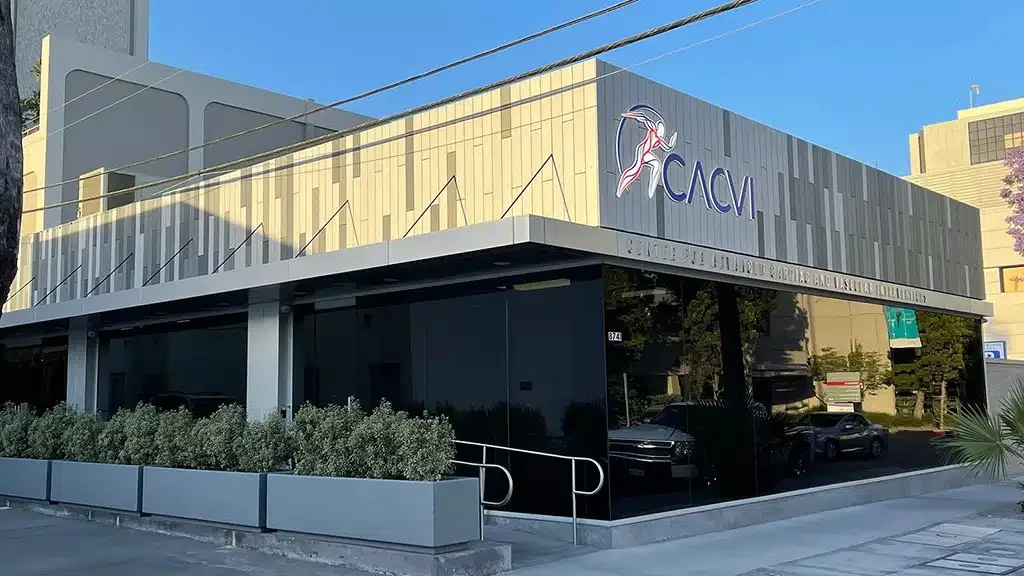
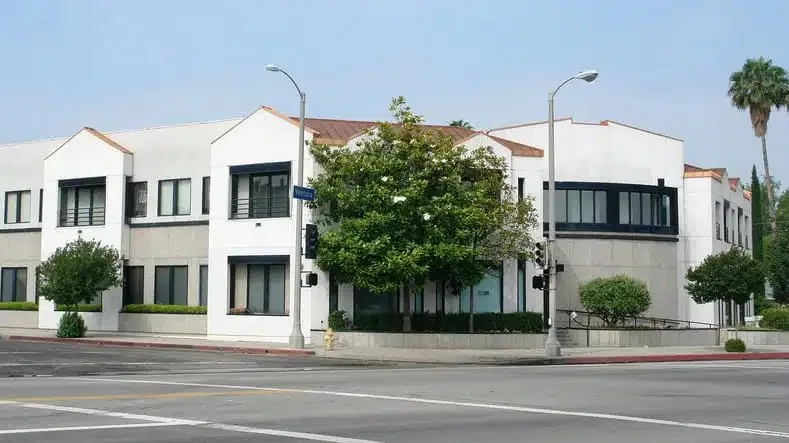
The CACVI office closest to Temple City is at 8741 Alden Drive, Suite A, in Los Angeles, and that is where most Temple City patients are seen on weekdays. Of the other two, the Ventura Boulevard office in Tarzana adds weekend hours, and the Hesperia Road office in Victorville looks after the High Desert. If you need a cardiologist or heart doctor close to a Temple City address, the sections below tell you plainly what the trip involves, what the visit covers and how to book it, so you can decide whether a Los Angeles cardiology practice suits you.
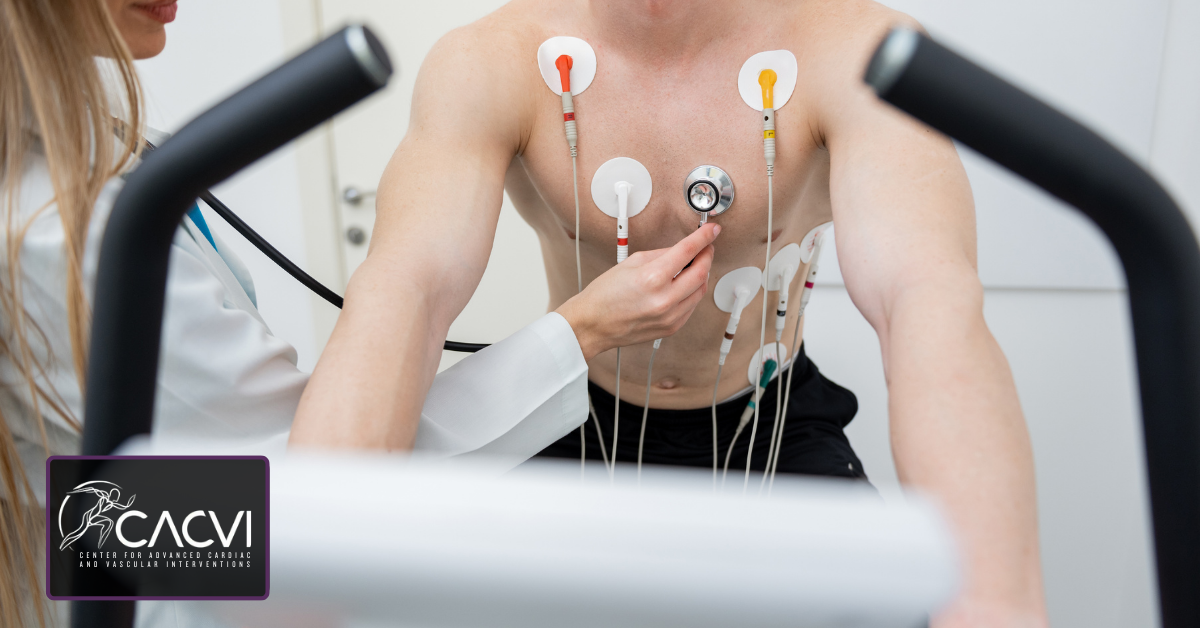
A Temple City patient may need a cardiologist for chest pain that shows up on exertion, breathlessness that wasn’t there a year ago, a racing or skipping pulse, swollen ankles, a murmur someone heard, or a recent heart attack and the questions that follow it. If you have a device already implanted, a pacemaker or defibrillator placed elsewhere, we can take over its follow-up. A first cardiac evaluation starts with a physical examination and a full medical history: the symptoms and when they appear, earlier heart problems, which relatives had heart disease and at what age, every medicine you take, and the other conditions you live with. Blood or urine tests are often ordered at that stage, because thyroid levels, kidney function, blood count and cholesterol all change how a heart symptom is read.
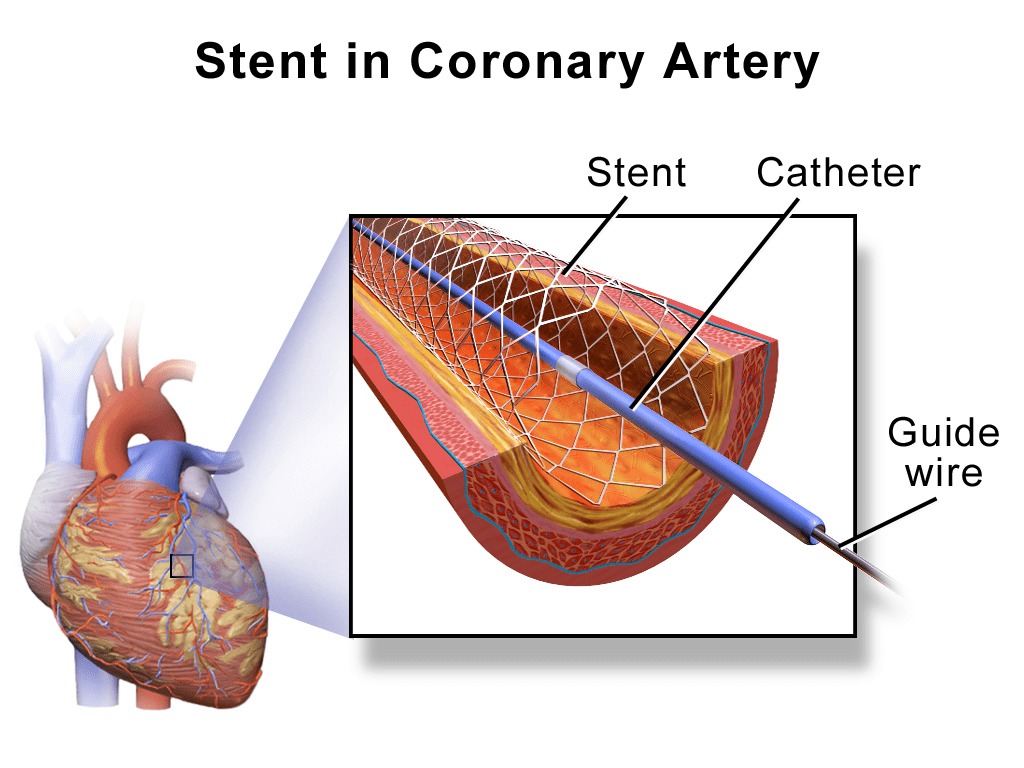
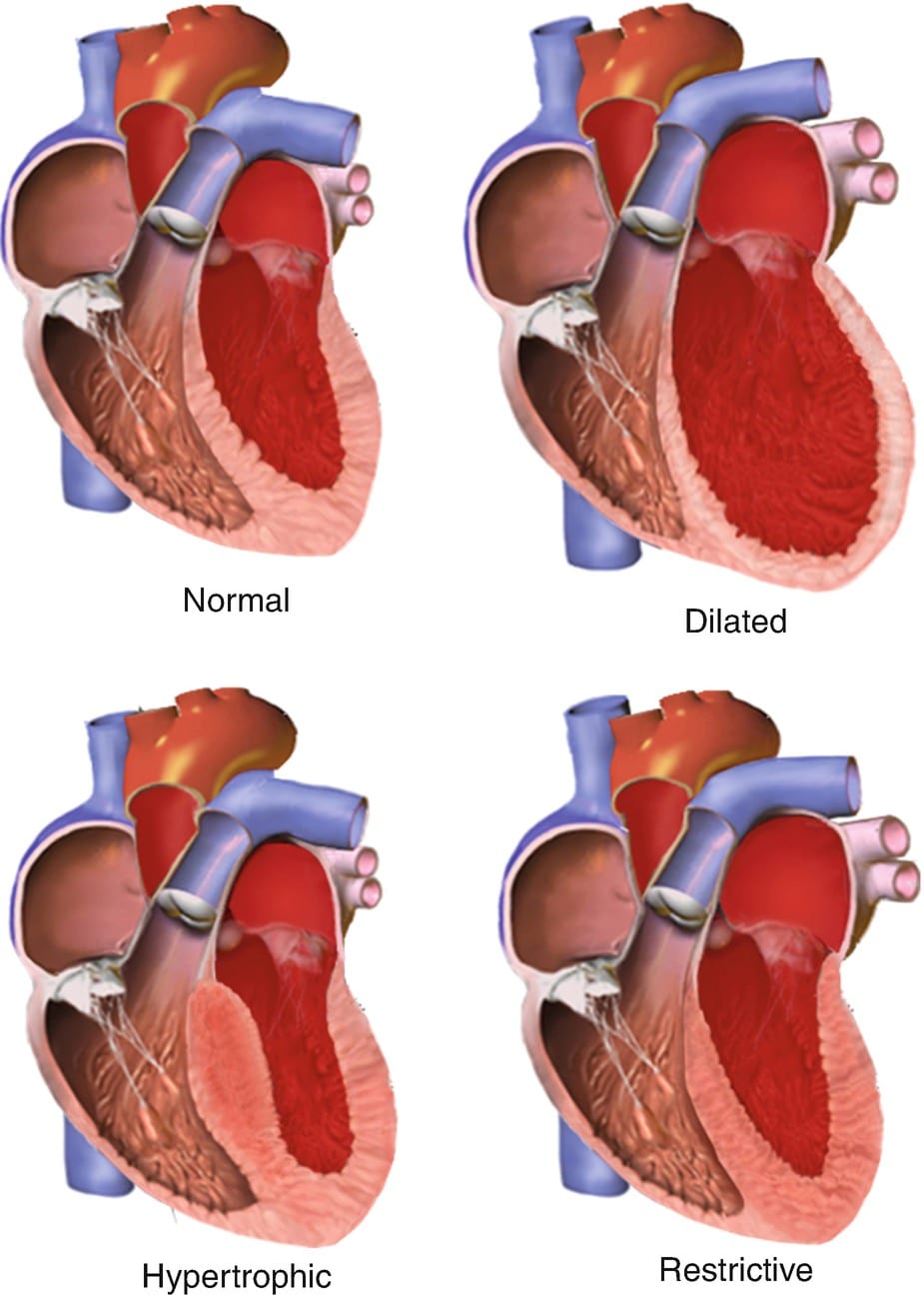
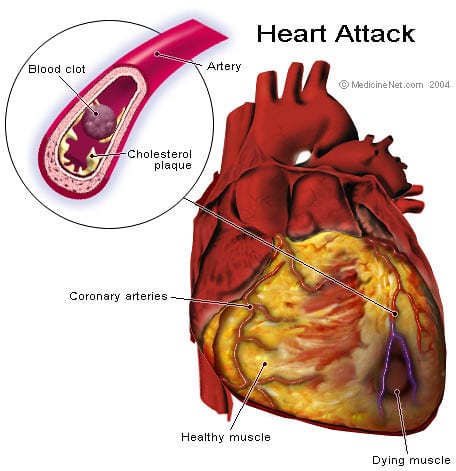
CACVI’s site gives each of the main heart conditions its own page: coronary artery disease, heart failure, cardiomyopathy, heart attack (myocardial infarction), heart rhythm problems including atrial fibrillation, and disease of the mitral and aortic valves. On the vascular side the list includes peripheral artery disease, carotid narrowing, aortic aneurysm and vein disease.
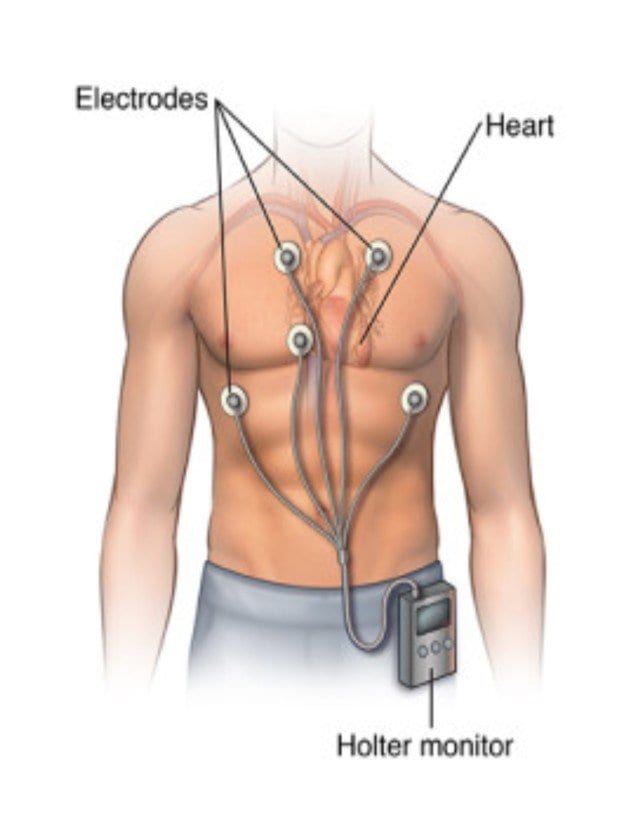
Because the office is a long drive from Temple City, it helps to know what can happen there without a hospital booking. The physicians record and read EKGs in the office, perform echocardiograms and stress tests, arrange home rhythm monitors, and run vascular ultrasound of the neck, leg and abdominal arteries; the diagnostic procedures page lists each one. Coronary calcium scans and coronary CT angiography need a scanner and are scheduled separately. When a catheter procedure is the next step, it is planned at a later visit with its own preparation, never sprung on a patient who came for a consultation. Per the ¿Por qué procedimientos en consultorio? page, CACVI’s procedures take place in an office-based lab and/or an ambulatory surgery center, with patients going home the same day. That page gives no address, so when yours is booked, ask for the location.
What sets a Temple City patient’s visit apart is usually not the symptom. It is the fact that the heart question often arrives from someone else: a surgeon who wants a cardiology opinion before an operation, the doctor managing your diabetes or your kidneys, or an HIV, thyroid or rheumatology clinic. Much of this page is organised around those situations, because each one asks the cardiologist something different.
To book, call the Alden Drive office at 310-652-2744, Monday to Friday, 8:30 a.m. to 5:00 p.m., or write to the office through the form at the bottom of the contact page.
Temple City to CACVI: the details behind a booking
The table collects the facts a Temple City patient asks about before the first call. Distances and times start at Temple City City Hall, 9701 East Las Tunas Drive, and were read from Google Maps on a weekday morning; your own street and hour will change them.
| Detail | What it means for a Temple City patient | Source |
|---|---|---|
| Nearest CACVI office: 8741 Alden Dr, Suite A, Los Angeles, CA 90048. Phone 310-652-2744. Monday to Friday, 8:30 a.m. to 5:00 p.m. | Where most weekday visits from Temple City take place. | CACVI appointments page |
| Tarzana office: 18226 Ventura Blvd, Suite 102, Tarzana, CA 91356. Phone 818-905-5904. Also open Saturday, 8:00 a.m. to 4:30 p.m. | The weekend option when a weekday trip won’t work. | CACVI appointments page |
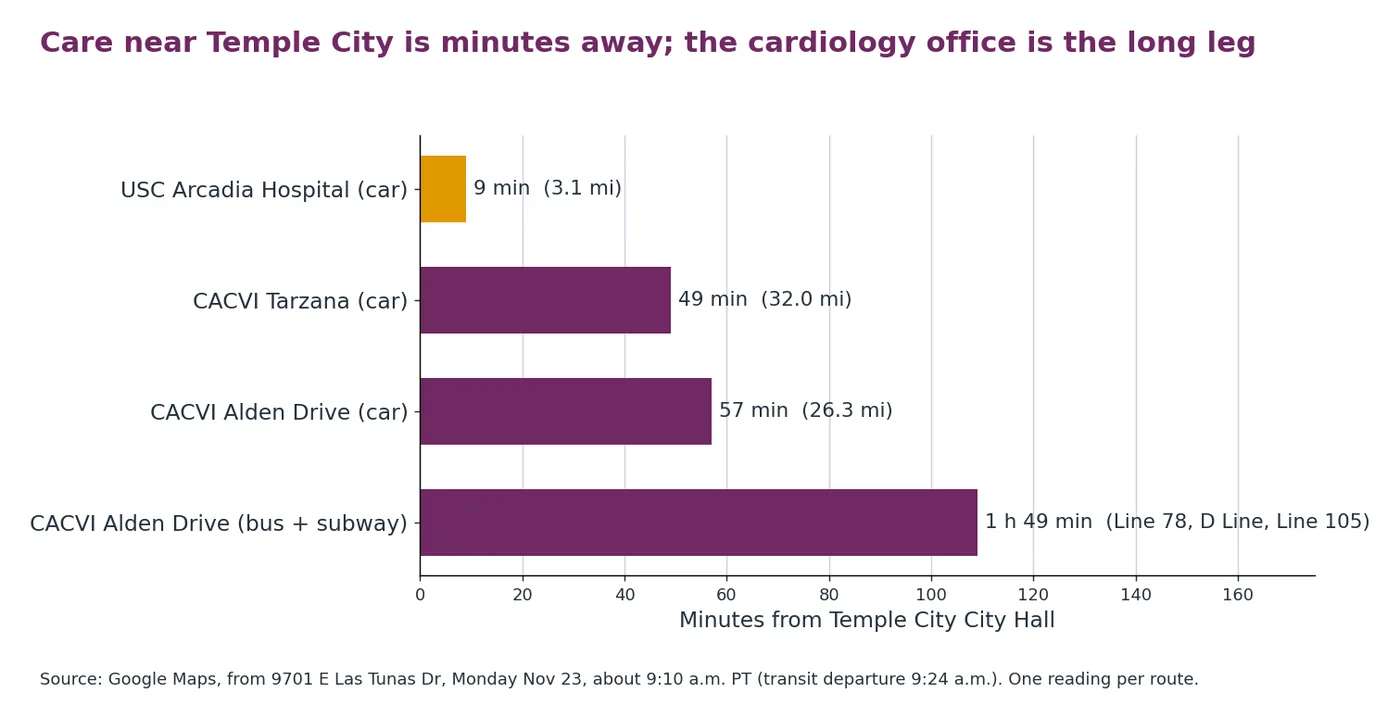
| City Hall to Alden Drive by car: 26.3 miles on the westbound 10, 57 minutes | Allow about an hour each way on a weekday morning. | Google Maps reading, 9:10 a.m. PT, Monday Nov 23 |
| City Hall to Tarzana by car: 32.0 miles on the 134 and 101, 49 minutes | Longer in distance, yet the faster trip at that hour. | Google Maps reading, 9:10 a.m. PT, Monday Nov 23 |
| City Hall to Alden Drive by transit: Line 78, D Line, Line 105; 1 hour 49 minutes with about 19 minutes of walking | Possible without a car if the walking is manageable. | Google Maps transit planner, 9:24 a.m. PT departure, Monday Nov 23 |
| USC Arcadia Hospital, 300 W Huntington Dr, Arcadia: 3.1 miles, 9 minutes. 24-hour emergency department; STEMI (heart attack) receiving center | The closest emergency department with a heart-attack program; local surgery and records. | Keck Medicine of USC; LA County EMS STEMI centers map |
| Temple City Dial-A-Ride: residents 60+ or with a disability, 50 cents a ride, reservations 626-286-2456 | Rides to doctors and hospitals in Temple City and the four bordering cities, not to Los Angeles. | City of Temple City Dial-A-Ride and its service guide |
Two rows matter most for planning. The office itself is about an hour away by car, so it pays to bring every record and question in one trip. The hospital is a few minutes away, so emergencies, stroke care and local surgery stay close to home while the cardiology work is done in Los Angeles.


When another doctor sends the heart question: what CACVI can answer
A referral rarely says everything the cardiologist needs. “Cardiology evaluation, please” on a slip of paper can mean the doctor heard a murmur, saw a worrying EKG, wants a second look at a stent history, or needs to know whether you can safely have an operation. Knowing the real question shortens the visit and keeps you from repeating tests that were already done near home.
Bring the question, not only the slip
Ask the doctor who sent you what they want answered, and write it down in one sentence. “Is this murmur a valve that needs watching?” leads to a different visit from “Can she have her hip replaced in March?” If the referral came through an HMO medical group, the authorization usually names the service it covers, so bring that paper too.
Which referral reasons lead to which part of the practice
The table below matches common reasons for a referral with the part of CACVI’s work that answers them. It describes what the practice lists on its own pages; it does not mean every patient will need every test.
| Why the other doctor is asking | What CACVI looks at | Where to read more |
|---|---|---|
| A murmur, breathlessness or swollen ankles | Echocardiogram of the valves and pumping strength | Ecocardiograma |
| An abnormal EKG or palpitations | Resting EKG, then a home rhythm monitor if the episodes come and go | EKG; mobile cardiac telemetry |
| Chest discomfort on exertion | Stress testing, coronary CT angiography or a calcium scan, chosen by the question | Stress tests; coronary CT angiography |
| A planned operation | Risk estimate, medicine plan around surgery, stent timing | Cardiac evaluation |
| A blocked retinal artery found by an eye doctor | Carotid ultrasound, echocardiogram and rhythm monitoring to find the clot source | Section below on the eye doctor’s finding |
| Testosterone treatment in a man with heart disease or a past clot | Rhythm check and risk review alongside the prescriber | Section below on testosterone |
| Leg pain on walking or a non-healing foot wound | Ankle and leg artery studies, then angioplasty if needed | Peripheral vascular evaluation |
| An overactive thyroid with a fast or irregular pulse | Rhythm assessment and stroke-risk review while the thyroid is treated | Section below on other doctors’ questions |
| Pulmonary hypertension suspected by a lung doctor | Echocardiogram of the right heart and a check of the left side | Ecocardiograma |
| Kidney disease, dialysis or a transplant listing | Heart work-up planned around kidney function and contrast use | Section below on kidney disease |
| HIV, rheumatoid arthritis or lupus with risk factors | Risk review that accounts for chronic inflammation; statin and blood pressure decisions | Sections below on HIV and arthritis |
| A dentist asking about antibiotics before dental work | A letter stating whether you fall in the highest-risk group | Section below on the dentist’s question |
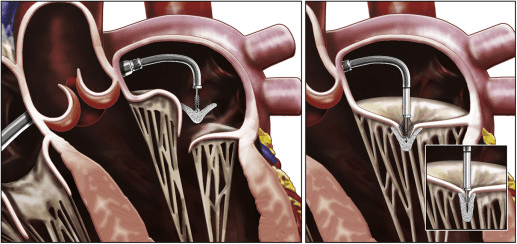
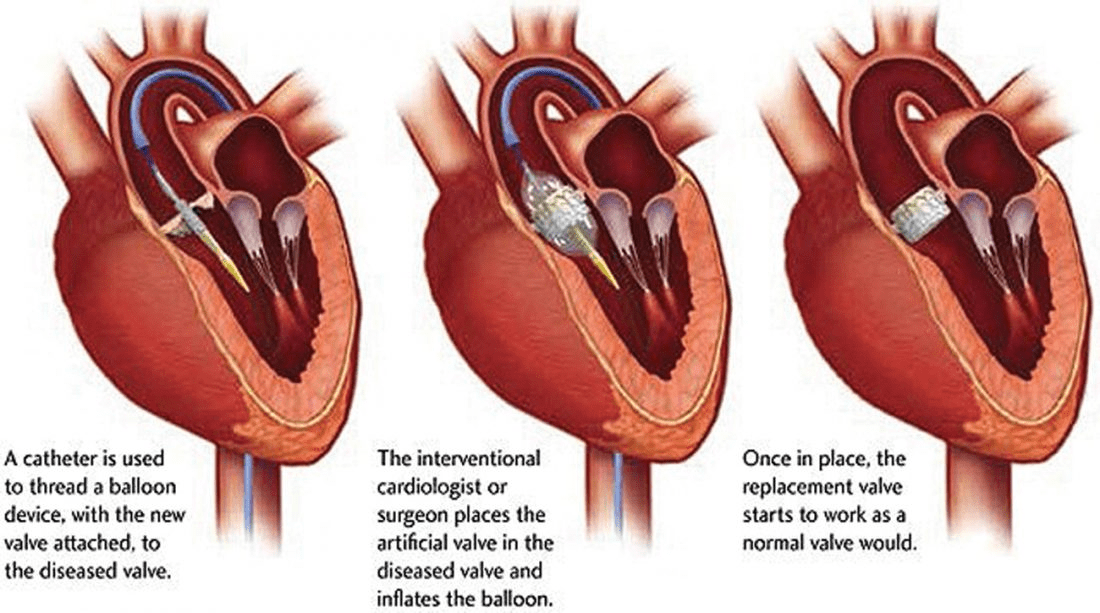
| A narrowed aortic valve or a pacemaker question | TAVR evaluation; pacemaker and defibrillator care | TAVR; pacemakers and defibrillators |
If nobody sent you
A referral is not required to want a cardiology opinion. Plenty of people book on their own after a pharmacy blood pressure reading, a smartwatch alert or a relative’s heart attack. In that case the visit starts from your own question, and the office still asks for the name of your primary doctor so the findings reach the person who sees you most often. Check first whether your insurance plan requires a referral for a cardiology visit.
What happens to the answer afterwards
The physician who sees you writes a consultation note, and with your permission it goes back to the doctor who asked. If a test is ordered, its result goes into the same record. When the question came from a surgeon or a stroke team, the note is written to answer their question directly: whether the heart is ready, what should be watched, and what should change.
When two doctors give different advice
It happens: the surgeon wants a blood thinner stopped for five days, the cardiologist says two, or the diabetes doctor and the cardiologist each adjust the same pill. Don’t pick one answer and hope. Ask each doctor to put the instruction in writing, then call the office that prescribed the medicine and read the other instruction to them. Most conflicts turn out to be two doctors answering slightly different questions, and they settle quickly once each sees the other’s reasoning. The consultation note exists partly for this reason, so ask for a copy for your own records.
Questions this practice sends on rather than answers
CACVI’s physicians are cardiologists who work through catheters and needles, not through an open chest. When the answer turns out to be open-heart surgery, a cardiac surgeon takes over that part. Its pages also don’t list catheter ablation for rhythm problems or heart transplant evaluation. In those cases the visit still settles what is wrong, and the next referral goes to a program that offers the missing piece.
Referring as a doctor or a clinic
Physicians and clinics in the San Gabriel Valley can send patients through CACVI’s patient referral page. Including the reason for the referral, the most recent EKG and any echo or stress test report helps the office schedule the right visit length.
Heart clearance before an operation: what the surgeon is really asking
USC Arcadia Hospital, three miles from Temple City City Hall, lists surgical services among its programs, so a Temple City patient’s knee, hip, gallbladder or cancer operation may well be booked close to home while the heart question goes to a cardiologist farther away. When a surgeon or anesthesiologist asks for “cardiac clearance”, the request sounds like a pass or fail. It isn’t one. The current American Heart Association and American College of Cardiology guideline on heart care around non-cardiac surgery, published in 2024, frames the visit as an estimate of risk and a plan to lower it.
How the risk is estimated
Two things matter most: the operation and the patient. A cataract procedure carries a very different heart risk from a major abdominal or vascular operation. For the patient, the cardiologist looks at known coronary disease, heart failure, earlier stroke, diabetes treated with insulin and kidney function, the factors built into the widely used Revised Cardiac Risk Index. Functional capacity is the other half. The usual threshold is about four metabolic equivalents (METs), and structured questionnaires such as the Duke Activity Status Index ask about everyday effort, like climbing a flight of stairs, to estimate it.
Low-risk procedures
Many procedures carry little heart risk at all: cataract surgery, most skin procedures, and many endoscopies among them. For a person with stable heart disease, the guideline’s general rule that tests are ordered only when they would change the plan applies with extra force here, and the cardiology question is often limited to blood thinners. A request for full “clearance” before a minor procedure is worth a phone call to the surgeon’s office to ask what exactly they need.
Tests that help and tests that don’t
Evidence does not support routine stress testing before surgery for people with stable heart disease, and prophylactic stents or bypass before an operation have not reduced heart attacks or deaths in most stable patients. Tests are ordered when the result would change the plan. Blood tests such as BNP or NT-proBNP can sharpen the risk estimate before high-risk surgery, and the 2024 guideline says measuring troponin at 24 and 48 hours after surgery may be reasonable for patients with known heart disease or a higher-risk operation.
A stent and an operation on the calendar
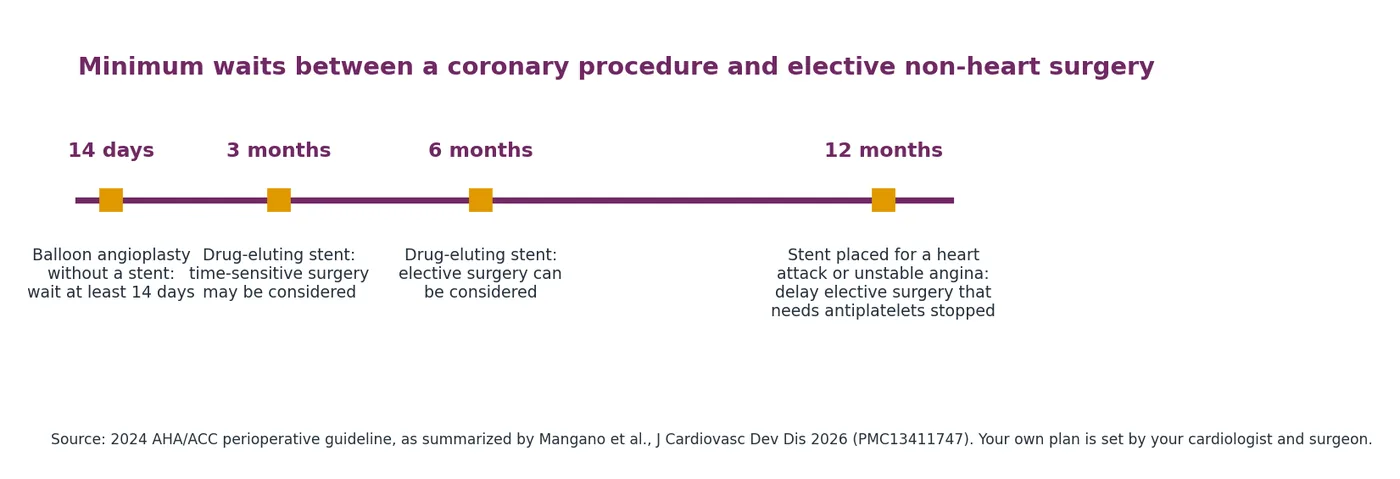
If you have had a coronary stent, the timing of elective surgery depends on when it was placed and whether your antiplatelet medicine would have to stop. The 2024 guideline says elective surgery should wait at least 14 days after balloon angioplasty without a stent. After a drug-eluting stent placed for a heart attack or unstable angina, elective surgery that requires stopping antiplatelet therapy should be delayed for 12 months if possible. Surgery can be considered six months after a drug-eluting stent, and as early as three months when the operation is time-sensitive and the benefit outweighs the risk.
Medicines in the days before surgery
Several heart and diabetes medicines change around an operation, and the 2024 guideline addresses them by name:
- Statins: keep taking them through surgery.
- Beta-blockers: not started on the day of surgery; when a new one is needed, it is started more than seven days ahead.
- ACE inhibitors and ARBs: in people with controlled blood pressure having a higher-risk operation, held for 24 hours beforehand; people with heart failure and a weak pump may continue them.
- SGLT2 inhibitors (empagliflozin, dapagliflozin, canagliflozin): stopped three to four days before surgery, and ertugliflozin at least four days before.
- GLP-1 medicines used for diabetes or weight: the guideline flags them for attention before anesthesia, so the surgical team should know you take one.
- Antiplatelet drugs and blood thinners: the stop-and-restart plan is set jointly by the cardiologist and the surgeon. Never stop one on your own.
After the operation
The heart plan doesn’t end in the recovery room. If the 2024 guideline’s troponin checks at 24 and 48 hours are ordered, the results go to the surgical team first. Medicines paused for surgery, such as SGLT2 inhibitors, ACE inhibitors or antiplatelet drugs, need a clear restart date written into the discharge instructions; ask for it before you leave the hospital, and bring the discharge papers to your next cardiology visit.
Kidney, liver and weight-loss operations
The 2024 guideline gives separate attention to people with end-stage kidney or liver disease being evaluated for transplant and to people having bariatric surgery. Transplant programs set their own heart-screening rules, and those rules vary widely from one program to the next, so a Temple City patient on a transplant list should bring the program’s written checklist to the cardiology visit rather than assume a standard set of tests. For bariatric surgery, the guideline points to careful pre-operative assessment because many candidates carry heart risk factors, and to the GLP-1 question above.
When the operation can’t wait
Not every operation can be scheduled around a heart work-up. A broken hip, a bowel obstruction or a fast-growing cancer may go ahead with the cardiology input arriving by phone or during the hospital stay. In that setting the aim narrows to the essentials: keep the heart medicines that must not stop, manage blood thinners around the incision, and watch the heart closely in the first days after surgery.
Heart strain that only a blood test shows
Some heart damage around surgery causes no chest pain at all. The 2024 guideline and the review that summarizes it describe myocardial injury after noncardiac surgery, a rise in troponin in the days after an operation, as common and strongly linked to higher mortality, which is the reason for the 24- and 48-hour troponin checks in higher-risk patients. If you are told after an operation that a troponin was raised, ask for the values and bring them to the cardiology follow-up; the visit is about finding out why, not about the operation that has already happened.
New atrial fibrillation after an operation
An irregular rhythm can appear for the first time in the days after surgery. The review of the guideline puts its incidence after non-cardiac surgery at under 3%, usually brief, and lists pain, low fluid volume, low oxygen and salt imbalances among the triggers; the 2024 guideline added specific advice on managing it, including a target heart rate under 110 beats a minute. Even when the rhythm settles before discharge, it should be on the list for the next cardiology visit, because the question of a blood thinner does not end when the rhythm does.
Pacemakers and defibrillators in the operating room
Electrical equipment used in surgery can interfere with an implanted device, so the surgical team needs to know about it well before the day. Have three facts ready for the surgical team: who made the device and which model it is (both on its ID card), which clinic checks it, and when it was last checked. Arrangements for programming the device around the operation are made between that clinic, the anesthesiologist and the cardiologist.
What to send ahead of the visit
The cardiologist can answer faster with the surgeon’s name and the planned operation, the date if one exists, any EKG or echo from the last year, your stent card or the hospital note describing the stent, and a current medicine list. The answer goes back as a written note the surgeon and anesthesiologist can use.
Diabetes care and heart care, shared between two doctors
Adults with diabetes are nearly twice as likely to have heart disease or a stroke as adults without it, and they tend to develop heart disease at a younger age, according to the National Institute of Diabetes and Digestive and Kidney Diseases. High blood sugar damages blood vessels and the nerves that control the heart. If you live in Temple City with diabetes, you may already see a primary doctor or an endocrinologist for it; the cardiologist’s job is the vascular side of the same disease.
The numbers both doctors watch
The NIDDK frames diabetes heart protection as the ABCs plus stopping smoking. The A1C goal for many people is below 7%, though some do better with a slightly higher target; the blood pressure goal for most people with diabetes is below 140/90; and adults over 40 with diabetes may need a statin even without a heart diagnosis. The same page notes that a waist over 40 inches in men or 35 inches in women adds risk even at a normal weight, and that a parent or sibling with a heart attack before 50 doubles the chance of heart disease. Bring the latest values to the cardiology visit; a cardiologist who sees an A1C of 9% and an LDL that has never been treated will plan very differently from one who sees both at goal.
Some diabetes medicines now protect the heart
Two drug classes changed how cardiologists and diabetes doctors divide the work. In the EMPA-REG OUTCOME trial, people with type 2 diabetes at high cardiovascular risk who took empagliflozin, an SGLT2 inhibitor, had lower rates of death from cardiovascular causes (3.7% against 5.9% on placebo) and of hospitalization for heart failure (2.7% against 4.1%). In DAPA-HF, dapagliflozin lowered worsening heart failure or cardiovascular death in people with a weak heart pump, with similar results whether or not they had diabetes. In 2024 the FDA approved semaglutide (Wegovy), a GLP-1 medicine, to reduce heart attack, stroke and cardiovascular death in adults with heart disease and obesity or overweight; in its trial these events occurred in 6.5% of people on the drug against 8% on placebo.
Who prescribes what
A cardiologist may recommend one of these drugs for its heart effect even when your sugar is already controlled, which can surprise patients. The two doctors should agree on who writes and adjusts the prescription, so you don’t end up with two drugs from the same class or a dose change one doctor doesn’t know about. Bring your full list, including anything started in the last three months.
Signs the heart deserves a direct look
The NIDDK notes that people with diabetes may have heart disease diagnosed from symptoms, history and tests, and that A1C, blood pressure and cholesterol results help decide when to refer to a cardiologist. Diabetes can blunt chest pain through nerve damage, so breathlessness, unusual fatigue on exertion, or discomfort in the jaw, back or stomach can be the only warning. Those symptoms in someone with diabetes deserve an evaluation rather than a wait.
Kidney damage from diabetes, seen from the heart side
The NIDDK notes that kidney disease affects about 40% of people with diabetes and that high blood pressure and a family history of kidney failure add to the risk. For a cardiologist the kidney result decides which heart and diabetes medicines are safe, at what dose, and how any test using contrast dye is prepared, so the two specialties end up watching the same lab report. Send the latest kidney results along with the A1C.
Feet, legs and the arteries below the knee
Diabetes narrows the small arteries of the legs and feet. A foot wound that won’t heal, pain in the calf on walking, or cold, discoloured toes point to peripheral artery disease and, at the far end, to diabetic foot ulcers. CACVI’s amputation prevention work exists for those patients, and a podiatrist or wound clinic can refer directly.
Daily aspirin
Many people with diabetes take aspirin because someone once told them to. For adults without known heart disease, the US Preventive Services Task Force recommends against starting aspirin for prevention at age 60 or older, and calls it an individual decision between 40 and 59 for people with a 10% or higher 10-year risk. People who already have coronary disease or a stent are in a different category. Ask before stopping or starting it.
Kidney disease, dialysis and heart tests that use contrast dye
Heart disease is the most common cause of death among people with kidney disease, and the two share their main causes, diabetes and high blood pressure, according to the NIDDK. Each one makes the other worse: damaged kidneys retain salt and water and push blood pressure up, and high blood pressure damages the kidneys’ small vessels. A Temple City patient with chronic kidney disease, or one already on dialysis, often sees a nephrologist first and a cardiologist second.
The kidney number your cardiologist will ask for
The estimated glomerular filtration rate (eGFR), calculated from a blood creatinine level, is how both doctors stage kidney function. Bring the most recent result and the date it was drawn. If you are on dialysis, bring your schedule and the name of your dialysis unit, so tests can be planned around your sessions.
What the contrast question really is
Coronary CT angiography and catheter angiograms use iodine-based contrast dye, and patients with kidney disease are often told to avoid it. A 2020 joint statement from the American College of Radiology and the National Kidney Foundation, covering contrast given into a vein for CT, estimated the risk of contrast-caused kidney injury at close to 0% when eGFR is 45 or above, 0% to 2% between 30 and 44, and 0% to 17% below 30. It recommends intravenous saline beforehand for patients with acute kidney injury or an eGFR under 30 who are not on dialysis.
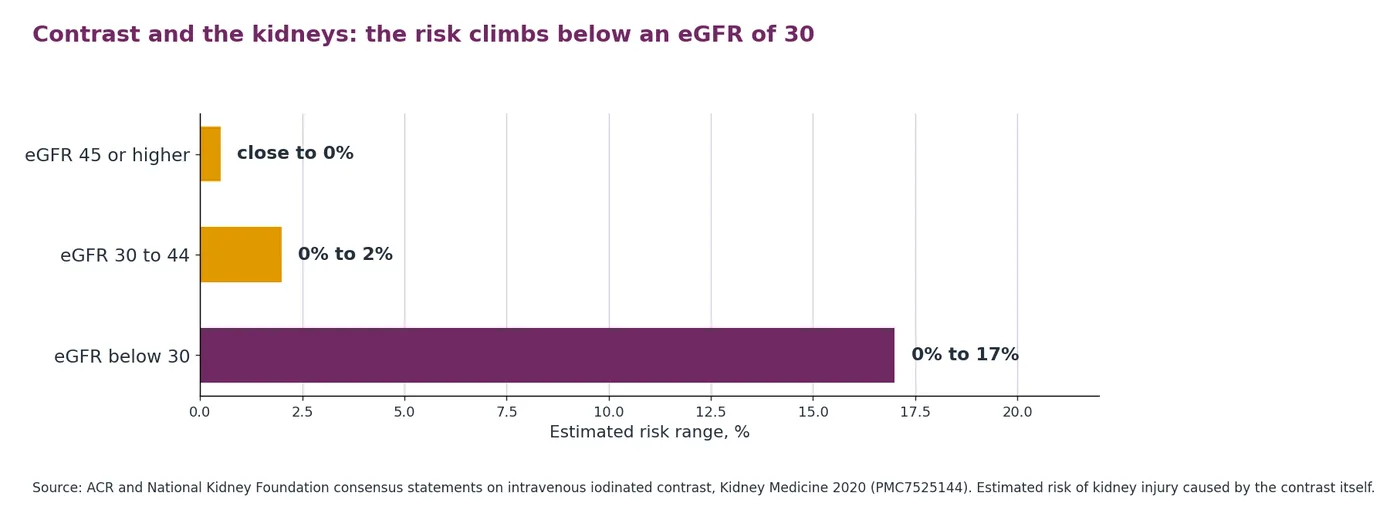
Catheter procedures deliver contrast into an artery and use a dose the physician controls, so the decision is made case by case rather than from that table alone. The point for patients is that kidney disease seldom rules out a needed heart test; it changes how the test is prepared and which one is chosen. Echocardiograms, EKGs and many nuclear and ultrasound studies need no iodine contrast at all.
Telling the team about your access arm
If you have a dialysis fistula or graft, or one is planned, tell the cardiology team at the first visit. It affects which arm is used for blood pressure readings and blood draws, and which artery is chosen if you ever need a catheter procedure.
On a kidney transplant list
Transplant centers ask for heart testing before listing, and the requirements differ by program. A review of the 2024 perioperative guideline notes that screening practices for asymptomatic transplant candidates vary widely across US programs, and that extra screening beyond the routine has not been shown to improve outcomes. In practice that means doing what your program asks, on its schedule, and sending each result back to the transplant coordinator as soon as it is read.
Medicines that touch both organs
Blood pressure drugs, diuretics, SGLT2 inhibitors and potassium levels sit between the cardiologist and the nephrologist. A change by one doctor can shift a lab value the other is watching, so copies of each visit note should reach both.
HIV care and the heart: the statin question
People living with HIV who take antiretroviral therapy now live long enough for heart disease to become a major concern, and their HIV physician may send them to a cardiologist for that reason alone. The evidence behind that referral changed in 2023.
What the REPRIEVE trial found
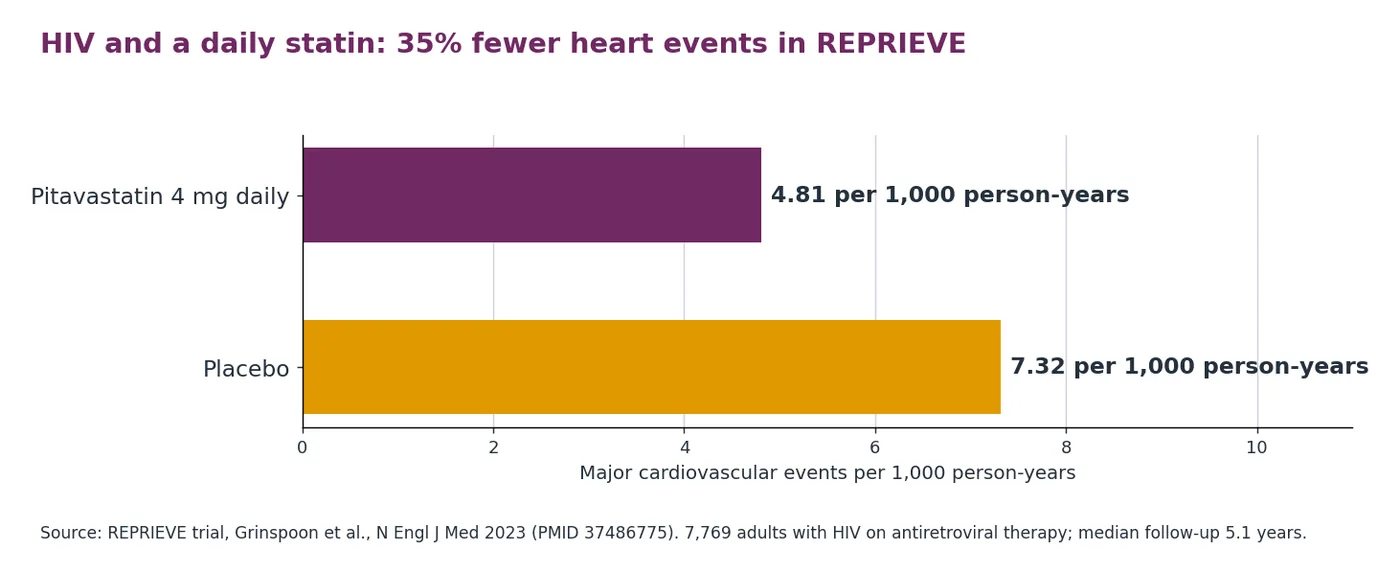
REPRIEVE enrolled 7,769 adults with HIV on antiretroviral therapy whose heart risk was rated low to moderate, people who would not usually have been offered a statin. Half took pitavastatin 4 mg a day and half a placebo. The trial was stopped early after a median of 5.1 years because the difference was clear: major cardiovascular events occurred at 4.81 per 1,000 person-years on pitavastatin against 7.32 on placebo, a 35% lower hazard. Muscle symptoms were slightly more common on the statin (2.3% against 1.4%), and so were new diabetes diagnoses (5.3% against 4.0%).
Where the cardiologist fits in HIV care
The statin decision itself often stays with the HIV clinic. A cardiologist becomes useful when there are symptoms, an abnormal EKG or stress test, a family history of early heart disease, or several risk factors at once, and when someone needs to weigh a statin against the rest of a long medicine list. Bring the full antiretroviral regimen, so every heart medicine can be checked against it for interactions.
Privacy
Your HIV status is part of your medical record and is protected like the rest of it. You decide what records go to the cardiologist; sharing the medicine list is the part that matters most for safety.
When the eye doctor finds a blocked artery in the retina
Sudden, painless loss of vision in one eye sends most people to an optometrist or an eye clinic, not a cardiologist. When the cause turns out to be a central retinal artery occlusion, a clot or plaque fragment blocking the main artery of the retina, the eye doctor’s next call is often to a stroke team, and the heart and neck arteries become part of the work-up.
An eye stroke is still a stroke
A 2021 American Heart Association scientific statement, written by neurologists, eye doctors, an immunologist and a cardiologist, describes central retinal artery occlusion as a form of acute ischemic stroke. It calls it a medical emergency and a warning sign of further strokes and heart events. The statement asks health systems to send these patients to emergency care quickly, and notes that clot-dissolving treatment given into a vein may be effective when it is given early.
The first hours belong to the emergency department
If vision in one eye disappears suddenly, the right move is 911 or the nearest emergency department, not a booked appointment. USC Arcadia Hospital, three miles from Temple City City Hall, lists a certified stroke center among its services. The cardiology part of the story starts once the emergency is over.
Why the heart and neck get examined
A clot that lodged in the eye came from somewhere. The AHA statement says these patients should have urgent screening and treatment of vascular risk factors. For a cardiologist that means looking at the two places a clot most often starts: the carotid arteries in the neck and the heart itself. CACVI’s vascular ultrasound page lists a carotid duplex study, and an echocardiogram and a home rhythm monitor look at the heart side. When a carotid narrowing is severe, carotid stenting is one of the procedures CACVI lists.
After the emergency: lowering the odds of a second event
The AHA statement calls a retinal artery occlusion a harbinger of further strokes and heart events, so the cardiology follow-up is less about the eye than about everything upstream. Expect the visit to cover blood pressure, cholesterol and diabetes control, whether a blood thinner or antiplatelet drug is needed and which one, the results of the carotid and heart studies, and how long a rhythm monitor should be worn if the first one found nothing. Ask the eye clinic and the stroke team to copy the cardiologist on their notes, so the three plans don’t contradict each other.
What to bring from the eye clinic
- The eye doctor’s note or letter, with the diagnosis and the date vision changed.
- Retinal photographs or scan reports, if the clinic can print or send them.
- Any hospital discharge summary if you were seen in an emergency department or admitted.
- Results of blood tests the eye clinic or hospital ordered, such as inflammation markers.
- Your full medicine list, including any blood thinner started after the event.
Testosterone therapy from a urologist or an endocrinologist
Men treated for low testosterone are often told to “check with your cardiologist”, sometimes by the doctor prescribing it and sometimes by a pharmacist. For years the heart safety of testosterone was an open question. A large trial published in 2023 answered part of it.
What the TRAVERSE trial found
TRAVERSE enrolled 5,246 men aged 45 to 80 who had symptoms of low testosterone, two fasting testosterone levels below 300 ng/dL, and either known heart disease or a high risk of it. Half used a daily testosterone gel and half a placebo gel. Over a mean follow-up of 33 months, heart attack, stroke or cardiovascular death occurred in 7.0% of the testosterone group and 7.3% of the placebo group, which met the trial’s test for being no worse than placebo.
The side effects that do matter to the heart
The same trial found more atrial fibrillation, more acute kidney injury and more pulmonary embolism (a blood clot in the lungs) in the men taking testosterone. That is why a cardiologist may ask about palpitations, check the pulse rhythm at each visit, and pay attention to any past blood clot before agreeing that the treatment fits.
What the cardiologist adds
The decision to treat low testosterone stays with the prescribing doctor. A cardiology visit is useful for a man who already has heart disease, has had a clot, or develops an irregular pulse after starting treatment. Bring the testosterone levels, the product and dose, the start date, and any recent blood count, since testosterone can raise the red cell count.
The thyroid, the lungs and the dentist: other doctors with a heart question
Surgeons, kidney doctors, eye doctors and urologists are not the only ones who send patients to a cardiologist. Three other requests come up often enough to deserve their own explanation; arthritis and mood follow in their own sections.
An overactive thyroid and a fast or irregular pulse
Thyroid hormone sets the pace of nearly every organ, the heart included. The NIDDK lists a rapid or irregular heartbeat among the symptoms of hyperthyroidism, and warns that the irregular rhythm can lead to blood clots, stroke and heart failure. In older adults the condition can look like depression or memory trouble rather than the restless, sweaty picture people expect, so an endocrinologist or primary doctor may find it first on a blood test. The cardiology part is the rhythm: whether it is atrial fibrillation, whether a blood thinner is needed while the thyroid is brought under control, and whether the heart has been strained. The NIDDK also notes that some heart medicines contain a lot of iodine, which matters to the thyroid doctor, and MedlinePlus’s patient page for the rhythm drug amiodarone asks patients to tell their doctor about any thyroid problem. If you take a rhythm medicine, make sure both doctors know.
A lung doctor who mentions pulmonary hypertension
Pulmonary hypertension means high pressure in the arteries that carry blood from the right side of the heart to the lungs. The NHLBI lists its causes as left-sided heart disease, lung diseases such as COPD, interstitial lung disease and sleep apnea, blood clots in the lungs, and conditions such as liver disease and scleroderma. A pulmonologist who sees signs of it on a CT scan or a breathing test will often want a cardiologist to look at the heart side. The NHLBI names cardiac catheterization and echocardiography as the most common tests: normal pulmonary artery pressure is 11 to 20 mm Hg, and pulmonary hypertension is suggested by 25 mm Hg or more on catheterization, or 35 to 40 mm Hg or more on an echo. The echo also shows how the right ventricle is coping. Because left-heart disease is one of the commonest causes, sorting out the left side of the heart is usually the first job.
The NHLBI adds details that help a patient see why the referral was made. Pulmonary hypertension is usually diagnosed between ages 30 and 60, is more common in women, and is more likely with a family history of blood clots, with smoking, and with some medicines used for cancer and depression. A patient with more than one of those may have more than one reason for the pressure to rise, and the cardiologist and pulmonologist need each other’s findings to sort them out. Typical early complaints are breathlessness on stairs and fatigue, easy to blame on age or weight, which is why an echo ordered by a lung doctor often turns up the first clue.
The dentist asking about antibiotics before a cleaning
Many heart patients were once told to take antibiotics before every dental visit. That advice has narrowed. The American Heart Association’s 2021 scientific statement, written with the American Dental Association and infectious disease physicians, kept the 2007 approach: antibiotics before dental work only for the small group at highest risk from infective endocarditis. The American Dental Association says that for those patients, prophylaxis applies to procedures that manipulate the gums or the area around the tooth root, or break the lining of the mouth, and that the reason for narrowing the list was that antibiotic side effects and drug-resistant bacteria outweighed the benefit for most heart patients. Whether you belong to the high-risk group is a question for your cardiologist; if your dentist is unsure, a short letter from the cardiologist settles it.
Rheumatoid arthritis, lupus and psoriasis: inflammation as a heart risk
People with rheumatoid arthritis and related inflammatory joint diseases have a higher risk of heart disease than the general population, and the European League Against Rheumatism (EULAR) says the same may apply to ankylosing spondylitis and psoriatic arthritis. Its 2016 recommendations make the rheumatologist responsible for managing that risk, which is why a Temple City patient followed for arthritis may be sent to a cardiologist when a risk factor or a symptom turns up.
Why the usual risk numbers can mislead
Standard heart-risk calculators were built from populations without chronic inflammation, so they can understate risk in someone whose joints have been inflamed for years. The EULAR update says the evidence of higher cardiovascular risk now covers the whole range of inflammatory joint disease. In practice that means a cholesterol result or blood pressure reading that looks borderline in an arthritis patient deserves a closer look than the same number in someone without the disease.
Steroids and anti-inflammatory pills
Long courses of prednisone can raise blood pressure, blood sugar and weight, and EULAR asks that both steroids and NSAIDs be used according to their own disease-specific guidance. The NSAID warning in the medicines section below applies with extra weight here, because arthritis patients are often the people taking them every day.
Chest pain that may not be the heart
Lupus and rheumatoid arthritis can inflame the lining around the heart (pericarditis) or around the lungs (pleurisy), and both cause chest pain that changes with breathing or position. The pain needs sorting out, not guessing at; an EKG and an echocardiogram are often the first tests, and the rheumatologist’s recent blood results help read them.
What to bring from the rheumatology chart
Bring the diagnosis and the year it was made, the current and past disease-modifying drugs and biologics, the steroid doses you have taken and for how long, and the latest inflammation markers such as CRP or sedimentation rate.
Low mood after a heart diagnosis is part of the heart plan
A heart attack, a new stent or a heart failure diagnosis often brings weeks of worry, poor sleep and low mood. For some people it becomes depression, and that matters to the heart as well as to the person. In 2014 an American Heart Association scientific statement reviewed 53 studies and four meta-analyses and recommended that depression be recognised as a risk factor for poor outcomes after an acute coronary syndrome, meaning a heart attack or unstable angina.
Why the cardiologist asks
Depression makes it harder to take medicines on schedule, keep follow-up appointments, stay active and stop smoking, and the statement found generally consistent links between depression and death or new heart events after an acute coronary syndrome. A cardiology visit that skips the question leaves part of the risk unaddressed.
Who leads the care
The primary doctor, a psychiatrist or a therapist usually leads depression care. The cardiologist’s part is to ask, to check that heart medicines aren’t adding to fatigue or low mood, and to make sure any antidepressant fits with the rest of the medicine list. If you already see someone for depression or anxiety, list that medicine with the others.
When it can’t wait
If low mood turns into thoughts of self-harm, call, text or chat with the 988 Suicide and Crisis Lifeline, which is free, confidential and open 24 hours a day, or call 911. Tell the cardiology team afterwards; some heart medicines and doses may need reviewing during a crisis.
Family members notice first
Spouses and adult children often see the change before the patient names it: withdrawal, missed doses, lost interest in walking or seeing friends. Bringing that observation to a visit is not interfering; it is useful history.
Flu season and RSV shots when you have heart disease
Vaccines are usually given by a primary doctor or a pharmacy, not a cardiologist, but heart patients ask about them at cardiology visits every autumn, and the heart has a stake in the answer.
Why the flu matters to the heart
A Canadian study published in the New England Journal of Medicine in 2018 compared heart-attack admissions in the seven days after a laboratory-confirmed flu infection with the year before and the year after. The rate in that first week was about six times higher (incidence ratio 6.05), and no increase was seen after day seven. A fever and a cough put real strain on a heart with narrowed arteries or a weak pump, which is why cardiologists ask whether you have had this season’s flu shot.
RSV: one dose, not every year
The CDC recommends a single dose of RSV vaccine for all adults 75 and older, and for adults 50 to 74 who are at increased risk of severe RSV illness. Its list of qualifying conditions includes chronic cardiovascular disease such as heart failure, coronary artery disease or congenital heart disease; high blood pressure on its own does not count. The RSV vaccine is not currently given every year, so people who have had one dose are done for now.
Timing around procedures
If a heart procedure is scheduled, tell the office when you were last vaccinated or plan to be. A sore arm or a low fever the day after a shot can be confused with a complication, and the team would rather know in advance than guess.
Sick days with a heart condition
If a respiratory infection leaves you unable to eat or drink normally, some heart and diabetes medicines, diuretics and SGLT2 inhibitors among them, may need a pause until you recover. Ask the prescriber for a written sick-day plan before the season starts, so the decision isn’t made at night with a fever.
Prescriptions from other doctors that touch the heart or the aorta
When more than one doctor prescribes, a heart patient can end up with a medicine that works against the heart plan without anyone noticing. Two drug groups come up often enough in cardiology visits to be worth knowing by name.
Pain and arthritis pills
Non-aspirin anti-inflammatory drugs (NSAIDs), such as ibuprofen, naproxen, diclofenac and celecoxib, are prescribed for arthritis, back pain and gout, and sold over the counter. Their FDA labels carry a boxed warning that they raise the risk of heart attack and stroke, that the risk can start early in treatment and may grow with longer use, and that they should be avoided in severe heart failure unless the benefit outweighs the risk of making it worse. They can also raise blood pressure and strain the kidneys. If an orthopedist, a rheumatologist or a pain clinic has you on one daily, the cardiologist needs to know, and may ask that doctor about alternatives.
Some antibiotics and the aorta
Fluoroquinolone antibiotics, such as ciprofloxacin and levofloxacin, carry an FDA warning that epidemiologic studies found more aortic aneurysms and dissections within two months of use, particularly in older patients. The labels say that in people with a known aortic aneurysm, or at higher risk of one, these drugs should be reserved for when no other antibiotic will do. If you have an aneurysm being watched, tell every prescriber, including an urgent care clinic treating a urinary or sinus infection, and keep a note about it in your wallet or phone.
One list, carried to every visit
The simplest protection is a single, dated medicine list with the prescriber’s name beside each drug, carried to every appointment and updated whenever something changes. It is the list CACVI’s new-patient page asks you to bring, and it is what lets a cardiologist spot a conflict between two doctors’ orders before it causes harm.
Las Tunas Drive to Alden Drive: drive times we measured and car-free options
On Monday, November 23, at about 9:10 a.m., Google Maps put the drive from Temple City City Hall to the Alden Drive office at 57 minutes for 26.3 miles on the westbound 10. The Tarzana office was 32.0 miles away by the 134 and the 101, yet only 49 minutes at that hour. Those are single readings, not averages, and they will be different on your day.
Garage options a few minutes from the office
The first two hours are free at Lot 703, the Robertson Alden Garage at 141 Robertson Boulevard, which the appointments page names as its preferred garage; the walk to the office is about three minutes. Robertson Plaza and the Steven Spielberg Building garage on Alden Drive are listed on the same page as alternatives, each with its own rates.
The bus and train route Google suggested
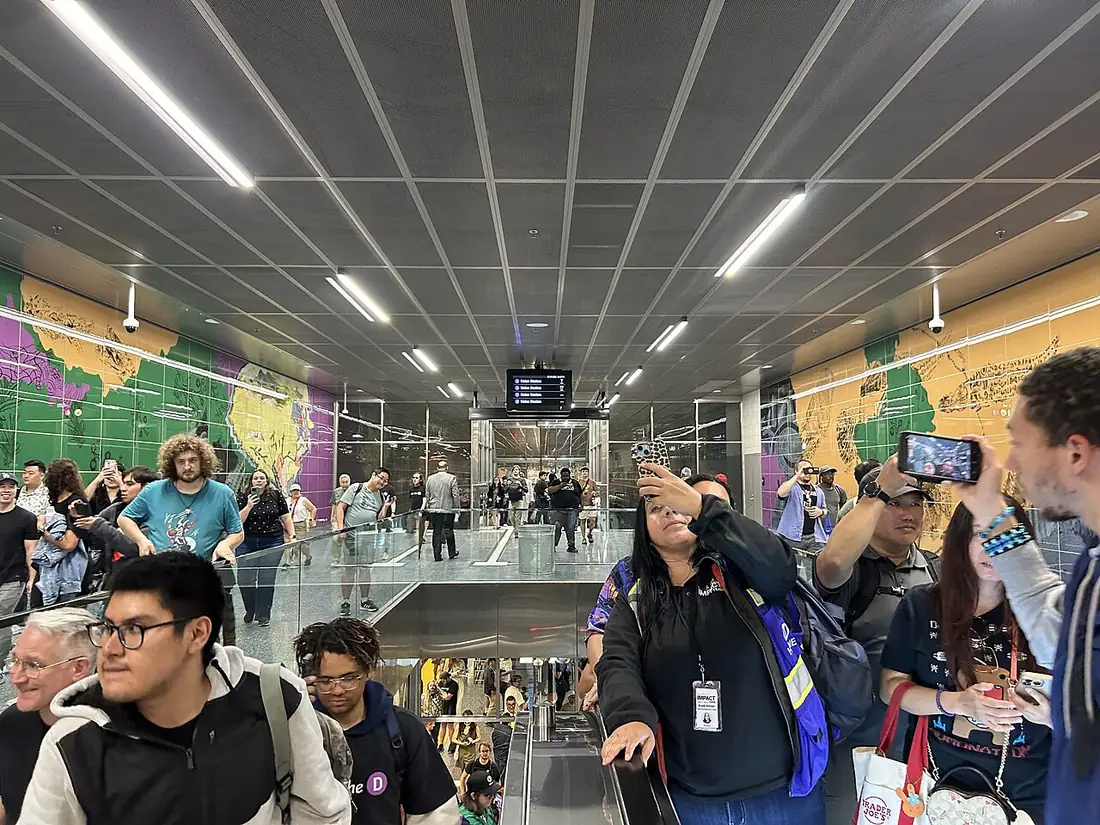
The same morning, Google Maps found a transit route of 1 hour 49 minutes: Metro Line 78 from the Las Tunas and Golden West stop near City Hall to downtown Los Angeles (59 minutes), the D Line subway from Civic Center/Grand Park to Wilshire/La Cienega (18 minutes), Line 105 north on La Cienega for three stops, then a half-mile walk to the office. It involved about 19 minutes of walking in total, so it suits people who can manage that comfortably.

Procedure days are different
Consultations and tests are trips you can usually make alone. A catheter procedure is not, wherever it ends up being done (ask the office for the address when the date is set): patients who receive sedation are generally asked to have another adult drive them home, and the office gives the exact instructions when the date is set. From Temple City that means a driver who can spend most of a day on the trip. Line up that driver at the same time as the procedure date.
Temple City Dial-A-Ride for the local leg
The city’s Dial-A-Ride serves residents 60 and older and younger residents with a disability, for 50 cents per pickup. Members can ride anywhere within Temple City, and to Arcadia, El Monte, Rosemead and San Gabriel for listed purposes that include doctor appointments and hospital trips; standing weekly reservations are offered for medical appointments only. It does not go to Los Angeles, so it covers the local part of a heart patient’s care: a lab draw, a primary doctor, or a visit to USC Arcadia Hospital. Reservations are taken up to seven days ahead at 626-286-2456.
Access paratransit for the full trip
Access Services runs ADA paratransit across Los Angeles County. Eligibility depends on whether a disability prevents you from using accessible buses and trains, and it is decided at an in-person transit evaluation; Access will provide transportation to that appointment. A decision arrives by mail within 21 days. Access riders can also ride most Los Angeles County buses and trains, including Metro, free with their rider ID card.
Getting local records to Alden Drive
Hospital records do not travel on their own. USC Arcadia Hospital’s medical records line is 626-574-3566, and the hospital’s page links to Keck Medicine’s myUSCchart patient portal. Ask for the discharge summary, EKGs, echo and catheterization reports, and send them to the office before the visit, or bring paper copies and a disc of any images. Doing this once saves a second 26-mile trip to review a result that could have been in the chart.
When the Saturday office makes sense
If a weekday trip west is hard to fit around work or caregiving, the Tarzana office’s Saturday hours, 8:00 a.m. to 4:30 p.m., are the alternative. The appointments page lists its parking as limited on-site spaces or the street, at no charge.
Meeting the cardiologists who would see you from Temple City
Three physicians lead the practice. Each holds board certification in cardiovascular disease and in interventional work, and each one’s biography points to a different emphasis that can help you choose when you call.
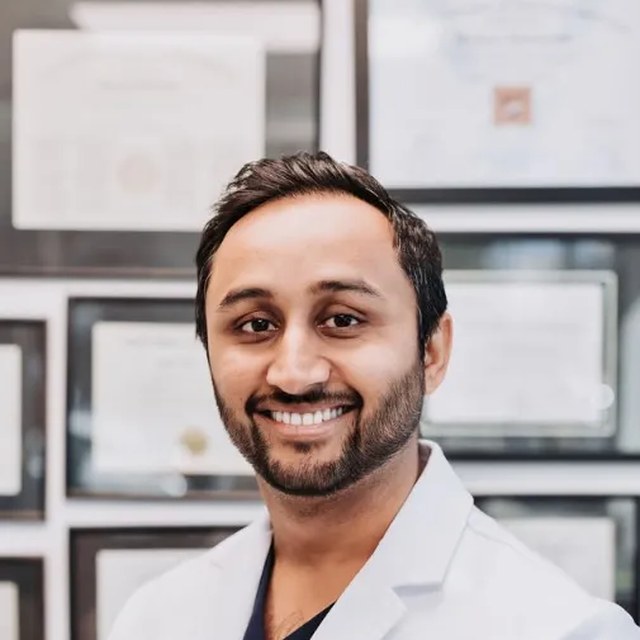
Dr. Mehran J. Khorsandi, M.D.
Five certifications, including the cardiac device credential; runs the Providence Cedars-Sinai Tarzana cath lab
Dr. Khorsandi’s credentials include a device certification next to his interventional, endovascular, cardiovascular and internal medicine boards, and his listed interests run from bifurcation disease and high-risk angioplasty to pacemaker and defibrillator implants and vein care. The bio credits him with 50 US and international patents and a co-founder role at Advanced Bifurcation Systems, a stent technology company. For a Temple City patient whose surgeon is asking about an existing device or a complicated stent history, his is the name to mention when booking.
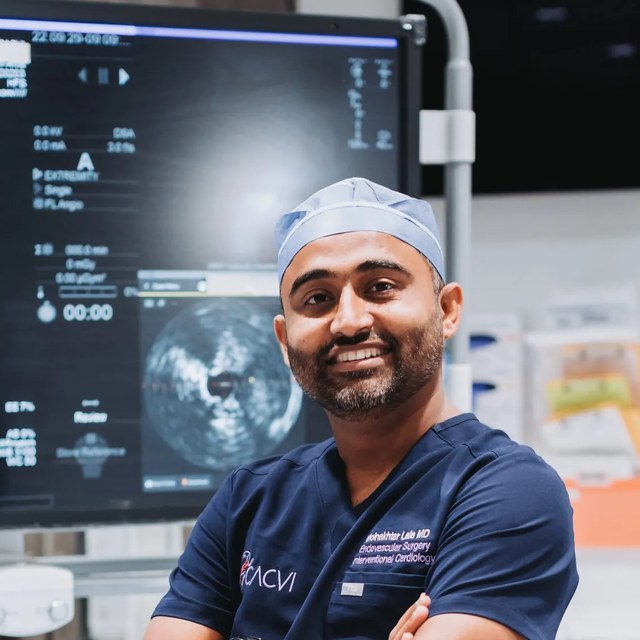
Dr. Moinakhtar Lala, M.D.
Founded CACVI’s limb salvage and amputation prevention program; board certified in echocardiography, nuclear cardiology and vascular interpretation
After his New York training at Mount Sinai Beth Israel, Dr. M. Lala joined the practice in October 2016. Three of his credentials are imaging ones (echo, nuclear and vascular reading), and those are the tests behind cancer-treatment baselines, pre-operative questions and aortic ultrasound. His procedure list includes chronic total occlusions, coronary work through the wrist and TAVR, and he has published on reaching leg arteries through the foot. Diabetic foot wounds that need an artery opened fall within the limb salvage program he started.
Dr. Vasim Lala, D.O.
Structural and interventional cardiologist, with CACVI since July 2022; cardio-oncology is on his clinic list
His path ran through Michigan State, for osteopathic medical school, residency and a cardiology fellowship at McLaren Macomb, and then New York for the advanced year. His procedure list reaches structural work, but the clinic list is the part that matters here: alongside blood pressure, heart failure, atrial fibrillation and artery disease of the heart and legs, it names cardio-oncology outright. Articles under his name have run on ACC and TCTMD platforms. For a patient sent with high blood pressure, heart failure or a rhythm question by another doctor, his clinic list covers that ground.
Questions Temple City patients ask about heart care
Which CACVI office is closest to Temple City?
The nearest office is at 8741 Alden Drive, Suite A, Los Angeles, about an hour by car from City Hall on a weekday morning. The Tarzana office at 18226 Ventura Boulevard is the one open on Saturdays. Tests that need to happen near home, such as blood work, can often be ordered to a lab close to Temple City, so not every step requires the drive.
I was told I may need a heart surgeon. Is that what CACVI’s physicians are?
No. Their training is in catheter work: a thin tube threaded from the wrist or groin lets them open arteries, swap a valve or seat a device without opening the chest. If you expected to need a heart surgeon, one of these procedures may turn out to be the better fit. When a patient does need open-heart surgery, such as a bypass operation, the cardiologist arranges the referral to a cardiac surgeon and stays involved before and after it.
Can I book without my doctor sending me?
That depends on your insurance. Many PPO and Medicare plans let you book a cardiologist directly; HMO members usually need an authorization from their medical group first. The office can tell you what your plan requires when you call.
My heart flutters or skips. Is that something you evaluate?
Yes. The evaluation usually starts with an EKG and, if the rhythm comes and goes, a mobile cardiac telemetry monitor worn at home. For a person with atrial fibrillation who bleeds on anticoagulants, the practice also offers the WATCHMAN implant.
Can an EKG be done nearer home and sent over?
An EKG can be recorded at many primary care offices and urgent care clinics in the San Gabriel Valley. Bring a copy, or the tracing itself, to your cardiology visit; the cardiologist reads the waveform, not just the computer summary at the top.
Does CACVI do renal artery stenting?
Yes, CACVI lists renal artery stenting among its procedures. Whether a narrowed kidney artery should be stented is a decision made after imaging and a review of your blood pressure history.
Which papers and pill bottles go with me to Alden Drive?
The office wants its registration form done before you walk in (it is a printable file on the new patient page), and it asks new patients to be there 15 minutes ahead. Pack the insurance card, a card or cash for payment, the reports and image discs that relate to your question, and every bottle you take, herbal and vitamin products included.
Interventional cardiology: what the word adds
A cardiologist with extra training in procedures done through a thin tube inserted in an artery or vein, such as angioplasty, stents and valve replacement through a catheter. All three CACVI physicians hold this certification.
My eye doctor found a blocked artery in my retina. Should I see a cardiologist?
Usually yes, after the emergency care. The AHA treats a central retinal artery occlusion as a stroke, so the source of the clot, often the carotid artery or the heart, needs to be found. Bring the eye clinic’s letter and any hospital summary to the visit.
My surgeon wants “cardiac clearance.” How soon can I be seen?
Call the Alden Drive office with the surgery date and the surgeon’s name, and mention that the visit is pre-operative. The note we write explains your heart risk and the plan for medicines around the operation; it does not replace the anesthesiologist’s own assessment. If you have a stent, say when it was placed, because that alone can decide whether the date stands.
Should someone in my home learn CPR and keep an AED?
It is worth it for any household with a heart patient. Sudden cardiac arrest is treated with CPR and an automated external defibrillator (AED) in the first minutes, before paramedics arrive. Courses are offered by the American Red Cross and the American Heart Association.
Is there a hospital close to Temple City that handles heart attacks?
USC Arcadia Hospital at 300 West Huntington Drive, about three miles from City Hall, is a STEMI receiving center on the Los Angeles County EMS list. In an emergency, call 911; paramedics choose the destination.
Is cramping in the calves on walks part of what you look at?
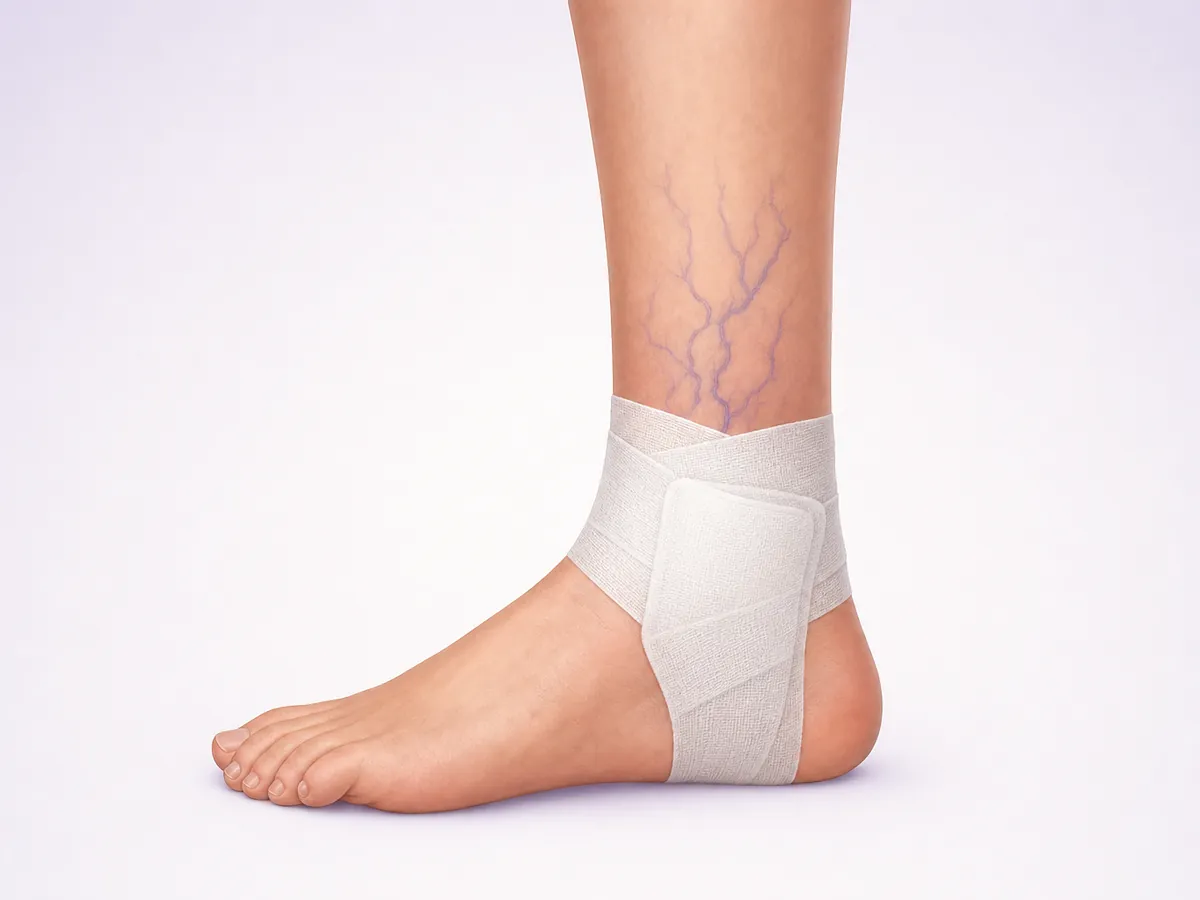
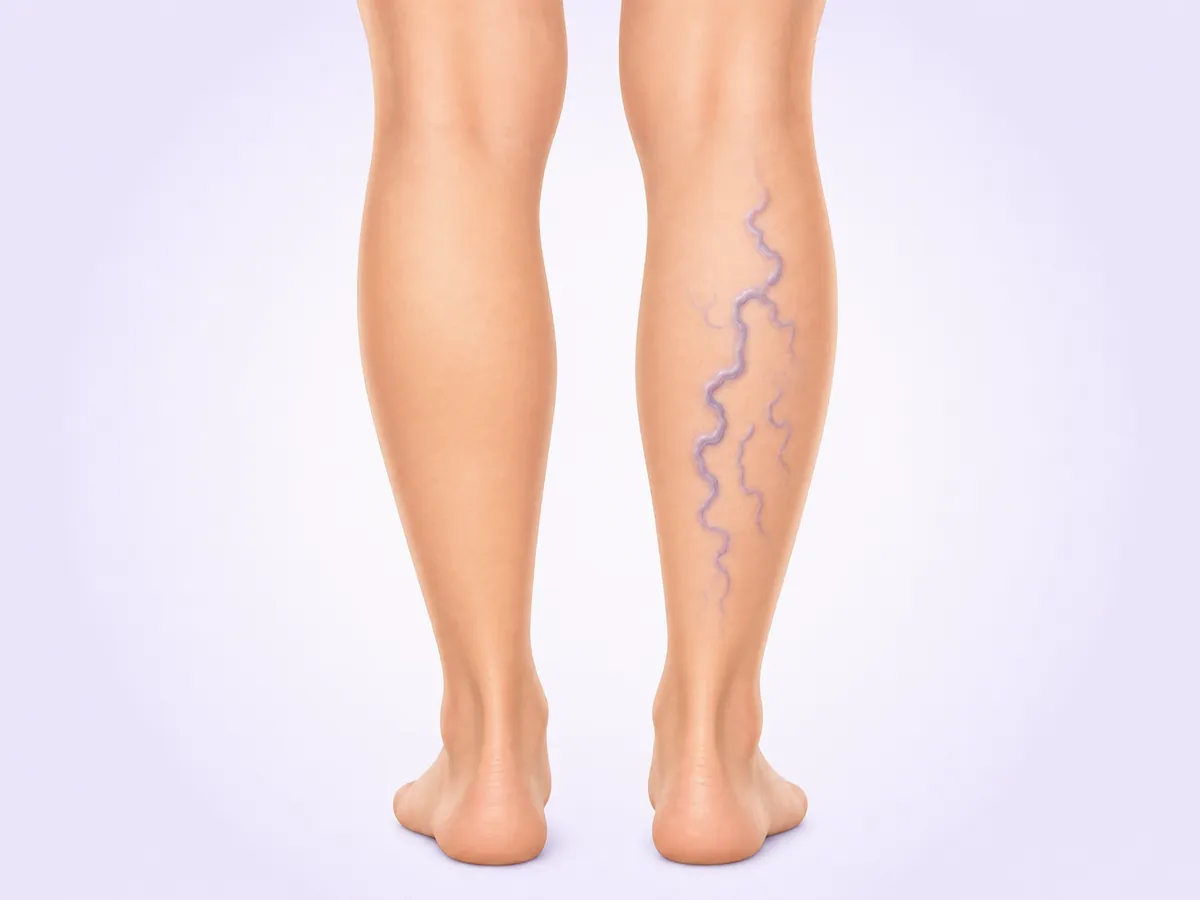
Yes. Leg pain on walking, slow-healing foot wounds and varicose veins are part of CACVI’s vascular practice; see the peripheral vascular disease evaluation page.
Is the Victorville office an option?
It serves the High Desert at 12441 Hesperia Road, Suites A5 and A6, in Victorville, phone 760-706-7115. From Temple City it is a mountain-pass drive and much farther than the Los Angeles or Tarzana office, so it only makes sense if you spend time in the High Desert.
How long does a first cardiology visit take?
Plan on most of a morning or afternoon once travel is counted. The registration form, history and examination take time, and an EKG is often recorded the same day. Longer tests such as an echocardiogram or stress test may be booked for the same trip or a later one; ask when you schedule.
What does “cardiovascular center” mean at CACVI?
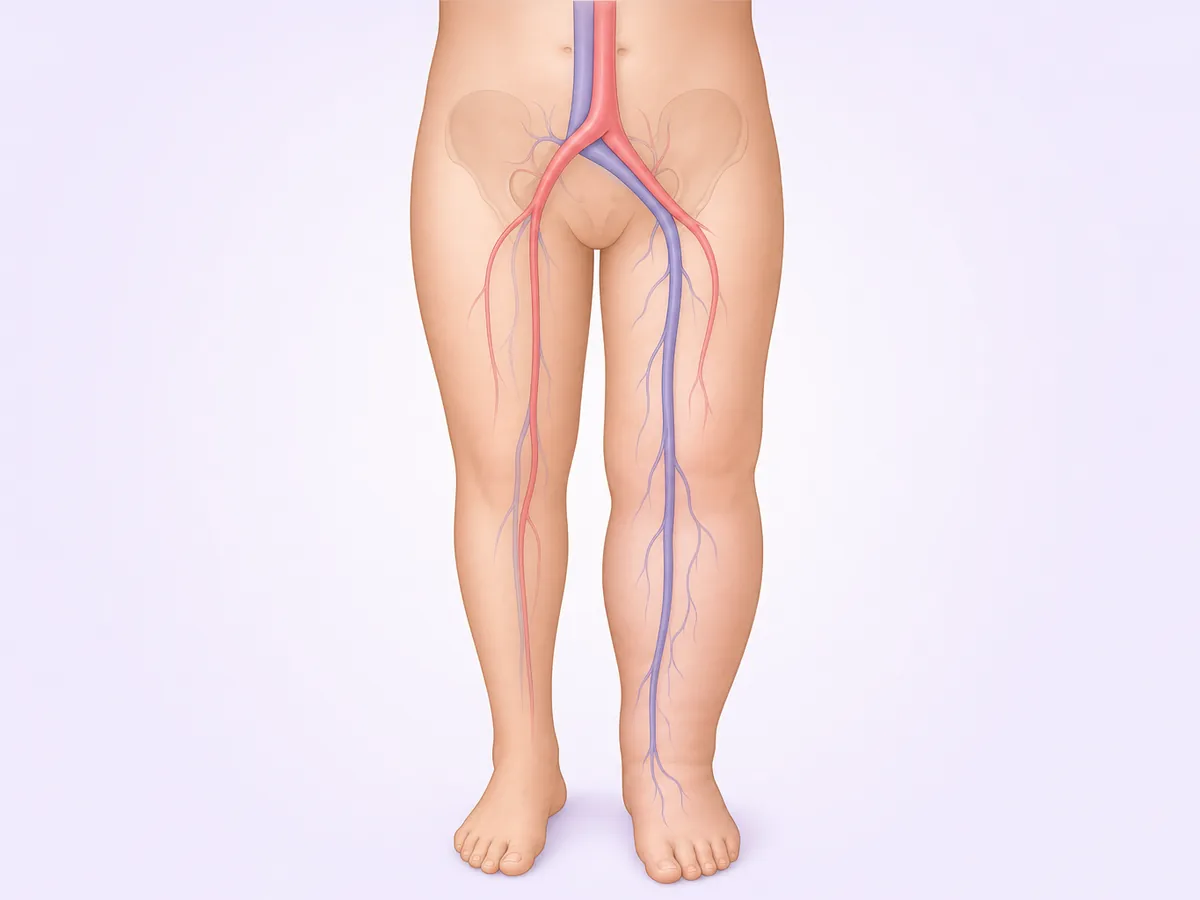
It means the practice covers both the heart and the blood vessels elsewhere in the body: the arteries of the legs, neck, kidneys and abdomen, and the veins of the legs. One set of physicians handles both, which is useful because the same disease process often affects more than one place.
Request a cardiology appointment from Temple City
Call the Alden Drive office at 310-652-2744 between 8:30 a.m. and 5:00 p.m., Monday through Friday, or the Tarzana office at 818-905-5904 if a Saturday visit suits you better. The appointments page lists both offices, their fax line and email, and parking.
When you call, have three things ready: the reason for the visit in a sentence, the name of the doctor who sent you if there is one, and your insurance details. If the visit is for a surgery or another treatment with a date attached, say so first, because it affects how soon you should be seen.
If you are a doctor’s office calling on a patient’s behalf, the patient referral page is the faster route; send the reason for referral and recent test results with it, and the office will contact the patient to schedule.
Before the day itself, print and complete the new patient registration form from the new patients page, gather the records and imaging that relate to the question, and put every medicine bottle, including vitamins and herbal products, in one bag. If someone is driving you, plan for them to wait or to stay with you; many families find a second set of ears useful when test results and next steps are discussed.
Anything happening to you as you read this, chest pain, sudden breathlessness, a faint or stroke signs, goes to 911 and never waits for an office to open.
Google reviews from CACVI patients
Neighbouring cities with their own CACVI cardiology page
The Census Bureau’s TIGERweb boundary files show Temple City touching four cities, Arcadia, El Monte, Rosemead and San Gabriel, plus the unincorporated communities of East San Gabriel and North El Monte. CACVI has pages for three of those cities:
- Cardiologist for Arcadia patients
- Cardiologist for El Monte patients
- Cardiologist for San Gabriel patients
These pages cover cities a little farther away that do not share a boundary with Temple City:
- Cardiologist for Alhambra patients
- Cardiologist for San Marino patients
- Cardiologist for Sierra Madre patients
Each of these pages points to the same CACVI offices that serve Temple City. The full list of tests behind a first visit is on the cardiac evaluation page.
Where the Temple City facts come from
| Source | Publisher | Used for |
|---|---|---|
| CACVI appointments, office details and parking | CACVI | Addresses, phones, hours, parking |
| CACVI new patients | CACVI | What to bring to a first visit |
| Physician biographies | CACVI | Training, certifications, procedure lists |
| USC Arcadia Hospital | Keck Medicine of USC | Address, 24-hour emergency room, STEMI center, surgical services |
| STEMI Receiving Centers map, as of June 2024 | Los Angeles County EMS Agency | USC Arcadia Hospital listed |
| Dial-A-Ride and service guide | City of Temple City | Eligibility, fare, destinations, hours |
| Gaining eligibility; Free Fare program | Access Services | ADA paratransit evaluation and free fares |
| 2024 AHA/ACC perioperative guideline (abstract) | Circulation, via PubMed | Scope of the guideline |
| Update in perioperative ischemic workup: integrating the 2024 AHA/ACC guidelines | J Cardiovasc Dev Dis, 2026 (PMC) | Risk indices, testing, stent timing, medicines |
| Diabetes, heart disease and stroke; Heart disease and kidney disease | NIDDK | Risk and diagnosis in diabetes and kidney disease |
| EMPA-REG OUTCOME and DAPA-HF trials | N Engl J Med, via PubMed | SGLT2 inhibitor results |
| FDA approves first treatment to reduce risk of serious heart problems in adults with obesity or overweight | FDA | Semaglutide cardiovascular indication |
| Aspirin use to prevent cardiovascular disease | USPSTF | Aspirin for primary prevention |
| Use of intravenous iodinated contrast media in patients with kidney disease | ACR and NKF, Kidney Med 2020 (PMC) | Risk by eGFR; saline prophylaxis |
| Heart disease and kidney disease | NIDDK | Shared causes; most common cause of death in CKD |
| Pitavastatin to prevent cardiovascular disease in HIV infection (REPRIEVE) | N Engl J Med 2023, via PubMed | Trial size and results |
| Hyperthyroidism | NIDDK | Heart rhythm effects; iodine in some heart medicines |
| Pulmonary hypertension: causes and risk factors | NHLBI | Causes and risk factors |
| Prevention of viridans group streptococcal infective endocarditis | American Heart Association 2021, via PubMed | Prophylaxis limited to highest-risk groups |
| Antibiotic prophylaxis prior to dental procedures | American Dental Association | Which dental procedures it applies to |
| EULAR recommendations for cardiovascular risk management in inflammatory joint disorders | Ann Rheum Dis 2017, via PubMed | Higher risk; rheumatologist’s role |
| Depression as a risk factor after acute coronary syndrome | American Heart Association 2014, via PubMed | Depression as a risk factor |
| Acute myocardial infarction after laboratory-confirmed influenza infection | N Engl J Med 2018, via PubMed | Heart attack risk in the week after flu |
| RSV vaccine guidance for adults | CDC | Who should get one dose |
| Management of central retinal artery occlusion | American Heart Association 2021, via PubMed | Retinal artery occlusion as a stroke; urgent risk-factor screening |
| Cardiovascular safety of testosterone-replacement therapy (TRAVERSE) | N Engl J Med 2023, via PubMed | Trial design and results |
| Pulmonary hypertension: diagnosis | NHLBI | Catheterization and echo pressure thresholds |
| Amiodarone | MedlinePlus (NIH) | Thyroid caution |
| 988 Suicide and Crisis Lifeline | 988 Lifeline | Crisis support by call, text or chat |
| NSAID prescribing information (boxed warning) | FDA label | Heart attack, stroke and heart failure warnings |
| Fluoroquinolone prescribing information, section 5.8 | FDA label | Aortic aneurysm and dissection warning |
| TIGERweb boundary services | US Census Bureau | Cities bordering Temple City |
¿Listo para hablar?