




















Evaluación cardíaca
Cardiologist close to West Los Angeles, CA
A flutter that disappears before you can get an appointment is hard to explain. So is an irregular-pulse alert that shows up while you’re at home in West Los Angeles. CACVI evaluates heart-rhythm concerns within its cardiology service. The useful starting point is the episode you had, and any tracing already recorded. Don’t assume every palpitation is atrial fibrillation.
For non-emergency Westside care, contact CACVI about a rhythm evaluation. The practice’s Los Angeles office is at 8741 Alden Dr, Suite A, Los Angeles, CA 90048, with appointment line 310-652-2744. It isn’t a clinic at a Metro station, and it isn’t on the UCLA campus. The published contact page doesn’t list a separate West Los Angeles office.
If an irregular heartbeat comes with chest pain, severe breathlessness, collapse, or stroke symptoms, call 911. Don’t wait for a wearable device to produce a cleaner recording. The AHA/ACC chest-pain guidance supports urgent assessment of acute, concerning symptoms.
How a West Los Angeles cardiologist looks at rhythm evidence
| Distinction | What the patient needs to understand | Source |
|---|---|---|
| Palpitation versus diagnosis | A symptom description is not sufficient to establish AF. | 2023 AF guideline |
| Clinician-reviewed tracing | Initial AF diagnosis requires visual interpretation of the electrical signal. | Full AF guideline |
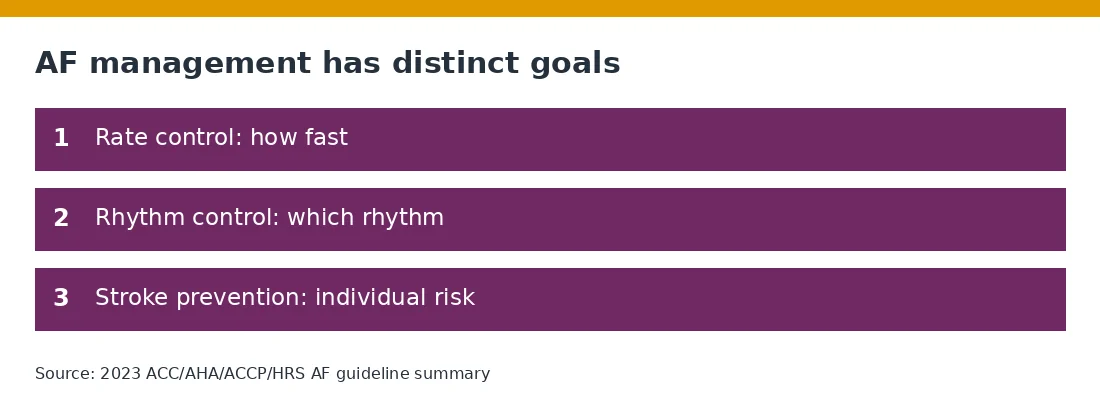
| Rate control | Addresses how fast the heart is beating. | 2023 AF guideline |
| Rhythm control | Addresses the rhythm itself. | 2023 AF guideline |
| Stroke prevention | Requires a separate risk and treatment discussion. | 2023 AF guideline |
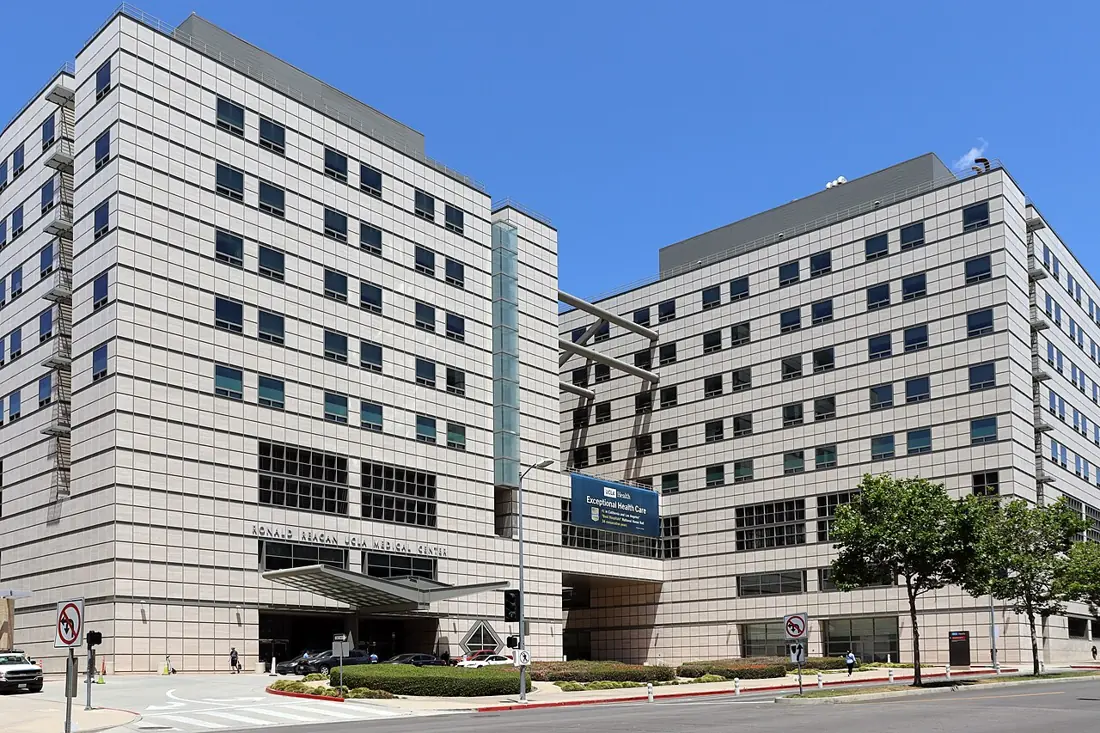
| Ronald Reagan UCLA emergency department | Local acute-care facility at 757 Westwood Plaza, Los Angeles, CA 90095. | UCLA emergency department |
Capturing an intermittent episode before a Westside consultation
Describe the episode without giving it a diagnosis
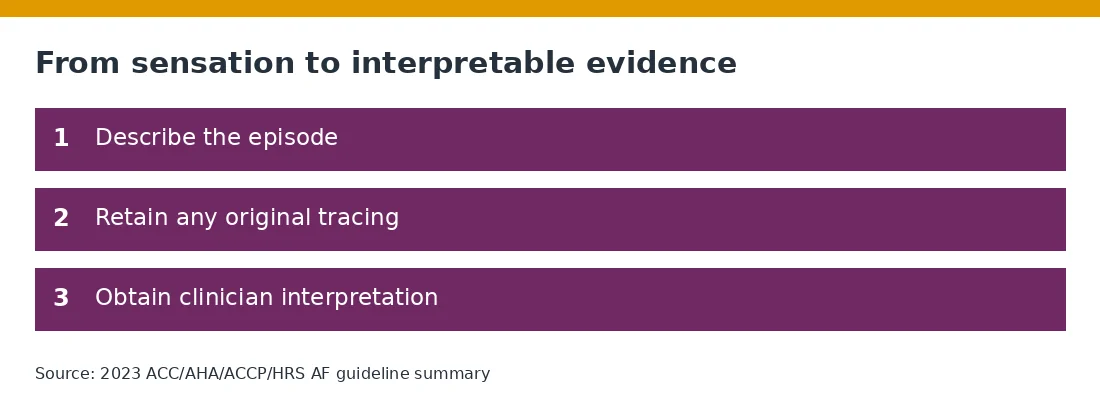
Was it a skipped beat? Racing? Pounding? An irregular pulse? Note when it began, whether it stopped, and what else happened. Those descriptions help you communicate the experience. They don’t establish the electrical mechanism, and they don’t determine treatment.
Someone looking for a cardiologist in West Los Angeles may already have a watch alert, or an ECG from another setting. Keep those findings distinct from the symptoms you noticed. The 2023 ACC guideline summary separates symptoms and device observations from clinician-confirmed AF.
Preserve the original recording when one exists
A screenshot that only says “irregular” can leave out the tracing needed for interpretation. If the device provides a source report or an export, keep it, including the date and time. Don’t edit a tracing to remove a segment that looks inconvenient before you share it with your treating clinician.
El Centro de full guideline requires professional visual interpretation for an initial AF diagnosis, regardless of the device used to record the signal. That’s why bringing the underlying information is more useful than arriving with a diagnosis inferred from a notification alone.
Match a monitoring question to the symptom pattern
An office ECG captures a limited period. Intermittent symptoms may raise a different recording question from a persistent rhythm found during the visit. During a CACVI cardiac evaluation, the pattern you describe helps frame whether the recording method has answered the rhythm question.
This page doesn’t promise a monitor on the day of the visit, name a brand, or prescribe a monitoring duration. It also doesn’t claim that a quiet interval proves there was never a rhythm problem. Describe how often episodes occur so the question is clear before a device is selected.
Keep a concise rhythm-event record
A short diary can connect the experience with existing findings, without turning every sensation into an alarm:
- Date and approximate start time.
- A description in your own words.
- Approximate duration, if you know it.
- Whether you were active or at rest when it started.
- Associated dizziness or breathlessness.
- Whether a device recorded a tracing.
- Whether a clinician already assessed the episode.
- Any instructions already supplied.
This is an editorial preparation aid, based on the guideline’s emphasis on documented rhythm and clinical context. Don’t use that diary to diagnose yourself. Request a consultation for recurrent, non-emergency symptoms rather than waiting to assemble a perfect diary.
Atrial fibrillation decisions that should not be collapsed into one question
Heart-rate treatment does not answer every rhythm concern
A discussion about reducing a fast ventricular rate has a different goal from restoring or maintaining sinus rhythm. The distinction in the AF guideline helps patients understand why more than one treatment discussion may occur. It doesn’t tell an individual to increase or withhold a medication.
Ask which goal a proposed treatment addresses, and which goal still needs a separate look. A lower pulse reading isn’t, by itself, a complete description of AF management. And a symptom that has eased doesn’t settle every longer-term risk question.
Rhythm strategy depends on the disease and the person
The 2023 guideline emphasizes earlier rhythm control in appropriate patients, and it recognizes approaches that can include medication or catheter ablation. The choice depends on clinical context, symptoms, other conditions, and patient preferences. There’s no blanket promise that one technique is suitable for every West Los Angeles patient.
CACVI publishes an arrhythmia condition resource. Use it for the practice-level background, and discuss a recommendation using the actual diagnosis. This page doesn’t advertise an unsupported local procedure schedule.
Stroke risk is assessed separately from how noticeable AF feels
Guideline-based stroke prevention considers validated risk assessment and the individual’s situation. A lack of troublesome palpitations doesn’t establish a lack of stroke risk. Equally, a watch notification alone isn’t a reason to start an anticoagulant without evaluation.
El Centro de ACC summary distinguishes risk estimation, bleeding-risk modification, and treatment selection. Bring a history of prior stroke, bleeding, and relevant diagnoses to the clinical discussion. Don’t calculate a medication decision from an incomplete online checklist.
Relevant physician information has limits
Dr. Vasim Lala, D.O. lists atrial fibrillation among the conditions he treats. His biography documents his degree and cardiovascular training. We don’t infer a West Los Angeles office assignment, a monitoring inventory, or an appointment timetable from that biography.
For device questions, CACVI’s pacemaker and defibrillator page addresses a separate subject. Not every irregular rhythm requires an implanted device. And a page about implantation doesn’t determine the next step for a first palpitation.
What a device alert leaves unresolved for a West LA patient
A light-based pulse alert is not an ECG tracing
Some wearable systems infer an irregular pulse through photoplethysmography, which uses a light-based signal rather than an electrical tracing. The full AF guideline says this signal can prompt someone to obtain an ECG, but it isn’t sufficiently reliable to establish AF by itself. If an app produces both kinds of information, identify which one generated the alert you’re bringing to the consultation.
That distinction is useful when an appointment is arranged after a notification, but before a diagnosis. Write down the device and the type of output. Don’t replace the original label. There’s no claim here about the performance of a particular commercial watch, and no instruction to buy another one.
Automated interpretation can need an overread
The guideline explains that automated ECG algorithms have imperfect test characteristics. An apparently definite label can still need professional review. For people with an implanted device capable of detecting AF through an atrial lead, the intracardiac tracing also needs visual confirmation, to exclude artifacts and other arrhythmias.
Keep the device report associated with the clinician or service that produced it. A screenshot cropped to one word can leave out the evidence needed for that review. This doesn’t mean every alert is false. It means the signal and the interpretation have separate roles. Monitoring recommendations.
Episode duration is one factor, not a self-prescribing threshold
El Centro de ACC summary gives different recommendations for device-detected atrial high-rate episodes lasting less than five minutes, between five minutes and 24 hours, and at least 24 hours. The recommendations also incorporate stroke-risk information and other indications for treatment. A duration on a device screen therefore can’t determine an anticoagulant decision by itself.
For example, the recommendation not to anticoagulate solely for an episode shorter than five minutes applies when there is no other indication. Drop that qualifier and you could give unsafe advice to someone already prescribed treatment for another reason. Keep current prescriptions intact until a treating professional reviews the actual situation. This page neither starts nor stops medication.
More recording is not automatically the right next step
The full guideline describes multiple monitoring tools, and it notes that more frequent or longer monitoring increases the sensitivity of AF detection. That observation doesn’t mean every person with one palpitation needs an implanted monitor. The recommendation for an implantable cardiac monitor after a systemic thromboembolic event concerns a particular clinical circumstance, and a need for high sensitivity.
A Westside outpatient discussion should therefore state what remains unknown: the cause of a sensation, recurrence of established AF, or another question identified by the treating team. An investigation is useful when it addresses that uncertainty. No device stock, implant appointment, or monitoring interval is advertised for the Alden Drive practice here. Full rhythm-monitoring section.
UCLA emergency care, and how a scheduled CACVI visit is different
Recognize what the nearby hospital provides
Ronald Reagan UCLA publishes a 24-hour emergency department and identifies its Level I trauma, stroke, and STEMI receiving-center roles. That makes it a relevant Westside acute-care resource. It doesn’t establish that it’s the nearest facility from every West Los Angeles address, or that CACVI staffs it. UCLA facility information.
Emergency responders select a destination based on the situation. The hospital’s page describes triage as the evaluation used to determine urgency. That isn’t a guarantee you’ll be seen in the order you walked in.

Use Metro and Big Blue Bus for an actual itinerary
Metro’s schedules and the Big Blue Bus trip planner are current planning sources for Westside travel. An E Line station photograph is a geographic reference, not proof of a direct rail connection to the office. Work through the interchange and the final walk. Then check whether the planned return still operates when you need it.
If your symptoms limit walking, don’t estimate accessibility from the distance drawn on a map. Look at the real walk and any help you’ll need getting there. No unverified transit fare, station-to-office time, or universal route is supplied here.


Keep office parking separate from campus parking
The CACVI appointment page lists Robertson Alden Garage at 141 Robertson Blvd as preferred Los Angeles parking, with additional alternatives. Use the practice parking instructions for that destination. UCLA emergency valet information applies to a different campus. It isn’t an outpatient CACVI parking benefit.


Bring the rhythm material through the records process
See the registration preparation page for forms. Rhythm-specific files need their own clear source labels. Keep an emergency ECG, a monitor interpretation, and a device export identifiable by source. The referral states why the evaluation was requested. It doesn’t, by itself, transfer an outside digital tracing.
Prepare the relevant existing material rather than ordering an extra investigation just to complete a packet:
- Referral or consultation reason.
- The original rhythm report, if you have one.
- The tracing or export associated with an alert.
- Prior treatment instructions.
- Medication and supplement information.
- The insurance card you’ll use at check-in.
No private data needs to be entered into a public website comment. Keep the release request with the provider holding the tracing. Don’t assume an online appointment inquiry carries the file.
AF details for patients comparing West Los Angeles cardiology care
What does the guideline call paroxysmal AF?
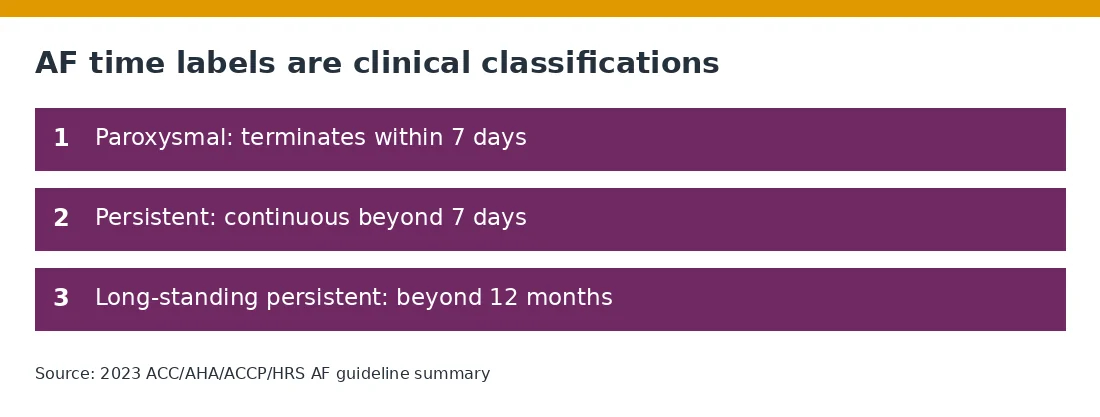
It describes intermittent AF that terminates within seven days. That’s a clinical classification, not a rule for waiting seven days before you seek care for concerning symptoms. AF staging summary.
What does persistent AF mean?
The guideline classification describes continuous AF lasting more than seven days. The label informs clinical discussion. It doesn’t determine a treatment plan without the rest of the assessment. ACC summary.
What is long-standing persistent AF?
The summary uses continuous AF lasting more than 12 months. Keep an established diagnosis, and its documentation, intact. Don’t relabel it on the basis of an isolated wearable reading. Guideline stages.
What does permanent AF refer to?
It’s the stage in which the patient and clinician have jointly decided not to pursue further attempts to restore sinus rhythm. Don’t treat the word as just another name for a long episode. Guideline summary.
Is aspirin an equivalent substitute for anticoagulation in AF?
No. For patients who are candidates for anticoagulation and have no separate antiplatelet indication, the guideline doesn’t recommend aspirin as the alternative stroke-prevention treatment. This answer isn’t permission to add or drop either medication. Antithrombotic recommendations.
Are direct oral anticoagulants used in every patient?
The summary prefers them over warfarin except in patients with mitral stenosis or mechanical heart valves. Individual treatment still requires clinical assessment. This isn’t a prescription, and it isn’t a dose recommendation. ACC guidance.
Can a bleeding-risk score alone rule out anticoagulation?
The guideline says bleeding-risk scores shouldn’t be used alone to determine eligibility. They help identify modifiable factors and inform shared decisions. Risk assessment.
Does the guideline address alcohol?
It does. Minimizing or eliminating alcohol consumption is included among lifestyle measures for patients with AF. Discuss an appropriate plan with your treating clinician rather than assuming a universal safe amount from this page. Lifestyle recommendations.
Is sleep-disordered breathing relevant?
The guideline includes screening for sleep-disordered breathing as part of AF risk-factor management. If you already have a sleep-apnea diagnosis or treatment, mention it to the clinician evaluating your rhythm. Risk-factor guidance.
Does the guidance discuss smoking?
Tobacco cessation is one of its recommended lifestyle measures. That recommendation concerns risk reduction. It doesn’t prove that tobacco caused an individual episode. ACC summary.
Can left atrial appendage occlusion be considered when anticoagulation is unsuitable?
The guideline discusses percutaneous appendage occlusion in selected patients with a contraindication to long-term anticoagulation, or other specified circumstances. It’s a clinician-led option, not a procedure promised by this regional page. Guideline recommendations.
Does AF discovered during another acute illness need follow-up?
Yes. The guideline highlights recurrence risk, and the value of outpatient follow-up for risk assessment and rhythm surveillance, after AF identified during acute medical illness or surgery. Acute-illness recommendations.
Connected Westside neighborhoods and cardiology resources
Read the service-area pages for Westwood, Santa Monica, Culver City, Venice and Beverly Hills. They describe nearby communities, including Los Angeles neighborhoods, not five separate practice branches. See the cardiac evaluation hub for a referral spanning concerns beyond these intermittent episodes.
Rhythm sources and Westside reading links
| Source | Publisher | What it covers |
|---|---|---|
| ACC: 2023 Guideline for Diagnosis and Management of Atrial Fibrillation | American College of Cardiology | Key points from the 2023 guideline on diagnosing and managing atrial fibrillation. |
| 2021 AHA/ACC Guideline for the Evaluation and Diagnosis of Chest Pain | American Heart Association / American College of Cardiology | Clinical practice guideline with recommendations and algorithms for evaluating and diagnosing chest pain in adults. |
| CACVI: Appointments | CACVI | Office addresses, phone numbers, parking notes, and how to request a visit. |
| CACVI: New Patients | CACVI | Registration form and a checklist of what to bring to a first visit, including insurance card and medical records. |
| CACVI: Cardiac Evaluation | CACVI | Explains what a cardiac evaluation includes, starting with a physical examination and medical history. |
| CACVI: Dr. Vasim Lala | CACVI | Published biography and credentials for Dr. Vasim Lala, D.O. |
| UCLA Health: Ronald Reagan Emergency Department | UCLA Health | Information about the emergency department at Ronald Reagan UCLA Medical Center. |
| LA Metro: Line Schedules and Maps | LA Metro | Bus and rail line schedules and maps for riding Metro. |
| Big Blue Bus: Routes and Schedules | Big Blue Bus | Routes, schedules, and service alerts for Big Blue Bus in the Santa Monica area. |
| 2023 ACC/AHA/ACCP/HRS Guideline for the Diagnosis and Management of Atrial Fibrillation | American College of Cardiology / American Heart Association (via PubMed Central) | Full-text clinical practice guideline with recommendations for diagnosing and treating atrial fibrillation. |
¿Listo para hablar?