




Vascular & Leg Pain Care
Leg Pain Doctor Castaic
A deep vein thrombosis is usually diagnosed and treated in a hurry: an emergency visit, an ultrasound, a prescription for a blood thinner. The leg often takes much longer to settle. This page is for Castaic patients looking for a leg pain doctor after a clot was treated weeks or months ago and whose leg still swells, aches or feels heavy by evening, and for anyone who still has an IVC filter that was supposed to be temporary. The Center for Advanced Cardiac and Vascular Interventions (CACVI) sees patients for this kind of long-term vein follow-up, including the check that decides when a retrievable IVC filter can come out.
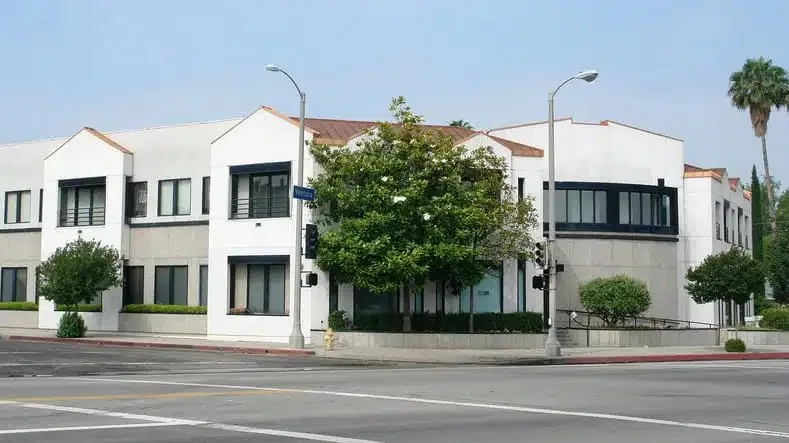
Follow-up visits for Castaic patients take place at the San Fernando Valley office, 18226 Ventura Blvd, Suite 102, Tarzana, CA 91356 (818-905-5904). A new clot or a sudden change is a different matter: Castaic’s nearest emergency department is at Henry Mayo Newhall Hospital in Valencia, and the route section below explains where each kind of problem belongs.
Book a post-clot leg review in Tarzana
Distances, odds and deadlines after a Castaic clot
| Number | What it means after a clot | Where it comes from |
|---|---|---|
| 9.7 miles; about 14 minutes with empty roads | Castaic Library (27971 Sloan Canyon Rd) to the Henry Mayo Newhall Hospital emergency department, for a new or worsening clot | OSRM estimate, no traffic |
| 31.6 miles; about 39 minutes with empty roads | Tarzana office for the post-clot review: south on I-5, then I-405 and US-101 | OSRM estimate, no traffic |
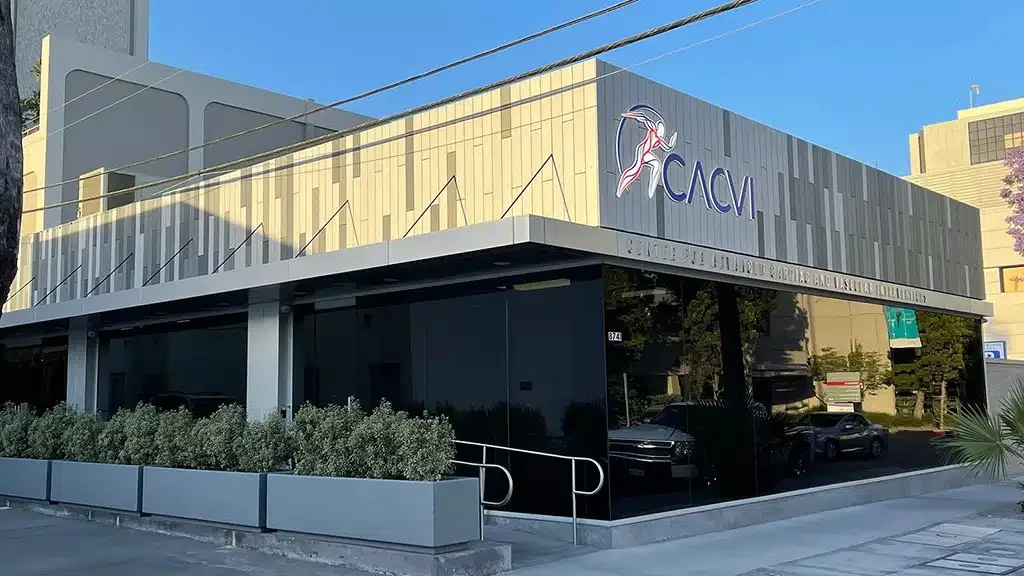
| 38.0 miles; about 52 minutes with empty roads | CACVI Los Angeles (8741 Alden Drive, Suite A, 310-652-2744), the second-closest office | OSRM estimate, no traffic |
| 20% to 50% | Share of people who develop post-thrombotic syndrome within two years of a DVT, even with proper blood-thinner treatment | Kahn et al., 2016 guidance |
| 3 to 6 months | How long doctors wait after the clot before calling lasting symptoms post-thrombotic syndrome | Kahn et al., 2016 guidance |
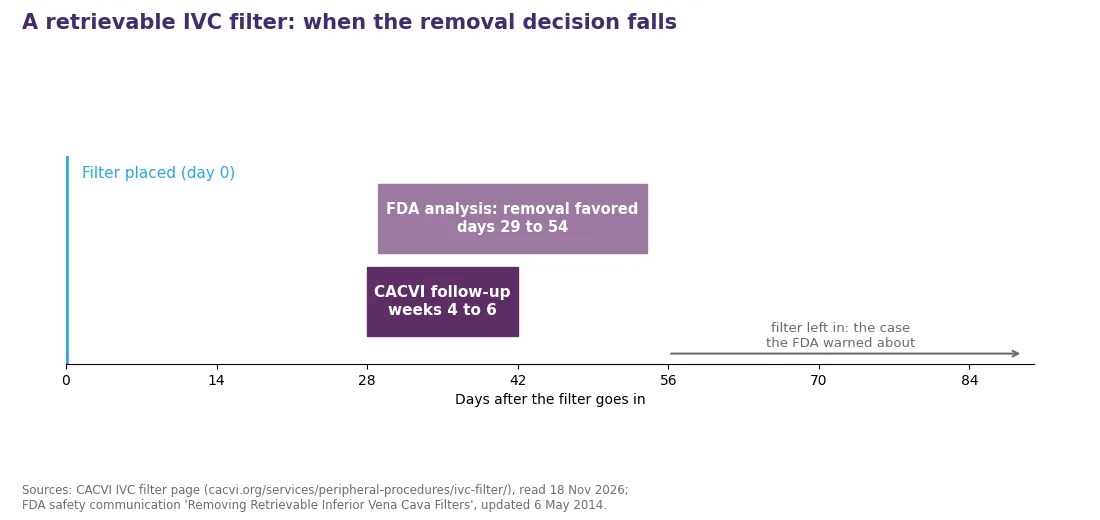
| 4 to 6 weeks | When CACVI schedules the follow-up that decides whether an IVC filter it placed can come out | CACVI IVC filter page |
| 29 to 54 days | The window in which an FDA analysis found the balance starts to favor removing a retrievable filter, once the clot risk has passed, in patients who had no lung clot | FDA safety communication, 2014 |
Leg trouble months after a blood clot: care for Castaic patients
CACVI’s role after a DVT is the long view. The emergency team stops the clot from growing and protects the lungs. What happens to the leg over the next two years is a separate question: whether the deep vein reopens cleanly, whether its valves still work, whether a filter is still sitting in the main abdominal vein. Those are the questions a follow-up visit at CACVI is built around.
Three threads a post-clot review pulls together
The visit pulls together three threads. The first is the leg itself: how it looks and feels now, compared with the weeks after the clot. The second is the vein, which can be imaged in the office with vascular ultrasound. The third is any device left in place, above all a retrievable IVC filter. CACVI’s peripheral venous disease page separates ordinary chronic vein disease from post-thrombotic syndrome, in which the deep veins have been damaged by a previous DVT. That distinction drives what is offered.
Who reviews the leg
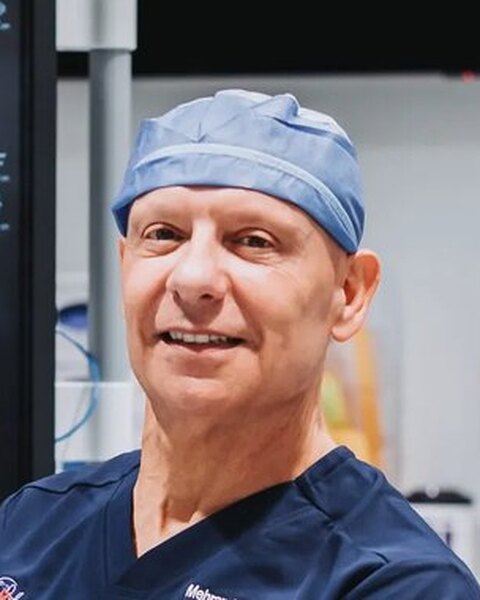
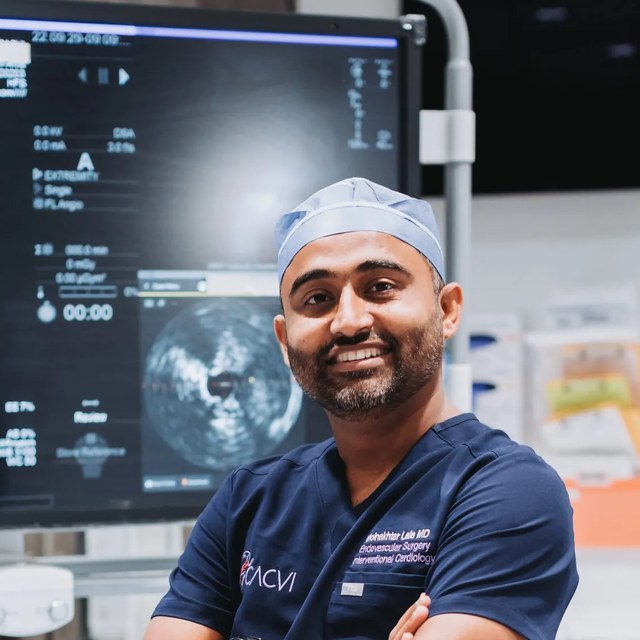
Dr. Moinakhtar Lala and Dr. Vasim Lala both carry RPVI after their names, the credential for interpreting vascular ultrasound, which matters for a leg whose history is told mostly by scans. Dr. Mehran J. Khorsandi holds an endovascular medicine board certification; Cedars-Sinai has had him on staff since 1993.
Leg pain that did not start with the clot
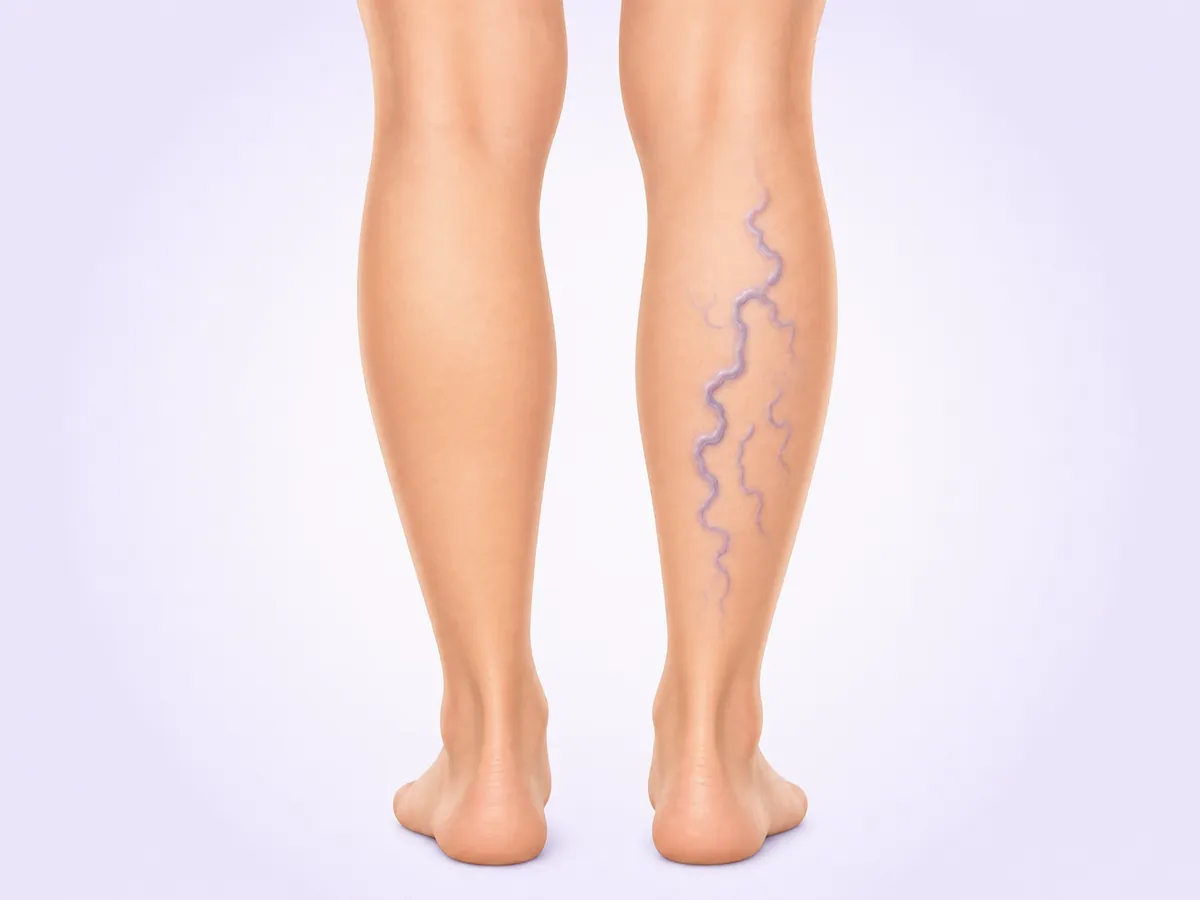
Not every sore leg after a DVT is post-thrombotic. Pain on walking that eases when you stop is more typical of narrowed arteries; the peripheral artery disease page covers that. Bulging surface veins that were there before the clot may be ordinary varicose veins.
Leg pain that has nothing to do with the clot still belongs at the same visit. CACVI also treats diabetic foot ulcers and runs an amputation prevention program, and it sees arterial leg ulcers and critical limb ischemia (CLI). Pain from an old injury, sciatica, tendonitis or arthritis is not a blood vessel problem, and the first visit is where that gets sorted out.
What the doctor will ask about the clot
Much of a post-clot review is history taking, because the answers map onto the risk factors and decisions further down this page. Expect questions like these:
- Was this your first clot, and has either leg clotted before?
- Which blood thinner were you given, when did it start, and has it changed?
- If you took warfarin, how often was your INR outside the target range in the first three months?
- Was a filter put in, and do you know its make and whether it is retrievable?
- Was the leg still swollen or sore a month after the diagnosis?
- Were stockings prescribed, and did you wear them?
- How does the leg behave across a normal day, from waking to bedtime?
Leg still swelling since the clot? Request a visit
From the Henry Mayo emergency department to follow-up in Tarzana
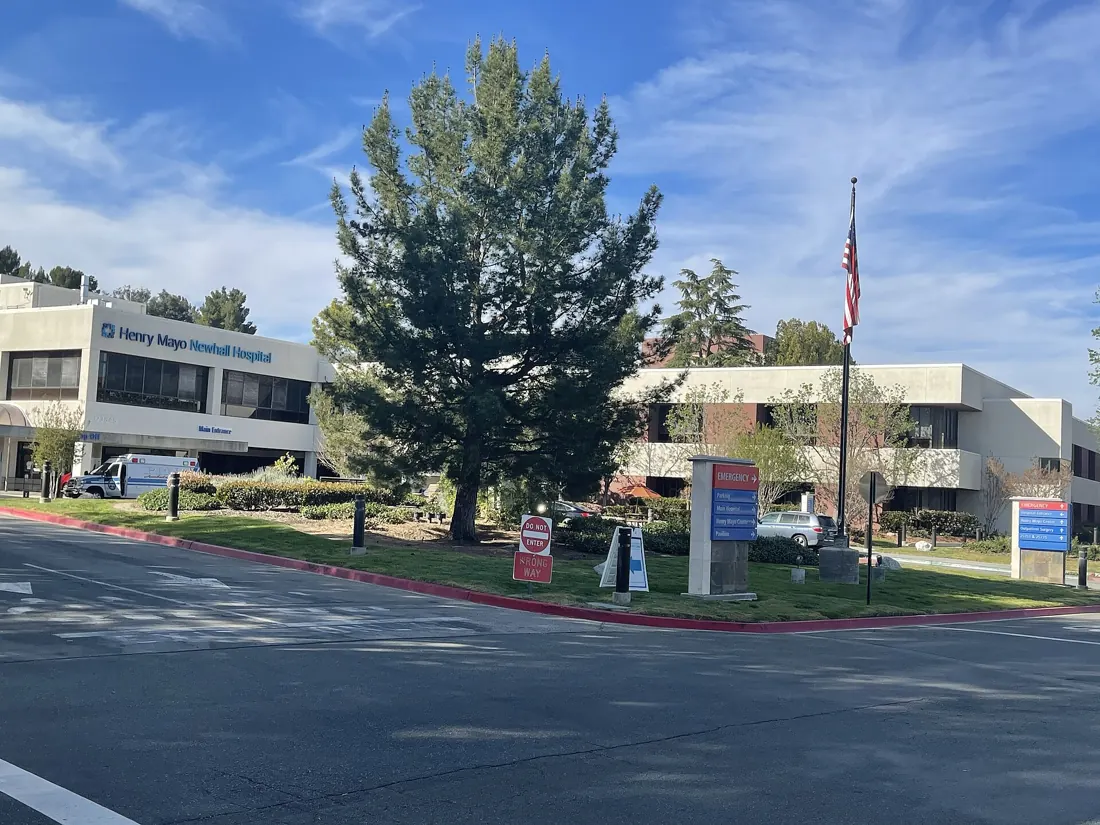
Castaic’s nearest emergency department is in Valencia. Henry Mayo Newhall Hospital, 23845 McBean Parkway, is listed in the Los Angeles County services directory as a not-for-profit community hospital and trauma center whose emergency department is open 24 hours a day.

The emergency department’s job, and where it ends
The emergency visit deals with the clot in front of it. Whether the leg will develop post-thrombotic syndrome, or when a filter should come out, are questions for the weeks and months after discharge, not for the emergency visit. Anything new still goes back to Henry Mayo or 911: fresh swelling in either leg, or the sudden chest pain and shortness of breath that the National Heart, Lung, and Blood Institute lists as signs of a clot in the lung. How to tell a new clot from a surface vein problem is covered on the thrombophlebitis and DVT page.
The report worth asking the hospital for
Ask Henry Mayo for the ultrasound report that diagnosed the clot, because it names the veins involved, and how high up the leg the clot reached is one of the risk factors listed in the next section.
The 31.6-mile drive
Castaic Library to the Tarzana office is 31.6 miles by road, roughly 39 minutes when the freeways are clear. The route runs south on I-5 through the Newhall Pass, takes I-405 south across the San Fernando Valley, then follows US-101 west to the Reseda Boulevard exit near the office on Ventura Boulevard. Alden Drive, CACVI’s other office, means a longer drive from Castaic; the table gives the figures. All figures are OSRM estimates without traffic, so rush hour on I-5 and I-405 will add time.
Coming home, I-405 north rejoins I-5, and a few miles later I-5 and State Route 14 separate at the Newhall Pass interchange, where Castaic traffic keeps to I-5.
Post-thrombotic syndrome: a deep vein that healed badly
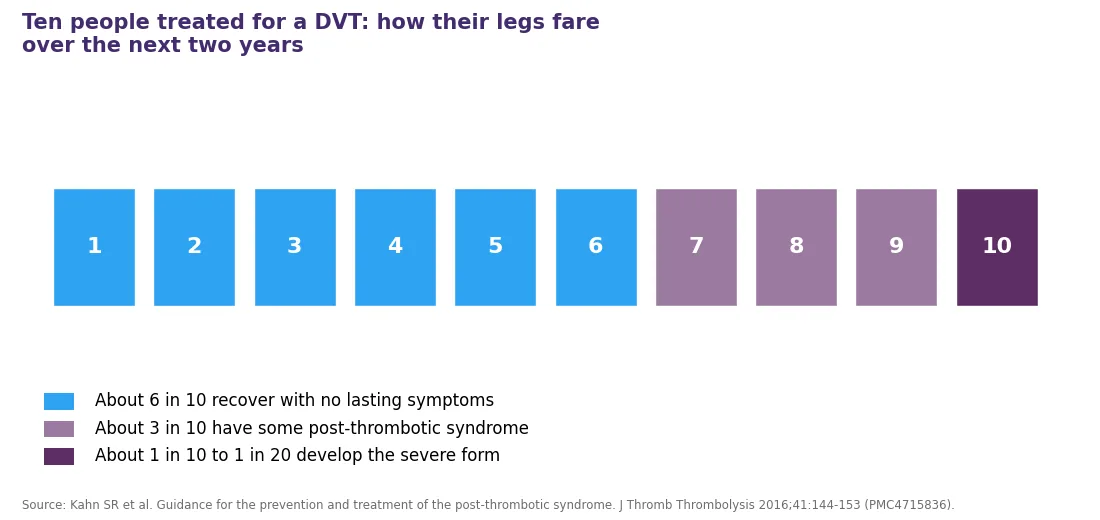
Post-thrombotic syndrome (PTS) is chronic vein trouble that follows a DVT. The 2016 guidance on PTS, led by Susan Kahn of McGill University (who also led the SOX stocking trial described below), calls it the most frequent complication of DVT. It develops in about 20% to 50% of patients within two years, even when the blood thinner was taken properly, and it is severe in 5% to 10%. The guidance also counts its cost beyond the leg: poorer health and quality of life, health care bills, out-of-pocket spending and lost work time.
Why the vein stops working
The underlying problem is high pressure in the leg veins. The guidance describes two causes that combine: clot that never fully clears and keeps part of the vein blocked, and valves damaged by the clot so that blood falls back down the leg. Inflammation may play a part by slowing clot clearance and stiffening the vein wall. The higher pressure reduces blood flow to the calf muscle and makes small vessels leak, which produces the swelling and skin changes.
How it feels, and when it is worst
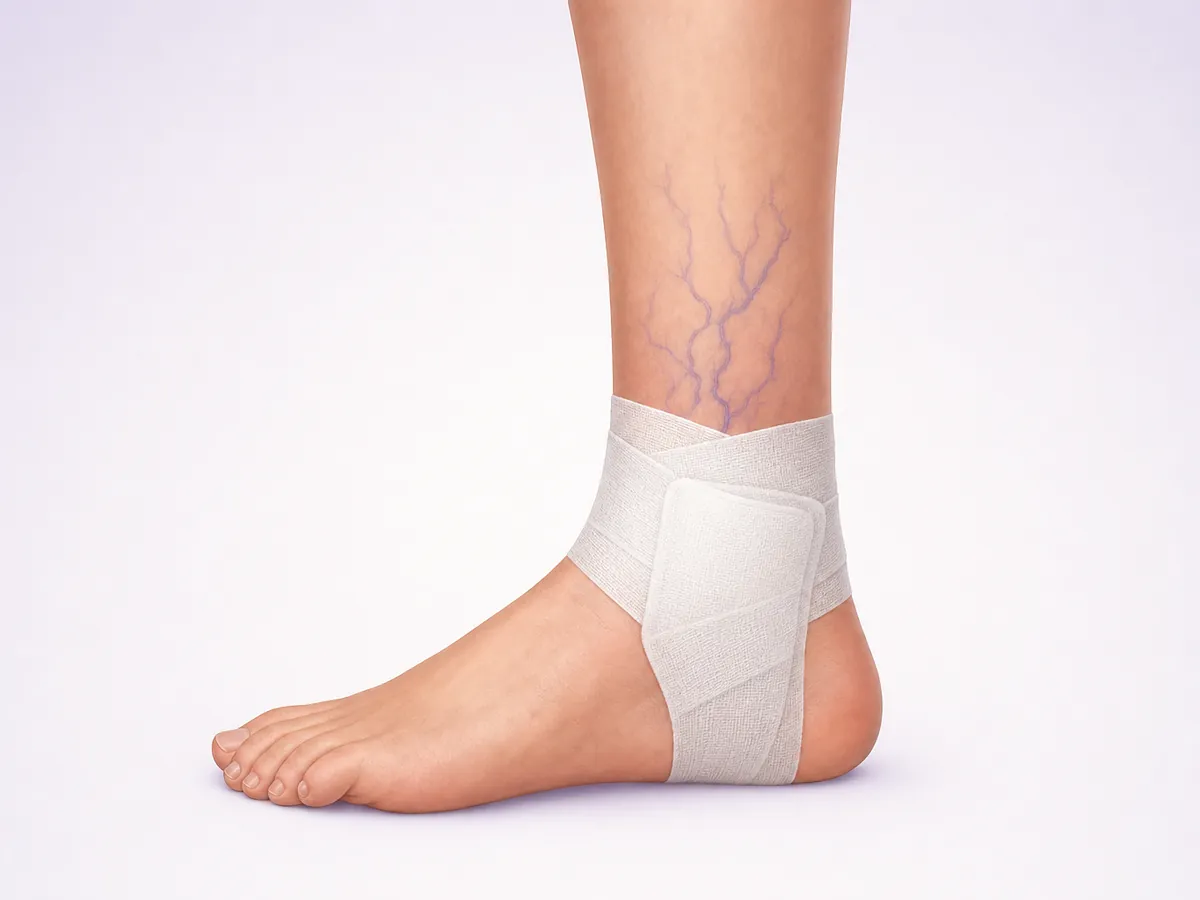
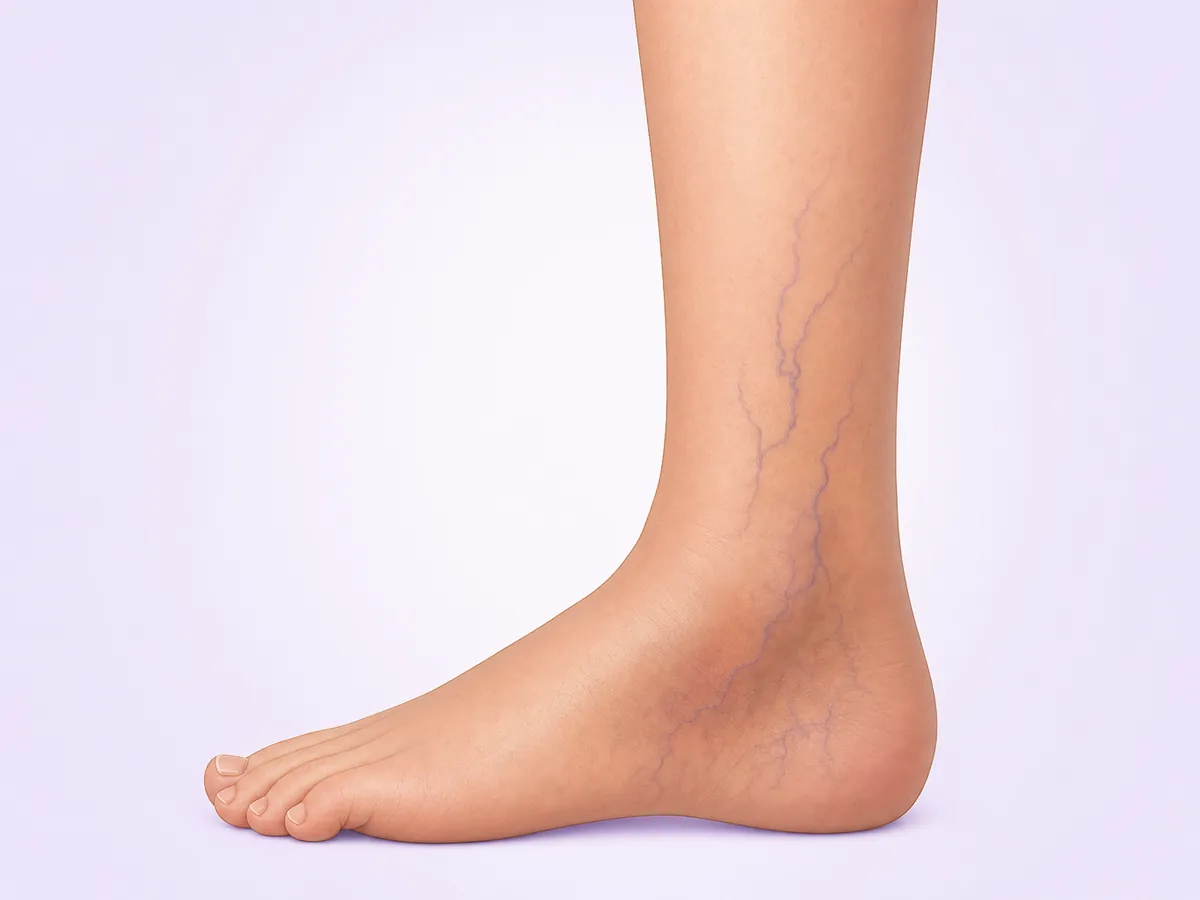
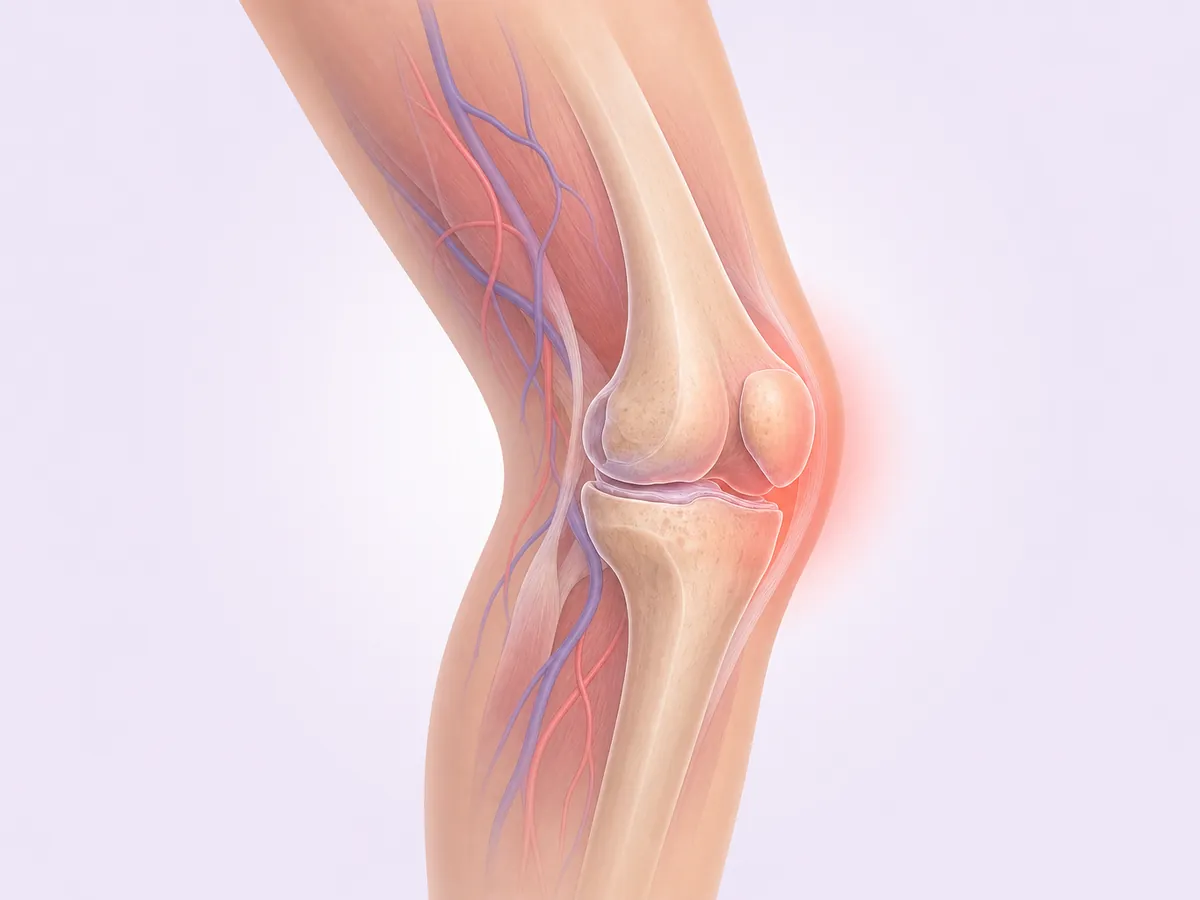
Typical symptoms are heaviness or tiredness in the leg, pain, swelling, itching, cramps, pins and needles, and a bursting pain on walking. Signs a doctor looks for include swelling, small veins around the ankle, new varicose veins, brown skin staining, redness, a bluish color when the leg hangs down, and hardened skin. The pattern is the giveaway: worse with standing and walking, better with rest and lying down, and at its worst at the end of the day.
Why the diagnosis waits three to six months
The pain and swelling of the clot itself can take a few months to fade, so the guidance says a PTS diagnosis should be put off until the acute phase has passed, usually three to six months. Symptoms most often appear in that window but can start up to two years after the DVT. No blood test or scan proves PTS on its own. It is a clinical diagnosis: typical symptoms and signs in someone who had a DVT.
The Villalta score
The standard way to grade PTS is the Villalta scale, adopted by the International Society on Thrombosis and Haemostasis. The patient rates five symptoms: pain, cramps, heaviness, itching and pins and needles. The clinician rates six signs: swelling, hardened skin, brown staining, enlarged veins, redness and pain when the calf is squeezed. Each item scores 0 to 3 and the points are added.
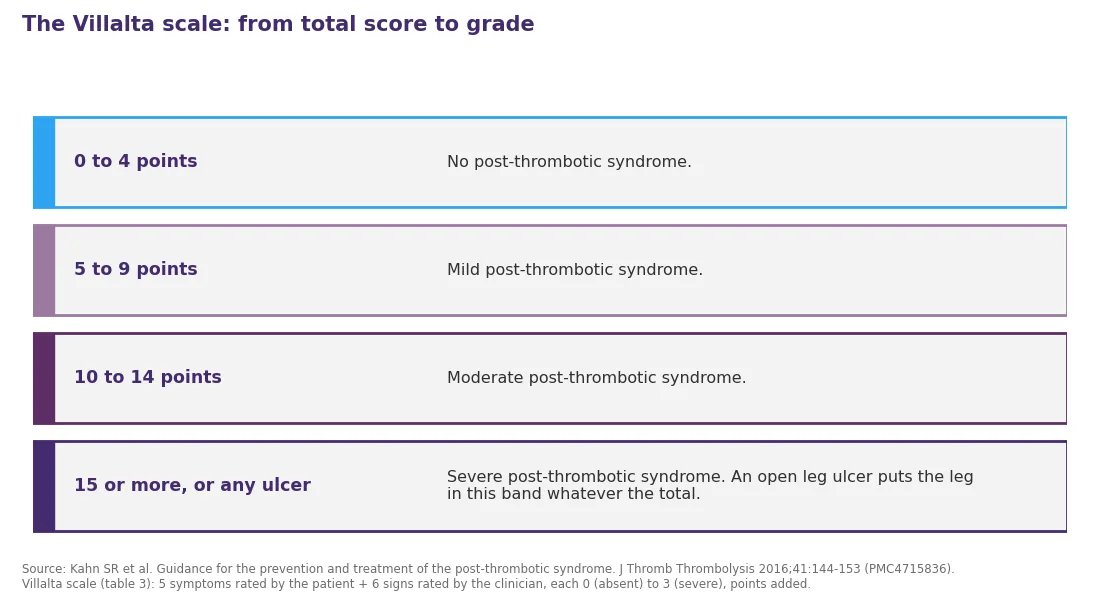
A total of 0 to 4 means no PTS, 5 to 9 mild, 10 to 14 moderate, and 15 or more, or any ulcer, severe. Because half the score comes from the patient’s own ratings, a symptom diary kept at home is useful evidence at the visit.
What raises the odds
The guidance lists the factors known so far. Some are fixed at the time of the clot:
- Older age.
- A higher body mass index.
- Vein problems that were already there before the clot.
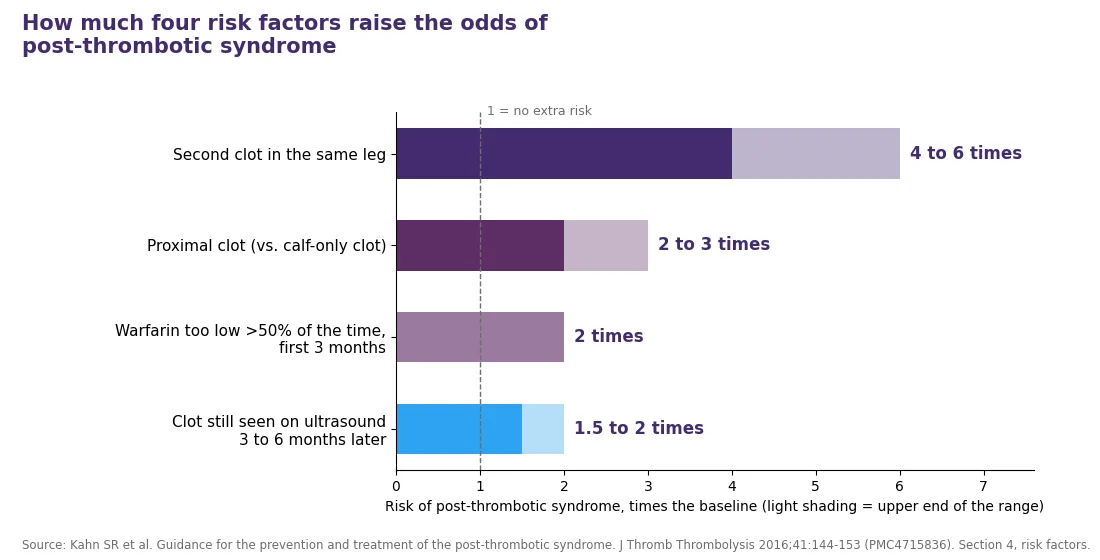
- A proximal clot, two to three times the risk of a calf-only clot.
Others depend on what happens afterward:
- Warfarin levels that run too low for more than half of the first three months, which doubles the risk.
- A second clot in the same leg, the strongest factor, raising risk four- to six-fold.
- Clot still visible on ultrasound three to six months later, a modest 1.5- to 2-fold increase.
- A D-dimer level that stays high in the weeks and months after.
Sex, inherited clotting disorders, and whether the clot had an obvious trigger such as surgery have not been shown to change the risk consistently.
Ulcers in a severe post-thrombotic leg
In its severe form PTS can include leg ulcers. The guidance recommends that post-thrombotic ulcers be managed by a team, typically an internist, dermatologist, vascular surgeon and wound care nurse, with compression, skin care and dressings. Day-to-day wound care, and how it fits with a wound clinic you already use, is on the venous ulcer page; long-standing swelling and skin change without an open sore are on the venous insufficiency page.
Heavy leg every evening since the clot? Ask for a PTS assessment
An IVC filter that was meant to come out
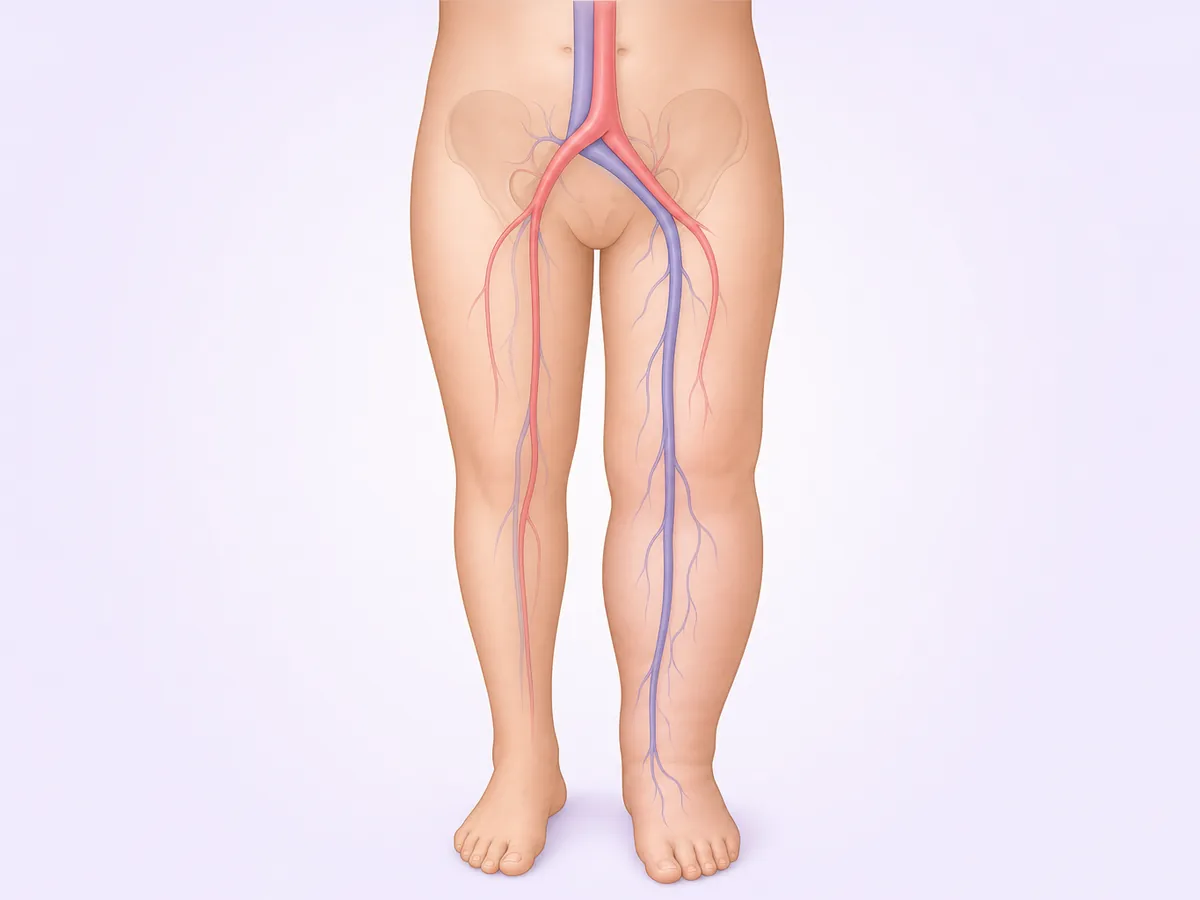
An IVC filter sits in the inferior vena cava, the vein returning blood from the legs and abdomen to the heart, and traps clots on their way to the lungs. The FDA describes filters as small, cage-like devices, used often when blood thinners cannot be given or have not worked. Why and how one is put in is covered on the thrombophlebitis and DVT page. This section is about the other end of the story: a retrievable filter that was never taken out.
Why the FDA wants retrievable filters removed
The FDA’s safety communication, first issued in August 2010 and updated in May 2014, is addressed to the doctors who implant filters and to the clinicians who care for those patients later. It lists the problems reported to the agency:
- The filter moving from where it was placed.
- The filter breaking.
- The whole filter, or broken pieces, traveling to the heart or lungs.
- The filter piercing the wall of the vena cava.
- Difficulty getting the filter out.
The agency notes that these events may be related to how long the filter has been in, and it adds two known long-term risks: DVT in the legs and blockage of the vena cava itself. Its stated concern is that retrievable filters placed for a short-term risk “are not always removed once the risk subsides.”
The 29-to-54-day window
The FDA recommends that the doctors placing filters, and the clinicians caring for those patients later, consider removing a retrievable filter as soon as protection from pulmonary embolism is no longer needed. It based this partly on a decision analysis published in 2013, which found that once the temporary risk has passed, the balance starts to favor removal between 29 and 54 days after the filter goes in.
That analysis, by Morales and colleagues at the FDA, looked at published data on patients who had a retrievable filter placed as a precaution, without a pulmonary embolism, during a temporary risk of one. Each kind of complication was given a weight for how serious it is, then multiplied by how often it happens. The model added up three things: the risk of the filter staying in, the risk of taking it out, and the risk of having no filter at all. The combined risk score bottomed out between day 29 and day 54 and climbed after that, and the result held when the weights and complication rates were varied within reasonable limits.
CACVI’s four-to-six-week check
When CACVI places a filter, it books a follow-up visit four to six weeks later to decide when the filter comes out, according to its IVC filter page. The FDA frames the same decision in two parts: is protection from a lung clot still needed, and is removal feasible given your health. Both are answered for the individual patient, not by the calendar alone.
What the FDA still wanted to learn
The 2014 update did not close the question. The FDA required more clinical data on filters already sold in the United States, for permanent and retrievable models alike. Manufacturers could either join PRESERVE, an independent national study of filter use, or run their own post-market surveillance studies under section 522. The point for a patient is simple: the 29-to-54-day figure comes from a model built on published data, and the agency itself asked for more evidence on filter safety.
A filter placed somewhere else
Many Castaic patients will have had their filter put in during a hospital stay rather than at CACVI. The FDA’s advice applies to every clinician caring for the patient afterward, not only the one who placed it. The first step is to find out what you have. The filter card or the hospital’s procedure note should say whether it is retrievable and when it went in. With that, the office can tell you whether a removal review makes sense. CACVI’s page does not say how it handles filters placed elsewhere, so ask when you call.
Getting home on removal day
Before booking a removal, ask whether you will need someone to drive you home, and if so, line up the ride before the appointment.
Filter still in? Ask whether it can come out
Living with the leg after a DVT
Most of the evidence on day-to-day care after a DVT comes from a handful of large trials. Some of them overturned long-standing habits. This section follows that evidence rather than custom.
Stockings after a DVT: SOX and OCTAVIA
For years, wearing compression stockings for two years after a DVT was standard advice to prevent PTS. The SOX trial tested it properly. It enrolled 806 patients after a first proximal DVT in Canada and the United States and gave half of them real stockings and half placebo stockings, for two years. PTS developed in 14.2% with real stockings and 12.7% with placebo, no meaningful difference. The Kahn 2016 guidance therefore does not suggest routine stockings to prevent PTS. It does say a trial of stockings is reasonable when swelling after the clot is bothersome.
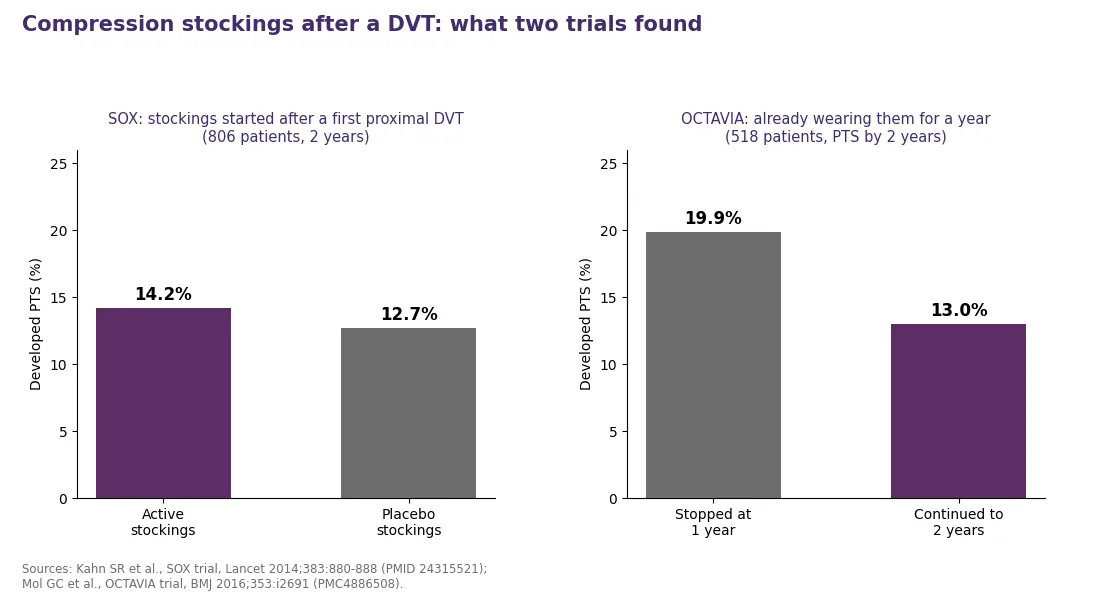
The two trials did not measure PTS the same way, so their percentages should not be lined up against each other. SOX counted leg pain and swelling lasting at least a month (Ginsberg’s criteria); OCTAVIA used the Villalta score described above. Each trial is a fair test of its own question, not a second reading of the other’s.
Once PTS is established, the advice changes. The guidance suggests 20 to 30 mm Hg knee-length stockings, worn daily from waking to bedtime, for patients whose leg feels heavy or swells. It prefers knee-length because they work about as well as thigh-length ones and are easier to put on, more comfortable and cheaper. If those are not enough, a stronger stocking (30 to 40 or 40 to 50 mm Hg) can be tried.
Exercise, measured in months
The guidance suggests a supervised exercise program of leg strengthening plus aerobic activity, for six months or more, for patients who can manage it. Only two small trials stand behind that advice. The one run in people with PTS, a pilot at two Canadian centers, found that six months of strength, flexibility and fitness training improved PTS severity, quality of life, leg strength and flexibility. The authors call the data “not definitive”, which is why the suggestion is framed as reasonable rather than settled. Supervised means a planned program with a therapist or trainer, built up over months, not an instruction to walk more.
Protecting the leg from a second clot
A new clot in the same leg is the strongest PTS risk factor on the list above, so the guidance treats preventing one as part of PTS care. Its first line is blunt: preventing PTS starts with preventing DVT. In practice that means three things:
- Blood thinner treatment for the first clot at the right intensity and for the right length of time, as set by the doctor managing it.
- For warfarin users, frequent and regular INR checks, above all in the first three months.
- Preventive blood thinners or mechanical devices in high-risk settings later on, such as a major operation or a hospital stay, following the consensus guidelines the guidance cites.
Medicines the guidance does not support
Two kinds of pill come up often and are not recommended. “Venoactive” drugs, such as rutosides, were tested in four randomized trials for PTS, and the guidance judged the evidence low quality and does not suggest them. Diuretics, or water pills, are not suggested for PTS swelling either, given the lack of evidence and the potential for harm.
Compression pumps for the hardest cases
For moderate to severe PTS that stockings do not control, the guidance suggests trying a portable, battery-powered intermittent compression device. For severe, stubborn symptoms or heavy swelling, it suggests pneumatic compression sleeves used for 20 to 30 minutes two or three times a day. It notes that patients may find the sleeves cumbersome and that the units are expensive.
A narrowed iliac vein behind severe PTS
In some patients the damage sits in the iliac vein in the pelvis, where a clot can leave a lasting narrowing. The C-TRACT trial, published in the New England Journal of Medicine in 2026, randomized 225 patients between 2018 and 2025, all with moderate or severe PTS and iliac vein blockage confirmed on imaging. Half received an iliac vein stent and stronger anti-clotting treatment in addition to standard PTS care. At six months their Venous Clinical Severity Score averaged 8.1, against 10.0 with standard care alone. The vein-specific quality-of-life score (VEINES-QOL) averaged 62.8 against 48.6, and general physical health scores were also higher. Bleeding was more common with the stent, 11.6% against 3.6%. Stenting itself, and how the pelvic vein is imaged, are covered on the iliac vein compression page.
Talk to CACVI about a plan for the leg
Current reviews are on the office’s Google listing. No star average is printed here, because that figure changes with every new review.
Months after a DVT: what Castaic patients raise
A month on, my leg is still puffy. Should I worry?
Not necessarily, since the acute swelling can take months to settle. The guidance does list venous symptoms and signs that persist one month after the DVT as a risk factor for later PTS, so it is worth having the leg reviewed rather than waiting it out.
Would clot-busting treatment at the start have prevented this?
Probably not for most people. The ATTRACT trial randomized 692 patients with a proximal DVT to blood thinners alone or blood thinners plus catheter-directed clot removal. PTS developed in 47% and 48%, no real difference, and major bleeding in the first 10 days was higher with the procedure (1.7% against 0.3%). Moderate to severe PTS was less common with the procedure, 18% against 24%. Repeat clots over the 24 months were 12% with the procedure and 8% without, a difference the trial did not count as significant.
Then why do some doctors still offer clot removal for a new DVT?
Because an earlier trial pointed the other way. In 189 patients with a clot in the iliac or upper thigh vein, adding catheter-directed clot-dissolving treatment to blood thinners cut the risk of PTS over two years by 26%, at the cost of about 3% more major bleeding. The 2016 guidance, written before ATTRACT reported, therefore left the door open for selected patients only: extensive clot, recent symptoms, low bleeding risk, and treatment at an experienced hospital center.
Does the choice of blood thinner change the risk?
Not in a way anyone can yet recommend on. The guidance found the data insufficient to choose between warfarin and the newer oral anticoagulants on PTS grounds. It mentions some data suggesting that low molecular weight heparin injections used on their own may lead to less PTS than heparin followed by warfarin, but says that needs confirming in large trials. The guidance lists both questions, the newer anticoagulants and longer courses of heparin injections, among the research the field still needs.
How long should stockings be worn if they help?
The OCTAVIA trial looked at patients who had worn stockings faithfully for a year after a proximal DVT and were free of PTS. Among those told to stop, 19.9% developed PTS by two years, against 13.0% of those who carried on. About 14 patients had to keep wearing them for one extra person to avoid PTS. Quality of life was the same in both groups.
Do stockings ease the pain of a fresh clot?
The SOX trial says no. A secondary analysis found the same pain scores over the first 60 days with real and placebo stockings, so the 2016 guidance does not suggest stockings to relieve the pain of a new DVT.
Can a filter just stay in for good?
Some are meant to. The FDA notes that IVC filters are designed as permanent implants and that only some models have the option to be removed. Its removal advice is aimed at retrievable filters placed for a short-term risk, so the first thing to establish is which kind you have.
My filter went in before an operation, not because of a clot. Does the removal advice apply?
Yes, if it is a retrievable model. The FDA’s advice covers retrievable filters placed for a short-term risk of a lung clot, and the specialties its notice addresses include trauma care, bariatric surgery and orthopedic surgery. The 2013 decision analysis the agency relied on modeled exactly that group: people given a filter as a precaution who had not had a pulmonary embolism.
Can Henry Mayo send my records ahead of the visit?
Yes. Ask the hospital to fax them to CACVI at 310-967-2140 before the appointment, or pick up copies and bring them along. If a filter was put in during the stay, add the procedure note.
I have an open ulcer. Did the stent trial show faster healing?
Not at six months. In C-TRACT, the share of patients with an open ulcer at six months was similar with and without the stent, 8.9% against 9.8%, and calf volume was similar too. The gains were in severity scores and quality of life. Dressings and wound clinics belong to the venous ulcer page mentioned in the PTS section.
Is surgery an option when PTS is severe?
For a few people. The 2016 guidance names venous valve repair, venous bypass and venous stents as procedures with potential in carefully selected patients. It says they should not be used routinely, because well-designed studies were missing, experience varied widely between providers and complication and failure rates were uncertain. People with moderate to severe PTS and real limits on daily life may want to discuss them with a physician experienced in complex vein disease. C-TRACT, described above, has since tested stenting in a randomized trial. Most stented patients in it took an antiplatelet drug alongside their anticoagulant to help keep the stent open, and the authors call the higher bleeding risk that came with it a trade-off of the stent strategy; most of those extra bleeds were not major and came months after the procedure.
My varicose veins got worse after the DVT. Can they be ablated?
Carefully, if at all. The 2023 varicose vein guideline says data are sparse, because many vein doctors avoid ablating surface veins when the deep veins are extensively blocked after a clot. The guideline adds that in badly affected patients the great saphenous vein may be needed for deep vein reconstruction.
Is exercise safe once I am on treatment?
The Canadian pilot reported no adverse events over its six months of supervised training. Agree the start date and intensity with the doctor managing your blood thinner.
The clot was in my arm. Can PTS happen there?
Yes. The guidance reports PTS in 15% to 25% of patients after an upper-limb DVT, and notes that it weighs more on daily life when the dominant arm is affected. No trial has tested sleeves or bandages for arm PTS, so the suggestion of a 20 to 30 or 30 to 40 mm Hg compression sleeve rests on likely benefit and low risk of harm.
Our teenager had a DVT. Does the same apply?
PTS has been reported in 15% to 25% of children after a DVT. No study in children has tested treatments to prevent or treat it, so the guidance suggests following adult management for symptoms, with pediatricians experienced in clotting problems involved where possible.
Does losing weight help?
A higher body mass index is one of the listed risk factors, and keeping to a healthy weight is among the everyday measures the guidance recommends. No trial has yet shown how much weight loss changes PTS once it has developed; the guidance lists that as a research gap.
Can a test predict who will get PTS?
Not yet. The 2016 guidance lists a score that predicts PTS at the time of the DVT diagnosis as one of the field’s open research needs, so for now the risk factors listed above are the best guide.
Did the stent trial use the Villalta score too?
Yes, as a secondary measure. At six months the average Villalta score was 8.2 with the stent and 12.3 with standard care alone, which puts the average stented patient in the mild band of the scale described above and the average control patient in the moderate band.
Santa Clarita Valley leg-care links
Neighboring Santa Clarita Valley towns have their own leg pages, and the last two links lead to the CACVI services this page draws on.
- Leg pain doctor, Santa Clarita
- Leg pain doctor, Newhall
- Leg pain doctor, Stevenson Ranch
- Leg pain doctor, Saugus
- Leg pain doctor, Canyon Country
- CACVI IVC filter
- CACVI venography and venous stenting
Post-thrombotic and filter sources
- Kahn SR, Galanaud JP, Vedantham S, Ginsberg JS. Guidance for the prevention and treatment of the post-thrombotic syndrome. J Thromb Thrombolysis. 2016;41:144-153. Full text (PMC)
- Kahn SR, Shapiro S, Wells PS, et al. Compression stockings to prevent post-thrombotic syndrome: a randomised placebo-controlled trial (SOX). Lancet. 2014;383:880-888. doi:10.1016/S0140-6736(13)61902-9. PubMed (PMID 24315521)
- Mol GC, van de Ree MA, Klok FA, et al. One versus two years of elastic compression stockings for prevention of post-thrombotic syndrome (OCTAVIA): randomised controlled trial. BMJ. 2016;353:i2691. Full text (PMC)
- Vedantham S, Goldhaber SZ, Julian JA, et al. Pharmacomechanical catheter-directed thrombolysis for deep-vein thrombosis (ATTRACT). N Engl J Med. 2017;377:2240-2252. Full text (PMC)
- Vedantham S, Kahn SR, Marston WA, et al. Endovascular therapy for post-thrombotic syndrome: a randomized trial (C-TRACT). N Engl J Med. 2026;394:2293-2304. Author manuscript (PMC)
- U.S. Food and Drug Administration. Removing retrievable inferior vena cava filters: FDA safety communication, updated May 6, 2014. Archived copy
- Morales JP, Li X, Irony TZ, et al. Decision analysis of retrievable inferior vena cava filters in patients without pulmonary embolism. J Vasc Surg Venous Lymphat Disord. 2013;1:376-384. PubMed (PMID 26992759)
- Gloviczki P, Lawrence PF, Wasan SM, et al. 2023 SVS/AVF/AVLS clinical practice guidelines for the management of varicose veins of the lower extremities, Part II. J Vasc Surg Venous Lymphat Disord. 2024;12:101670. Full text (PMC)
- CACVI. IVC filter. cacvi.org
- National Heart, Lung, and Blood Institute. Venous thromboembolism. nhlbi.nih.gov
- Los Angeles County. Henry Mayo Newhall Memorial Hospital, services directory. locator.lacounty.gov
¿Listo para hablar?