





Vascular & Leg Pain Care
Leg Pain Doctor Malibu
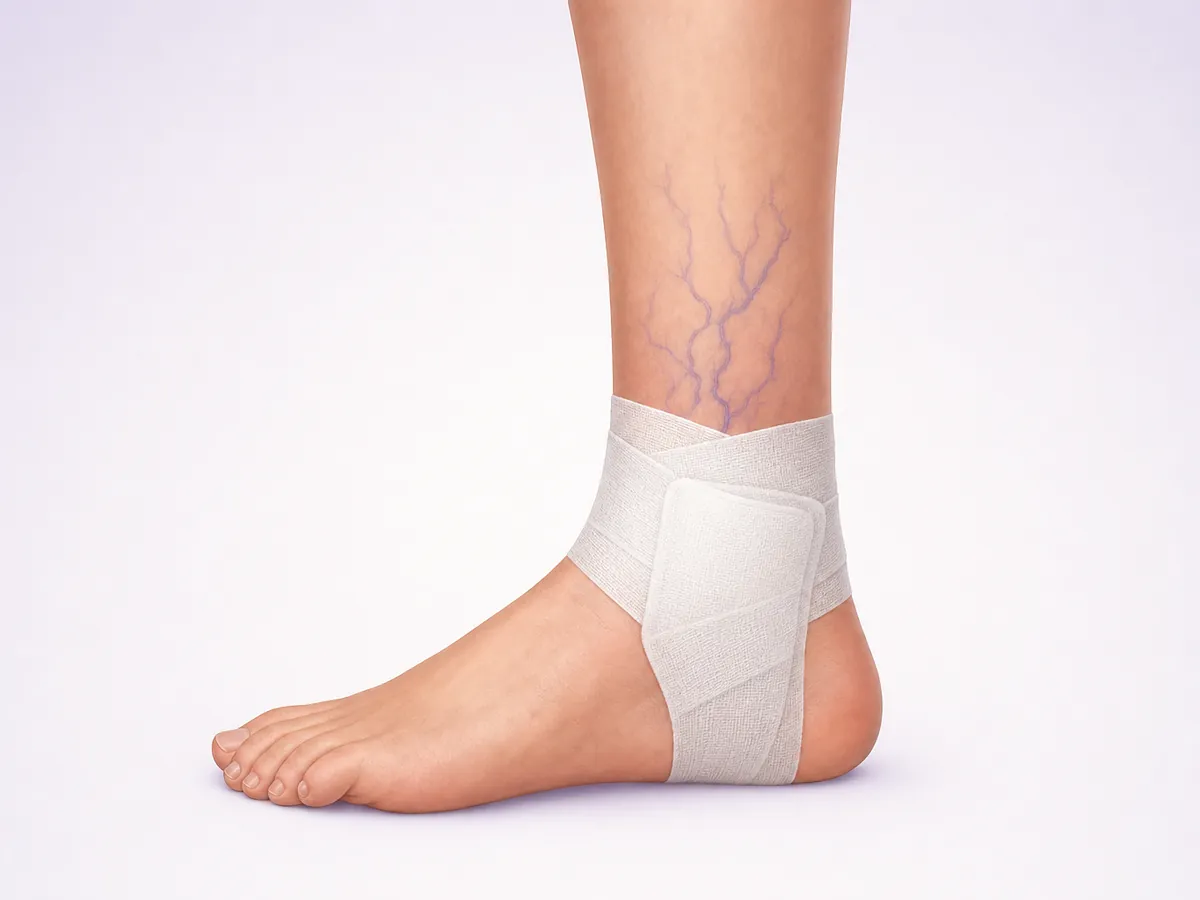
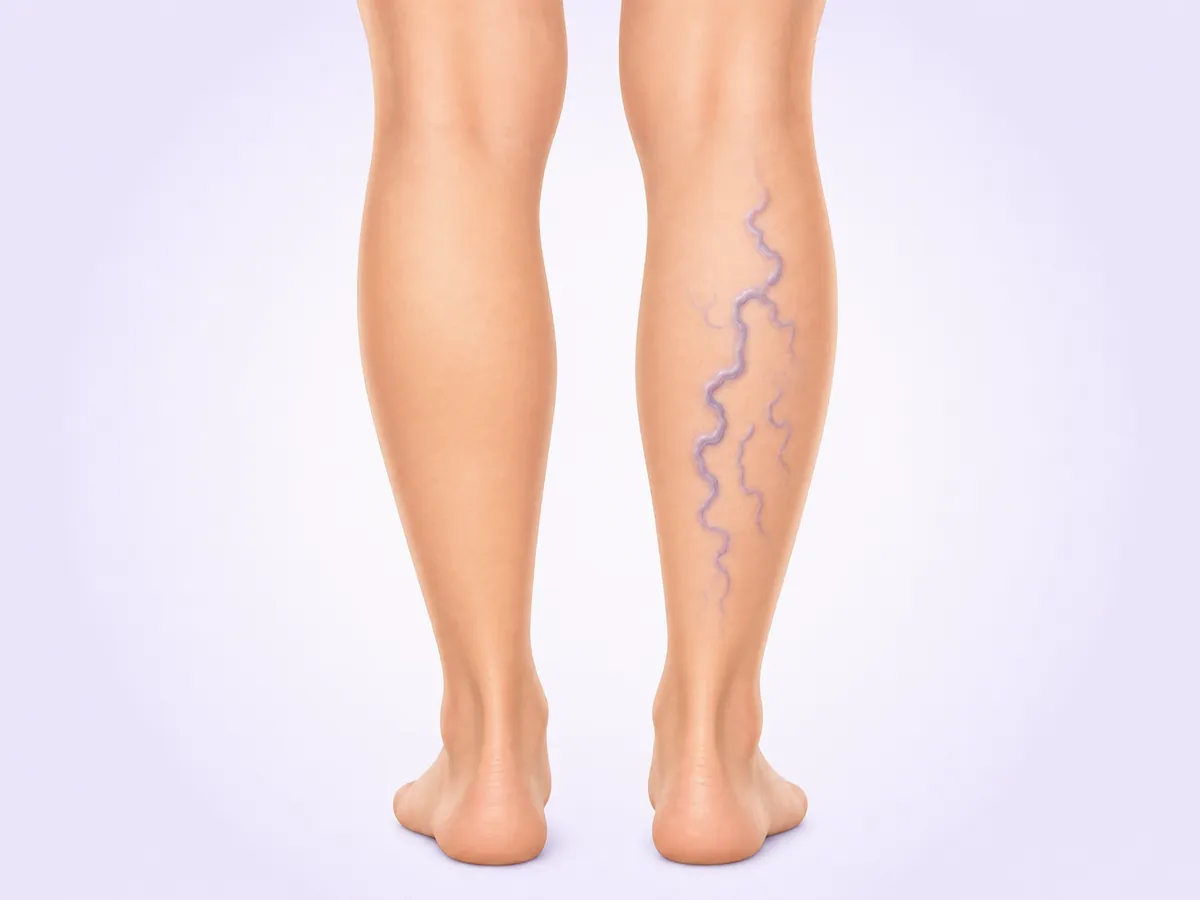
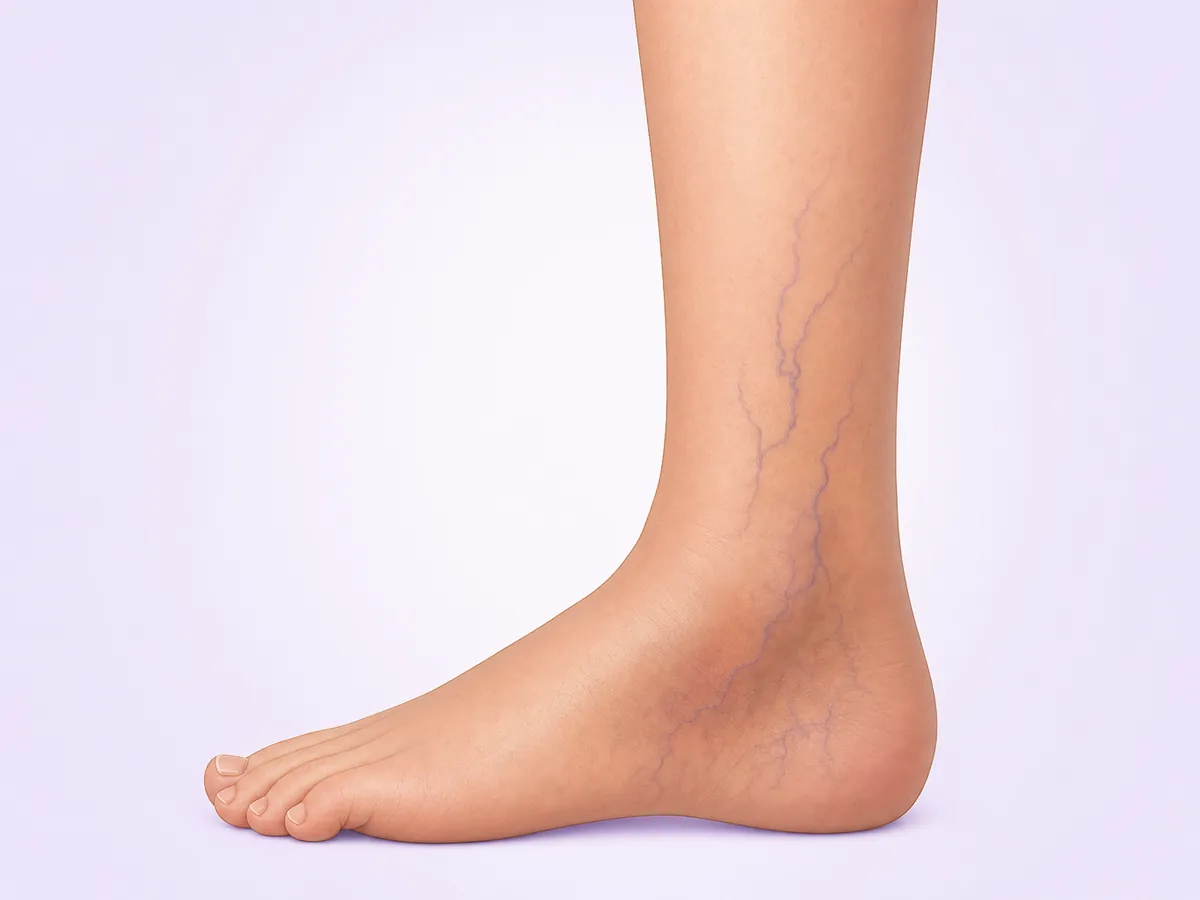
When Malibu residents look for a leg pain doctor because of thin red or purple lines on the thighs, calves or ankles, they are usually dealing with spider veins. This page is written for them. The Center for Advanced Cardiac and Vascular Interventions (CACVI) treats spider veins on the legs with sclerotherapy and surface laser, and its physicians also check whether a cluster of small veins is a sign of a larger vein problem that should be looked at first.
Malibu patients are usually seen at the San Fernando Valley office, 18226 Ventura Blvd, Suite 102, Tarzana, CA 91356, phone 818-905-5904. From Malibu City Hall that is a drive over Malibu Canyon Road and US-101. The sections below cover the treatment first, then the small number of cases where spider veins need more than cosmetic care, then cost and the trip itself.
Ask for a spider vein consultation in Tarzana
Before the first session: what the numbers say
| Number | Why it matters here | Where it comes from |
|---|---|---|
| 20.9 mi (31 min free-flow) | Malibu City Hall (23825 Stuart Ranch Rd) to the Tarzana office, by Malibu Canyon Road and US-101 | OSRM route, free-flow |
| 22.3 mi (38 min free-flow) | The same starting point to the Los Angeles office, 8741 Alden Drive, Suite A (310-652-2744), by Pacific Coast Highway and I-10 | OSRM route, free-flow |
| 13.2 mi (26 min free-flow) | Malibu City Hall to the Nethercutt Emergency Center at UCLA Santa Monica Medical Center, for anything urgent | OSRM route |
| Under 1 mm wide | The size that makes a vein a spider vein (telangiectasia); 1 mm to under 3 mm is a reticular vein | 2023 SVS/AVF/AVLS guideline |
| 95% vs 8% | Share of patients rated a treatment success 12 weeks after polidocanol injections, compared with saline placebo, in the trial behind the drug’s FDA approval | Asclera label (DailyMed) |
| $300 to $3,000 | The average cost range CACVI publishes for spider vein treatment | CACVI spider vein page |
Spider veins on Malibu legs, and what CACVI does about them
Spider vein treatment at CACVI starts with a physical exam and a review of your medical history, which the practice’s spider vein page describes as the step that keeps treatment safe and fitted to the person. The options on that page are sclerotherapy, laser therapy and lifestyle measures such as walking and support stockings.
Most people choose treatment because they dislike how the veins look. Others have veins that ache, burn or itch; the 2021 Cochrane review of spider-vein treatment lists pain, burning and itching as the symptoms patients report.
Telangiectasia or reticular vein: the 1 mm cut-off
Vein doctors sort small leg veins by width. The 2023 varicose vein guideline from the Society for Vascular Surgery, the American Venous Forum and the American Vein and Lymphatic Society defines spider veins, or telangiectasias, as veins under the skin that are less than 1 mm wide. Reticular veins, the blue-green veins often seen running behind a spider-vein cluster, measure 1 mm to just under 3 mm.
The width matters for the plan because it decides the drug strength. The FDA label for polidocanol (Asclera), a sclerosing drug approved for exactly these two vein sizes, calls for the 0.5% solution in spider veins and the 1% solution in reticular veins. The label also notes that the drug has not been studied in veins wider than 3 mm.
Who sees small-vein patients at CACVI
Two of CACVI’s physicians hold the RPVI, the credential for interpreting vascular ultrasound. The RPVI (Registered Physician in Vascular Interpretation) appears on the biography of Dr. Moinakhtar Lala, alongside echocardiography and endovascular board certification, and on that of Dr. Vasim Lala, a graduate of Michigan State University College of Osteopathic Medicine. Dr. Mehran J. Khorsandi, a University of Pennsylvania medical graduate, is a Diplomate of the American Board of Endovascular Medicine.
Treatment for knee pain and joint pain in Malibu
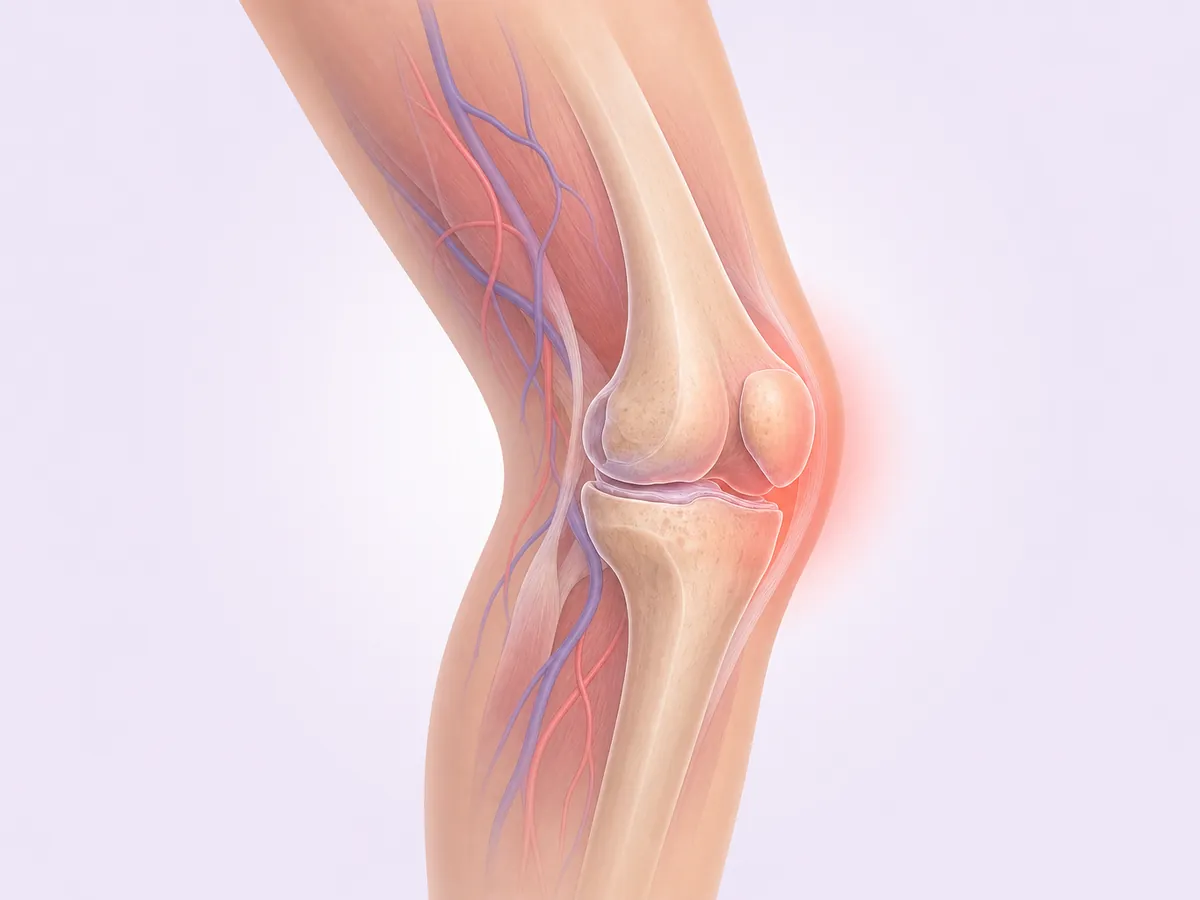
Not every Malibu search for leg pain is about veins. When the pain sits in the knee and the skin over it looks normal, osteoarthritis is a more likely cause than a vein. CACVI treats osteoarthritis knee pain with genicular artery embolization: a catheter placed through an artery in the upper thigh, guided by X-ray, blocks the small arteries feeding the inflamed knee lining, in a procedure of about two hours. The genicular artery embolization page explains the procedure and the osteoarthritic knee pain page covers the symptoms. The rest of this page is about leg veins.
Leg pain that spider veins don’t explain
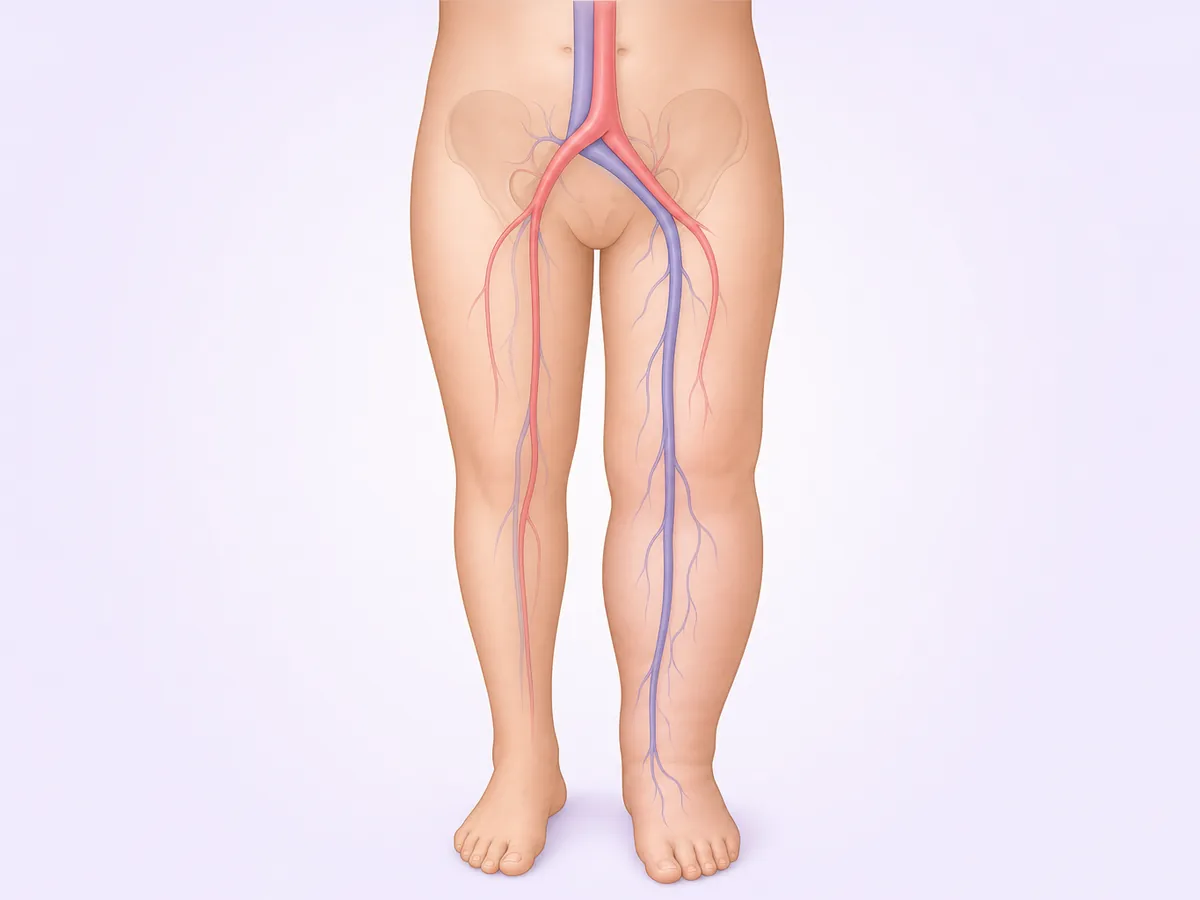
Calf pain when you walk, a sore that won’t close, or one leg that swells usually comes from the arteries or the deeper veins, not from spider veins. CACVI checks these with an in-office vascular ultrasound and treats peripheral artery disease, critical limb ischemia, arterial leg ulcers, diabetic foot ulcers and amputation risk, venous leg ulcers, chronic venous insufficiency and May-Thurner syndrome; each has its own page.
Notes worth making before the first visit
A few details shape the plan, and most of them come straight from the drug label’s warnings or the guideline’s advice on who needs a scan:
- The patches that bother you, for instance on the outer thigh or around the ankle bone.
- Whether they cause anything besides their appearance: burning, itching, aching late in the day, or bleeding.
- Any bulging, rope-like veins on the same leg.
- Earlier vein treatment, and what was used.
- A past deep vein thrombosis or pulmonary embolism, which the polidocanol label lists as a risk factor for a new clot after injection.
- Major surgery, a long hospital stay or a pregnancy in the past three months, which the label also lists.
- A known allergy to polidocanol or another sclerosant.
- A pregnancy now or planned soon, or breastfeeding.
- Travel booked in the days after a possible session.
Bring these notes to a Tarzana consultation
Sclerotherapy and laser: how small leg veins are closed
CACVI’s spider vein page lists two methods: sclerotherapy, an injected drug that the guideline recommends, and surface laser, which it suggests for a narrower group.
What a sclerosant does inside a spider vein
In sclerotherapy, the doctor injects a solution that irritates the inner lining of the vein so that it scars shut. Blood then takes other, healthy veins, and the treated vein fades, usually over a few weeks according to CACVI’s page. The polidocanol label describes the technique: a fine needle, typically 26- or 30-gauge, entered along the vein, with 0.1 to 0.3 mL injected slowly at each spot and no more than 10 mL in a session. A leg that needs more than that is treated over more than one visit, with the sessions one to two weeks apart.
For patients with symptomatic spider and reticular veins, the 2023 guideline gives sclerotherapy with liquid or foam a strong recommendation (grade 1) on moderate-quality evidence. The guideline says foam has been preferred recently for larger reticular veins.
What the trials measured
EASI, the trial behind polidocanol’s FDA approval, treated 338 patients with spider or reticular leg veins with polidocanol, sodium tetradecyl sulfate (STS, an older sclerosant) or saline placebo. A blinded panel rated before-and-after photographs, and success meant “good improvement” or “complete treatment success”.
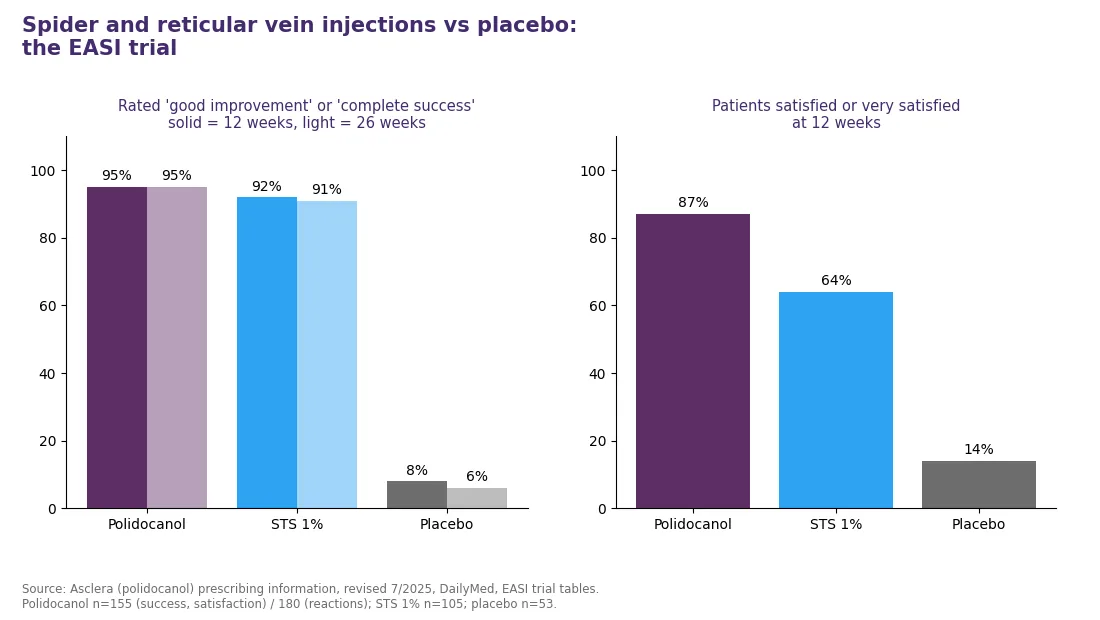
At 12 weeks, 95% of the polidocanol group and 92% of the STS group met that definition, against 8% on placebo, and the figures held at 26 weeks. Satisfaction was where the two drugs differed: 87% of polidocanol patients were satisfied or very satisfied at 12 weeks, against 64% after STS. A 2021 Cochrane review of 35 randomized trials (3,632 participants) found that sclerosing drugs clear or improve spider veins far more than placebo, and found no evidence that any one sclerosant, or laser, clears them better than another.
Side effects counted in those trials
Reactions mostly occur where the needle went in. In the label’s EASI table, bruising (hematoma) and skin discoloration were the most frequent, followed by pain, itching, new fine vessels (neovascularization, also called matting) and a small clot in the treated vein.
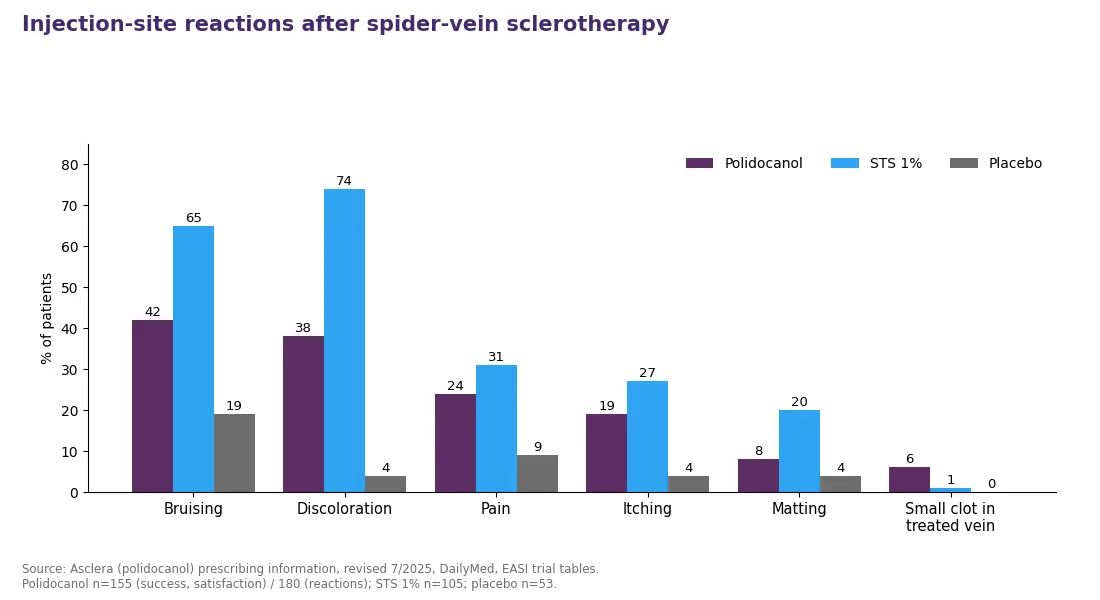
Ultrasound scans at one week and 12 weeks in that trial found no deep vein thrombosis in any group. The Cochrane review’s comparisons of side effects point the same way: compared with other sclerosants, polidocanol probably causes less pain, STS caused more pigmentation and more matting, and foam may cause more matting than liquid.
Surface laser, and the patients it suits
The guideline suggests surface laser (grade 2) in four situations: an allergy to sclerosants, a fear of needles, spider veins that did not respond to sclerotherapy, and very small veins under 1 mm with matting. In the Cochrane review, laser and sclerotherapy produced no clear difference in clearance or matting, and laser may have caused less brown staining (risk ratio 0.57). CACVI’s own page says laser is often less effective than injections for larger veins, that treated vessels fade over months and may not disappear completely, and that side effects can include redness, bruising, swelling and permanent changes in skin tone.
The first three weeks after a session
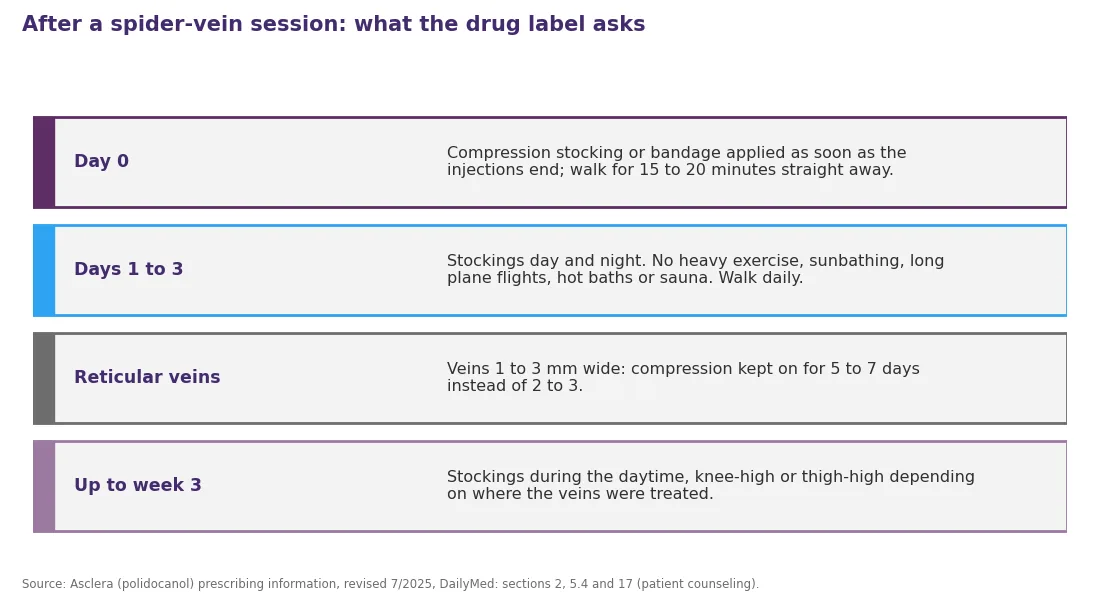
Compression with a stocking or bandage goes on as soon as the injections are finished, and the patient walks for 15 to 20 minutes straight away. The label then advises wearing compression stockings or support hose on the treated leg continuously for two to three days, and during the daytime for two to three weeks, knee-high or thigh-high depending on where the veins were injected. For reticular veins the label extends compression to five to seven days. For two to three days after treatment it also asks patients to avoid heavy exercise, sunbathing, long plane flights, and hot baths or sauna.
Rare but serious risks the drug label names
The label’s warnings, worth hearing before the first injection:
- Severe allergic reactions, including fatal anaphylaxis, have been reported. They are more frequent with volumes above 3 mL, so the label tells doctors to use the smallest dose that works.
- Polidocanol can cause venous thrombosis and pulmonary embolism. The risk is higher with reduced mobility, a past clot, or recent major surgery, hospitalization or pregnancy.
- Stroke, transient ischemic attack and heart attack have been reported close in time to polidocanol injection (the label’s arterial embolism warning).
- The label says polidocanol foamed with room air should be avoided.
- Injection into an artery, or leakage outside the vein, can cause severe tissue damage.
- The drug must not be used in anyone with a known polidocanol allergy or an active clot.
Talk through sclerotherapy or laser with CACVI
When spider veins hint at a larger vein problem
Most spider veins are only spider veins. A smaller group sits on top of a leaky vein deeper in the leg, and for those the plan changes. The guideline is clear about where the line falls, and it leans against over-testing.
Why a duplex scan is usually skipped
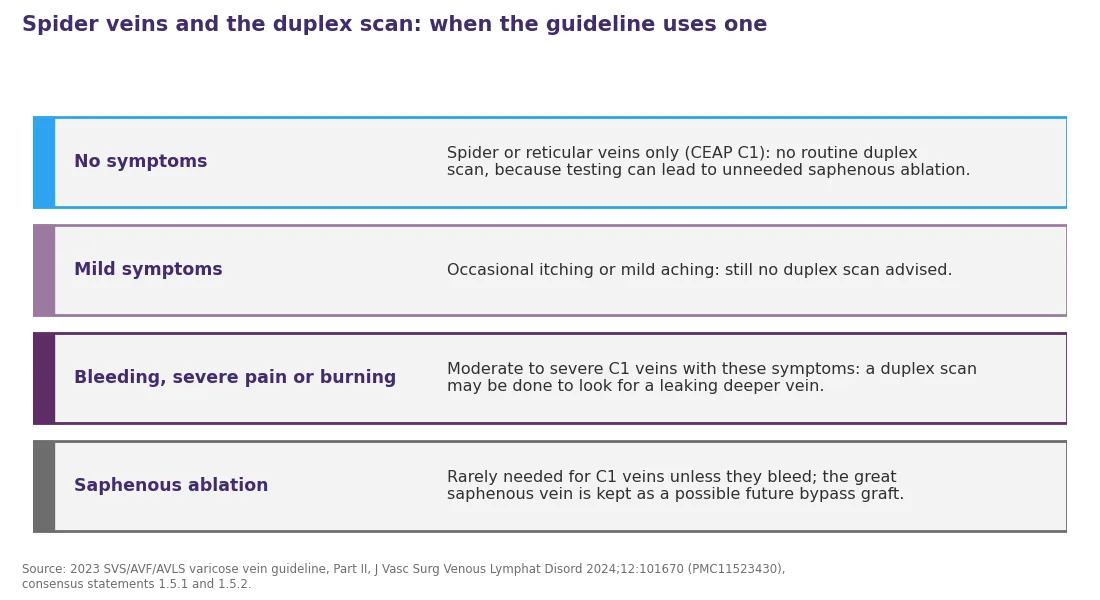
For people whose spider or reticular veins cause no symptoms, the 2023 guideline says a duplex ultrasound of the leg veins should not be done routinely. Its reason is that testing could lead to unnecessary ablation of the great saphenous vein, the long vein running up the inside of the leg. The guideline points out that this vein may be needed one day as a bypass graft for the heart or leg arteries, so it should be kept whenever possible. The Society for Vascular Surgery makes the same point in its Choosing Wisely list, which the guideline cites.
Symptoms that change the plan
The picture changes when small veins bleed, or when moderate to severe spider or reticular veins cause severe pain or burning. In that group, the guideline says a duplex scan may be done to look for a leaking vein behind them. Even then, it adds, ablation of the saphenous vein for C1 veins is rarely needed unless they bleed. Mild symptoms, and spider veins that itch now and then, do not call for a scan. If a scan is ordered, the Brentwood vein-scan page explains what happens during it.
Clusters along the inside of the thigh
Location gives a clue. The guideline cites work that found a significant but weak link between advanced spider veins on the inner thigh, along the path of the great saphenous vein, and a leaky saphenous vein. One study it summarizes scanned 269 legs of women with spider veins and found reflux in the great saphenous vein in 44%. In 73% of those, though, the reflux was limited to one segment, and only 4% had a leak at the groin junction, where varicose vein treatment usually focuses.
The feeder veins behind a cluster
Many spider-vein clusters are fed by a reticular vein running just under the skin. Work cited in the guideline found incompetent reticular veins in 80% to 90% of these cases and recommended treating them together with the spider veins. These feeder veins always lie above the superficial fascia, so they can be seen with magnification or found during an ultrasound-guided injection.
Bulging veins on the same leg
CACVI’s spider vein page notes that people with larger varicose veins are at higher risk of spider veins. If you can see rope-like veins 3 mm or wider on the same leg, they count as varicose veins (class C2), and the guideline handles them differently. For a leg with symptomatic varicose veins it advises checking the deep veins routinely, and it recommends treating the varicose branches themselves by miniphlebectomy or ultrasound-guided foam rather than by spider-vein injections. For how those branches are treated, read the Cypress varicose vein page, along with CACVI’s varicose veins and endovenous ablation pages.
Spider veins that bleed or burn? Ask whether a scan comes first
Cosmetic, medical, and the $300 to $3,000 CACVI publishes
Spider veins sit on the line between appearance and health, and how a vein is labeled affects how the visit is planned. This section keeps to what the guideline, the drug label and CACVI’s own pages say.
Treating for appearance is a legitimate reason
The guideline says spider and reticular veins without symptoms are usually a cosmetic problem. MedlinePlus, the National Library of Medicine’s consumer health site, puts it plainly for varicose veins: if they are painful or you don’t like the way they look, your doctor may recommend procedures to remove them. Choosing treatment for the look of your legs is a normal reason to book, and nobody should feel they have to invent symptoms to justify it.
What turns small veins into a medical question
The CACVI page names aching, burning and pain after long periods of standing as the symptoms spider veins can cause. The guideline adds bleeding as the most serious complication of C1 veins. Those symptoms are what move a visit from the cosmetic column toward the medical one, and they are the reason the notes listed earlier ask about them. Plan rules for each kind of visit are not covered here; the office can tell you how your coverage applies before you book.
What the published range covers
CACVI’s spider vein page says treatment options cost $300 to $3,000 on average. The spread follows from the facts above. A few spider veins at the ankle may be cleared in one short session, while a leg covered from hip to ankle may need several, because the label limits how much drug can be used per session. Laser, stockings and any scan add their own costs. CACVI’s article on how much it costs to remove spider veins names the treatment method and the extent of the veins among the factors behind the figure. The range is CACVI’s published average, not a quote, and the consultation is where a figure for your legs is worked out.
Pregnancy and timing
The polidocanol label addresses pregnancy directly. Case reports have not shown harm to mother or baby, but the label says there is minimal benefit in treating uncomplicated spider and reticular veins during pregnancy. Leg veins that appear during pregnancy may also shrink on their own after delivery. For someone planning a pregnancy, that is an argument for waiting until afterward and seeing what remains.
Brown marks and the sun
Brown staining along a treated vein (hyperpigmentation) is the side effect people mind most. In the Cochrane review it was about 12 times as frequent with sclerosing drugs as with placebo, and more frequent with STS than with other agents. Sunbathing is on the label’s short list of things to skip right after a session, set out in the aftercare section above.


For a Malibu patient that advice is practical. A session booked just before a planned beach weekend means either skipping the beach or ignoring the label. One randomized trial of 720 patients, published in 2021, tested an oral venoactive drug, sulodexide, given before and after sclerotherapy. Brown marks at one month fell from 14.8% to 8.7%, although the difference in skin tone was no longer significant at three months. That is a single trial, so it is a research finding, not a standard step.
Ask CACVI what treatment would involve for your legs
Up Malibu Canyon to the Tarzana office
Every distance on this page is measured from Malibu City Hall at 23825 Stuart Ranch Road. Malibu is a long, narrow city along the coast, so a patient in western Malibu or on Point Dume will drive farther, and a patient near Topanga less. The figures are free-flow estimates from OSRM routing, without traffic.
The route, measured from City Hall
The Tarzana office at 18226 Ventura Blvd, Suite 102, is 20.9 miles from City Hall, about 31 minutes without traffic. The route climbs Malibu Canyon Road, which becomes Las Virgenes Road in Calabasas, joins US-101 eastbound at the Lost Hills Road ramp and leaves the freeway at Reseda Boulevard, a short way from the office on Ventura Boulevard. The Los Angeles office on Alden Drive is listed in the table above for anyone who prefers the coast road.


Planning a session around the drive
A sclerotherapy visit ends with stockings on and a short walk. Wear pants or a skirt roomy enough to go over a thigh-high stocking. Leave time for the walk before getting back in the car. The label’s pause on heavy exercise and long flights is worth checking against your calendar. If a leg with many veins will need several sessions, a course can be planned as a short series of trips rather than one long day.
Urgent problems stay on the coast
CACVI’s offices handle scheduled care. Sudden swelling and pain in one leg, chest pain or sudden shortness of breath after a procedure, or signs of a severe allergic reaction need emergency care, not a drive to Tarzana. Call 911, or go to the Nethercutt Emergency Center at UCLA Santa Monica Medical Center, 1250 16th Street, Santa Monica (emergency department 424-259-8400), reached from Malibu by Pacific Coast Highway.
Pacific coast and Santa Monica Mountains pages
Other CACVI leg pain pages for communities near Malibu, along the coast and over the Santa Monica Mountains:
- Leg pain doctor, Pacific Palisades
- Leg pain doctor, Topanga
- Leg pain doctor, Calabasas
- Leg pain doctor, Agoura Hills
- Leg pain doctor, Santa Monica
- CACVI spider vein treatment
- CACVI vein treatment overview
Small leg veins, briefly: a Malibu FAQ
How common are spider veins?
Very common. The 2021 Cochrane review notes that spider and reticular veins on the legs become more frequent with age and have been found in 41% of women. It also says their cause is unknown. Having them is not, by itself, a sign that anything is wrong with the deeper veins; the guideline keeps scans for the smaller group with bleeding or severe symptoms.
How many sessions do spider veins usually take?
It depends on how many veins there are. In the EASI trial, patients had one injection session and were offered repeat injections three and six weeks later if the first result was rated unsuccessful. A leg with many veins takes more visits because of the per-session dose limit described in the sclerotherapy section. CACVI’s page notes that the same vein sometimes needs a second injection.
Did the results last beyond the first few months?
For as long as the approval trial followed patients, yes. At 26 weeks, the success rates were almost unchanged from 12 weeks, and 84% of polidocanol patients were still satisfied or very satisfied, against 63% after STS and 16% after placebo. The label reports nothing beyond 26 weeks, and the Cochrane review notes that its trials did not measure recurrence or delayed side effects.
Will new spider veins appear after treatment?
They can. CACVI’s page says new spider veins can develop in the same area after treatment. The Cochrane review found that none of its 35 trials measured recurrence, so there is no good figure for how often it happens.
Which sclerosing drug does CACVI use?
The practice does not name one on its website, so ask at the consultation. Polidocanol (Asclera) is the drug FDA-approved specifically for spider veins up to 1 mm and reticular veins of 1 to 3 mm in the leg. STS is the main alternative. When the Cochrane authors compared them, the review found no clear difference in clearance, and STS caused more brown staining and matting.
What is polidocanol, and how does it close a vein?
The label describes polidocanol as a non-ionic detergent. Injected into a vein, it damages the vessel’s inner lining; platelets then gather on the damaged wall, a dense plug of platelets, cell debris and fibrin closes the vein, and the closed vein is finally replaced by fibrous tissue. The solution also contains alcohol as an inactive ingredient, 42 mg in each mL, which is worth knowing if you avoid alcohol for medical reasons.
Does foam work better than liquid on spider veins?
The evidence does not show that. In the Cochrane review, foam and other sclerosant forms showed no clear difference in clearing spider veins, in brown staining or in pain. That comparison rested on only two trials with 187 participants, and the reviewers rated the evidence low-certainty. The website does not say whether CACVI uses foam for small veins, so that is a question for the consultation.
What is matting?
Matting is a blush of new, very fine red vessels near a treated area. In the Cochrane review it was about four times as frequent after sclerosing drugs as after placebo, and roughly twice as frequent with STS as with other sclerosants. For the fine matting under 1 mm that can follow injections, surface laser is one of the uses the guideline suggests.
Are the brown marks permanent?
Some fade and some last. In the sulodexide trial described above, the skin-tone difference between groups was no longer statistically significant at three months. CACVI’s page lists permanent skin tone changes among the possible side effects of laser treatment. There is no reliable figure for how many marks become permanent.
Do reticular veins need longer compression than spider veins?
Yes. The polidocanol label asks for compression for two to three days after spider veins are treated and for five to seven days after reticular veins, the larger blue-green veins of 1 to 3 mm. For extensive varicose veins it advises longer compression with bandages or a stocking of a higher compression class.
Do stockings after the injections make a difference?
Stockings after spider-vein injections were argued over for decades, and a randomized trial published in the Journal of Vascular Surgery in 2007 tested part of it. Women who wore medical compression stockings of 23 to 32 mm Hg daily for three weeks after one session had better vessel clearance on blinded photo review than women who wore none, and satisfaction was similar in the two groups. Of 100 women randomized, 96 could be evaluated, with photographs taken about 52 days after the session. The authors calculated that 4.7 patients needed to wear the stockings for one extra patient to reach a high vessel-clearance score, and complaints of discomfort averaged 17.5%.
Can everyday habits keep leg veins from getting worse?
MedlinePlus lists exercise, losing weight, raising the legs when resting, not crossing them when sitting, loose clothing and avoiding long periods of standing as steps that can help keep varicose veins from getting worse. CACVI’s spider vein page includes walking and support stockings among its options. None of these removes spider veins that are already there, which is why they sit alongside injections or laser rather than replacing them.
Does treating spider veins stop them turning into varicose veins?
No evidence shows that. The guideline says spider and reticular veins without symptoms should not be treated to prevent progression to more advanced vein disease, because there is no scientific evidence that complications can be prevented that way.
Can I have sclerotherapy while breastfeeding?
The label has no data on polidocanol in breast milk and says a nursing mother may consider pumping and discarding milk for up to 8 hours after the injection.
How long does polidocanol stay in the blood?
Not long, as far as the label’s data go. In blood samples from 22 EASI patients, low levels of polidocanol showed up in some of them. In the 4 patients whose samples could be used to measure it, the average half-life was 1.5 hours. That is a very small group, which is one reason the label gives cautious advice for nursing mothers rather than a firm all-clear.
Was polidocanol tested in people over 65?
The label says its trials did not include enough people aged 65 and over to tell whether they respond differently. It also says safety and effectiveness in children have not been established.
Does polidocanol interact with other medicines?
The label says no drug interaction studies have been done with it. That is not the same as saying there are no interactions, so bring a full list of your medicines, including blood thinners and hormone treatment, to the consultation.
What has been reported since the drug went on sale?
The label lists reactions reported voluntarily from worldwide use, where the number of patients treated is unknown, so no rate can be given. Besides the serious events in the warnings, the list includes fainting, dizziness, migraine, tingling near the injection, allergic skin rashes, brown skin staining and extra hair growth in the treated area.
I have had a blood clot. Can I still have sclerotherapy?
The label does not allow polidocanol during an active clot, and it lists a past deep vein thrombosis or pulmonary embolism as a risk factor for a new one after injection. A past clot does not rule treatment out, but it belongs in the first conversation. Leg symptoms that have lasted since a clot are a separate subject, covered on the Castaic post-clot page.
What about intense pulsed light or removing the veins?
These methods exist, but the Cochrane review found no randomized trials of intense pulsed light, thermocoagulation or microphlebectomy for spider veins, so there is no trial evidence to compare them with injections or laser. The treatments CACVI’s spider vein page lists are sclerotherapy and laser therapy, together with walking and support stockings.
What about spider veins on the face?
CACVI’s page says spider veins can appear on the face as well as the legs. This page covers leg veins only, and polidocanol’s FDA approval is for the leg. Ask the office what it offers for facial veins.
Can sclerotherapy affect vision?
Briefly, and rarely. A 2013 systematic review in Phlebology found visual disturbance after sclerotherapy in 0.09% to 2% of patients in series of 500 or more. Most reports involved foam rather than liquid, and none of the reported disturbances was permanent. The review found 25 reports that met its criteria; disturbances followed both polidocanol and STS, and the authors judged that air or other embolism was unlikely to be the only cause.
Spider-vein citations
- Gloviczki P, Lawrence PF, Wasan SM, et al. The 2023 Society for Vascular Surgery, American Venous Forum, and American Vein and Lymphatic Society clinical practice guidelines for the management of varicose veins of the lower extremities. Part II. J Vasc Surg Venous Lymphat Disord. 2024;12:101670. Full text (PMC)
- Nakano LC, Cacione DG, Baptista-Silva JC, Flumignan RL. Treatment for telangiectasias and reticular veins. Cochrane Database Syst Rev. 2021;10:CD012723. Full text (PMC)
- Asclera (polidocanol) injection, prescribing information, revised July 2025. DailyMed
- Kern P, Ramelet AA, Wütschert R, Hayoz D. Compression after sclerotherapy for telangiectasias and reticular leg veins: a randomized controlled study. J Vasc Surg. 2007;45:1212-1216. doi:10.1016/j.jvs.2007.02.039
- Gonzalez Ochoa AJ, Carrillo J, Manríquez D, Manrique F, Vazquez AN. Reducing hyperpigmentation after sclerotherapy: a randomized clinical trial. J Vasc Surg Venous Lymphat Disord. 2021;9:154-162. doi:10.1016/j.jvsv.2020.06.019
- Willenberg T, Smith PC, Shepherd A, Davies AH. Visual disturbance following sclerotherapy for varicose veins, reticular veins and telangiectasias: a systematic literature review. Phlebology. 2013;28:123-131. doi:10.1258/phleb.2012.012051. PubMed (PMID 23761921)
- MedlinePlus. Varicose veins. National Library of Medicine. medlineplus.gov
- CACVI. Spider vein treatment. cacvi.org
¿Listo para hablar?