




















Evaluación cardíaca
Cardiology care for Los Angeles: Westside, Mid-Wilshire and beyond
You know that awkward moment at a pharmacy kiosk when the cuff beeps out a number you weren’t expecting. Maybe that’s what brought you here. Maybe it’s a prescription that used to settle things and now… doesn’t. Or someone in your family had heart disease earlier than they should have, and you’re trying to figure out what that means for you. CACVI provides cardiology care in Los Angeles. An outpatient visit looks at your symptoms, the findings you already have, and the treatment you’re on. What follows stays with blood-pressure evidence, because that’s the part you can actually prepare. Show up with measurements a clinician can read, not a pile of unexplained numbers, and the visit goes better.
Los Angeles County Public Health names high blood pressure, diabetes, smoking, and high cholesterol as controllable cardiovascular risks. Take your own findings seriously. Just don’t read that list as a claim that every Los Angeles patient carries the same risks. And if you get new chest discomfort, sudden breathlessness, fainting, or stroke symptoms, call 911. An office slot can wait; that can’t. County cardiovascular prevention and the AHA/ACC chest-pain guideline are why we draw that line.
If it isn’t an emergency, request a Los Angeles cardiology consultation. Nothing here promises a particular test, a set appointment interval, or a named physician on a given day.
How to choose a cardiologist in Los Angeles
| Verified detail | Why it matters to your visit | Source |
|---|---|---|
| 8741 Alden Dr, Suite A, Los Angeles, CA 90048 | This is the outpatient destination, not an emergency department. | CACVI appointments |
| 310-652-2744 | Los Angeles appointment line. | CACVI appointments |
| Upper-arm automatic cuff | AHA recommends this monitor style for home measurements. | Home monitoring |
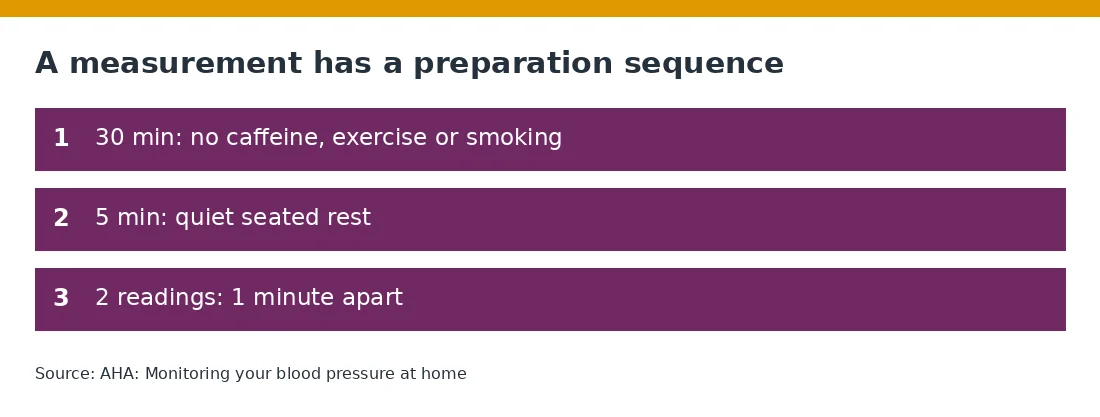
| 30 minutes | Avoid smoking, caffeine and exercise during this period before measuring. | Home monitoring |
| At least 5 minutes | Quiet seated rest precedes a measurement. | Home monitoring |
| Two readings, 1 minute apart | Record both rather than choosing the lower result. | Home monitoring |
Blood-pressure evidence to bring to your Los Angeles heart doctor
Set up a repeatable measurement position
A reading taken over a sleeve, or with your arm dangling, is hard to compare with one taken correctly. The AHA instructions linked in the table want a bare upper arm, supported at heart level, with the cuff fitted the way its directions say. Sit with your back supported and both feet on the floor. Don’t talk. Don’t scroll your phone while the cuff is working.
If you’re coming from Mid-Wilshire or Koreatown, the useful comparison isn’t simply “home versus office.” It’s a properly recorded home measurement versus one taken under known office conditions. Did a reading follow a workout or a stressful commute? Write that next to the number. Context belongs beside the result. Don’t erase the number just because of that context.
Check the equipment rather than chasing a target
Pick a validated monitor and a cuff that actually fits your arm circumference. A wrist or finger unit isn’t the AHA’s recommended stand-in. Bring the device to the appointment so someone can look at how it works and how it sits. The point is to see whether the equipment and your technique can support a treatment decision. Nobody here is selling a brand.
Don’t change your prescribed dose just to make one reading look different before you come in. The AHA cautions against stopping blood-pressure medication on the basis of home readings without professional advice. A useful Los Angeles cardiology visit starts with an honest account of what you’ve actually taken.
Keep an interpretable log
A paper sheet works. So does the monitor’s memory. Put down the date, the time, both numbers, any symptoms, and any missed medication. Follow the recording frequency you already agreed on with the clinician who treats you. This page doesn’t invent a universal number of days. One isolated result and a pattern are different kinds of evidence, and they shouldn’t be treated as the same thing.
A few notes make the log easier to follow:
- Write which monitor produced the reading.
- Say whether the cuff sat on bare skin.
- Note if someone talked to you, or if you were interrupted, during the measurement.
- Keep the readings that surprised you. Don’t tidy them away.
- Jot relevant symptoms in plain words.
- Mark a missed dose, and don’t double it on your own.
Those are preparation suggestions drawn from the AHA home-monitoring guidance. Keeping a diary, on its own, won’t confirm that you have high blood pressure.
Separate a routine review from a dangerous change
The AHA draws a line between severe hypertension without symptoms and a hypertensive emergency. A reading higher than 180 systolic and/or 120 diastolic calls for the actions described in its guidance. If those numbers show up with chest pain, breathlessness, back pain, numbness, weakness, a vision change, or trouble speaking, call 911. Don’t wait for the pressure to come down on its own. If you have no symptoms, repeat the reading after at least a minute. If it stays very high, contact a healthcare professional right away.
None of that is an instruction to delay emergency care while you hunt for a cuff. Sudden, concerning symptoms still need emergency assessment even when you don’t know your blood pressure.
What a cardiology consultation in Los Angeles looks like
Use the history to explain the numbers
Your cardiologist starts with a physical exam and your history, including heart disease in the family and any earlier cardiology records. Hang on to the dates and names of prior tests. Calling every report “a heart scan” doesn’t help much. CACVI’s cardiac evaluation information gives the service context. The actual workup still depends on what’s found.
Lead with the question your referring clinician wants answered. A referral for hard-to-control hypertension isn’t the same question as a consult about a murmur or an unusual rhythm. If several issues are on your mind, bring a short written list so the conversation has a place to start.
Match the next test to a question
If you’ve been referred for an EKG, an echocardiogram, or a stress test, you can read CACVI’s diagnostic service descriptions before you talk it through with your clinician. A test named on a website isn’t proof of an automatic package, and it isn’t a same-day guarantee for a Los Angeles appointment.
When the concern is blood pressure, ask which uncertainty a proposed test would actually settle. Don’t arrange a study just because someone else had it. Your symptoms, the exam, your other conditions, and earlier results all feed that decision.
Review medication information without guessing
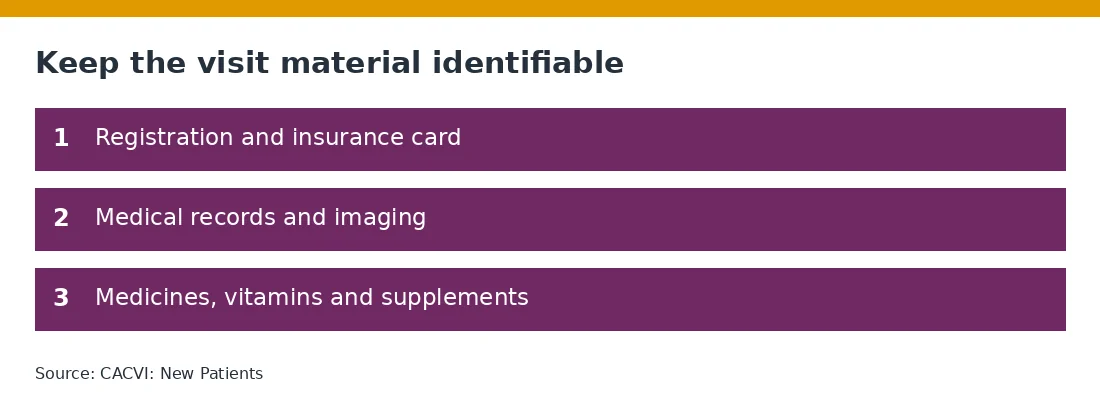
CACVI asks new patients to bring medications, herbals, vitamins, and supplements, along with records and imaging. Use the labels, or an accurate list, so drugs with similar names don’t get mixed up. Write the dose you take. An old discharge sheet may list something different.
A practical medication sheet can include:
- The prescription name and its strength.
- The dosing hours you really use.
- Over-the-counter products you use.
- Supplements and herbals.
- Recent changes another clinician made.
- Reactions or difficulties you want to talk about.
El Centro de new-patient instructions support bringing this material. Treatment changes still require clinical judgment. This page doesn’t start or stop any medication.
Know which physician facts are documented
Dr. Vasim Lala lists hypertension, coronary artery disease, heart failure, and cardiomyopathy among the conditions he treats. His bio also documents interventional, vascular, and structural training. Those published details support the scope described on this page. It still won’t tell you where he’s seeing patients on a given morning. So ask the scheduler which office he is at before you book.
If you’re comparing Los Angeles cardiologists, a named bio is more useful than an unsupported ranking. Use the published hypertension background to frame the concern you want assessed. Send an appointment request about your blood-pressure concern, and don’t treat that request as an emergency channel.
Alden Drive arrival, records and emergency facilities
Parking and the last stretch to Alden Drive
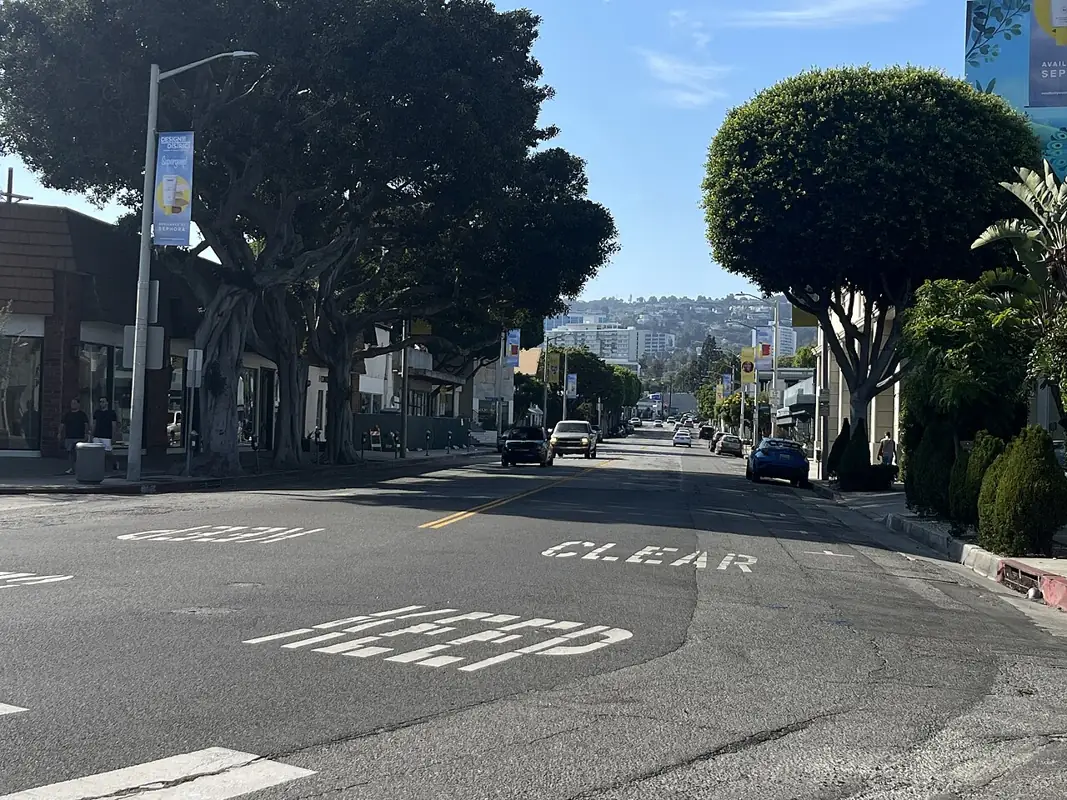
CACVI’s appointment page lists Robertson Alden Garage, Lot 703, at 141 Robertson Blvd as preferred parking. It also names Robertson Plaza and the Spielberg Building as alternatives. Use that parking information for orientation. Posted conditions at the facility still govern once you arrive. Don’t assume a parking-garage timetable is the clinic’s opening timetable.
El Centro de Metro schedules and maps let you plan from your actual starting address. Build a plan that also gets you home, including the last stretch on foot. We don’t claim that one bus serves every neighborhood directly, or that a route on a map is suitable for every patient’s walking ability.


Keep registration separate from medical records
Download and complete CACVI’s new-patient registration form, and bring it with you. The site asks new patients to arrive at least 15 minutes early. Registration gathers administrative information. It isn’t a stand-in for an earlier echo report or a medication list. Bring your insurance card and the payment method described in the practice instructions.
If records live elsewhere, request the relevant report from the provider who created it. A referral and a record release do different jobs. Nothing here claims that a clinician at Cedars-Sinai has referred you, or that a chart automatically moves between nearby offices.

Distinguish the medical center from CACVI
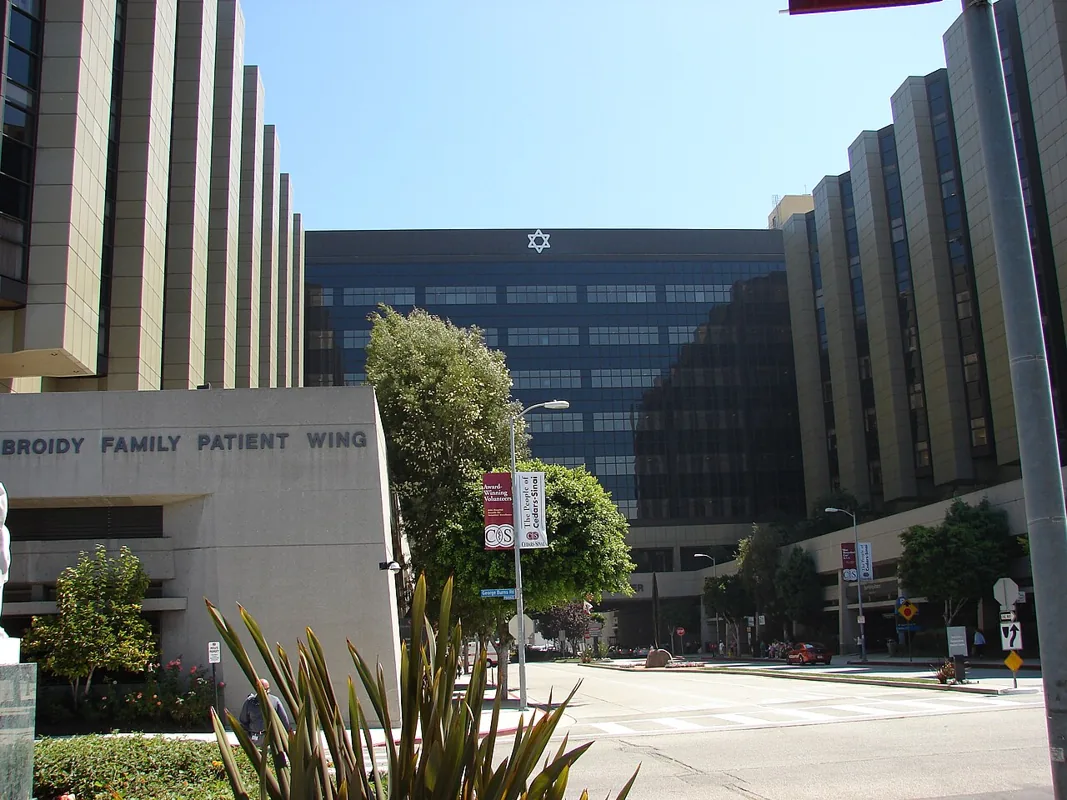
Cedars-Sinai Medical Center is a separate local hospital at 8700 Beverly Blvd. Its facility overview documents an emergency room. Its campus map distinguishes hospital entrances and parking facilities. Use emergency services for acute symptoms, and let EMS decide the destination. Being close to the campus doesn’t make the CACVI office an ER, and it doesn’t imply a particular hospital affiliation.

Details Los Angeles patients can clarify before a routine evaluation
Can a home monitor diagnose high blood pressure on its own?
People sometimes treat the number on the cuff like a diagnosis. The AHA doesn’t. A clinician still has to confirm high blood pressure, and the log you kept is just evidence for that talk. AHA guidance.
Should I bring the monitor if its readings are stored electronically?
Bring the monitor, even if you already exported the numbers. The AHA wants the device at the appointment when its memory holds the measurements, so the clinician can see the saved record and how the unit actually behaves in your hands. Device review guidance.
Is the larger number the systolic pressure?
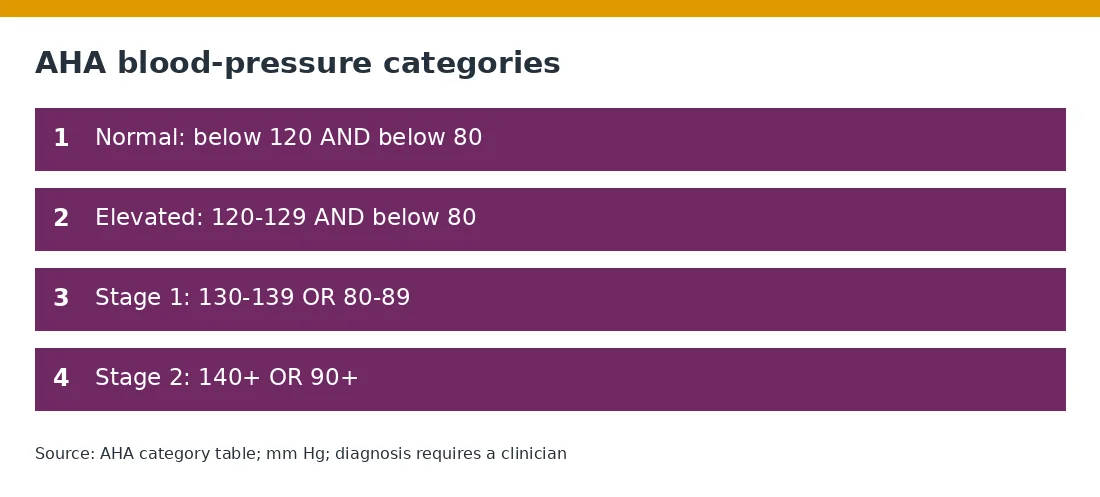
The bigger number is systolic. The smaller one is diastolic. That’s how the AHA table labels them, in mm Hg, and it’s worth writing the words on your log so a hurried note doesn’t swap them. Blood-pressure categories.
What does a reading in the AHA “Elevated” category mean?
If your reading sits in the AHA “Elevated” category, that means systolic 120-129 with diastolic below 80. That’s a defined band, not one of the hypertension categories, and it still has to be read next to the rest of your clinical information. AHA category table.
How is stage 1 hypertension defined?
AHA places that first hypertension category at a top reading of 130 through 139, or a bottom reading of 80 through 89. Notice the “or.” One of those numbers in range is enough for the category, but your treating professional still has to evaluate the measurements before anyone calls it a diagnosis. AHA category table.
What is the stage 2 range?
Stage 2, in the AHA list, is systolic 140 or higher, or diastolic 90 or higher. That’s how the category is defined. It isn’t your personal prescription, and it isn’t a green light to add a medication on your own. AHA category table.
Are symptoms required for a blood-pressure problem?
You can feel fine and still have a blood-pressure problem. That’s kind of the point of checking at home: you document the numbers over time, including while someone is assessing treatment, instead of waiting until you feel unwell. Home monitoring.
Does the time of a home reading matter?
Yes, timing matters. The AHA would rather you measure at the same time each day, and then stick to the recording schedule you already agreed on with your clinician. Comparing a rushed midday reading with a quiet morning one usually just confuses the picture. Home-monitoring instructions.
Is an osteopathic physician’s degree different from an M.D.?
Dr. Vasim Lala’s published credential is D.O., so that’s the designation we use. We don’t quietly swap it for M.D. If you want the training and board-certification details, they’re in his linked bio. Published physician bio.
Where can I find CACVI information about heart failure?
Use the heart-failure condition page for that separate clinical topic. This Los Angeles page doesn’t copy its treatment discussion, and it doesn’t treat swelling alone as proof of heart failure.
Where is information about a pacemaker or defibrillator?
CACVI has a separate pacemakers and defibrillators resource. A device-specific question belongs with the implant and follow-up record. An unrelated blood-pressure reading won’t answer it.
Should I empty my bladder before a home reading?
Yes, empty it first. The AHA puts that in the preparation list because a full bladder can mess with the conditions of the reading. It’s a measurement detail, not a way to treat the pressure itself. Preparation instructions.
Book a visit with a Los Angeles cardiologist
El Centro de West Hollywood, Beverly Hills, Culver City, West Los Angeles and Westwood pages describe other service areas, not additional CACVI offices. For background on the examinations CACVI describes, read its diagnostic service overview.
Los Angeles evidence and reading links
| Source | Publisher | What it covers |
|---|---|---|
| LA County Public Health: Cardiovascular Disease Prevention | Los Angeles County Department of Public Health | Defines cardiovascular disease and lists controllable risk factors in Los Angeles County. |
| American Heart Association: Home Blood Pressure Monitoring | American Heart Association | Instructions for choosing a home cuff, preparing for a reading, and recording blood-pressure measurements. |
| 2021 AHA/ACC Guideline for the Evaluation and Diagnosis of Chest Pain | American Heart Association / American College of Cardiology | Clinical practice guideline with recommendations and algorithms for evaluating and diagnosing chest pain in adults. |
| CACVI: Appointments | CACVI | Office addresses, phone numbers, parking notes, and how to request a visit. |
| CACVI: New Patients | CACVI | Registration form and a checklist of what to bring to a first visit, including insurance card and medical records. |
| CACVI: Cardiac Evaluation | CACVI | Explains what a cardiac evaluation includes, starting with a physical examination and medical history. |
| CACVI: Dr. Vasim Lala | CACVI | Published biography and credentials for Dr. Vasim Lala, D.O. |
| LA Metro: Line Schedules and Maps | LA Metro | Bus and rail line schedules and maps for riding Metro. |
| Cedars-Sinai: Medical Center Map and Parking Information | Cedars-Sinai | Parking, directions, and amenities for a visit to Cedars-Sinai Medical Center in Los Angeles. |
| Cedars-Sinai Medical Center | Cedars-Sinai | Location page for Cedars-Sinai Medical Center, the hospital campus near the Los Angeles office. |
¿Listo para hablar?