




















Respuesta rápida
Purple, blotchy legs usually signal a circulation problem, most often chronic venous insufficiency, where weakened vein valves let blood flow backward and pool instead of returning to your heart. That pooling shows up as dark purple, red, or mottled skin. Peripheral artery disease, deep vein thrombosis, and hemosiderin staining from long-term vein pressure can cause similar coloring. Trauma and minor bruising can also leave temporary discoloration.
Purple or blotchy skin on the legs can have several causes, including circulation problems, cold exposure, and bruising. In chronic venous insufficiency, damaged vein valves allow blood to pool in the lower legs. In peripheral artery disease, narrowed arteries reduce blood flow to the feet and legs. A new color change that comes on suddenly or is accompanied by pain, swelling, or a cold foot may need urgent care.
This guide covers what causes purple and blotchy legs, how to tell a harmless color change from a warning sign, how doctors find the cause, and which treatments work.
Circulation and Its Role in Leg Health
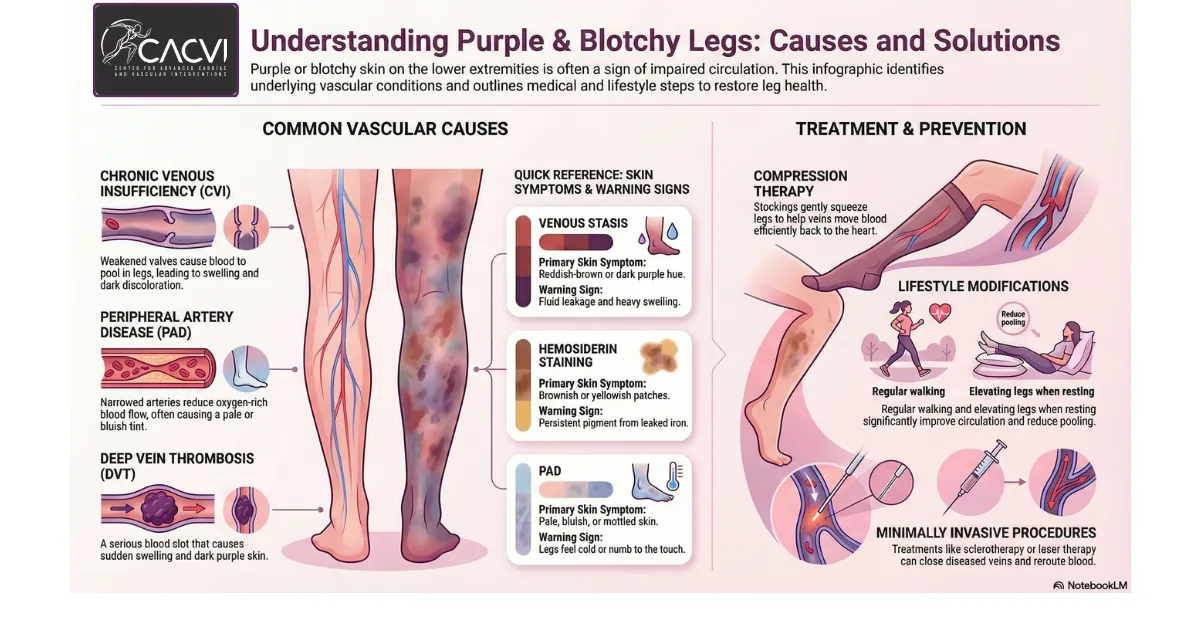
Arteries carry oxygen-rich blood to the legs and feet. Veins carry blood back toward the heart. The calf muscles help move blood upward when you walk, and one-way valves in the veins help keep it from flowing backward.
Blood pools in the lower legs when those valves stop working properly. Pressure increases and fluid leaks into tissues; the skin then changes color. Doctors refer to this as chronic venous insufficiency (CVI) and it frequently shows up along with varicose veins.
Arterial side can fail as well. Arteries get narrowed by plaque and less blood gets to the feet which makes skin there look very pale, blue or purple. The Centers for Disease Control and Prevention estimates that 6.5 million Americans aged 40 and older have peripheral artery disease.
Either problem can bring on leg swelling, aching, cold feet, numbness, and spider veins long before anything serious happens. That's why changes in the color of your legs should be taken seriously. It usually becomes the first obvious sign that something has changed regarding circulation.
Common Causes of Purple and Blotchy Legs
Not every purple spot indicates a vein problem. A bruise, a rash or spending some time in a very cold room can all change skin color for a while. What's important is whether the discoloration goes away or stays around and whether there is any accompanying pain, swelling or other skin changes.
1. Livedo Reticularis (Mottled, Net-Like Skin)
If your legs look blotchy in a lacy, net-like purple pattern, you're probably looking at livedo reticularis. It occurs when small blood vessels in the skin narrow in some places and widen in others; this makes skin look mottled.
Most of the time it's pretty harmless. Cold air, a cold shower, or sitting still for a long time can bring it on, and it fades once your legs warm up. The pattern deserves a closer look when it stays put after warming, spreads, or shows up with sores, pain, or numbness. Persistent livedo rash is related to blood clotting disorders, autoimmune diseases, certain drugs taken, or little cholesterol particles blocking blood vessels after a heart or vascular surgery.
2. Peripheral Artery Disease (PAD)
Enfermedad arterial periférica develops when plaque narrows the arteries that feed the legs. Less blood gets through, and the skin shows it.
A telltale sign is color that shifts with position. With PAD, your feet and lower legs may turn red or purple when they hang down, then go pale when you lift them. You may also notice cold feet, shiny skin, hair loss on the shins, or cramping in your calves when you walk that eases with rest.
When PAD gets worse it can transform into critical limb ischemia. That stage brings foot pain at rest, wounds that won't heal, and a real risk of losing the limb. Treatment begins with stopping smoking, engaging in walking programs and taking medication. Severe blockages may need angioplasty, stenting, or atherectomy to reopen the artery.
3. Chronic Venous Insufficiency (CVI) and Venous Stasis
Chronic venous insufficiency can cause purple or brown discoloration. When vein valves are damaged, blood can pool in the lower legs. This pooling is called venous stasis. Over time, pressure can cause fluid and blood cells to leak into surrounding tissue.
Swelling in your legs along with feeling heavy or achy and discoloration of skin turning purple, red or brown at ankles can occur. Left alone, CVI can result in at least stasis dermatitis along with thickened skin and open sores called venous ulcers.
A clinician may recommend walking, leg elevation, or properly fitted compression for some people with chronic venous insufficiency. If symptoms continue, treatments that close the affected vein may be an option.
4. Deep Vein Thrombosis (DVT)
Deep vein thrombosis (DVT) occurs when a clot forms in a deep vein, often in the calf or thigh. Symptoms can include swelling, warmth, tenderness, and redness or discoloration, usually in one leg.
A deep vein clot can travel to the lungs and cause a pulmonary embolism. Suspected DVT needs immediate medical assessment. Treatment often involves anticoagulants. Some patients may need a procedure.
5. Hemosiderin Staining
When red blood cells leak from damaged veins, they break apart and leave behind iron in the skin. That iron causes hemosiderin staining, which shows up as rusty brown or purplish patches on the lower legs.
Long standing vein problems show up as staining. It rarely goes away on its own, and creams won't touch it while the veins underneath keep leaking. First treating vein issues prevents new spots from appearing. Afterward, some patients opt for laser treatment to reduce old marks.
Non-Vascular Causes of Leg Discoloration
Some spots that are purple or blotchy have nothing to do with veins or arteries. Obvious bumps and small scrapes are the obvious ones. A bruise turns purple, then green and yellow, and fades over a week or two.
Medications can lead to unexpected bruising. Taking blood thinners, using aspirin regularly, and long term steroid treatment all increase the likelihood of easy bruising and so can very low platelet counts as well. If you bruise without remembering any injury, mention it to your doctor.
Cold exposure and Raynaud's phenomenon can turn the toes and feet white, then blue or purple, then red as blood returns. Skin conditions can also look like a circulation problem. Contact dermatitis, a reaction to soap, lotion, or fabric, causes red, itchy patches. Cellulitis is an infection of the skin causes by bacteria and results in red, warm swelling that can spread quickly; prompt treatment is necessary.
There are two less common conditions you should know about too. Pigmented purpuric dermatosis leaves clusters of tiny reddish-brown dots on the shins that look like cayenne pepper. Erythema ab igne is a lacy brown or purple rash from repeated heat, like a heating pad, space heater, or laptop resting on your legs. People who have diabetes also develop small brown spots on their shins; these are harmless.
How Can You Tell If You Have Poor Circulation?
Poor circulation tends to creep up slowly, so the early signs are easy to brush off. Watch for legs that look purple, red, or blotchy after you stand for a while, swelling that's worse by evening, aching or heaviness, cold feet, numbness or tingling, and cuts that take weeks to heal.
On darker skin tones, these changes are harder to see. Instead of purple or red, discoloration may look dark brown, gray, or ashy. Changes in skin texture, like shiny, tight, or thickened skin, can be easier to see than color.
When to Seek Medical Attention for Purple and Blotchy Legs
Schedule a medical visit if the discoloration persists, gets worse, or comes with ongoing swelling, discomfort, or changes in skin texture. A foot wound that is not healing also needs prompt evaluation.
Some symptoms need immediate medical attention.
- Seek medical care right away for sudden swelling, warmth, pain, or discoloration in one leg. These symptoms can occur with DVT.
- Call 911 if you suddenly have trouble breathing, chest pain, cough up blood, or feel faint. These can be signs of a pulmonary embolism.
- Get emergency care if a leg or foot suddenly becomes cold and painful, pale, numb, or weak. These can be signs of a sudden loss of arterial blood flow.
CDC guidance on blood clots and the ACC/AHA peripheral artery disease guideline describe these warning signs.
Catching vein and artery problems early makes treatment simpler. A especialista vascular can usually find the cause in a single visit.
Diagnosis of Circulatory Problems
When a patient comes in worried about purple or blotchy legs, we follow the same basic process to find out what's behind it.
Medical history and symptoms
We ask when the color change started, whether it comes and goes, and what makes it better or worse. We also review risk factors such as varicose veins, diabetes, smoking history, previous clotting incidents, and how long you sit or stand.
Physical exam
We examine both legs and feet for swelling, visible veins, skin texture, any wounds and changes in color. We take pulses in your feet and observe how the color of the skin changes as you lift and lower your legs.
Ankle-brachial index (ABI)
This short test compares blood pressure levels in your ankles versus those in your upper arms. Low readings indicate narrowed arteries and PAD.
Duplex ultrasound
Vascular ultrasound uses sound waves painlessly to display blood flow in veins and arteries in real time. It shows valves that are leaking, blockages and clots of blood.
Further imaging if needed
If the ultrasound shows a significant blockage, we may order an angiogram or other imaging to map the arteries before treatment.
A treatment plan
Once we know the cause, we build a plan around it, whether that's compression and lifestyle changes, medication, or a minimally invasive procedure.
Treatment Options for Purple and Blotchy Legs
The right treatment depends on what is causing the discoloration. Vein and artery problems get handled quite differently so getting an accurate diagnosis is important first.
A clinician may recommend compression stockings for certain vein problems. If you have peripheral artery disease or the cause of the discoloration is unclear, ask a clinician before starting compression. Severe arterial disease can make sustained compression unsafe. See the international consensus on medical compression.
If those steps aren't sufficient then there are also less invasive methods that can seal off damaged veins. Endovenous ablation seals faulty veins from the inside using heat from either radio frequency or laser energy and blood then reroutes through other healthy veins. Sclerotherapy injects a solution directly into small varicose and spider veins. Ambulatory phlebectomy removes superficial veins using very small cuts. Vein stripping, the old surgical approach, is rarely needed today.
Treatment for peripheral artery disease can include medication to lower cardiovascular risk and structured exercise for people with stable symptoms. Some patients need a procedure to restore blood flow. Foot pain at rest or a wound that will not heal warrants prompt vascular evaluation.
Skin care helps no matter the cause. Moisturizers, and prescription creams when needed, calm the dry, itchy skin that comes with stasis dermatitis. Once circulation problems have been brought under control, treating with lasers can help reduce lingering pigmentation.
Common Causes vs. Treatments for Purple and Blotchy Legs
Purple or blotchy legs can result from various causes and each one calls for a different way of handling them. Here is a comparison of common causes, how to diagnose them, and knowing when to seek help from a doctor.
| Cause | Síntomas | Diagnostic Method | Opciones de tratamiento | When To See A Doctor |
|---|---|---|---|---|
| Insuficiencia venosa crónica | Discoloration around the ankles, swelling, heavy legs, visible veins | Physical exam, duplex ultrasound | Clinician-directed compression, walking, leg elevation, endovenous ablation | If symptoms persist or skin changes or ulcers appear |
| Várices | Bulging veins, aching legs, blotchy skin | Clinical exam, ultrasound | Clinician-directed compression, sclerotherapy, ablation, phlebectomy | When pain, swelling, or discoloration affects daily life |
| Enfermedad arterial periférica | Color that changes with leg position, cold feet, calf pain when walking | Pulse check, ankle-brachial index, ultrasound | Medication, walking program, angioplasty, stenting | If you have walking pain, foot wounds, or pain at rest |
| Deep Vein Thrombosis (DVT) | Sudden swelling in one leg, warmth, pain, red or purple skin | Urgent duplex ultrasound | Blood thinners, clot removal in some cases | Seek medical care right away |
| Livedo Reticularis | Lacy, net-like purple pattern | Exam, blood work if it persists | Warming; treating any underlying cause | If it doesn't fade with warmth or comes with sores |
| Stasis Dermatitis | Itchy, scaly, discolored skin on the lower legs | Skin exam, vein ultrasound | Creams, skin care, treating the vein problem | If the rash persists or shows signs of infection |
| Injury or Bruising | Localized purple patch, tenderness | Exam and history | Rest, ice, elevation | If it doesn't improve within a few weeks |
Preventive Measures to Avoid Purple and Blotchy Legs
If you can walk comfortably, regular activity helps your calf muscles move blood back toward your heart. Ask your clinician what level of activity is appropriate if you have walking pain, a foot wound, or a diagnosed circulation problem.
If you sit or stand for work, break it up. Get up every hour, flex your ankles at your desk, or shift your weight and rise onto your toes if you're on your feet. Long stretches without moving are when blood settles in the lower legs.
Manage your weight, blood pressure, cholesterol levels and blood sugar. Each one adds extra strain to blood vessels. If you smoke, quitting is the very best thing you can do for your arteries.
Check the skin on your feet and lower legs regularly. Ask a clinician whether compression stockings are appropriate if you have persistent swelling or varicose veins, especially if the cause has not been evaluated.
Do You Have Leg Discoloration From Poor Circulation?
Persistent purple or blotchy skin is worth checking. Your clinician may recommend a physical exam, an ultrasound, or another test based on your symptoms.
If your legs have changed color and you're not sure why, book a vascular evaluation with our team. We will figure out what's causing this and guide you through your options.
Talk to a CACVI Vascular Specialist
Our team can evaluate persistent leg discoloration and discuss your options.
Schedule a ConsultationPreguntas frecuentes
These are some of the questions we hear most often from patients who notice purple or blotchy changes in their legs.
What Causes Purple and Blotchy Legs?
Possible causes include chronic venous insufficiency, peripheral artery disease, cold-related skin mottling, bruises, and blood clots. The pattern, timing, and other symptoms help a clinician determine the cause.
Can Varicose Veins Cause Purple Discoloration?
Yes. Varicose veins cause blood to pool in the legs below the knee. Over time, prolonged pressure can result in purple or brown discoloration around veins and ankles along with swelling too.
When Should I See a Doctor for Leg Discoloration?
Make an appointment if discoloration persists or gets worse. Seek care right away for sudden swelling or discoloration in one leg, and get emergency care for a suddenly cold, painful, numb, or pale foot or leg.
Are Purple Legs a Sign of Blood Clots?
Yes. A clot can cause sudden swelling, warmth, pain, or discoloration in one leg. Seek medical care right away if these symptoms occur. Call 911 if you also develop sudden trouble breathing or chest pain.
Why Do My Legs Look Blotchy When I'm Cold?
Cold makes the small blood vessels in your skin tighten unevenly, which creates a lacy, purple pattern called livedo reticularis. It's usually harmless and fades as you warm up. Have that checked if it doesn't go away.
How Do You Get Rid of Leg Discoloration Due to Poor Circulation?
Treatment depends on the cause. Some vein problems respond to clinician-directed compression or procedures that close damaged veins. Some artery problems require medication, supervised exercise, or a procedure to restore blood flow.
How Do They Fix Poor Circulation in Your Legs?
A clinician first checks whether the problem involves veins or arteries. They may recommend fitted compression for some vein problems. Peripheral artery disease may be treated with medication, supervised exercise, or a procedure, depending on severity.
What Does a Leg Look Like With Poor Circulation?
It may appear purple, red, blueish or pale especially when the leg is hanging down or after you've been standing for a while. Other symptoms include swelling, shiny skin, hair loss on shins, cold feet, brown discoloration and slow healing of sores too.
How Do You Fix Venous Insufficiency in Legs?
A clinician may recommend walking, elevating the legs when resting, or fitted compression if it is safe. If symptoms persist, procedures such as endovenous ablation or sclerotherapy may be an option.
Can Leg Discoloration Be a Sign of a Serious Condition?
Yes. Long-term discoloration can indicate chronic venous insufficiency, peripheral artery disease, or a blood clot. Caught early, most of these conditions respond well to treatment.
Important Disclaimer: This article is intended for general information only and does not constitute medical advice. Talk to a qualified doctor about your symptoms. If you think you're experiencing an emergency medical situation right now, dial 911.
Revisado médicamente por Dr. Mehran J. Khorsandi, M.D., CCDS, FACP, FACC, FSCAI · Last reviewed November 2026
Contacte a CACVI
If you were told you need an amputation, get a second opinion! We are board certified consultants in endovascular interventions committed to improving the quality of your life and the lives of those you love!
Thanks for contacting CACVI! We will be in touch with you shortly.