
Blood Clot in Thigh Symptoms
Quick answer
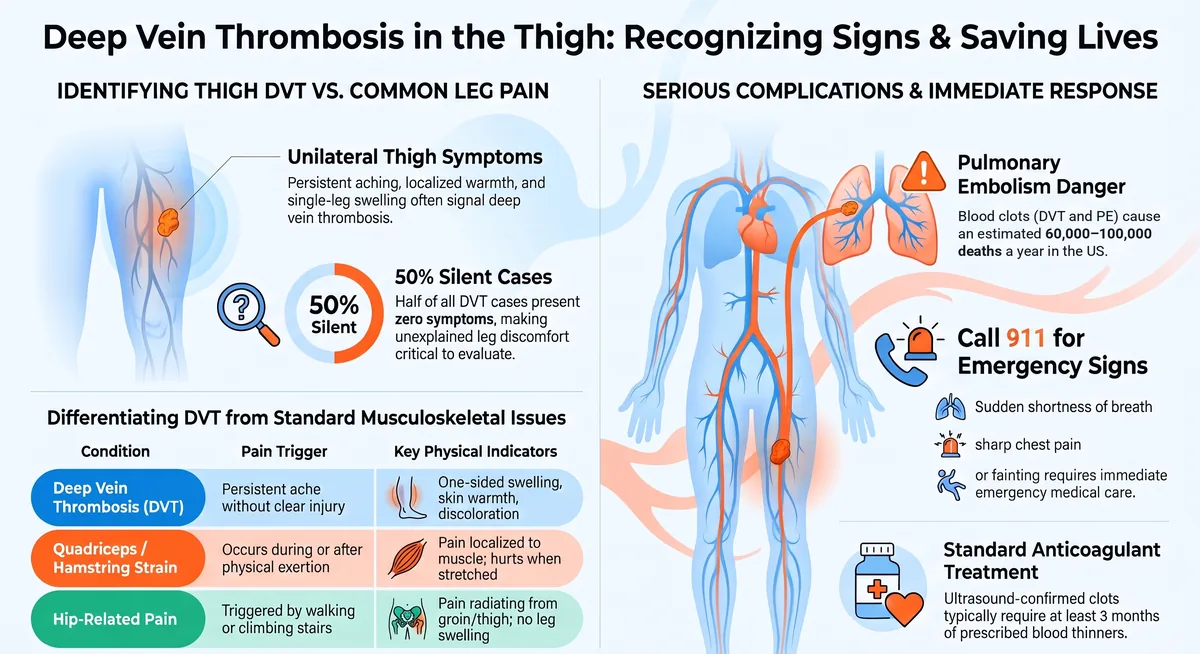
A blood clot in the thigh is usually a deep vein thrombosis (DVT) in the femoral vein, or higher up in the iliac veins of the pelvis. Watch for a deep ache or cramp, swelling in one thigh or the whole leg, tenderness, warmth, or reddish or bluish skin, though about half of people with DVT have no symptoms. A duplex ultrasound is the usual first test. Sudden shortness of breath or chest pain means call 911.
Blood clots in the thigh can result in persistent pain along with swelling, tenderness, warmth and discoloration of skin on the leg that's affected. These symptoms may build over a few days or appear suddenly, and some people with deep vein thrombosis (DVT) notice few or no signs at all.
At CACVI, our board-certified endovascular specialists bring more than 30 years of experience and have performed more than 15,000 vascular and heart procedures. Left untreated, a clot can cause serious complications, including a pulmonary embolism if part of the clot travels to the lungs. If you have unexplained pain or swelling in one thigh, schedule a vascular evaluation with our team.
This guide covers the warning signs of a blood clot in the thigh, where the pain usually shows up, and how to tell it apart from a muscle strain or a hip problem. It also covers the main risk factors, how doctors check for clots, the treatment options, and when to seek urgent or emergency care.
8 Warning Signs of a Blood Clot in the Thigh
Having a blood clot in the thigh can cause your leg to look and feel different; however, no two people experience exactly the same symptoms. DVT happens when a clot forms in a deep vein and partly or fully blocks blood flow. The Centers for Disease Control and Prevention (CDC) reports that about half of people with DVT have no symptoms at all, so a leg that feels fine does not rule out a clot. The signs below are the ones to watch for, and many overlap with the general symptoms of blood clots in the legs.
1. Persistent Thigh Pain or Aching
A deep, persistent ache or cramp in the thigh is one of the possible signs of a clot. It can feel like a pulled muscle or a charley horse, even if you haven't been working out or hurt your leg. Unlike ordinary soreness, the pain often has no clear cause and may also come with swelling or tenderness.
2. Swelling in One Thigh
A clot can block blood flow through a deep vein, so blood pools in the area. One thigh may then look noticeably larger than the other, sometimes over just a day or two. If only one leg is swelling and you can't figure out why, get it checked soon, especially if it also hurts or feels warm.
3. Tenderness in the Affected Thigh
The thigh may feel sore when you press on it or move your leg. Sometimes tenderness goes along with swelling and pain, but not always. Muscle injuries also cause tenderness, so your doctor weighs it alongside your other symptoms and risk factors.
4. Warmth in the Affected Area
The skin over the clot may feel warmer than the skin around it or than the same spot on your other leg. Warmth usually accompanies swelling and tenderness. On its own it doesn't confirm DVT, since infections and inflammation can do the same thing.
5. Skin Discoloration
The skin near the clot may turn reddish, bluish, purple, or darker than usual. On darker skin, these color changes can be harder to see. See a doctor if you have discoloration along with unexplained pain or swelling in one leg.
6. Heaviness or Tightness in the Affected Leg
Some people say their leg feels heavy, full or tight. That feeling comes from a clot slowing blood flow and fluid building up in the thigh or lower leg. It may be worse when standing or walking, but it can also occur at rest.
7. Swelling Extending Beyond the Thigh
Swelling from a blood clot in the thigh may spread to the knee, down to the calf, or over much of the leg. This is more likely when the clot blocks a large vein high in the thigh or in the pelvis. Swelling alone can't show exactly where the clot is or how big it is; only imaging can.
8. Prominent Surface Veins
Veins across the thigh or groin may stand out more than normal when blood is rerouted around a blocked deep vein. Visible veins alone aren't a reliable sign of DVT, and they are easy to confuse with other vein problems (here's how DVT differs from varicose veins). New veins that appear along with swelling, pain or color changes should be checked out.
🚨 When to Seek Medical Attention
These symptoms overlap with muscle strains and other conditions, so they can't confirm or rule out a clot. Seek prompt medical attention if you have unexplained pain in your thigh along with swelling, warmth, or discoloration. If you have sudden shortness of breath, chest pain, bloody sputum or fainting, call 911 or your local emergency number immediately. These can be signs of a pulmonary embolism (PE), which can be fatal.
Where Does a Blood Clot in the Thigh Hurt?
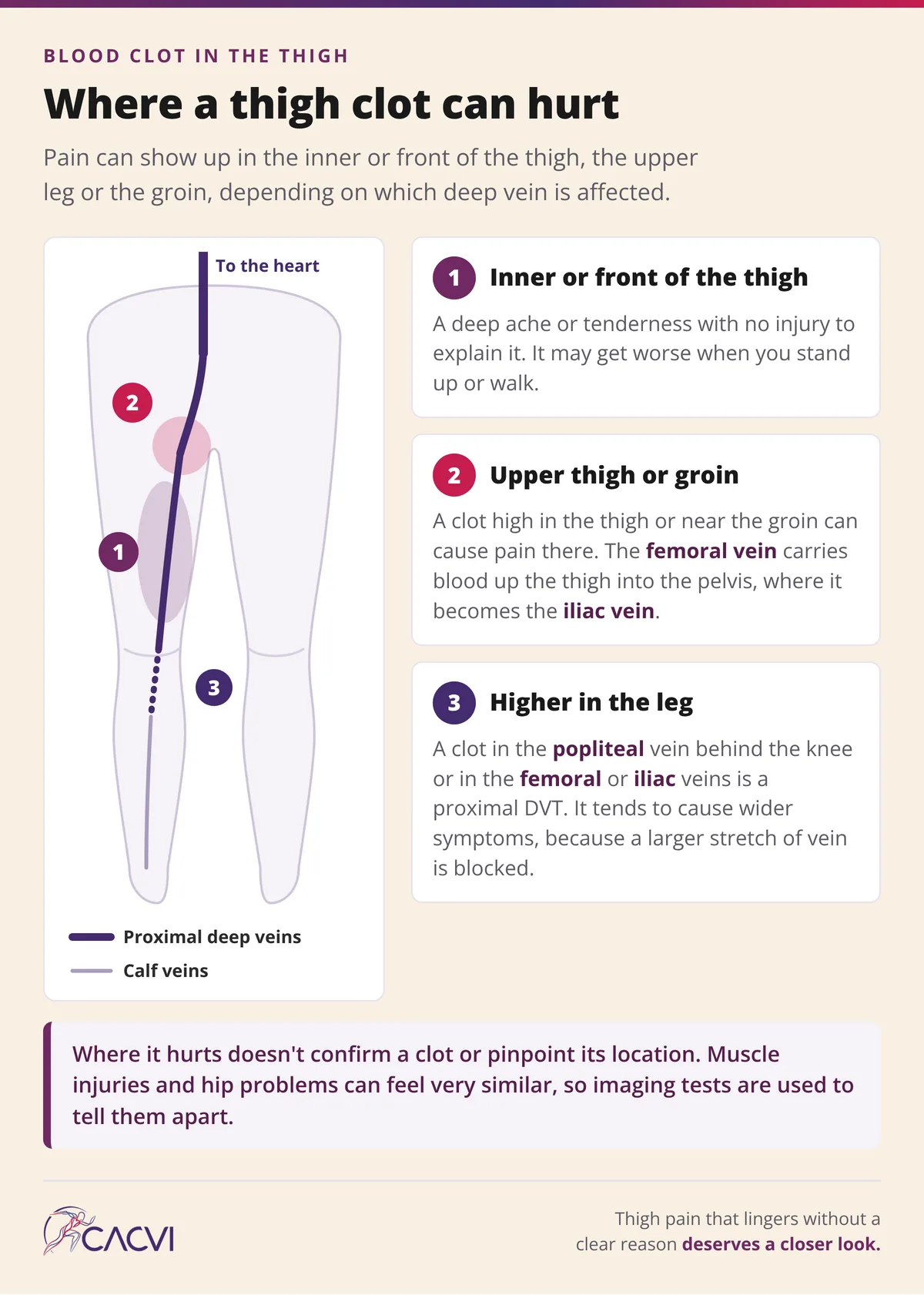
A blood clot in the thigh can cause pain in the inner or front of the thigh, the upper leg or the groin, depending on which deep vein is affected. The discomfort is often a steady ache or cramp. According to the National Heart, Lung, and Blood Institute (NHLBI), DVT can cause swelling, pain or tenderness, cramping or aching, warmth, and red or discolored skin. Not everyone gets all of these.
Pain in the Inner or Front of the Thigh
You may feel a deep ache or tenderness along the inner or front of the thigh with no injury to explain it. It may get worse when you stand up or walk, but pain with movement on its own doesn't mean you have a clot. Because DVT can mimic a pulled muscle, thigh pain that lingers without a clear reason deserves a closer look.
Pain Near the Upper Thigh or Groin
A clot high in the thigh or near the groin can cause pain there. The femoral vein carries blood up the thigh into the pelvis, where it becomes the iliac vein, and the iliac veins drain into the inferior vena cava, the large vein that returns blood to the heart. A clot in one of those bigger veins can block flow enough to cause pain, swelling, or heaviness in a large part of your leg. In some patients, a left iliac vein squeezed by the right iliac artery, a condition called May-Thurner syndrome, makes clots in this area more likely.
When a Clot Higher in the Leg Causes More Extensive Symptoms
In the legs, deep vein clots can form anywhere from the calf up through the thigh and into the pelvis. A clot in the popliteal vein behind the knee or in the femoral or iliac veins is called a proximal DVT, and it tends to cause wider symptoms because a larger stretch of vein is blocked. Michigan Medicine's adult venous thromboembolism guideline notes that a severe blockage of the iliac and femoral veins sometimes causes severe swelling and pain in the leg.
Still, where it hurts doesn't confirm a clot or pinpoint its location. Muscle injuries and hip problems can cause pain that feels very similar, so imaging tests are generally used to tell them apart.
Thigh DVT vs. Muscle Strain or Hip Pain: How Can You Tell the Difference?
Thigh pain can be due to deep vein thrombosis (DVT), a pulled muscle, a hip problem, or a groin injury. Where the pain started and what comes with it can give some clues, but symptoms alone don't prove or disprove that there is a blood clot. The table below compares four common causes side by side.
| Feature | Deep Vein Thrombosis (DVT) | Quadriceps or Hamstring Strain | Hip-Related Pain | Groin Muscle Injury |
|---|---|---|---|---|
| Common causes | A clot forms in a deep vein, often linked to recent surgery, long periods of immobility, cancer, or a past DVT. | Overstretching or tearing a muscle while running, jumping, lifting, or moving suddenly. | Arthritis, bursitis, joint irritation, or a hip injury. | Stretching or tearing inner-thigh muscles during exercise, quick direction changes, or kicking. |
| Pain pattern | Deep aching, cramping, or persistent pain in one thigh or leg, often with no injury. | Starts during or soon after the activity and stays in the injured muscle. | Felt in the groin or front of the thigh and may spread toward the knee. | Localized pain in the groin or upper inner thigh, mainly when using those muscles. |
| Swelling | May cause swelling in one thigh or the entire leg. | Localized swelling or bruising is possible. | Whole-leg swelling is not typical. | Local swelling or bruising may occur. |
| Warmth and skin changes | The area may feel warm, and the skin may look red, bluish, or darker than usual. | Bruising may appear over the injury. | Warmth or color change is not typical. | Bruising may appear; widespread warmth is less common. |
| Other clues | Can start with no clear trigger. Some people have few or no symptoms. | Hurts more when you stretch or tighten the muscle. | Worse with walking, climbing stairs, or getting up from a chair. | Hurts more when you squeeze your legs together or stretch the area. |
No single clue in the table rules out DVT. A clot can sit in a leg that also has a strained muscle, so a doctor may still order testing.
Why Exercise-Related Pain Does Not Rule Out a Blood Clot
After working out, thigh pain usually means you've strained something, but exercise does not protect you from DVT either. Active people get clots too, particularly after surgery, a long flight, or a period of bed rest, and the pain can feel exactly like a pulled muscle.
If the pain doesn't ease with rest, or if swelling, warmth, or discoloration shows up, see a doctor. A duplex ultrasound is a quick, painless way to check the deep veins for a clot.
Can a Blood Clot in the Thigh Cause Swelling in the Whole Leg?
Yes, it can. A blood clot in the thigh can cause swelling of the whole leg if it blocks a large deep vein. When blood can't flow properly back to the heart, pressure builds up in the veins and fluid starts leaking into the surrounding tissue. The swelling may show up in the thigh or spread down toward the knee and calf. Sometimes one leg looks noticeably bigger than the other.
Clots in the femoral or iliac veins tend to cause more widespread swelling because those veins drain such a large area. Even so, the amount of swelling doesn't reliably show where the clot is or how serious it is, and some people with DVT have little swelling at all.
Unexplained swelling in one thigh or leg should be checked promptly, especially with pain, tenderness, warmth, or discoloration. Swelling that comes on fast or covers most of the leg needs same-day care.
Why Do Blood Clots Develop in the Thigh?
Blood clots develop in the thigh when something disrupts the body's normal clotting process and a clot forms inside a deep vein. Doctors trace most cases of DVT to three problems: slow blood flow, damage to a vein wall, or blood that clots more easily than it should. Any one of them raises the risk, and they often occur together. The CDC lists several factors that make DVT more likely.
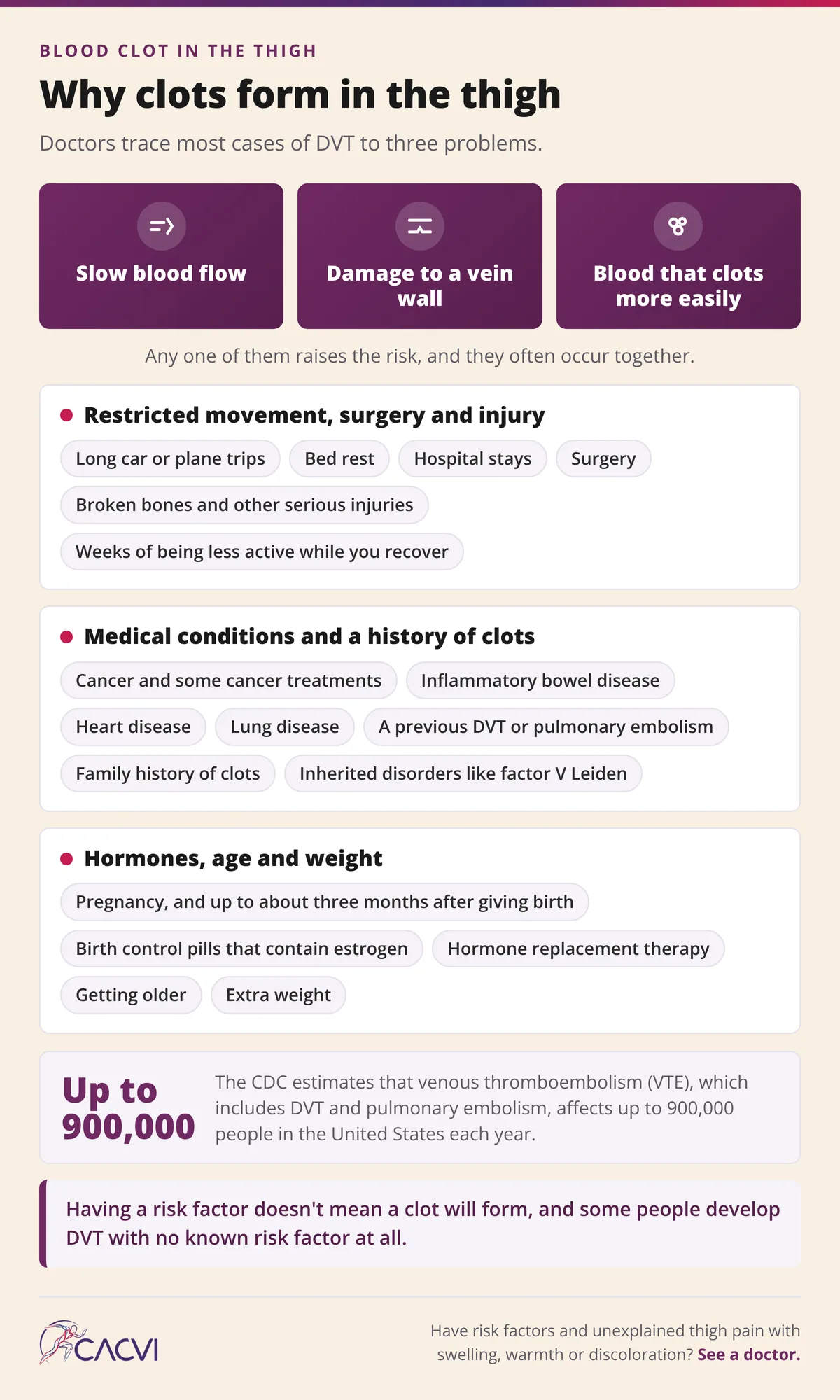
Restricted movement, surgery, and injury. Long car or plane trips, bed rest, and hospital stays all slow blood flow through the deep veins. Surgery and serious injuries such as broken bones can damage veins directly, and being less active for weeks while you recover also raises the risk.
Medical conditions and a history of blood clots. Cancer and some cancer treatments make blood more prone to clotting, as do chronic illnesses such as inflammatory bowel disease, heart disease, and lung disease. A previous DVT or pulmonary embolism raises the chance of another one, and a family history of clots or an inherited disorder like factor V Leiden can make clots form even without an obvious trigger.
Hormones, age, and weight. Risk rises during pregnancy and stays higher for up to about three months after giving birth. Birth control pills that contain estrogen and hormone replacement therapy also raise the risk. Risk goes up as you get older and if you carry extra weight.
Having a risk factor doesn't mean you will get a clot, and some people develop DVT with no known risk factor at all. The scale of the problem is large: the CDC estimates that venous thromboembolism (VTE), which includes DVT and pulmonary embolism, affects up to 900,000 people in the United States each year. If you have any of these risk factors and notice unexplained thigh pain along with swelling, warmth or discoloration, see a doctor.
How Is a Blood Clot in the Thigh Diagnosed?
Diagnosis starts with a conversation and a physical examination. Your doctor will ask when your symptoms started, whether they came on quickly, and whether you've noticed any changes in color, warmth or swelling. They will also ask about prior blood clots, recent surgery, cancer, pregnancy, hormone use, recent travel or bed rest, and any family history of clotting disorders, and they will compare both legs for swelling and tenderness. As the NHLBI explains, your answers help doctors judge how likely a clot is and which tests to order.
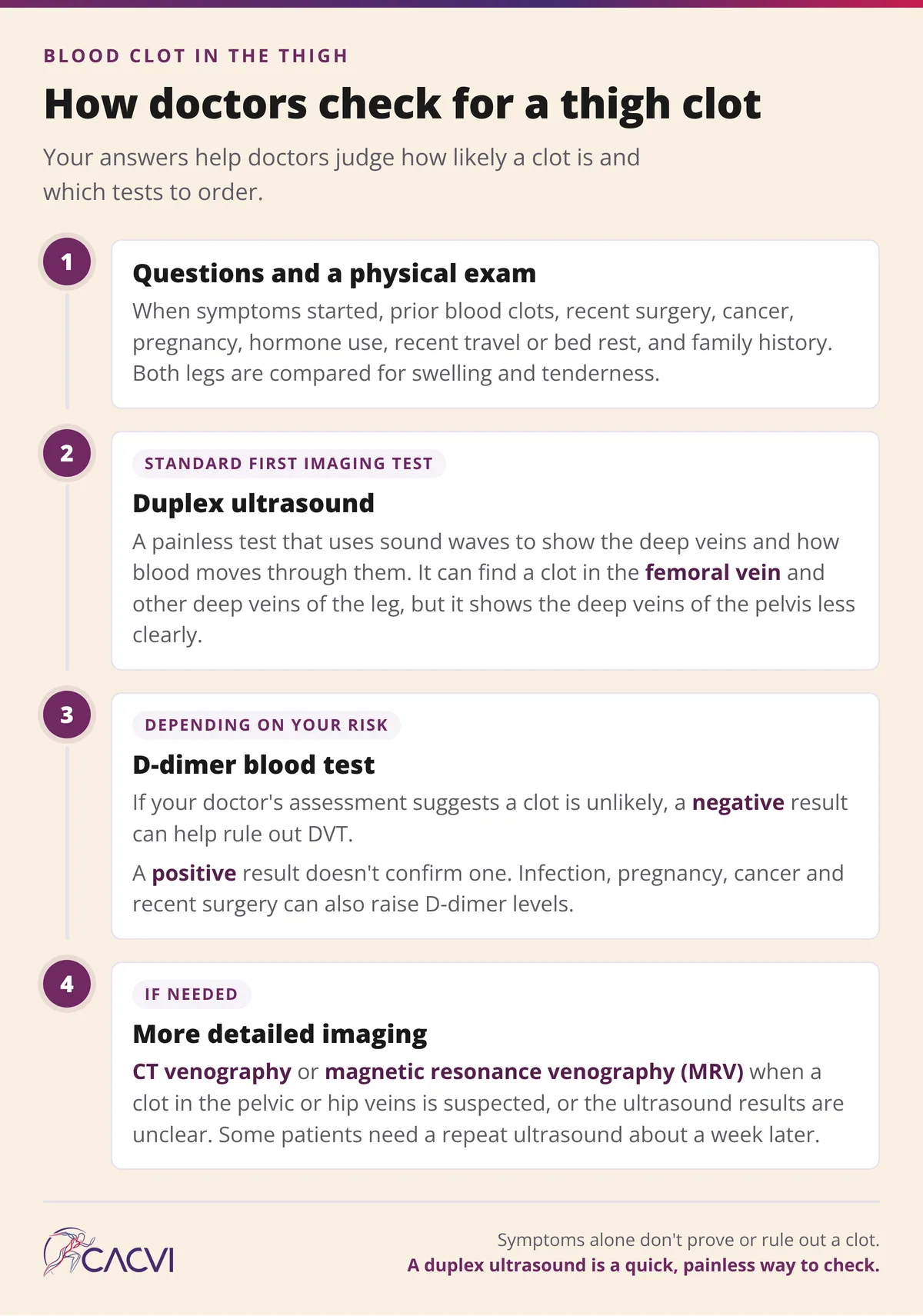
A duplex ultrasound is typically the next step. This painless test uses sound waves to show the deep veins and how blood moves through them, and it can find a clot in the femoral vein and other deep veins of the leg. It's the standard first imaging test for a suspected leg clot, but it shows the deep veins of the pelvis less clearly.
Depending on your level of risk, your doctor may also order a D-dimer blood test, which measures protein fragments released when the body breaks down a clot. If your doctor's assessment suggests a clot is unlikely, a negative result can help rule out DVT. A positive result doesn't confirm one, because infection, pregnancy, cancer, and recent surgery can also raise D-dimer levels, so the result is always read alongside your symptoms and other findings.
If a clot in the pelvic or hip veins is suspected, or the ultrasound results are unclear, more detailed imaging may be done. CT venography or magnetic resonance venography (MRV) gives a clearer view of veins that ultrasound doesn't see well. Some patients need a repeat ultrasound about a week later.
What Happens if a Blood Clot in the Thigh Is Left Untreated?
An untreated clot in the thigh can keep blocking blood flow and may grow into larger veins in the leg or pelvis. The most serious risk is a pulmonary embolism (PE), which happens when a piece of the clot breaks off, travels through the bloodstream, and lodges in a blood vessel in the lungs. This blocks blood flow to part of the lung, puts extra strain on the heart, and can be deadly. The CDC estimates that 60,000 to 100,000 Americans die of venous thromboembolism each year.
Where the clot sits matters. According to Michigan Medicine's adult venous thromboembolism guideline, clots in the thigh and pelvis are more likely than calf clots to cause a pulmonary embolism or post-thrombotic syndrome, which is why doctors treat them with blood thinners.
Another major risk is post-thrombotic syndrome (PTS). A blood clot can damage the veins and their valves, which can cause long-lasting swelling, pain, heaviness, skin discoloration and sometimes sores on the skin of that leg. According to the CDC, one third to one half of people who have had a DVT develop these long-term complications, and the symptoms can continue long after the clot itself has been treated.
How Is a Blood Clot in the Thigh Treated?
Treatment depends on where the clot is, how big it is, why it formed, how severe the symptoms are, and your general health. The goals are to stop the clot from growing, prevent a clot from reaching the lungs, and prevent new clots from forming.
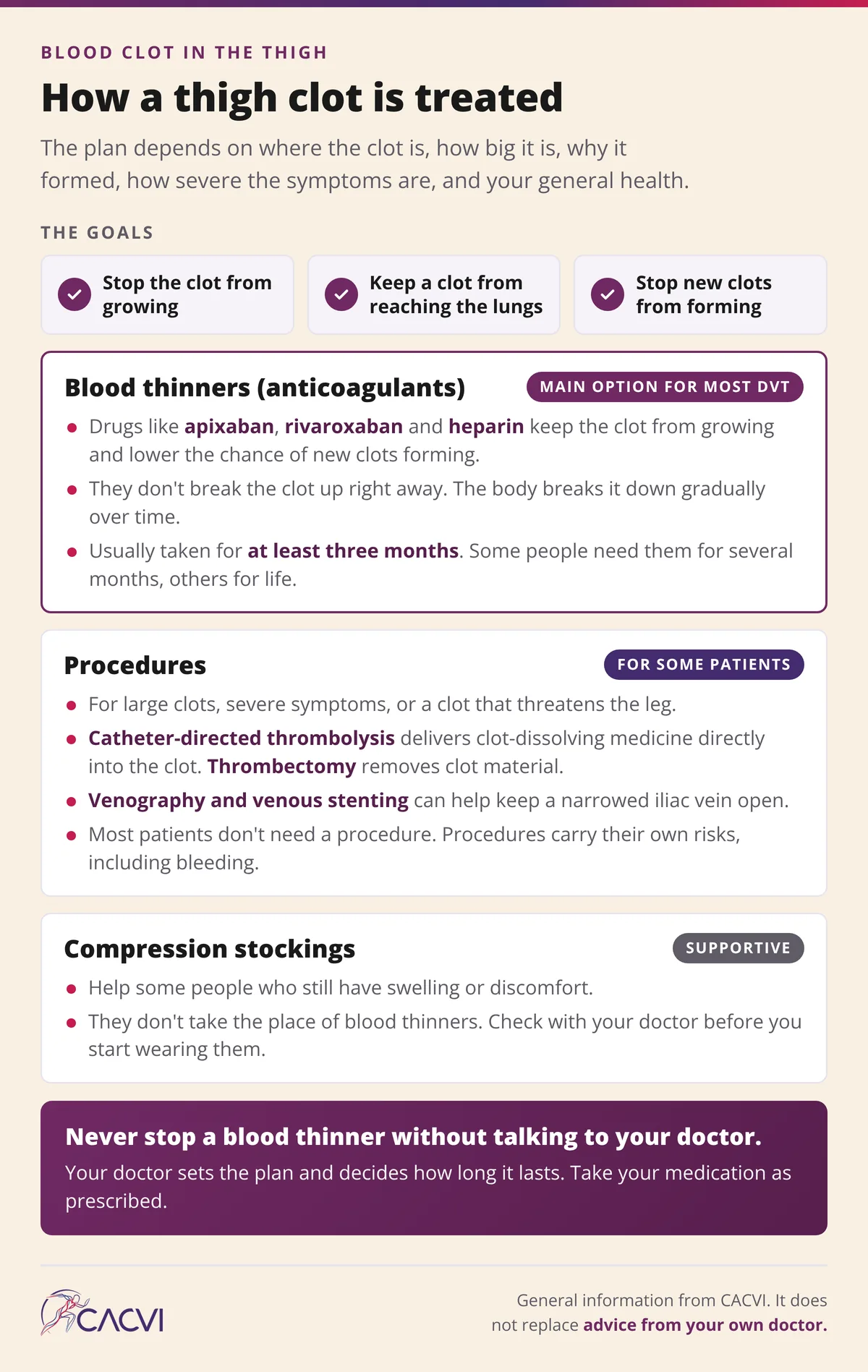
Anticoagulants, often called blood thinners, are the main treatment for most DVT. Drugs like apixaban, rivaroxaban and heparin keep existing clots from growing bigger and lower the chance of new clots forming. They don't break the clot up right away; the body gradually breaks it down over time. Treatment usually lasts for at least three months. The NHLBI notes that some people need blood thinners for several months and others for life. The length depends on factors such as the type of blood thinner and what caused the clot.
For large clots, severe symptoms, or a clot that threatens the leg, a specialist may recommend a procedure. Catheter-directed thrombolysis delivers clot-dissolving medicine directly into the clot, and thrombectomy removes clot material. If a narrowed iliac vein is part of the problem, venography and venous stenting can help keep that vein open. Most patients don't need a procedure; blood thinners alone are enough. Procedures carry their own risks, including bleeding.
Compression stockings help some people who still have swelling or discomfort, but they don't take the place of blood thinners. Many patients ask whether compression stockings can dislodge a clot. Check with your doctor before you start wearing them. Your doctor will set the treatment plan and decide how long it lasts. Take your medication as prescribed, and never stop a blood thinner without talking to your doctor.
When Should You Seek Medical Attention for Thigh Symptoms?
If you develop unexplained pain, swelling, tenderness, warmth or discoloration in one leg or thigh, get a prompt medical evaluation. These may be signs of DVT, particularly if you've recently had surgery or been on bed rest, or if you have cancer or a past clot, are pregnant or recently gave birth, or take estrogen. Because the symptoms overlap with muscle injuries, usually the only way to be sure is an exam and imaging tests. If you're not sure where to begin, here is a guide to what type of doctor treats deep vein thrombosis.
Call 911 or your local emergency number right away if you have signs of a pulmonary embolism, which needs emergency treatment:
- Sudden shortness of breath
- Sharp chest pain that gets worse when you take a deep breath or cough
- Coughing up blood
- Fainting
Rarely, a large clot in the thigh or pelvis can make the whole leg suddenly very swollen, very painful, and pale or bluish. This is called phlegmasia, and it is an emergency: call 911.
🚨 Seek Emergency Care
Don't wait until leg symptoms get worse, and don't drive yourself to the hospital.
Need to Know More About Blood Clot in Thigh Symptoms?
Persistent thigh pain, swelling in one leg, tenderness, warmth, skin discoloration, or newly prominent veins can all point to DVT. Finding a clot early makes treatment easier and lowers the risk of complications. Because these symptoms can look like a muscle strain, don't wait it out if something in your leg has changed without explanation.
Vascular specialists at CACVI diagnose and treat blood clots and other vein problems in Southern California. If you are worried about a clot, get in touch with CACVI to schedule an evaluation.
Talk to a CACVI Vein Specialist
If you have new pain, swelling, or other signs of a vein problem in one thigh, schedule a consultation with our team.
Contact CACVI Today →Frequently Asked Questions About Blood Clot in Thigh Symptoms
Thigh pain and swelling have many possible causes, and telling a clot apart from a muscle or joint problem isn't always easy. Here are answers to the questions patients ask most often.
Can a Blood Clot in the Thigh Feel Like a Pulled Muscle?▾
Yes. A blood clot in your thigh can cause deep pain, cramping, or tenderness that feels much like a pulled muscle or a charley horse. If the pain has no clear cause, or comes with swelling, warmth, or discoloration, get it checked promptly.
Can a Blood Clot in the Thigh Cause Pain Near the Groin?▾
Yes. A clot in the upper thigh near the groin, or higher up in the iliac veins of the pelvis, can cause pain in that area. Groin pain alone doesn't confirm DVT, so see a doctor if it's unexplained or comes with other clot symptoms.
Can You Have a Blood Clot in the Thigh Without Swelling?▾
Yes. Some people with DVT have pain or tenderness but no obvious swelling, and about half have no symptoms at all. A leg that isn't swollen can still have a clot, so see a doctor if you suspect one.
How Long Does a Blood Clot in the Thigh Take to Heal?▾
Most people with DVT take blood thinners for at least three months, though the length depends on the cause of the clot, ongoing risk factors, and overall health. Pain and swelling often improve sooner, but recovery varies, and some people develop lasting symptoms from post-thrombotic syndrome.
Can a Blood Clot in the Thigh Travel to the Lungs?▾
Yes. Part of a thigh clot can break loose, travel through the bloodstream, and block a blood vessel in the lungs. This is a pulmonary embolism, and it can be deadly. Call 911 or your local emergency number right away if you have sudden shortness of breath, chest pain, bloody sputum, or fainting.
Medical Disclaimer: This article is for educational purposes only and is not a substitute for professional medical advice, diagnosis, or treatment. If you think you have a blood clot in your thigh, seek medical attention right away, and call 911 or your local emergency number if you have symptoms of a possible pulmonary embolism.

✓ Medically reviewed by
Dr. Vasim Lala
D.O., FACC, FSCAI, RPVI · Coronary, vascular and structural intervention
Trained at Mount Sinai in New York in advanced coronary, vascular and structural intervention. Focuses on minimally invasive heart and vascular procedures and on preventive cardiology, and writes for the American College of Cardiology.
View physician profile →
